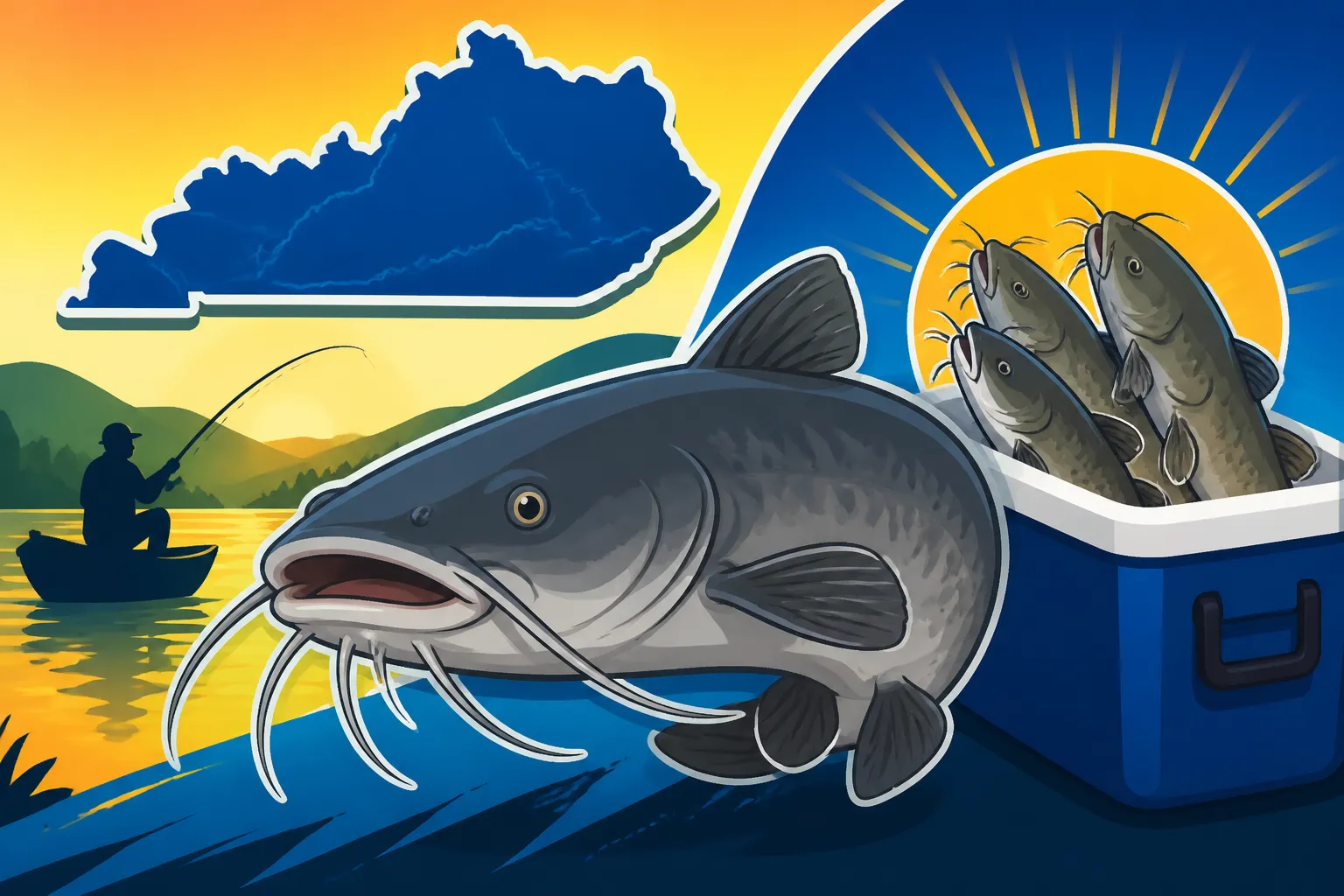
How Many Catfish Over 25 Inches Can You Keep?
It can be incredibly frustrating to head out for a peaceful day of fishing, only to realize you’re not entirely sure about the specific rules for keeping your catch, especially when it comes to those impressive, larger fish. You hook into a big catfish, your heart races, and then the doubt creeps in: Can I actually keep this one? How many of these big beauties am I allowed? This guide is here to untangle the Kentucky Department of Fish and Wildlife Resources (KDFWR) regulations for catfish, specifically focusing on the rules surrounding those over 25 inches, so you can fish with confidence and stay within the law.
Understanding Kentucky's Statewide Catfish Regulations
Kentucky offers some fantastic catfishing opportunities, from the mighty Ohio River to countless lakes and ponds. But before you fill your stringer, it's crucial to understand the statewide regulations set by the KDFWR. These rules are designed to manage fish populations, ensure sustainable fishing for future generations, and give everyone a fair shot at catching a good meal or a trophy. While many species have straightforward daily limits, catfish have a slightly nuanced rule that often trips up even seasoned anglers.
The General Daily Creel Limit for Catfish
First things first: in most public waters across Kentucky, there’s a general daily creel limit for catfish. This limit applies to all species of catfish combined – that’s your Channel Catfish, Blue Catfish, and Flathead Catfish. You can’t just fill your cooler with 20 of each! The current statewide regulation allows an angler to keep a combined total of 15 catfish per day. This means if you catch 10 Channel Cats and 5 Blue Cats, you've hit your limit. This seemingly simple rule is the foundation, but it's where the length exception comes into play that things get interesting. It's not just about how many fish you can keep, but also about what size they are, particularly the larger ones that often catch our eye.
For many anglers, especially those just starting out, this can be a bit confusing. You might think, "Okay, 15 fish, got it." But then you land a monster, and suddenly, the "15 fish" rule doesn't tell the whole story. The KDFWR implements these limits to ensure that enough catfish remain in the ecosystem to continue breeding and growing, ensuring the health of the fishery for years to come. These regulations also help distribute the catch among anglers, preventing any one person from over-harvesting a particular spot or species.
The "Trophy Fish" Exception: One Over 25 Inches
Now, here's the kicker, and what often leads to the most questions: while you can keep up to 15 catfish combined per day, there's a very specific rule concerning larger fish. Out of those 15 fish, only one (1) can be 25 inches or longer. Yes, you read that right. You might catch a dozen smaller Channel Cats, but if you land three Blue Catfish that are all pushing past the 25-inch mark, you can only keep one of them. The other two, no matter how exciting the fight, must be immediately released back into the water. This particular regulation is a critical aspect of the Kentucky Catfish Daily Limit and Trophy Fish Rule, specifically targeting the protection of larger, more mature fish that are vital for sustaining healthy populations.
This rule is a prime example of how the KDFWR works to balance recreational fishing with conservation. They understand the thrill of catching a truly big catfish – that's often what keeps us coming back! But they also know that these larger, older fish are the prime breeders. By limiting the harvest of these "trophy" sized fish, they help ensure that those strong genetics continue in the population. It's a way to give more anglers a chance to catch a big one, even if they can't always keep it, and ensures there are plenty of big ones left for the future.
Imagine you’re out on Kentucky Lake, targeting some big cats, and you have an incredible day. You pull in a 30-inch blue cat, then a 27-inch channel cat, and later, a magnificent 35-inch flathead. Under statewide rules, you can only pick one of those three to take home. The other two, regardless of their impressive size, must go back. It's a tough decision sometimes, but it’s a necessary one for the long-term health of our fisheries.
What This Means for Different Catfish Species
It’s easy to get caught up thinking about just one type of catfish, but remember, the 15-fish combined daily limit and the one-fish-over-25-inches rule applies to ALL species of catfish together. This means Channel Catfish, Blue Catfish, and Flathead Catfish are all grouped under this umbrella. There isn't a separate allowance for each species for the 25-inch rule; it's a combined total for your entire catfish catch for the day.
This comprehensive approach is key to effective fisheries management. Instead of having a patchwork of rules for each species, which could be confusing for anglers and difficult for wardens to enforce, the KDFWR simplifies it by lumping them together. This ensures that even if one species is particularly abundant in an area, the overall impact on the catfish population remains controlled. It's a practical way to manage the fishery and ensures the spirit of the regulation is maintained, which is to protect the larger, breeding-stock fish. For more details on the combined limits, check out the information on why Blue and Channel Catfish Count Toward the Same Kentucky Limit.
Why the 25-Inch Limit for Trophy Catfish?
This specific 25-inch length limit for larger catfish isn't just an arbitrary number plucked from thin air. It's a carefully considered regulation rooted in fisheries science and designed to protect the very resource we love to pursue. There's a method to the madness, and understanding the "why" behind the rule can help us appreciate its importance even more.
Promoting Sustainable Catfish Populations
The primary reason for the one-fish-over-25-inches rule is to promote sustainable catfish populations throughout Kentucky's waters. Larger, older catfish, particularly female blue and flathead catfish, are crucial for successful spawning and maintaining genetic diversity. These are the fish that produce the most eggs and contribute significantly to the next generation of catfish. If anglers were allowed to keep an unlimited number of these big breeders, it could quickly deplete the spawning stock, leading to fewer fish in the future, slower growth rates, and ultimately, a less robust fishery for everyone.
Think of it this way: these big cats are like the "seed corn" for the fishery. You want to harvest some of the crop, but you always need to save enough seed to plant for next year. By allowing only one trophy fish per angler per day, the KDFWR ensures that a significant portion of these vital breeding fish remain in the water to do their job. This long-term thinking benefits all anglers, ensuring that Kentucky remains a premier destination for catfish enthusiasts. It's part of the broader strategy found in the Kentucky Fishing Regulations Explained, designed to keep our waters healthy and productive.
Balancing Angler Opportunity with Conservation
It's a delicate dance, isn't it? On one hand, the KDFWR wants to provide ample opportunity for anglers to enjoy their sport and bring home some tasty fillets. On the other hand, they have a responsibility to conserve the resource for future generations. The 25-inch rule is a testament to this balancing act. It acknowledges the desire for anglers to catch and, occasionally, keep a truly impressive fish, while still prioritizing the overall health of the catfish population.
Without such a regulation, there's a risk of what's called "overfishing the top end." Anglers naturally gravitate towards catching the biggest fish, and if there were no limits on keeping them, the largest specimens could quickly become scarce. This would not only harm the breeding stock but also diminish the experience for anglers who dream of battling a giant catfish. This rule allows for that exciting possibility of a trophy catch, but it also instills a conservation ethic, reminding us that these magnificent fish are valuable beyond just the dinner table. It’s about creating a sustainable fishery where both the fish and the angler thrive.
Impact on Blue and Channel Catfish
While Flathead Catfish can also reach impressive sizes, the 25-inch rule most frequently impacts anglers targeting Blue and Channel Catfish, simply because they are more widely distributed and often targeted by a broader range of anglers. Blue Catfish, in particular, are known for their potential to grow into true giants, often exceeding 50 pounds in Kentucky waters. Channel Catfish are also abundant and regularly reach sizes well over 25 inches, especially in fertile impoundments and river systems.
This regulation directly influences how anglers approach fishing for these species. If you're specifically targeting a trophy Blue Cat on the Ohio River, you might still spend all day hoping for that one big bite. But once you land and decide to keep one over 25 inches, your pursuit of another large one for the cooler is effectively over for the day, even if you still have room for smaller fish in your 15-fish creel limit. This ensures that the pressure on the larger fish of both species is distributed and that these vital components of the ecosystem continue to flourish. This is especially relevant when you’re out on waters known for large fish, like the Best Catfish Fishing Spots on Kentucky's Ohio River.
Navigating Site-Specific Catfish Regulations
While the statewide regulations provide a general framework for catfish limits in Kentucky, it's absolutely crucial to remember that these rules are not universal across every body of water. Kentucky is blessed with a diverse array of rivers, lakes, and reservoirs, and many of these have their own unique, site-specific regulations. Failing to check these local rules is one of the quickest ways to accidentally break the law and potentially face penalties.
When Lake-Specific Rules Override Statewide Limits
It's a common misconception that once you know the statewide rules, you're good to go everywhere. However, many of Kentucky's premier fishing destinations, particularly large reservoirs and specific river stretches, have unique regulations that are stricter or different from the statewide general limits. These site-specific rules are put in place by the KDFWR based on localized biological surveys, population dynamics, and management goals for that particular body of water.
For example, a lake might have a slot limit for a certain species, meaning fish between a specific size range must be released, while those smaller or larger can be kept (with their own limits, of course). While these are more common for species like bass, it's not unheard of for catfish. The Ohio River, for instance, a massive and diverse fishery, has its own complexities that anglers need to be aware of. You might find different rules regarding trotlines or jug fishing there, which indirectly affect overall harvest. Always assume there could be an exception until you verify. This is similar to how the Kentucky Statewide Bass Size and Daily Limit Rules have exceptions for certain lakes, showing a common KDFWR management strategy.
How to Check Local Regulations Before You Go
This is perhaps the single most important piece of advice any angler can receive: Always check the current KDFWR Fishing and Boating Guide or their official website BEFORE you head out to a new (or even familiar) fishing spot. These resources are updated annually and provide detailed information for every major body of water in the state. Don't rely on old guides, hearsay from a buddy, or what you remember from last season. Regulations can and do change.
The KDFWR website offers an interactive map and a comprehensive listing of all lakes and rivers, complete with their specific size and creel limits. You can easily find the exact rules for a particular lake, whether it's Lake Cumberland, Barren River Lake, or a stretch of the Ohio River. Taking just five minutes to look up the rules could save you a lot of hassle, potential fines, and the disappointment of having to release a legal fish because you weren't sure. Knowing your local rules is as important as having the right bait or lure. When you're thinking about the Statewide Bag and Size Limits by Fish Species, always layer on the site-specific information.
Common Mistakes Anglers Make
It's easy to make a mistake when fishing regulations are involved, especially with the layered rules for catfish. One of the most common blunders is simply assuming the statewide 15-fish, one-over-25-inches rule applies everywhere. You might be fishing a small pond with a more restrictive limit or a special designation, and unknowingly violate the rules.
Another mistake is mismeasuring fish. The difference between a 24.5-inch catfish and a 25.5-inch catfish is significant when it comes to the "one-over" rule. Always use a reliable measuring device and measure carefully from the tip of the snout to the tip of the tail, with the fish lying flat. Lastly, some anglers might forget that the limit applies to all catfish species combined. They might keep one 26-inch Blue Cat, and then later catch and keep a 27-inch Flathead, forgetting their "one-over-25-inches" slot was already filled. These kinds of honest mistakes can still lead to a chat with a game warden and potentially a citation, highlighting why it's vital to know what Happens If You Fish Without a License in Kentucky or break other rules.
Practical Advice for Catfish Anglers
Beyond just knowing the rules, being a responsible and successful catfish angler means adopting certain practices that ensure both your enjoyment and the health of the fishery. Catching big fish is thrilling, but handling them correctly, whether you're keeping them or releasing them, is paramount.
Measuring Your Catch Accurately
When you land a catfish that's right on the cusp of that 25-inch mark, precision matters. Don't eyeball it! You need a reliable measuring device on hand. A good, rigid measuring board or a tape measure that can be laid flat next to the fish is essential. Remember to measure from the tip of the snout to the end of the tail, with the tail squeezed to get the maximum length. It's best to measure while the fish is on a wet surface or in the net, to minimize stress.
If you're using a flexible tape measure, ensure it’s straight and not curving along the fish's body, which could give you an inaccurate reading. Always err on the side of caution. If it looks close to 25 inches, and you've already kept your "one over," it's probably safer to release it unless you are absolutely certain it's under. A few extra inches won't make or break your meal, but adhering to the rules helps preserve the resource. You can find excellent, inexpensive measuring devices, sometimes integrated into things like boat rulers, on platforms like Amazon.
Releasing Large Catfish Safely
Let's face it, sometimes you're going to catch a massive catfish that's well over 25 inches, and you've already filled your "one over" quota, or perhaps you just prefer to release true trophy fish to fight another day. Releasing these powerful fish safely is crucial for their survival. Unlike smaller panfish, a large catfish requires careful handling.
First, try to keep the fish in the water as much as possible. If you must bring it aboard, use a large, wet landing net or a sturdy lip gripper (without gaffing, of course) to support its entire body. Avoid holding large catfish by just the lower jaw for extended periods, as their sheer weight can damage their jaw structure. Cradle the fish with one hand under its belly and the other supporting the head or tail. When releasing, gently place the fish back into the water, head first, and hold it upright until it regains its strength and swims off on its own. Often, these big fish need a few moments to re-oxygenate and orient themselves before they dart away.
Essential Gear for Responsible Catfishing
Having the right gear isn't just about catching fish; it's also about fishing responsibly and legally. For catfishing, especially when dealing with potentially large fish, a few items are non-negotiable.
- Measuring Device: As mentioned, a sturdy, accurate measuring tape or board is vital. Many tackle boxes come with one built-in, or you can purchase one separately.
- Large Landing Net: A net with a wide hoop and deep, rubberized mesh is perfect for safely landing and temporarily holding big catfish without removing their protective slime coat or damaging fins.
- Heavy-Duty Pliers or Hook Removers: Catfish often swallow hooks, so long-nose pliers or specialized hook removers are essential for quick, safe unhooking, minimizing stress on the fish.
- Circle Hooks: Many experienced catfish anglers swear by circle hooks, especially when fishing with live or cut bait. These hooks are designed to hook fish in the corner of the mouth, reducing gut-hooking and improving survival rates for released fish. You can find a wide variety of these, as well as bait choices like those discussed in Best Bait for Channel Catfish Fishing, on Amazon, ensuring you’re well-equipped.
- Gloves: Catfish, especially Flatheads, have sharp spines. A good pair of fish-handling gloves can protect your hands while you're getting that measurement or releasing your catch.
Being prepared with the right tools ensures that you can enjoy your time on the water, comply with Kentucky's fishing regulations, and contribute to the health and vitality of our cherished catfish populations. Remember that when it comes to a visit from a KDFWR officer, they'll often conduct a Game Warden Enforcement and License Checks While Fishing, ensuring you have all the necessary documentation and are following the regulations.
Disclaimer
The information provided in this guide is intended for general informational purposes only and is subject to change. While we strive to offer the most accurate and up-to-date details, fishing regulations can be complex and are periodically updated by the Kentucky Department of Fish and Wildlife Resources (KDFWR). It is always the angler's responsibility to consult the most current official KDFWR Fishing and Boating Guide or their official website before engaging in any fishing activity. This ensures compliance with all applicable state and local laws and regulations.