Does an Ohio Fishing License Cover Kentucky Border Waters?
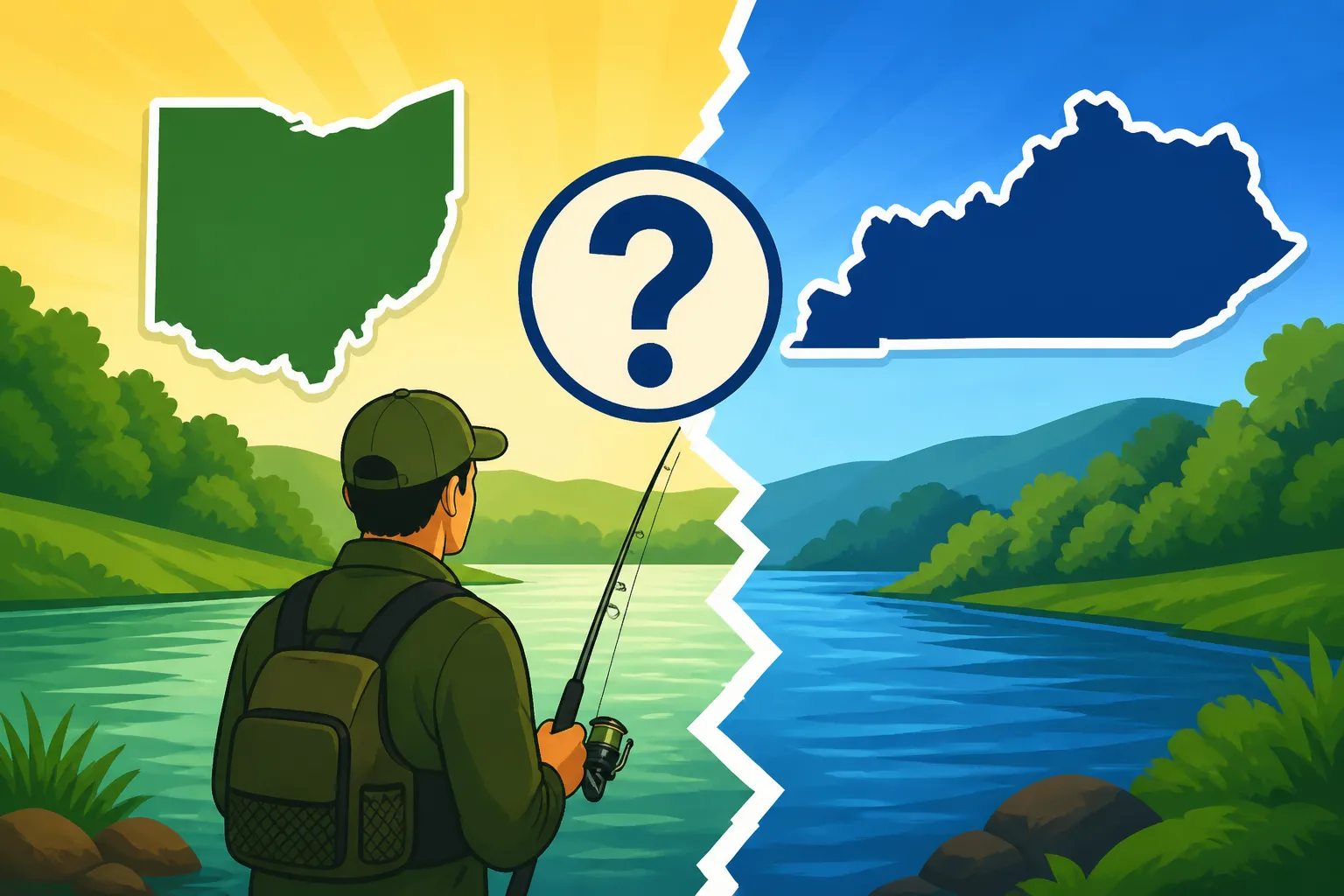
It's a common dilemma for us anglers, isn't it? You're standing on the bank of a beautiful river, or you've just launched your boat, and you can practically see the other state's shoreline. The question inevitably pops into your head: "Do I need a separate license for this water, or does my home state's license cover me?" This is especially true for folks living near the Ohio River, where the waters can feel like a neutral zone. Many Ohio anglers often wonder if their Ohio fishing license extends into Kentucky border waters. Let's dive deep into this common confusion and clear up exactly what you need to know to fish legally and confidently without worrying about a run-in with a game warden.
Understanding Reciprocity on Shared Waters
The idea of "border waters" often leads to a natural assumption of reciprocity, where one state's license is valid on the shared waterway. While this is true in some limited cases across the country, it's not a universal rule, and the specifics can be surprisingly nuanced. For the Ohio River, which forms the boundary between Kentucky and Ohio, there's a specific agreement in place, but it's crucial to understand its exact limitations. It doesn't mean your Ohio license is a golden ticket to fish any water that merely touches Kentucky's border.
Many anglers get caught up thinking that if they are on the river, they're good to go with either state's license. While this is largely true for the main stem of the Ohio River itself, the moment you deviate from that main stem, the rules change dramatically. It's not about the general vicinity, but the specific legal definition of where your license is valid. This distinction often trips people up and can lead to unintended violations, which is the last thing any of us want when we're just trying to enjoy a peaceful day on the water.
The Ohio River: A Unique Case for Ohio Anglers
When it comes to the Ohio River, there is a reciprocal agreement between Ohio and Kentucky. This means that if you possess a valid Ohio fishing license, you are generally permitted to fish the main stem of the Ohio River, from bank to bank, without needing a separate Kentucky fishing license. This applies whether you're fishing from a boat or from the Ohio side of the river. The same holds true for Kentucky residents; a Kentucky license allows them to fish the entire main stem of the Ohio River, including waters adjacent to Ohio.
However, and this is where many people get confused, this reciprocity is strictly limited to the main stem of the Ohio River. It does not extend to tributaries, embayments, creeks, or any other body of water that flows into the Ohio River but is clearly within Kentucky's jurisdictional boundaries. For instance, if you're drifting down the Ohio River in your boat, and you decide to duck into a small creek mouth that's clearly on the Kentucky side, you've just entered Kentucky waters where your Ohio license might not be valid. It's a fine line, but one that game wardens are trained to enforce.
When Your Ohio License Won't Cut It in Kentucky
So, when does an Ohio fishing license not cover you in Kentucky's "border waters"? The answer is straightforward: any time you are not physically on the main stem of the Ohio River, or if you are on Kentucky soil. This means:
- Fishing from the Kentucky Bank: If you step out of your boat onto any land that is officially Kentucky territory – be it a public access point, a fishing pier, or just a stretch of shoreline – you are now subject to Kentucky's fishing regulations and require a Kentucky fishing license. This is a common mistake for bank anglers who might cross a bridge or drive a short distance to access a different part of the river.
- Fishing Kentucky Tributaries: As mentioned, the moment your boat enters a creek, stream, or embayment that flows into the Ohio River but is clearly part of Kentucky's interior, your Ohio license is no longer valid. These are considered Kentucky "inland" waters, even though they are very close to the border.
- Kentucky Lakes Near the Border: This might seem obvious, but it's worth stating. If you decide to fish any other lake or reservoir in Kentucky, even if it's just a few miles from the Ohio River, your Ohio license absolutely will not cover you. Places like Lake Barkley or Kentucky Lake, while major fishing destinations, are entirely within Kentucky's jurisdiction. If you plan a trip to any of these fantastic fishing spots, you'll need to sort out your Kentucky licensing beforehand.
It’s crucial for anglers to remember that jurisdiction matters. The Ohio River is a shared resource, but the land and the tributary waters extending from it belong to one state or the other. Thinking you're covered simply because you're "close to the border" is a risky assumption.
What Ohio Anglers Need to Fish Kentucky Waters
Alright, so if your Ohio license doesn't cover all the enticing waters on the Kentucky side, what exactly do you need? The answer is a valid Kentucky fishing license. It's really that simple. Kentucky offers a variety of license types to fit different needs, whether you're just visiting for a day, a week, or planning to make more frequent trips.
Getting a Kentucky fishing license is a straightforward process, designed to be as easy as possible for both residents and nonresidents. You can pick one up quickly and get back to what you love doing: fishing. Don't let the thought of bureaucracy deter you from exploring Kentucky's incredible fishing opportunities. The investment in a proper license is minimal compared to the peace of mind and the potential penalties of fishing without one.
Nonresident Fishing License Options in Kentucky
Kentucky is a popular destination for out-of-state anglers, and the Kentucky Department of Fish and Wildlife Resources (KDFWR) makes it relatively easy to obtain the necessary permits. For Ohio anglers looking to fish in Kentucky, you'll generally be looking at nonresident options. These include:
- Nonresident Annual Fishing License: This is perfect if you plan on making multiple trips throughout the year. It covers you for the entire license year, which runs from March 1st to the last day of February the following year. The current cost for a Nonresident Annual Fishing License Cost in Kentucky is quite reasonable, especially if you consider the number of times you might visit.
- Nonresident 7-Day Fishing License: If you're planning a week-long fishing vacation, perhaps to explore Lake Cumberland or chase some crappie on Kentucky Lake, this is your go-to. It gives you seven consecutive days of fishing access. You can find the Nonresident 7-Day Fishing License Cost in Kentucky to budget for your trip.
- Nonresident 1-Day Fishing License: For a quick day trip across the river or to try out a specific Kentucky fishing spot, the 1-day license is ideal. It's the most flexible option if your plans are spontaneous or limited to a single outing. Details on the Nonresident 1-Day Fishing License Price in Kentucky are readily available.
Beyond the basic fishing license, remember to check if you need any additional permits for specific species or types of fishing. For example, if you plan to target trout in Kentucky's designated trout waters, you'll need a Kentucky Trout Permit Guide in addition to your regular fishing license. It’s a small extra cost but ensures you're fully compliant, especially if you plan to visit places like Lake Cumberland, which is known for its excellent trout fishery.
How to Obtain Your Kentucky Fishing License
The process of securing your Kentucky fishing license is quite simple and can be done in a few different ways:
- Online: This is by far the easiest and fastest method. You can purchase your license directly from the KDFWR website. It takes just a few minutes, and you can print your license or save a digital copy to your phone. This is a great option for last-minute decisions or if you're already on the road. You can learn more about How to Buy a Kentucky Fishing License Online. Make sure to have your personal information ready, including your date of birth and address.
- In-Person: If you prefer a more traditional approach, or if you have questions, you can visit a licensed vendor in Kentucky. This includes many sporting goods stores, bait shops, and even some county clerk offices. It’s often nice to chat with a local and get some tips while you’re there. You’ll just need to bring a valid form of identification.
- By Phone: The KDFWR often provides a phone number for license purchases, which can be convenient if you have limited internet access or prefer to speak with someone directly.
No matter which method you choose, always make sure you have your license on you when you're fishing. A digital copy on your smartphone is usually sufficient, but having a printed backup, perhaps stored in a waterproof case you purchased from Amazon, is never a bad idea. Game wardens often conduct Kentucky Game Warden Checks: What to Have on Hand on the water, and being prepared means a quick, hassle-free interaction.
The Risks and Consequences of Fishing Without the Right License
Nobody wants to get in trouble when they're out enjoying nature. It ruins the whole experience. Unfortunately, misconceptions about license reciprocity, or simply forgetting to buy the right one, can lead to some pretty unpleasant consequences. Fishing without a valid license in Kentucky, or fishing in Kentucky waters with only an Ohio license when a Kentucky one is required, is a violation of state law. And trust me, game wardens take this seriously. They’re out there to protect our natural resources and ensure everyone is playing by the rules.
It's tempting to think you might not get caught, especially on vast waterways like the Ohio River. But KDFWR conservation officers are highly vigilant. They patrol by boat, vehicle, and sometimes even on foot, and they know the local waters, including those tricky jurisdictional lines, like the back of their hand. They can pull up right alongside your boat, or even observe you from the bank with binoculars, before asking to see your license.
Penalties for Violations
The Penalties for Fishing Without a License in Kentucky can range from fines to more severe repercussions, depending on the specifics of the violation and whether it's a repeat offense. Typically, fishing without a license is a misdemeanor, and while it might not sound like a huge deal, it can result in:
- Fines: You're looking at a pretty hefty fine, often in the range of several hundred dollars. This is usually significantly more than the cost of even an annual nonresident license.
- Court Costs: Beyond the fine, you'll likely be responsible for court costs, which can add up.
- Confiscation of Gear: In some cases, a conservation officer might have the authority to confiscate your fishing gear, including your rods, reels, and even your catch. Imagine losing that brand new fishing rod you just ordered from Amazon because you forgot a $15 license!
- Loss of Future Fishing Privileges: Repeated or serious offenses could lead to a suspension of your fishing privileges, not just in Kentucky, but potentially across state lines through interstate compacts.
- A Criminal Record: A misdemeanor charge means a criminal record, which can have implications beyond just fishing, affecting things like background checks.
It’s just not worth the risk. That small cost for a Kentucky fishing license is an insurance policy against these headaches. Always make sure you're covered, especially when crossing state lines or venturing into unfamiliar waters. Think of it as part of your essential gear, just like your tackle box and a good pair of polarized sunglasses.
Avoiding Common Pitfalls
To ensure you don't accidentally fall into a licensing trap, here are a few proactive steps to take:
- When in Doubt, Buy Both: If you frequently fish the Ohio River and its adjacent areas, and you genuinely find yourself unsure about where the main stem ends and Kentucky tributaries begin, the safest bet is to simply purchase both an Ohio and a Kentucky fishing license. This removes all doubt and allows you to focus purely on fishing.
- Consult Official Maps: Before heading out, especially to a new area, consult official KDFWR maps or even apps that show jurisdictional boundaries. Many of these resources are available online.
- Ask a Local Bait Shop: Local bait and tackle shops are invaluable resources. The folks working there often know the precise local rules and boundaries better than anyone. They’re also a great place to pick up local tips for what's biting!
- Keep Your License Accessible: Always have your license, whether digital or physical, readily available. Trying to dig through your bag or phone when a warden asks for it can be frustrating for both parties. Keep it in a waterproof wallet or a dedicated fishing app on your phone.
| Scenario | Ohio Fishing License Valid? | Kentucky Fishing License Required? |
|---|---|---|
| Fishing main stem Ohio River (from boat) | Yes | No (reciprocity) |
| Fishing main stem Ohio River (from Ohio bank) | Yes | No (reciprocity) |
| Fishing main stem Ohio River (from KY bank) | No | Yes |
| Fishing Kentucky tributary (e.g., creek) | No | Yes |
| Fishing a Kentucky lake (e.g., Taylorsville) | No | Yes |
| Fishing a Kentucky private pond | No | Yes (unless specific exemption)* |
*Note: While a private pond owner or their guests often don't need a license if the pond is entirely private and not publicly stocked, it's always best to verify specific rules. Generally, for most anglers, Kentucky Fishing License Needed for Public Lakes and Rivers applies.
Ultimately, the goal is to have a fantastic, worry-free time on the water. By understanding the specific rules for Kentucky border waters, particularly the Ohio River, and ensuring you have the correct licenses in hand, you can focus on catching fish and making memories. Don't let a simple misunderstanding turn a great day into a costly mistake.
Disclaimer
The information provided in this guide is for general informational purposes only and does not constitute legal advice. Fishing regulations can change, and interpretations may vary. Always consult the official Kentucky Department of Fish and Wildlife Resources (KDFWR) website or contact them directly for the most current and accurate regulations before you fish.