Is Black Crappie Bigger Than White Crappie?
It’s a question that has sparked countless debates on boat decks and around campfires across Kentucky: is black crappie really bigger than white crappie? Many anglers swear by one over the other for size, leading to a lot of confusion and sometimes even missed opportunities on the water. This guide aims to clear up the common misconceptions, delve into the key differences between these two beloved panfish species in Kentucky, and help you understand why one might seem bigger than the other, equipping you with the knowledge to identify and target both successfully.
The Truth About Black and White Crappie Size in Kentucky
When you're out on the lake, reeling in a beautiful slab crappie, it's natural to wonder if you've caught a particularly large specimen of one species, or if the other species generally grows larger. The perception often is that one type of crappie simply gets bigger than the other. However, the reality in Kentucky's diverse waters is far more nuanced than a simple "black crappie are bigger" or "white crappie are bigger" statement.
Dispelling the "Bigger" Myth
Let's cut right to it: there isn't a definitive answer that one species of crappie is inherently bigger than the other. Both black and white crappie have the genetic potential to grow to impressive sizes, often reaching well over a pound, and sometimes even pushing the state record books. The idea that one is universally larger often comes from regional experiences or even specific lake conditions. You might fish a lake where the white crappie population consistently produces bigger fish, while a friend fishing a different reservoir might find their black crappie are consistently larger. These individual observations, while valid for their specific context, don't necessarily reflect a statewide or species-wide truth. It's more about the individual fish's age, health, and environment rather than its species. To learn more about overall crappie limits, check out Kentucky Crappie Daily Limit Rules.
For instance, you might catch a 15-inch white crappie and then a 13-inch black crappie from the same lake on the same day. This doesn't mean white crappie are always bigger; it just means those two specific fish had those particular sizes. Over their lifespan, both species have similar maximum growth potentials under ideal conditions. What's more common is that different environmental factors tend to favor the growth of one species over the other in specific bodies of water.
Factors Influencing Crappie Growth
The size a crappie reaches, whether it's a black crappie or a white crappie, is a complex interplay of several environmental factors. Think about it like a garden: if you plant the same type of vegetable in two different plots, one with rich soil, plenty of sun, and consistent watering, and the other with poor soil and irregular care, you'll get vastly different results. Fish are no different.
Food availability is a huge driver. Lakes with an abundance of baitfish, like shad or minnows, will generally produce larger crappie of both species. Water quality also plays a significant role; clearer, well-oxygenated water tends to support healthier, faster-growing fish. Fishing pressure can also factor in: heavily fished lakes might see smaller average sizes because the larger, older fish are harvested more frequently. Finally, age is critical. A five-year-old crappie, regardless of species, will almost always be larger than a two-year-old crappie from the same system, assuming similar health conditions. It’s all about growth rates over time, which are heavily influenced by the specific ecosystem the fish inhabits. The question of How Big Do Crappie Get in Kentucky Lakes? is really more about the lake than the species itself.
Identifying Black Crappie and White Crappie Beyond Size
Since size isn't the most reliable indicator, how do you tell these two popular Kentucky game fish apart? While they share a similar overall appearance and are both delicious panfish, there are distinct visual cues that will help you differentiate them instantly, even if you’re pulling them out of the same brush pile. Knowing these differences can make you a more informed angler and help you better understand the dynamics of your favorite fishing spots.
Spotting the Differences in Pattern and Fins
The most reliable way to distinguish between black crappie ( Pomoxis nigromaculatus ) and white crappie ( Pomoxis annularis ) lies in their markings and fin structures. Think of it as their unique "fingerprints."
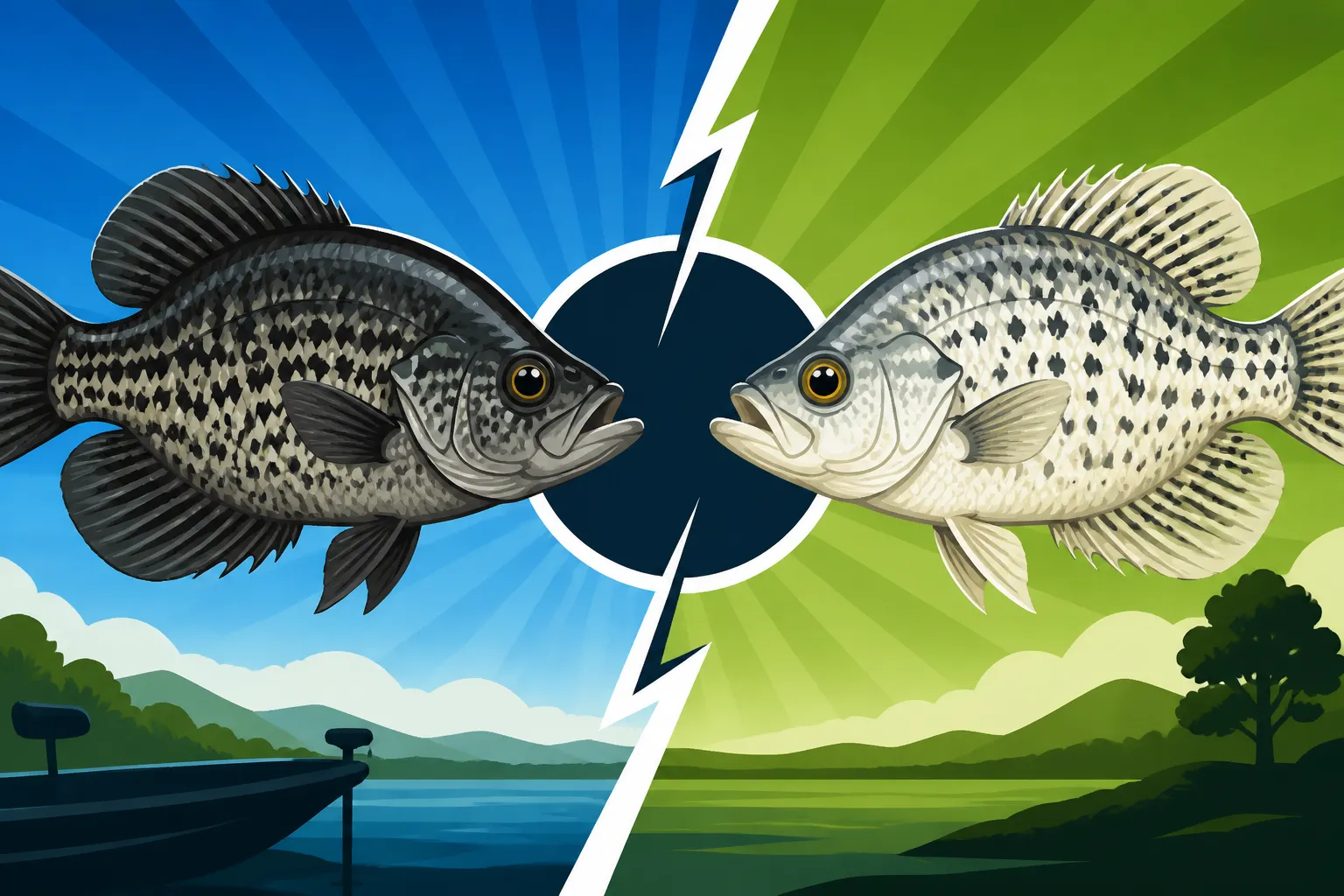
Black crappie typically have irregular, blotchy, or speckled dark spots scattered randomly across their silvery-olive bodies. These spots often look like a peppered pattern and don't form any distinct bands. Their dorsal fin, which is the fin on their back, will almost always have 7 or 8 spines. Count those spines! It's a key indicator. Black Crappie Vs White Crappie: Key Differences details these distinctions even further, helping you gain confidence in your identification skills.
White crappie, on the other hand, are generally paler, often silvery-white, and are distinguished by their distinct vertical bars or stripes running down their sides. These bars can be faint or quite prominent, but they are consistently vertical. Their dorsal fin almost always has 6 spines. So, if you're looking at a fish with clear vertical bars and counting six spines on its dorsal fin, you've got yourself a white crappie. Knowing these characteristics can be especially helpful when you're looking to match your technique to the specific species. You can find excellent visual guides and fish identification charts on Amazon, which can be invaluable tools for new and experienced anglers alike.
Body Shape and Mouth Structure Clues
Beyond the spots and fin spines, there are also subtle differences in their body shape and mouth structure that can help with identification. While these might be a bit harder to spot for a beginner, they become clearer with experience.
Black crappie tend to have a more compressed, disc-like, and somewhat rounder body shape, especially when they reach larger sizes. Their overall appearance can be stockier. Their mouth is also generally smaller and points slightly upward. If you envision a crappie that looks a bit like a flattened dinner plate, you're likely looking at a black crappie.
White crappie, while still compressed, often appear a bit more elongated or "football-shaped" compared to their black crappie cousins. Their body can seem slightly thinner from top to bottom. Their mouth is generally larger and extends further back towards the eye, often pointing more forward than upward. These subtle anatomical differences, combined with the primary indicators of spots and fin spines, will give you a complete picture for accurate identification. Mastering these details will make your time on the water even more rewarding, especially when you're targeting specific species.
Habitat and Behavior Preferences in Kentucky Waters
Understanding where each crappie species prefers to live and how they behave is just as important as knowing how to identify them. These preferences often explain why you might catch more of one species in certain areas of a lake, and they can also influence the perceived average size of the fish you encounter. By knowing their preferred stomping grounds, you can become a more effective crappie angler in Kentucky.
Black Crappie: Clearer Water and Denser Cover Lovers
Black crappie are generally considered to be the "clear water crappie." They thrive in lakes, reservoirs, and slow-moving rivers that have relatively clear water, abundant aquatic vegetation, and plenty of submerged woody cover. Think about brush piles, submerged trees, weed beds, and even dock pilings in clearer sections of a lake. These are prime locations for black crappie.
They are less tolerant of turbidity (murky water) and often prefer cooler, more stable water temperatures. This means you’ll often find them tucked tight into thick cover, ambushing baitfish that swim by. Their preference for dense structure makes them a fun challenge to fish for, requiring precise casts and presentations. If you're fishing a clear, brush-filled cove on a lake like Lake Barkley, you're likely to encounter more black crappie. For more localized insights, check out Kentucky's Lake Barkley Crappie Fishing Guide.
White Crappie: Adapting to Murkier, Open Water
White crappie, on the other hand, are incredibly adaptable and are often found in a wider variety of habitats, including those with more turbid or stained water. They are more tolerant of fluctuations in water quality and can thrive in systems that might be less appealing to black crappie. You'll frequently find them in larger rivers, more open areas of reservoirs, and around standing timber, bridge pilings, or channel breaks.
While they appreciate cover, white crappie are often found suspending in open water or relating to more spread-out cover than their black crappie cousins. They tend to school up in larger numbers, especially in open water, which can lead to incredible "slabs" when you find a schooling fish. Their willingness to adapt to different water conditions means they are often the predominant crappie species in many of Kentucky's larger, more riverine impoundments.
Tailoring Your Approach for Each Crappie Species
Knowing the differences in identification and habitat can dramatically improve your fishing success. Instead of randomly casting, you can tailor your techniques to target the specific crappie species you're most likely to find in a given location. This strategic approach often leads to more fish in the livewell and a deeper understanding of the crappie populations in your favorite Kentucky waters.
Targeting Black Crappie in Brush Piles and Docks
Because black crappie love dense cover and clearer water, your approach should focus on precision and subtle presentations. When targeting black crappie, look for submerged brush piles, fallen trees, and docks in areas with good water clarity. They'll often be right in the thick of it, so getting your bait into the "strike zone" is crucial. Vertical jigging or pitching small jigs, soft plastics, or even tiny crankbaits right into the cover works wonders.
Light line, usually 4-6 pound test, is recommended to avoid spooking these wary fish and to allow your bait to fall naturally. A sensitive rod will help you feel those subtle bites as they often just "tick" the bait. Some anglers even use a Slip Bobber Technique for Crappie Fishing to precisely present bait at a specific depth above or within brush. For specific tackle, look for small jigs or soft plastics, many excellent options available on Amazon. Remember, patience and persistence are key when coaxing black crappie out of their fortress-like hideouts.
Finding White Crappie in Open Water and Channel Bends
White crappie, with their preference for slightly murkier water and schooling behavior, require a different set of tactics. You'll often find them suspending over deeper water, along channel edges, or around standing timber. Instead of being buried deep in dense brush, they might be scattered along a breakline or concentrated in a large school in open water. This makes them excellent candidates for trolling or spider rigging, where multiple rods are used to present baits at different depths and speeds.
When fishing for white crappie, consider using a good depth finder to locate schools suspending in the water column. Once you find them, vertical jigging, casting small crankbaits, or even using live minnows under a float can be highly effective. They often respond well to a slower presentation, allowing the lure or bait to hover at their level. Since they school up, when you find one white crappie, there's a good chance many more are nearby. For deep water techniques, you might consider how to How to Jig for Crappie in Deep Water in Summer. To aid in your search, consider investing in a quality depth finder, with plenty of choices on Amazon.
| Feature | Black Crappie | White Crappie |
|---|---|---|
| Body Markings | Irregular, scattered dark spots/blotches | 6-8 distinct vertical bars/stripes |
| Dorsal Fin Spines | Typically 7-8 spines | Typically 6 spines |
| Body Shape | More compressed, rounder, disc-like | More elongated, slightly "football" shape |
| Mouth | Smaller, points slightly upward | Larger, points more forward/outward |
| Preferred Habitat | Clearer water, dense submerged cover (brush piles, docks) | Tolerates murkier water, open water, standing timber, channel bends |
| Schooling Tendency | Often in smaller groups, tight to cover | Often in larger, more dispersed schools |
Disclaimer
This article is for general informational purposes only and does not constitute professional advice. Laws, prices and regulations vary by location and change over time. Consult a qualified professional for guidance on your specific situation.