Best Bait for Crappie on Lake Barkley
There’s nothing quite like the thrill of a crappie bite on Lake Barkley, but finding the right bait can feel like a guessing game. Many anglers, myself included, have spent countless hours scratching our heads, wondering why the fish just aren't cooperating. This guide is here to cut through the confusion, offering a deep dive into the best baits and techniques to help you consistently land slab crappie in the expansive waters of Lake Barkley.
Understanding Lake Barkley Crappie Behavior and Habitat
Before we even talk about hooks and minnows, it’s crucial to understand the fish you’re after. Crappie in Lake Barkley aren't just swimming aimlessly; they have distinct patterns, preferences, and habits that dictate where they’ll be and what they’ll bite. Knowing these fundamentals is like having a secret map to their hideouts, making your bait choices far more effective.
Seasonal Movements and Water Temperature
Crappie are highly sensitive to water temperature, and their movements throughout the year are largely driven by it. In early spring, as water temperatures creep into the low to mid-50s, crappie begin to stage in deeper waters near spawning flats. They’re getting ready for the big event, and while they might be a bit lethargic, they’ll still strike a well-presented bait. This staging period is a fantastic time to target them, as they're often concentrated in predictable areas.
As the water warms further, typically hitting the high 50s to low 60s, the crappie spawn kicks into high gear. They move into extremely shallow water—often just a few feet deep, sometimes even less—to lay their eggs. This is when they become very aggressive and territorial, making them easier to locate and catch. After the spawn, they’ll gradually retreat to slightly deeper waters, often suspending over brush piles or around ledges, looking for comfort and food. Understanding these temperature triggers is key to knowing if you should be fishing shallow or deep, and thus, what bait presentation will work best. For a deeper dive into the timing, check out Kentucky Crappie Fishing: Spring Spawn Run Guide.
Structure and Cover Preferences
Lake Barkley is a massive impoundment with an incredible amount of structure and cover, all of which crappie absolutely love. From submerged timber and brush piles to creek channels, ledges, and man-made fish attractors, these spots offer both protection from predators and ambush points for prey. Crappie are masters of camouflage and prefer to hug tight to cover, waiting for an unsuspecting minnow or insect to swim by.
During different seasons, they might relate to these structures at varying depths. In the summer, they’ll often be found in the deeper, cooler sections of brush piles, or suspending out over deep creek channels. In the spring, they might be in the shallower portions of the same brush piles or tucked into flooded willows and cattails along the shorelines. Always pay attention to your electronics to pinpoint these underwater havens, and remember that fishing directly in or very close to cover is almost always the most productive approach for crappie.
Forage Base and Diet
What crappie eat directly influences what baits they’ll strike. In Lake Barkley, crappie primarily feed on small baitfish like threadfin shad and various species of minnows. They also munch on insect larvae, crustaceans, and sometimes even smaller panfish. Their diet is varied, but those tiny baitfish are often at the top of their menu. This is why minnows are such a universally effective crappie bait.
When crappie are actively feeding, they'll often hold near schools of baitfish, ambushing them from cover. Pay attention to any signs of baitfish on your sonar, or even visual cues like ripples on the water's surface. Matching the hatch, so to speak, means selecting baits that imitate the size, color, and action of the local forage. If the shad are tiny, use smaller jigs or minnows. If they’re a bit larger, you can bump up your bait size accordingly.
Top Live Baits for Lake Barkley Crappie
There’s an old saying in crappie fishing: "When in doubt, use a minnow." While artificials have come a long way, there’s still something undeniably effective about live bait, especially when crappie are finicky or the bite is tough. Live bait offers natural scent, movement, and an irresistible appeal that artificial lures sometimes struggle to replicate.
Minnows: The Unbeatable Classic
Without a doubt, live minnows are the reigning champions of crappie bait, especially on a lake as rich in forage as Barkley. Their natural movement, scent, and appearance are incredibly enticing to hungry crappie. Small to medium-sized minnows, typically 1 to 2 inches long, are perfect. You can buy them at almost any bait shop around Lake Barkley, or even find them on Amazon for delivery if you plan ahead for tackle and accessories.
The key to using minnows effectively is keeping them lively. A good aerated minnow bucket is essential, especially on warm days. Hooking them properly is also critical:
- Through the back, behind the dorsal fin: This allows the minnow to swim freely and naturally. Avoid piercing the spine.
- Through the lips: This works well if you're slowly trolling or casting, as it keeps the minnow horizontal.
- Through the tail: This can be effective if you want the minnow to dart and struggle a bit more, creating a distressed look.
Always use a light wire hook (e.g., a size 2 or 4 Aberdeen hook) that won't hinder the minnow's movement and is easy to remove from a crappie's delicate mouth.
Crickets and Worms: Sometimes Overlooked
While minnows get all the glory, don't discount crickets and worms, especially when fishing for smaller crappie or if you’re fishing shallow water for panfish and crappie are also present. Crickets, in particular, can be very effective in warmer months when crappie might be feeding on insects that fall into the water. They offer a unique struggling action on the surface or just below it.
Redworms or small earthworms can also entice crappie, especially if they’re primarily feeding on bottom-dwelling invertebrates. These baits provide a distinct scent trail that can draw in curious crappie. The downside is that they also attract a lot of other species, like bluegill and catfish, which can sometimes be a nuisance when you're specifically targeting crappie. However, if you’re out with kids or just enjoying a relaxed day, they can lead to consistent bites and a lot of fun.
Live Bait Rigging Techniques
There are several tried-and-true ways to present live bait for crappie on Lake Barkley. Your choice will depend on the depth you're fishing, the cover you're targeting, and whether you're fishing from the bank or a boat.
- Bobber Rig: This is perhaps the most common and simplest method, especially for bank anglers or when fishing around visible cover. Use a slip bobber for deeper presentations, allowing you to set your depth accurately. The bobber keeps your minnow suspended at a predetermined depth, usually just above a brush pile or structure where crappie are holding. It also provides a clear visual indicator of a bite, which is great for beginners.
- Tightlining/Spider Rigging: This technique is extremely popular with boat anglers. It involves fishing multiple rods (often 4-8 or more) from the front or sides of the boat, with each rod dangling a minnow or jig straight down, or slightly out from the boat. You slowly motor along, covering a wide swath of water, allowing your baits to work at various depths. This is incredibly effective for locating schools of crappie and determining their preferred depth. When spider rigging, you'll want specialized rod holders and long crappie poles.
- Drop Shot Rig: While often associated with bass fishing, a scaled-down drop shot rig can be deadly for crappie, especially when they're holding tight to bottom structure or suspended in specific depth zones. Tie your hook about 12-18 inches above a small sinker. This allows your minnow to hover tantalizingly in place, with the sinker keeping it anchored, even in a slight current or when drifting. It's excellent for feeling subtle bites.
Effective Artificial Baits for Lake Barkley Crappie
Artificial baits have undergone a revolution in recent years, with incredible advancements in realistic designs, actions, and scent impregnation. Many dedicated crappie anglers on Lake Barkley now prefer artificials for their versatility, durability, and the sheer number of presentations they allow. Plus, you don't have to worry about keeping them alive!
Jigs: Versatility is Key
Jigs are arguably the most versatile and effective artificial crappie bait. They come in an astonishing array of shapes, sizes, colors, and weights, allowing you to match almost any fishing condition. The most common jigs for crappie typically range from 1/32 to 1/8 ounce, though heavier jigs might be needed for deeper water or strong currents.
- Marabou Jigs: These classic jigs feature natural marabou feathers that pulse and breathe in the water, creating an incredibly lifelike action. They're particularly effective in cold water when a subtle presentation is key. Colors like black/chartreuse, white, and pink are perennial favorites.
- Hair Jigs: Similar to marabou jigs, hair jigs (often made with deer hair or synthetic fibers) also offer a natural, flowing action. They are generally very durable and can be fished slowly or jigged aggressively.
- Tube Jigs: These are soft plastic bodies shaped like small tubes, often with multiple tentacles. They offer a great profile and can be fished with a slow fall, making them irresistible to crappie. You can find these readily available at local tackle shops or online at retailers like Amazon.
- Paddle Tail Jigs: These mimic small baitfish with a vibrating tail that provides a lot of action. They're excellent for casting and retrieving, or for slow trolling.
The beauty of jigs is how you present them. You can cast them out and retrieve them with a slow, steady reel, or a series of lifts and drops. You can vertical jig them straight down over structure, or even troll them behind the boat. For more on jigging, explore How to Rig a Jig for Crappie Fishing.
Soft Plastics: Mimicking Natural Prey
Soft plastic baits, often paired with a jig head, offer an even wider range of profiles and actions than traditional jigs. They are designed to imitate various forms of crappie forage, from minnows to insects.
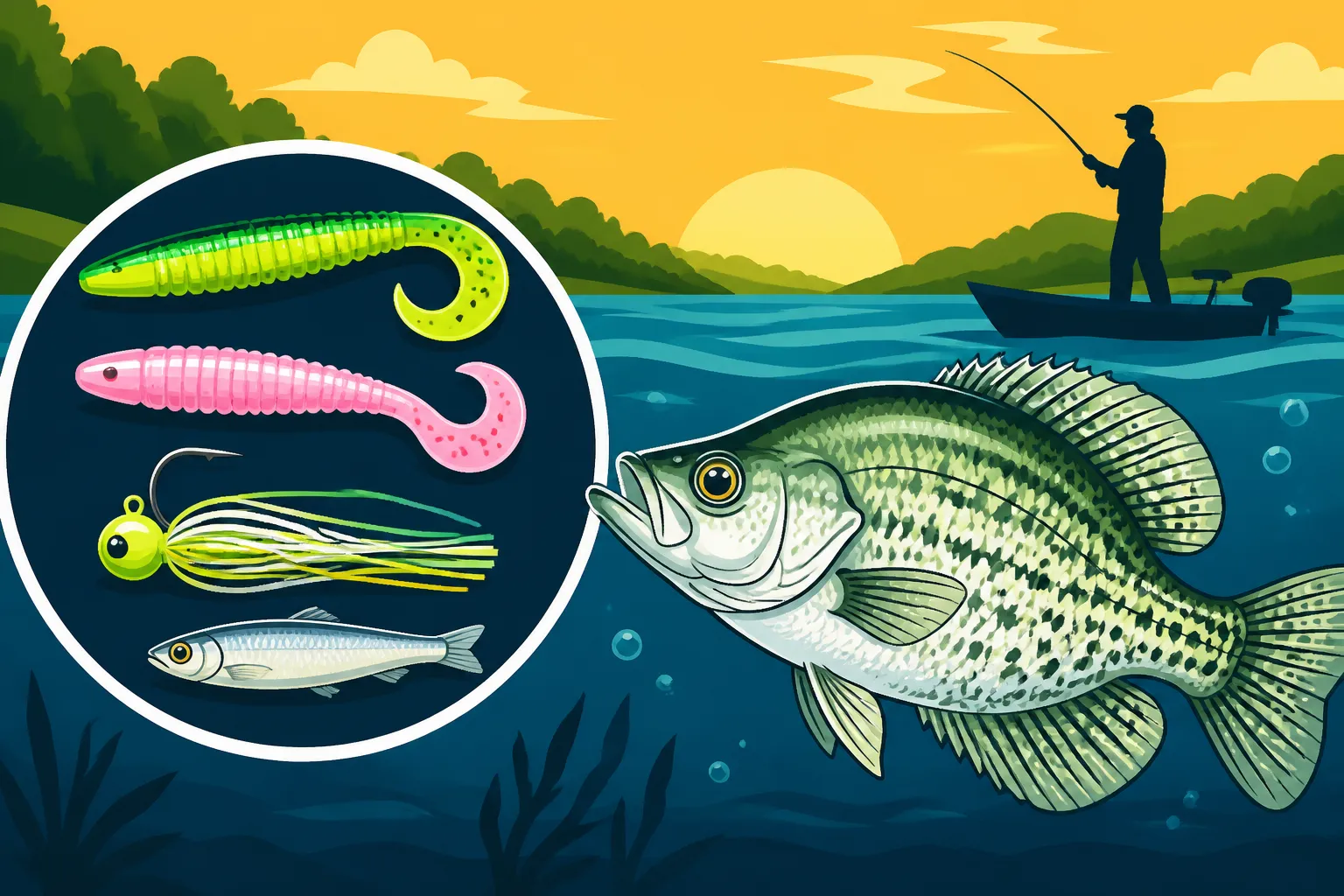
- Grubs/Curl-Tail Grubs: These are probably the most popular soft plastic crappie baits. The single, curling tail creates a tempting vibration and swimming action as it's retrieved. Sizes generally range from 1 to 2 inches. They come in every color imaginable, but chartreuse, white, natural shad colors, and various two-tone combinations are always solid choices.
- Minnow Imitations: These soft plastics are shaped almost exactly like a small minnow. When rigged on a jig head, they provide a very realistic swimming profile. Some even have a small paddle tail for added action.
- Creature Baits: These are less common for crappie but can be effective in certain situations. They might have multiple appendages or a more irregular shape, imitating larger insects or even small crawfish. These can be particularly good if crappie are showing a preference for something a bit different.
When fishing soft plastics, consider tipping them with a tiny piece of real bait, like a minnow head or a grub, for added scent. This can sometimes make the difference between a look and a bite, especially on tougher days.
Small Crankbaits and Spinners
While jigs and soft plastics dominate the crappie scene, don’t forget about small crankbaits and inline spinners, especially when crappie are aggressive or scattered. These lures can cover water quickly and trigger reaction strikes.
- Small Crankbaits: Look for tiny crankbaits, typically 1 to 2 inches long, that dive to the depths where crappie are holding. Shallow-diving models are great for the spawn, while deeper-diving cranks can be effective for trolling open water or along ledges. Their erratic wobbling action and vibrant colors can be very attractive to active crappie. Brands like Rapala and Strike King offer excellent small crankbaits that can entice crappie.
- Inline Spinners: Spinners like the classic Mepps or Rooster Tail are often overlooked for crappie, but they can be incredibly effective, especially in clear water or when crappie are hitting aggressive lures. The flashing blade and pulsating skirt create a lot of visual appeal and vibration. Sizes in the #0 or #1 range are usually perfect. They work well for casting and retrieving or for vertical jigging.
These baits are particularly useful if you're trying to locate fish quickly or if you notice crappie chasing baitfish on the surface. They offer a faster-paced alternative to the slow and methodical jigging or live bait presentations.
Matching Bait to Conditions and Techniques
Choosing the "best" bait isn't just about what's popular; it's about what works today on Lake Barkley, given the conditions and your fishing style. A bait that's dynamite in one scenario might be ignored in another. Being adaptable and having a range of options is crucial for success.
Slow Trolling vs. Vertical Jigging
Your presentation technique is just as important as the bait itself. Crappie often prefer a specific retrieve or motion, and adjusting yours can make all the difference.
- Slow Trolling (Pulls/Pushover Rigging): This technique involves moving very slowly (often less than 1 mph) with baits deployed at various depths behind or beside the boat. It's incredibly effective for covering large areas, especially when crappie are scattered or suspended in open water. Live minnows, small crankbaits, or soft plastic jigs are all excellent choices for trolling. This method allows you to experiment with different depths and lure colors until you find the "pattern" for the day. It's often employed when crappie are in their post-spawn or summer patterns, retreating from the very shallow areas.
- Vertical Jigging (Dipping): When crappie are concentrated in tight schools or holding to specific structures like brush piles or stump fields, vertical jigging is often the most effective approach. You position your boat directly over the fish (using your fish finder) and drop your bait straight down. Small jigs (marabou, hair, or soft plastic) or a live minnow under a slip bobber work exceptionally well. The key is to keep your bait in the strike zone and impart subtle movements that mimic a struggling baitfish. For more about specific locations, consider exploring Best Crappie Coves on Lake Barkley, Kentucky.
Color Selection and Water Clarity
Crappie vision is adapted to detect movement and contrast, especially in varying light conditions and water clarities. Bait color is not just cosmetic; it's a critical factor.
- Clear Water: In clear water, natural colors tend to be more effective. Think subtle shades like clear, smoke, pearl, white, or light browns and greens. These colors mimic natural baitfish or insects without appearing too artificial. Sometimes, a touch of glitter in these natural hues can add just enough flash to attract attention.
- Stained or Murky Water: When the water is stained or muddy, visibility is low, and crappie rely more on vibration and bright, contrasting colors to find prey. Chartreuse, lime green, hot pink, orange, and black are excellent choices. Often, a two-tone jig with a bright head and contrasting body (e.g., black/chartreuse) creates a strong silhouette that fish can easily see. For specific recommendations, check out Best Crappie Jig Colors for Stained Water.
- Low Light Conditions (Dawn/Dusk/Overcast): In low light, bright or glow-in-the-dark colors can be highly effective. The contrast is still important, but a bait that stands out against the dim backdrop will often get noticed first.
Always start with a few proven colors for the water conditions, but don't be afraid to experiment. Sometimes, a slight change in hue can make a huge difference on a tough bite.
Practical Tips for Bank and Boat Anglers
Whether you're fishing from the shore or cruising in your boat, there are specific considerations for bait selection and presentation.
- Bank Anglers: When fishing from the bank on Lake Barkley, accessibility is key. You'll likely be targeting crappie in shallower areas, around docks, fallen trees, or rip-rap. A simple bobber rig with a live minnow or a small jig (1/32 or 1/16 oz) cast and retrieved slowly are excellent choices. Focus on areas with immediate access to deeper water, as crappie will often move between shallow cover and deeper sanctuary. Pack light, keep your bait lively, and look for points or channels that bring fish closer to shore.
- Boat Anglers: With a boat, your options expand dramatically. You can access prime offshore structure, deeper creek channels, and isolated brush piles. Utilize your electronics to find schools of fish and then employ vertical jigging, spider rigging, or slow trolling. Experiment with different depths and speeds until you dial in the bite. Having multiple rods rigged with different baits (minnow, various jigs, small crankbaits) allows you to quickly test what the crappie are hitting. Don't forget to review the Kentucky Crappie Daily Limit Rules to ensure you're fishing responsibly.
Remember, the goal is always to present your chosen bait in a way that looks as natural and enticing as possible to a hungry crappie. Whether it's the subtle flutter of a marabou jig or the frantic dance of a live minnow, understanding the nuances of crappie behavior and adapting your approach will lead to more successful days on Lake Barkley.
Disclaimer
This article is for general informational purposes only and does not constitute professional advice. Laws, prices and regulations vary by location and change over time. Consult a qualified professional for guidance on your specific situation.