How to Choose a Trolling Motor for Big Water Fishing
Trying to pick out the perfect trolling motor for your boat when you plan to hit those massive Kentucky lakes or the mighty Ohio River can feel like you're trying to solve a complex puzzle. It's not just about getting from point A to point B; it's about staying put when the wind tries to push you around, fighting strong currents, and having the endurance to fish all day without your batteries giving up the ghost. This guide is going to walk you through the nitty-gritty of choosing a trolling motor that can truly stand up to the challenge of big water fishing here in the Bluegrass State.
Understanding Big Water Challenges for Trolling Motors
Let's face it, fishing a small pond is a world away from tackling giants like Kentucky Lake or the broad stretches of the Ohio River. These vast bodies of water present unique challenges that demand a lot more from your trolling motor. If you've ever found yourself struggling to hold a position in a strong breeze or fighting a current that seems to have a mind of its own, you know exactly what I'm talking about. Your trolling motor isn't just a propulsion system; it's your primary tool for boat control, especially when you're trying to work a shoreline or stay on a brush pile.
Dealing with Strong Currents and Wind
Imagine you're out on Lake Barkley, and a stiff breeze starts kicking up, making those whitecaps dance. Suddenly, your boat is being pushed around, and you're fighting to keep your lure in the strike zone. Or consider the Ohio River, where the current can be relentlessly strong, especially after heavy rains or near a dam. A weak trolling motor simply won't have the muscle to counteract these forces effectively. You'll spend more time correcting your position and less time actually fishing. It's incredibly frustrating, and it can completely ruin a day on the water. A good trolling motor for big water needs to have enough thrust to confidently hold your position against nature's push and pull, allowing you to focus on the fish, not just on keeping your boat straight.
Covering Vast Distances and Holding Position
Big water often means big distances. You might need to move your boat a considerable way down a long bank, or across a wide flat, to find the fish. A trolling motor that saps its battery life quickly, or one that’s too slow to cover ground efficiently, will limit your fishing time and range. Beyond just moving, the ability to hold your position precisely is paramount. Whether you're trying to pick apart a submerged hump on Lake Cumberland or subtly drift over a known crappie bed, the last thing you want is for your boat to wander off target because your motor lacks the sophisticated control or power to lock you in. This capability really comes into its own when you're trying to work a very specific piece of structure.
The Need for Robust Power and Battery Life
This goes hand-in-hand with dealing with currents and covering distance, but it deserves its own spotlight. Big water demands big power, which translates directly to thrust. But thrust isn't the whole story. You can have all the thrust in the world, but if your batteries die two hours into your trip, it's all for naught. A robust trolling motor for large bodies of water needs not only significant power output but also the efficiency to extend your battery life as much as possible. This means looking at higher voltage systems, larger battery capacities, and sometimes even considering multiple battery banks. You want to be able to fish from dawn till dusk without constantly worrying if your motor is going to leave you stranded or make you resort to your main engine for every slight move.
Key Features to Look for in a Big Water Trolling Motor
When you're staring at a wall of trolling motors, it can feel overwhelming. But once you understand the core features that truly make a difference on big water, the choice becomes much clearer. These aren't just fancy add-ons; they're necessities for a successful and enjoyable day.
Thrust Rating: More is Often Better
Thrust is arguably the most critical specification for big water. It's measured in pounds and tells you how much pushing or pulling power the motor generates. For big water fishing in Kentucky, you generally want to aim for the higher end of the thrust spectrum. Think about your boat's weight, including all your gear, passengers, and full livewells. Then factor in the relentless winds and currents you’ll encounter on lakes like Kentucky Lake or the Ohio River. A common rule of thumb is to have at least 2 pounds of thrust for every 100 pounds of boat weight. However, for true big water performance, many experienced anglers on larger boats (18 feet or more) opt for 80, 100, or even 112 pounds of thrust. This extra power provides a crucial margin of error when conditions get rough. It allows you to maintain control without running the motor at 100% all the time, which helps conserve battery life.
Shaft Length: Don't Skimp on This
This is one of those often-overlooked details that can make or break your experience on choppy water. The shaft length determines how deep your propeller sits in the water. If your shaft is too short, your prop will frequently come out of the water in waves, causing it to cavitate (spin in air) and lose thrust, making your boat difficult to control. For bigger lakes with significant wave action, a longer shaft is essential. Measure from the top of your bow (or where the motor will be mounted) to the waterline, and then add at least 10 to 20 inches to ensure the prop stays submerged even in rough conditions. Generally, for boats on big water, you're looking at shaft lengths of 52 inches, 60 inches, or even 72 inches. Don't underestimate how quickly a short shaft can become a major headache on a breezy day.
Battery Voltage and Run Time
Trolling motors typically come in 12-volt, 24-volt, and 36-volt configurations.
- 12-volt systems are usually for smaller boats and lighter applications; they simply won't cut it for sustained big water use.
- 24-volt systems require two 12-volt batteries wired in series and offer a good balance of power and run time for many medium to large bass boats.
- 36-volt systems use three 12-volt batteries and provide the most power and longest run time, which is ideal for heavier boats or anglers who demand maximum endurance on massive waters.
More voltage often means more efficient power delivery for higher thrust, and with additional batteries, you get a much longer effective run time. Beyond the voltage, consider the Amp-Hour (Ah) rating of your deep cycle batteries. Higher Ah ratings mean more capacity and longer fishing days. Many anglers look for specific deep-cycle marine batteries designed for continuous discharge. It's also wise to invest in a good multi-bank onboard charger to keep all your batteries topped off efficiently.
GPS Integration and Advanced Anchoring Systems
This is where modern trolling motors truly shine and become indispensable for big water fishing. Features like Spot-Lock (Minn Kota) or Anchor Mode (MotorGuide) use GPS technology to essentially anchor your boat electronically. Instead of dropping a physical anchor, which can be a real pain in deep water or strong current, these systems automatically adjust the motor's thrust and direction to keep your boat precisely on a chosen spot, even in wind and waves. This is a game-changer for working structure, holding over brush piles, or staying on a school of fish. It frees you up to focus on casting and catching, rather than constantly steering. Other GPS features might include:
- Jog Function: Moving your boat in small increments (e.g., 5 feet) in any direction with a button press.
- Route Tracking: Recording and re-running a fishing path.
- Cruise Control: Maintaining a set speed.
These advanced capabilities are not just conveniences; they're powerful fishing tools that significantly enhance your ability to fish big water effectively. Many anglers find products with these features available at retailers like Bass Pro Shops or online at Amazon, where you can compare different models and read reviews.
Build Quality and Durability
Big water can be tough on equipment. The constant jostling, waves, and potential for accidental bumps mean your trolling motor needs to be built like a tank. Look for:
- Durable Composites and Marine-Grade Metals: These materials resist corrosion from prolonged exposure to water and stand up to impact.
- Robust Mounts: The mounting bracket takes a lot of abuse. Ensure it's sturdy and securely attaches to your boat's bow.
- Sealed Electronics: Water intrusion is a trolling motor's worst enemy. Good motors have well-sealed circuit boards and connections.
- Reliable Foot Pedals or Remote Controls: These are your primary interface. They should feel solid, responsive, and withstand continuous use.
Investing in a well-constructed motor from a reputable brand will save you headaches and repair costs down the line. It ensures your motor will reliably perform season after season, even when fishing demanding waters like Lake Barkley or Lake Cumberland: Kentucky's Best All-Around Fishing Lake.
Bow Mount vs. Transom Mount: Which is Right for You?
The mounting location of your trolling motor is a fundamental decision that greatly impacts boat control and maneuverability, especially on big water. While there are exceptions, for serious big water fishing, the bow mount often comes out on top.
Advantages of Bow Mount Trolling Motors
For the vast majority of anglers targeting big fish on big water, a bow mount trolling motor is the undisputed champion. Here's why:
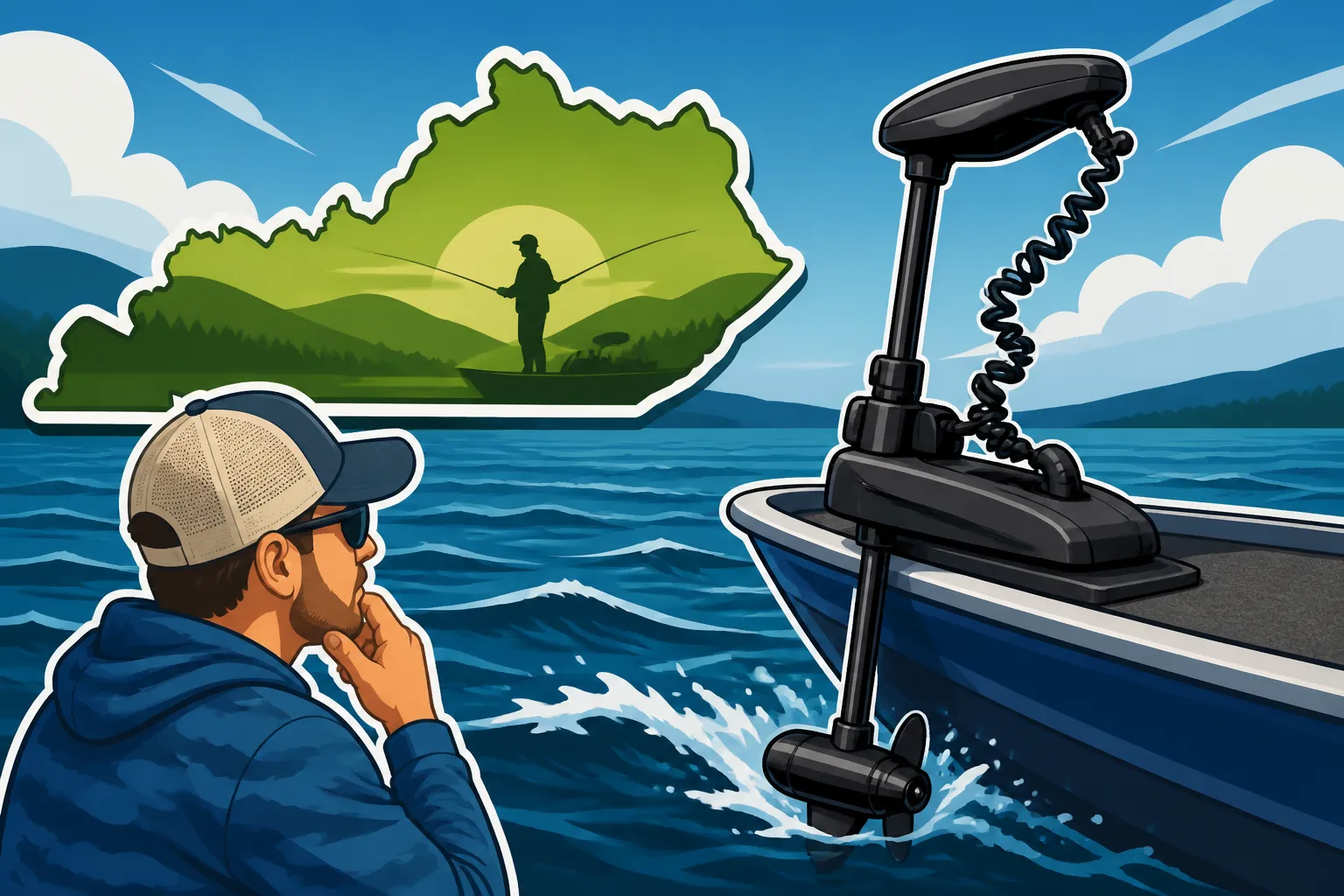
- Superior Control and Maneuverability: A bow mount pulls the boat rather than pushing it. This allows for incredibly precise steering and boat control, much like steering a car from the front wheels. When you're trying to hold a specific line along a windy bluff on Herrington Lake or keep your boat perfectly positioned over a deep structure, this forward pulling action is far more effective. You can make subtle adjustments with ease, which is crucial for presenting baits accurately.
- Better in Wind and Current: Because it pulls the boat, a bow mount motor can better track in a straight line and counteract lateral drift caused by wind and current. You point the boat where you want to go, and the motor pulls it there, offering much more stability than trying to push a boat from the rear. This is particularly noticeable on large, open stretches of water.
- Unobstructed Casting: With the motor at the bow, the transom area of your boat remains clear. This is especially important for anglers who like to fish from the rear, allowing for unimpeded casting and fighting of fish without tripping over motor components or cables.
- Integration with Advanced Features: Most high-thrust, GPS-enabled trolling motors with features like Spot-Lock are designed for bow mounting. This is where the advanced technology can be most effectively utilized for precise boat positioning.
If you're serious about fishing big lakes and rivers and your boat has a suitable bow, a bow mount is almost always the recommended choice.
When a Transom Mount Might Still Be an Option
While generally not ideal for primary boat control on vast waters, a transom mount trolling motor does have its place, primarily as a secondary motor or for very specific scenarios.
- Smaller Boats or Kayaks: For smaller fishing boats, john boats, or kayaks where bow mounting isn't feasible or practical, a transom mount provides a simple and effective means of propulsion. For instance, if you're exploring smaller coves off the main body of Kentucky Lake: The State's Top Bass Fishing Destination in a small craft, a transom mount might suffice.
- Back-Trolling or Specific Techniques: Some anglers prefer transom mounts for specific techniques like back-trolling (moving stern-first) for certain species, although this is less common for general big water bass or crappie fishing.
- Auxiliary Power: A transom mount can serve as an excellent backup or auxiliary motor for precise speed control when trolling with your main engine, or for very short, quiet moves around a small area.
- Cost-Effectiveness: Transom mount motors are typically less expensive and simpler to install than their bow-mounted counterparts. If budget is a major concern and your primary fishing isn't in extreme big water conditions, it might be a consideration, but understand its limitations.
Ultimately, for the challenges presented by Kentucky's biggest fishing grounds, the control and features of a bow mount typically make it the superior choice for dedicated anglers.
Practical Considerations and Maintenance Tips
Choosing the right trolling motor is a big step, but it's not the end of the journey. To ensure your investment pays off for years to come and performs flawlessly on every trip, there are a few practical considerations and maintenance habits you'll want to adopt.
Battery Selection and Management
Your trolling motor is only as good as the batteries powering it.
- Deep Cycle Batteries: Always use deep cycle marine batteries, not starting batteries. Deep cycle batteries are designed for sustained discharge over long periods, which is exactly what a trolling motor does. Starting batteries deliver a quick burst of power and will quickly degrade with deep discharges.
- Capacity: Opt for the highest Amp-Hour (Ah) rated batteries you can reasonably fit and afford. More Ah means more run time.
- Maintenance: Regularly check battery terminals for corrosion and keep them clean and tight. Use a good quality marine battery charger specifically designed for deep cycle batteries. Charge your batteries immediately after each use, even if they weren't fully depleted, to prolong their lifespan. Consider a smart charger that can maintain the batteries when your boat is in storage. You'll find a range of reliable deep cycle batteries and chargers at places like Bass Pro Shops. For information on battery costs, check out Kentucky Resident Annual Fishing License Cost to ensure you're budgeting for all your fishing essentials, not just the motor itself.
Installation and Wiring
Proper installation is crucial for performance and safety.
- Secure Mounting: Ensure the trolling motor mount is bolted securely to the boat's bow. Use backing plates if necessary to distribute the load and prevent gel coat cracks or hull damage, especially on rough water.
- Dedicated Wiring: Run dedicated, heavy-gauge wiring (typically 6- or 8-gauge, consult your motor's manual) directly from your trolling motor batteries to the motor itself. Avoid tapping into existing boat wiring or using undersized wires, as this can lead to voltage drop, reduced motor performance, and potential overheating.
- Circuit Breaker/Fuse: Install an appropriate size circuit breaker or fuse (again, check your motor's manual) close to the battery to protect the motor and wiring from overcurrents. This is a critical safety component. If you're not comfortable with electrical work, it's always best to have a professional marine technician handle the installation to ensure it meets all safety standards.
Routine Maintenance for Longevity
A little preventative maintenance goes a long way in extending the life of your trolling motor and preventing frustrating breakdowns on the water.
- Propeller Check: Regularly inspect your propeller for fishing line, weeds, or damage. Even a small nick can cause vibration and reduce efficiency. Carry a spare prop and the necessary wrench for quick changes.
- Shaft and Mount Lubrication: Keep the pivot points and moving parts of your mount clean and lightly lubricated with marine-grade grease or spray. This prevents seizing and ensures smooth deployment and stowing.
- Cable and Connector Inspection: Check all electrical cables and connectors for fraying, cracks, or corrosion. Keep them clean and dry.
- Freshwater Rinse: After fishing in brackish or saltwater (if you venture outside Kentucky's freshwater), always rinse your motor thoroughly with fresh water to prevent corrosion.
- Storage: When not in use, ensure the motor is stowed properly, covered if possible, and protected from the elements.
- Software Updates: If your motor has advanced GPS or electronic features, check the manufacturer's website periodically for any software updates. These can improve performance, add features, or fix bugs.
By following these practical tips, your trolling motor will be a reliable workhorse for many years, helping you explore Best Fishing Spots in Kentucky and beyond with confidence.
Here's a quick comparison of key trolling motor features to consider for different big water scenarios:
| Feature | Smaller Lakes/Calm Rivers | Large Lakes/Moderate Currents | Major Rivers/Choppy Conditions |
|---|---|---|---|
| Thrust (lbs) | 50-70 | 70-90 | 100-112+ |
| Shaft Length (inches) | 45-52 | 52-60 | 60-72+ |
| Voltage System | 12V | 24V | 36V |
| GPS Anchor | Nice to have | Highly Recommended | Essential |
| Build Quality | Standard durable | Enhanced durability | Heavy-duty, marine-grade |
| Mount Type | Bow or Transom (smaller boats) | Bow Mount | Bow Mount |
| Battery Ah Rating | Moderate (75-100 Ah) | High (100-120 Ah per battery) | Very High (120+ Ah per battery) |
Choosing the right trolling motor for big water fishing in Kentucky is an investment, but it's one that truly pays off in terms of control, comfort, and ultimately, more successful fishing trips. Don't let a poorly matched motor be the reason you miss out on a great day on the water. Do your research, understand your boat's needs, and select a motor that's built to conquer those vast and challenging waters. You'll be glad you did when you're effortlessly holding your boat over a productive fishing spot, even when the wind and current are doing their best to push you off. For more details on boat requirements, explore Kentucky Boat Registration Requirements Explained or Kentucky Life Jacket Rules for Personal Watercraft Riders.
Disclaimer
This article is for general informational purposes only and does not constitute professional advice. Laws, prices and regulations vary by location and change over time. Consult a qualified professional for guidance on your specific situation.