Bank Fishing vs Boat Fishing on Kentucky Lakes
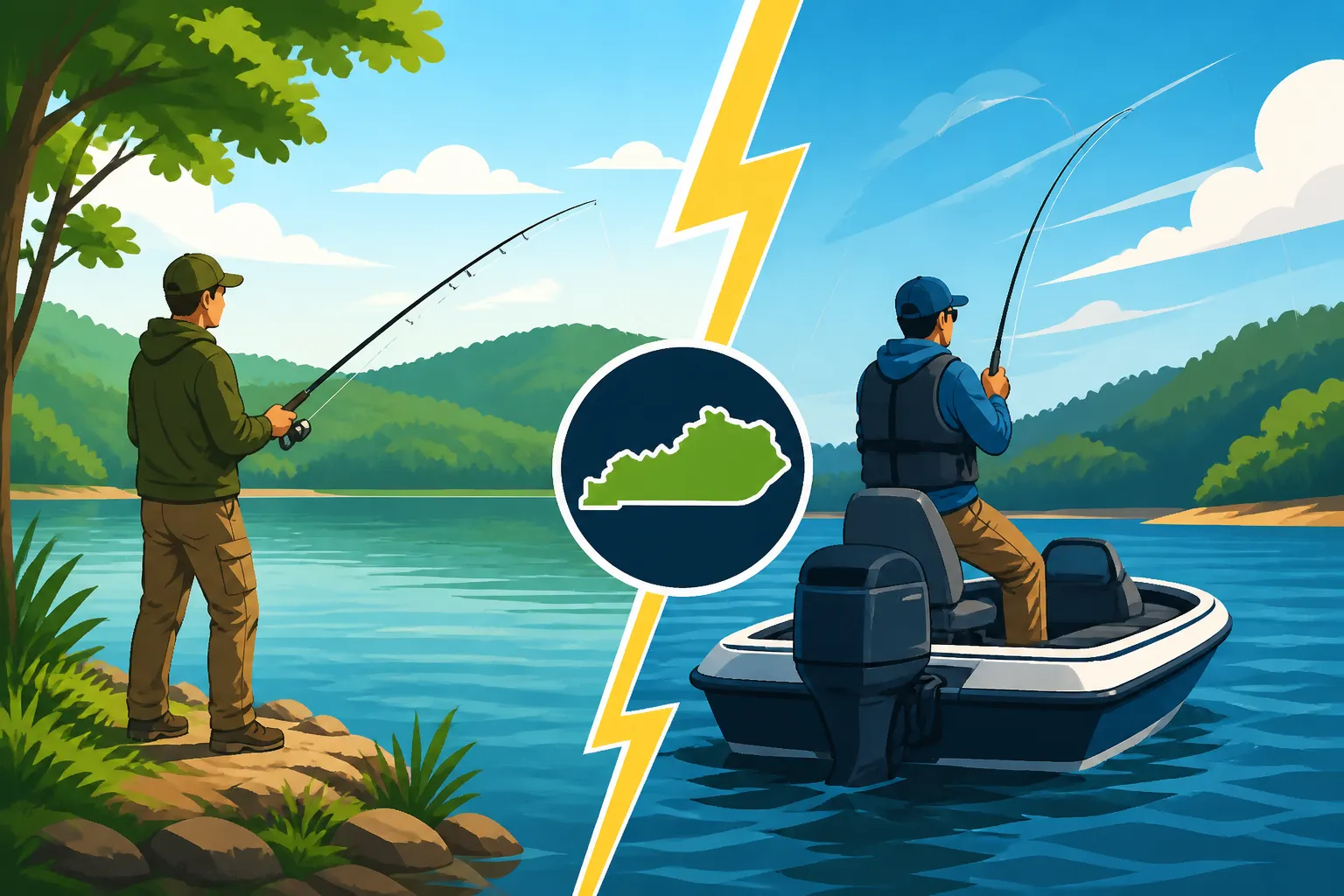
Anglers often grapple with a fundamental question when hitting Kentucky's beautiful waters: should I fish from the bank or invest in a boat? Each approach offers distinct advantages and challenges, and figuring out which one best suits your style, budget, and time can be a real head-scratcher. This guide aims to thoroughly explore the ins and outs of both bank fishing and boat fishing on Kentucky lakes, helping you decide how to make the most of your angling adventures.
The Allure and Accessibility of Bank Fishing in Kentucky
Bank fishing is often seen as the purest form of angling, a simple joy that connects you directly with the water. It’s an accessible and often budget-friendly way to enjoy Kentucky’s abundant fishing opportunities. For many, it's not just a starting point, but a preferred method, offering a unique sense of peace and connection with nature that can sometimes get lost in the hustle of boat ownership.
The Unbeatable Entry Point for New Anglers
Bank fishing is truly the gateway drug to the angling world. There's something incredibly simple and therapeutic about just grabbing a rod, a small tackle box, and finding a quiet spot by the water's edge. It doesn't require a huge financial commitment right off the bat, which is a massive relief for anyone just starting out or on a tight budget. You don't need to worry about boat maintenance, launching, or navigating crowded waters. It's just you, your line, and the fish.
Think about those easy afternoons at local ponds or state park lakes. Places like the small ponds near Louisville or the quieter coves on Barren River Lake are perfect for this. You can literally walk up, cast a line, and enjoy the peace. It's fantastic for introducing kids to fishing, too, without the added complexity of a boat. No need for life jackets (unless you're on a public dock or near deep water, always check local rules!), no motor to start, just pure, unadulterated fishing fun. Imagine a quiet afternoon with the family at a spot like that – it's all about making memories, not managing logistics. Best Family-Friendly Fishing Spots on Barren River Lake, Kentucky
For many, bank fishing isn't just a starting point; it's a preferred method. It allows for spontaneous trips after work, or a quick weekend escape without elaborate planning. You can explore new areas on foot, discover hidden pockets of water that boaters might overlook, and really connect with the natural surroundings. It's less about speed and covering ground, and more about patience and observation, letting the rhythm of the water dictate your pace.
Finding Prime Bank Fishing Spots
Kentucky is blessed with an abundance of public access points, from state parks to wildlife management areas, making bank fishing surprisingly versatile. You've got options on nearly every major lake, whether it's the peaceful shores of Taylorsville Lake or the sprawling banks of Kentucky Lake. Look for areas with public docks, fishing piers, or designated shoreline access. Many state parks, like those found around Lake Cumberland or Green River Lake, offer excellent bank fishing opportunities, sometimes even with handicap-accessible piers. Best State Park Fishing Piers in Kentucky
The trick is knowing where to look beyond the obvious. Often, bridges, causeways, and areas below dams can be phenomenal bank fishing spots, especially during certain seasons like the white bass run. However, always be mindful of safety and legality in these areas. Local bait shops are goldmines of information; the folks working there usually know the best-kept secrets for bank fishing in their area. They can tell you where the fish are biting from shore, and what kind of bait to use for the species that are currently active.
Don't underestimate smaller bodies of water either. Community fishing ponds, urban parks with lakes, and even some larger creeks can offer fantastic bank fishing. These spots are often well-stocked and provide a more intimate fishing experience. You might be surprised what you can pull out of a seemingly small pond with just a worm and a bobber. Remember to check local regulations for these smaller waters, as they can sometimes have specific rules regarding catch limits or species, which can differ from statewide regulations.
Essential Gear for Successful Bank Fishing
The beauty of bank fishing is that your gear list can be incredibly simple. A medium-action spinning rod and reel combo, some monofilament line, a few hooks, sinkers, bobbers, and a selection of worms or crickets will get you started. You can easily find affordable starter kits at places like Bass Pro Shops or even online at Amazon. Having a small tackle box or a backpack to carry your essentials, a comfortable folding chair, and maybe a small cooler for drinks and snacks makes the experience even better.
As you get more into it, you might want to expand your arsenal to include different lures for bass or crappie, a net for landing bigger fish, and perhaps a pair of pliers for hook removal. But truly, the barriers to entry are low. Unlike boating, where safety gear like life jackets, navigation lights, and fire extinguishers are often mandatory, bank fishing simplifies things immensely. Your most important safety gear is usually a good pair of shoes, sun protection, and common sense around the water.
Think about portability. If you're going to be walking a good distance along a shoreline or through trails to reach a secluded spot, you'll appreciate lightweight and compact gear. A telescopic rod, a small bait bucket, and a sling bag for tackle make trekking to those hidden gems much easier. Remember to bring plenty of water and wear appropriate clothing for the weather, as you won't have the shelter or storage capacity of a boat. Best Tackle and Gear for Bank Fishing
The Freedom and Challenges of Boat Fishing on Kentucky Lakes
Stepping into a boat and heading out onto the open water is a feeling of true freedom for many anglers. It opens up vast possibilities, but this expanded access comes with its own set of responsibilities and investments. For those who embrace the challenges, boat fishing unlocks unparalleled opportunities on Kentucky's diverse waterways.
Expanding Your Horizons with a Boat
Owning a boat, whether it's a sleek bass boat, a versatile jon boat, or a comfortable pontoon, opens up a whole new world on Kentucky's vast lakes and rivers. Suddenly, that distant cove, that submerged brush pile in the middle of a channel, or that deep drop-off is within reach. You're no longer limited to what you can cast to from shore; you can chase fish across miles of water. This is particularly true for giant reservoirs like Kentucky Lake, Lake Barkley, or Lake Cumberland, where the best fishing spots are often far from any bank access. Best Boats for Kentucky Lake and Lake Barkley Fishing
Boat fishing allows for a much more dynamic approach. You can troll for walleye on Lake Cumberland, spider rig for crappie in the deeper pockets of Lake Barkley, or cover vast amounts of water looking for active bass schools. The ability to move, explore, and access different depths and structures is an undeniable advantage. Plus, there's the sheer joy of being out on the open water, the wind in your hair, and the hum of the motor as you head to your next honey hole, a feeling of mastery over your angling domain.
It also facilitates different fishing techniques and targets. Want to fish for big blue catfish in the main channel of the Ohio River? You'll need a boat. Interested in chasing muskie in the sprawling depths of Cave Run Lake? A boat gives you the range. It transforms fishing from a stationary activity into an exploratory adventure, giving you unparalleled access to diverse habitats and fish species that bank anglers can only dream of reaching. Kentucky Catfish Fishing: Ohio River and Kentucky Lake Guide
The Investment and Maintenance of Boat Ownership
Let's be realistic: boat ownership is a significant financial commitment. Beyond the initial purchase price of the boat itself, you're looking at costs for a motor, a trailer, registration, insurance, fuel, and ongoing maintenance. While you can find budget-friendly jon boats, a fully equipped bass boat can rival the cost of a new car. Think about the Kentucky Boat Registration Requirements Explained and the annual renewal fees you'll face. It adds up quickly and can sometimes be a rude awakening for new boat owners.
Maintenance is another factor. Boats need regular servicing, winterization, and occasional repairs. Propellers can get dinged, engines need tune-ups, and trailers require attention. This requires not just money, but also time and often a fair bit of mechanical aptitude. If you're not handy, you'll be paying a marine mechanic, which can be expensive. It's not a "set it and forget it" kind of investment; it demands consistent attention to keep your vessel in top shape.
Then there's the logistical challenge. Where will you store your boat? Do you have a truck capable of towing it? Learning how to launch and retrieve a boat from a ramp, especially on busy weekends, can be a steep learning curve. There are often rules about Kentucky Boat Ramp Parking and Access Rules at public facilities, and navigating them smoothly takes practice and patience. Anyone who's ever been at a crowded ramp on a holiday weekend knows the stress involved in a botched launch or retrieve.
Navigating and Safety on Kentucky's Big Waters
When you're out on a large body of water like Kentucky Lake, navigation becomes a serious consideration. You need to be aware of other boaters, channel markers, submerged hazards, and rapidly changing weather conditions. A good fish finder with GPS and mapping capabilities is almost essential for safe and effective boat fishing on these big lakes. Knowing how to read a map and use your electronics is key to finding fish and getting back safely, especially if you venture far from shore.
Safety is paramount. Life Jacket Rules for Boats in Kentucky are strictly enforced, especially for children under a certain age. You'll also need a host of other safety equipment, including fire extinguishers, sound-signaling devices, and proper lighting for dawn, dusk, or night fishing. Kentucky even has specific Kentucky Boat Safety Certificate Requirements for certain age groups, highlighting the importance of proper education. It's not just about having the gear, but knowing how to use it and being prepared for emergencies.
Operating a boat, especially a powerful one, requires skill and responsibility. You're not just responsible for yourself, but for any passengers and other boaters around you. Understanding right-of-way rules, maintaining safe speeds, and being constantly vigilant are critical. While the freedom of a boat is incredible, it comes with a significant responsibility to operate it safely and legally, ensuring a positive experience for everyone on the water.
Key Differences: Costs, Gear, and Flexibility
When deciding between bank fishing and boat fishing, a direct comparison of the practical aspects can shed light on which method aligns best with your resources and expectations. Understanding the disparities in financial outlay, the nuances of tackle and technique, and the fundamental trade-offs in flexibility can guide your choice.
Financial Outlays: A Direct Comparison
The cost difference between bank fishing and boat fishing is perhaps the most glaring. For bank fishing, your initial investment can be as low as fifty dollars for a basic rod and reel combo and some terminal tackle from a store like Bass Pro Shops or an online retailer like Amazon. Annual costs might just be your fishing license and bait. It's highly scalable to your budget, meaning you can spend as little or as much as you like on gear and still have a successful outing.
Boat fishing, however, starts in the hundreds or thousands of dollars for even a modest used jon boat setup, and can quickly escalate into the tens of thousands for a new, fully rigged bass boat. Beyond the purchase, you're looking at ongoing expenses like fuel, oil, storage, launch fees (if applicable), yearly registration, insurance, and maintenance. This table helps break down some general cost areas:
| Cost Category | Bank Fishing (Typical Range) | Boat Fishing (Typical Range) |
|---|---|---|
| Initial Gear (Rod/Reel/Tackle) | $50 – $300 | $300 – $1,000 (boat specific gear) |
| Boat/Motor/Trailer | N/A | $1,500 – $80,000+ |
| Fishing License (Annual) | $25 – $60 | $25 – $60 |
| Fuel | Minimal/Zero | $100 – $1,000+ (per year) |
| Insurance | None | $200 – $1,000+ (per year) |
| Registration/Title | None | $50 – $200 (annual/bi-annual) |
| Maintenance/Repairs | Minimal | $100 – $1,500+ (per year) |
| Storage | None | $300 – $1,000+ (per year, if not home) |
| Total Annual (Excl. Initial) | $50 – $200 | $800 – $5,000+ |
It's clear that boat fishing is a much more substantial investment. This doesn't mean it's not worth it, but it's a decision that requires careful financial planning. Many anglers choose to start with bank fishing, gain experience, and then perhaps upgrade to a kayak or a small boat before committing to a larger vessel. There are always trade-offs between access and expense, and knowing your Kentucky Fishing License Costs and Types is just one piece of that puzzle.
Tackle and Technique Variations
While many lures and baits work for both, the practical application of tackle often differs. Bank anglers tend to favor methods that allow for long casts, such as bobber fishing with live bait, throwing spinnerbaits or crankbaits, or using bottom rigs for catfish. They often focus on areas where fish naturally congregate close to shore, like weed lines, points, or submerged structure visible from the bank. Simplicity and casting distance are usually key considerations.
Boat anglers have the luxury of using specialized techniques like vertical jigging for sauger in deep channels, drop-shotting for bass over submerged humps, or trolling large crankbaits over vast flats. They can bring more gear, including multiple rods rigged for different presentations, and often rely heavily on fish finders to locate structure and schools of fish. This expanded access to techniques means a wider range of fish species can be targeted more effectively, and with greater precision. How to Jig for Sauger in Deep Water
The choice of fishing line, rod power, and reel gear ratio can also be influenced by your chosen method. Bank anglers might lean towards heavier line to avoid snags in shore cover, while boat anglers might opt for more sensitive braided lines to detect subtle bites in deeper water or when fishing vertically. Each approach has its nuances, and mastering them is part of the fun of angling, regardless of your chosen platform.
Freedom of Movement vs. Simplicity
The core trade-off is between freedom of movement and sheer simplicity. Boat fishing offers unparalleled freedom to explore vast expanses of water, chase active fish, and reach remote, unpressured spots. You can follow migration patterns, adjust to changing conditions, and fish anywhere the water takes you. This is invaluable for serious tournament anglers or those seeking trophy fish in specific, hard-to-reach locations where bank access is simply not an option.
Bank fishing, on the other hand, excels in simplicity and spontaneity. No launch lines, no trailer hassles, no fuel stops, no complex electronics to learn. You can decide to go fishing on a whim, pick a spot, and be casting within minutes. It's incredibly stress-free and accessible, making it perfect for casual outings, family time, or just unwinding after a long week without a huge commitment of time or energy.
Ultimately, both methods offer a unique way to enjoy the water. One provides boundless opportunity at a higher cost and effort, while the other offers straightforward, easy access at minimal expense and complexity. Your personal preferences, available resources, and the type of fishing experience you seek will largely dictate which one is the better fit for you at any given time, or even for different moods.
Making the Choice: Which Style Suits Your Angling Adventure?
Deciding between bank fishing and boat fishing isn't about one being inherently "better" than the other; it's about aligning the experience with your personal preferences, circumstances, and goals. Both offer fulfilling angling adventures on Kentucky's diverse waters.
Considerations for Solo Anglers and Families
For solo anglers, the choice often comes down to budget and desired solitude. Bank fishing offers easy solitude without the responsibility of a boat, allowing you to simply disappear into nature with minimal fuss. However, a boat can provide solitude in more remote areas of large lakes, allowing you to escape crowded shorelines and find true peace away from others. It's a different kind of quiet. If you're a serious solo angler targeting specific species or tournament fishing, a boat might be indispensable for reaching those competitive spots.
For families, especially those with young children, bank fishing often wins out for convenience and safety. It's much easier to keep an eye on little ones from shore, pack a picnic, and let them explore. There's less gear to manage, fewer safety rules to enforce (though life jackets are always smart for kids near water), and a lower overall stress level. Introducing kids to fishing from a stable, easily accessible bank is a fantastic first step, fostering a love for the outdoors without overwhelming them. Best Kentucky Lakes for a First Family Fishing Trip
As children get older and more comfortable around water, a boat can open up new family adventures, allowing you to explore islands, find swimming spots, and access areas with more diverse fishing opportunities. Pontoon boats, for example, are fantastic for family outings, offering plenty of space and comfort for fishing, swimming, and simply cruising, making the day about more than just catching fish.
Matching Your Skill Level and Desired Experience
Beginners will almost always find bank fishing more approachable. It's a low-pressure environment to learn the basics of casting, baiting hooks, and handling fish. You can focus on the fundamentals without the added complexities of boat operation, navigation, and advanced electronics. It builds confidence and provides a solid foundation before potentially moving on to more intricate boat-based techniques, helping you avoid common Beginner Mistakes to Avoid When Fishing.
Experienced anglers, especially those looking to maximize their catch or target specific, challenging species, will appreciate the advantages of a boat. It allows them to apply advanced techniques, explore intricate bottom structures, and reach fish that rarely come close to shore. If your goal is to consistently catch larger fish or specific types of fish, a boat can be a game-changer, giving you the tools to hone your craft further and access those hard-to-find honey holes.
Consider your desired fishing experience. Are you looking for a peaceful, contemplative time by the water, or an active, dynamic pursuit of fish across a vast lake? Do you prefer simplicity and minimal fuss, or are you willing to invest time and effort into learning boat mechanics and navigation for greater access? There's no right or wrong answer, only what aligns best with your personal angling philosophy and what makes you happiest on the water.
Combining Both Styles for the Ultimate Flexibility
Here's the secret many seasoned Kentucky anglers know: you don't have to choose just one! Many passionate fishers embrace both bank and boat fishing. They might have a primary boat for serious excursions on the big lakes but keep a few bank fishing setups ready for quick, spontaneous trips to local ponds or river access points. This hybrid approach offers the best of both worlds: the comprehensive access of a boat and the convenient simplicity of shore fishing.
Imagine having a weekend plan to take your boat out on Lake Cumberland for some serious trout fishing, but then on a Tuesday evening, you grab a lightweight spinning rod and head to a nearby public pond for an hour of bluegill fishing. This flexibility allows you to adapt to weather, time constraints, and even your mood. It ensures you always have an opportunity to wet a line, no matter the circumstances, and truly maximize your time on the water.
Ultimately, the best fishing style is the one that gets you out on the water, enjoying nature, and hopefully catching some fish. Whether you prefer the grounding simplicity of a riverside perch or the expansive freedom of a boat on Kentucky's grand reservoirs, the joy of fishing is truly what matters most. So, consider your options, weigh the pros and cons, and get ready for your next Kentucky fishing adventure! Make sure you have your Kentucky Fishing License Guide sorted, and then explore the Best Fishing Spots in Kentucky and know Kentucky Fishing Seasons: What to Catch Each Month to maximize your chances, regardless of your fishing platform.
Disclaimer
This article is for general informational purposes only and does not constitute professional advice. Laws, prices and regulations vary by location and change over time. Consult a qualified professional for guidance on your specific situation.