Is a Kentucky License Required for Illinois Anglers on Border Lakes?
It's a common dilemma for anglers living near state lines: you're just looking for a good fishing spot, maybe a stretch of river that technically borders two states, and suddenly you're wondering if you need one fishing license, two, or none at all! For our friends coming over from Illinois, the question of whether a Kentucky fishing license is required when you're fishing those seemingly shared waters is a really valid one, and the answer isn't always as straightforward as you'd hope. This guide is here to clear up that confusion, specifically for Illinois anglers looking to cast a line in Kentucky's border waters.
Understanding Kentucky's General Fishing License Requirements
Let's start with the basic principle in Kentucky. If you plan to fish in any public waters entirely within the Commonwealth of Kentucky, you absolutely need a valid Kentucky fishing license. This isn't just a suggestion; it's a requirement enforced by the Kentucky Department of Fish and Wildlife Resources (KDFWR). Think of any lake like Lake Cumberland, Taylorsville Lake, or even smaller local ponds. If it's in Kentucky, your Illinois license won't cut it.
The confusion really kicks in when you're dealing with those long, winding rivers that form a natural boundary between states. You might be standing on the Illinois bank of the Ohio River, or perhaps fishing from a boat that seems to be right in the middle. It feels like shared territory, and often, it is. But "shared" doesn't always automatically mean "reciprocal," and that's where many anglers can get into a bind without knowing the specifics. It's truly frustrating to just want to enjoy a day on the water and have to navigate a maze of regulations that seem to change depending on which way the current is flowing.
To avoid any headaches, always remember that ignorance of the law isn't a valid excuse if a game warden checks your license. It's on us, the anglers, to make sure we're squared away before we even wet a line. For more general details, you might want to read up on the entire Kentucky Fishing License Guide.
Reciprocity Agreements for Border Waters: The Illinois-Kentucky Situation
Now, let's get down to the nitty-gritty for Illinois anglers. Does Kentucky have reciprocal fishing license agreements with Illinois? The good news is, yes, for certain border waters, they do! This is a huge relief for many folks who frequently fish these areas.
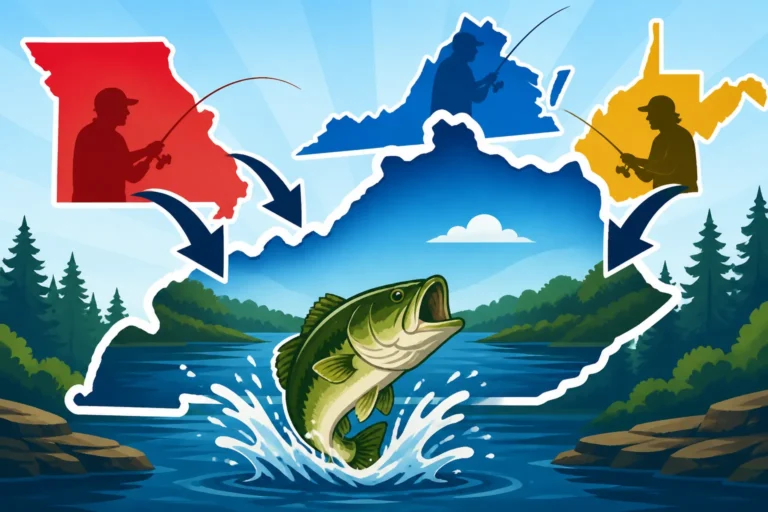
However, it's critical to understand that this reciprocity isn't universal across all Kentucky waters that might be accessible from Illinois. The agreements specifically cover the main stem of the Ohio River and the main stem of the Mississippi River. What does "main stem" mean? It generally refers to the main navigable channel of the river itself, not its tributaries, embayments, or any waters that are clearly and entirely within one state's jurisdiction.
If you possess a valid Illinois fishing license, you are generally permitted to fish the flowing waters of the main stem of the Ohio River and the main stem of the Mississippi River that border Kentucky without needing to purchase a separate Kentucky fishing license. This agreement makes it much easier to enjoy these fantastic fisheries without having to worry about crossing an invisible line in the water. Just imagine the hassle of carrying multiple state licenses and trying to figure out which one applies at any given moment!
It's important to note that this reciprocity generally does not extend to large impoundments like Kentucky Lake or Lake Barkley, even though they are geographically close to Illinois. These lakes are primarily shared with Tennessee, or entirely within Kentucky, and are not considered part of the main stem of the Ohio or Mississippi Rivers in this context. If your plan is to fish these incredible lakes, you will absolutely need a Kentucky fishing license. For more information on license types and costs, refer to Kentucky Fishing License Costs and Types.
The Ohio River: A Shared Fishery
The Ohio River is a massive waterway, a true jewel for anglers, and a significant border between Kentucky and Illinois. Thankfully, for Illinois residents, the reciprocal agreement simplifies things immensely. If you're fishing from the Illinois bank, a boat launched from Illinois, or even from a Kentucky bank directly onto the main stem of the Ohio River, your Illinois fishing license should suffice.
However, be extremely cautious about venturing into areas that are clearly Kentucky tributaries or embayments. For instance, if you're fishing a creek or a bay that empties into the Ohio River, but that creek or bay is wholly within Kentucky's jurisdiction, then that reciprocity agreement likely does not apply. It might seem like a minor detail, but straying even a short distance from the main river channel can put you in a position where a Kentucky license becomes mandatory. This is a common pitfall, and it's always better to err on the side of caution.
Many anglers use navigation apps on their phones or tablets, perhaps even devices found on Amazon, to help them stay within these main river channels or to identify state boundaries. These tools can be invaluable for understanding where you are in relation to state lines and ensuring you comply with regulations.
The Mississippi River: Western Kentucky's Border
Similarly, the Mississippi River forms Kentucky's western border with Illinois. Just like with the Ohio River, a valid Illinois fishing license allows you to fish the flowing waters of the main stem of the Mississippi River bordering Kentucky. This opens up a huge amount of prime fishing territory for species like catfish, bass, and crappie without needing a second license.
Again, the same caveat applies: stick to the main stem. If you find yourself in an oxbow lake, a backwater slough, or a tributary that is clearly on the Kentucky side and not part of the main river's flowing channel, you will need a Kentucky license. These areas are often incredibly productive fisheries, but they fall under Kentucky's exclusive jurisdiction. It’s crucial to know the difference. When planning your trip, consider checking Kentucky Fishing Rules by Lake and Water for specific regulations on particular bodies of water.
What "Kentucky Waters" Really Means for Border Anglers
When we talk about "Kentucky waters" for border lake purposes, we're really focusing on areas that are unequivocally within Kentucky's jurisdiction, even if they're close to a state line. The reciprocal agreements are precise and limited to the main stems of the specified rivers.
Think about it this way: if you can step out of your boat and be on solid ground in Kentucky, and that water body isn't the main channel of the Ohio or Mississippi River, then you likely need a Kentucky license. This includes:
- Tributaries: Any river or creek that flows into the Ohio or Mississippi from the Kentucky side.
- Backwaters and Oxbows: Stagnant or slow-moving water bodies that were once part of the main river channel but have since been cut off, especially if they are wholly within Kentucky's boundary.
- Inland Lakes and Ponds: Any lake or pond not directly part of the Ohio or Mississippi main stem, even if it's just a mile or two from the border. This includes popular destinations like Kentucky Lake, Lake Barkley, and any smaller public access waters.
It's tempting to think that since you're "close" to Illinois, the rules might bend, but that's a dangerous assumption. Game wardens are very familiar with these border areas and can quickly determine if you're in reciprocal waters or not. Many savvy anglers will use GPS on their boats or even a smartphone app (available on platforms like Amazon) to clearly delineate the precise boundaries of the main river channel versus inland waters to avoid any legal troubles. For youth anglers, it's also important to know Kentucky Fishing License Requirements for Kids.
What Happens If You Don't Have the Correct License?
Let's be realistic: getting caught fishing without the proper license is not a fun experience. It's not just a slap on the wrist. In Kentucky, fishing without a valid license is a violation that can carry significant penalties.
Typically, you're looking at a fine that can easily range from a couple of hundred dollars to more, depending on the discretion of the court and any prior offenses. Beyond the financial hit, there's the inconvenience and embarrassment of dealing with law enforcement, which might include a court appearance. In some cases, your fishing gear could even be confiscated, and you could lose your fishing privileges for a period. It really puts a damper on what was supposed to be a relaxing day on the water.
Game wardens are out there specifically to ensure compliance with fishing regulations, protecting Kentucky's natural resources for everyone. They are highly trained and equipped to check licenses on the water, whether you're in a boat, on the bank, or wading a stream. Many modern wardens can quickly look up license information electronically, so a simple "I forgot it at home" often won't cut it if you don't actually have a valid license on file.
The best defense is always preparation. Before you head out, double-check that your license is valid for the waters you intend to fish. If you're an Illinois angler planning a trip to a Kentucky lake, make sure you've purchased your Kentucky license. You can typically purchase them online through the KDFWR website, or at various retail agents across the state. This peace of mind is truly priceless.
Here's a quick summary of the situation for Illinois anglers on Kentucky's border waters:
| Water Body | Location | Illinois License Valid? | Kentucky License Required? | Notes |
|---|---|---|---|---|
| Ohio River (Main Stem) | Border between IL and KY | Yes | No (if IL license valid) | Only applies to the main, flowing channel. |
| Mississippi River (Main Stem) | Border between IL and KY | Yes | No (if IL license valid) | Only applies to the main, flowing channel. |
| Ohio River Tributaries | Wholly within KY | No | Yes | Any creeks, bays, or waters branching off the main stem into KY. |
| Mississippi River Backwaters/Oxbows | Wholly within KY | No | Yes | Cut-off channels, sloughs, or still waters fully on the KY side. |
| Kentucky Lake | Shared with TN, primarily within KY | No | Yes | No reciprocity with Illinois for this large impoundment. |
| Lake Barkley | Shared with TN, primarily within KY | No | Yes | No reciprocity with Illinois for this large impoundment. |
| Other Inland Kentucky Lakes/Ponds | Wholly within KY (e.g., Lake Malone, Rough River Lake) | No | Yes | All other public waters entirely within Kentucky. |
Remember, this table is a general guide, and it's always best practice to consult the most current regulations directly from the KDFWR website before any trip. You can also learn more about Tennessee-Kentucky Fishing License Reciprocity Rules if you plan to fish those shared waters.
Final Thoughts for Illinois Anglers
Fishing those big border rivers, whether it’s the Ohio or the Mississippi, offers some truly fantastic opportunities. The reciprocal agreements Kentucky has with Illinois for the main stems of these rivers are a real bonus, making it much easier for you to enjoy the fishing without unnecessary bureaucratic hurdles. Just make sure you understand the nuances.
Always carry your valid Illinois fishing license with you when you're on those reciprocal waters. Even better, consider keeping a digital copy on your phone or a printout in a waterproof bag, perhaps a dry bag you picked up on Amazon. It's a small step that can save you a lot of grief.
However, if your Kentucky fishing adventure takes you beyond those main river channels – into a quiet tributary, a secluded backwater, or to any of the state's incredible inland lakes like Lake Cumberland or Herrington Lake – then a Kentucky fishing license is a non-negotiable part of your gear. Don't let a misunderstanding of border rules turn a fun fishing trip into a legal headache. Be informed, be prepared, and enjoy the beautiful waters Kentucky has to offer!
Disclaimer
Please remember that fishing regulations can change. While this guide aims to provide accurate and up-to-date information, it is your responsibility to verify all current rules and license requirements with the Kentucky Department of Fish and Wildlife Resources (KDFWR) before you go fishing. This content is for informational purposes only and should not be considered legal advice.