Checking Current Regulations Before a Fishing Trip
Current Kentucky fishing regulations explain bag limits, size limits, and licenses to avoid fines and protect ecosystems.

Current Kentucky fishing regulations explain bag limits, size limits, and licenses to avoid fines and protect ecosystems.
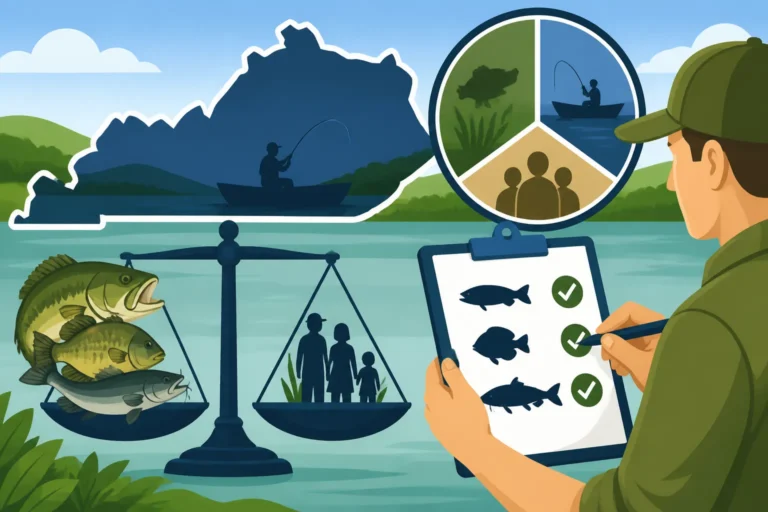
Kentucky fishing bag limits protect fish populations and aquatic ecosystems while ensuring fair catch shares for anglers.
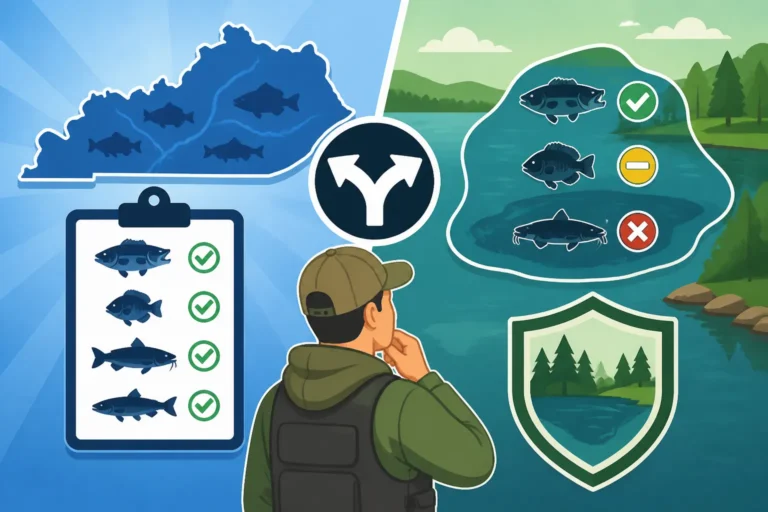
Kentucky fishing regulations explain differences between statewide limits and lake-specific rules for bass, crappie, and catfish species.

Verifying local fishing rules before visiting new Kentucky lakes prevents costly tickets and protects healthy fish populations.
A Kentucky fishing license permits catching most public water fish species, but specific harvest limits and trout permits still apply.
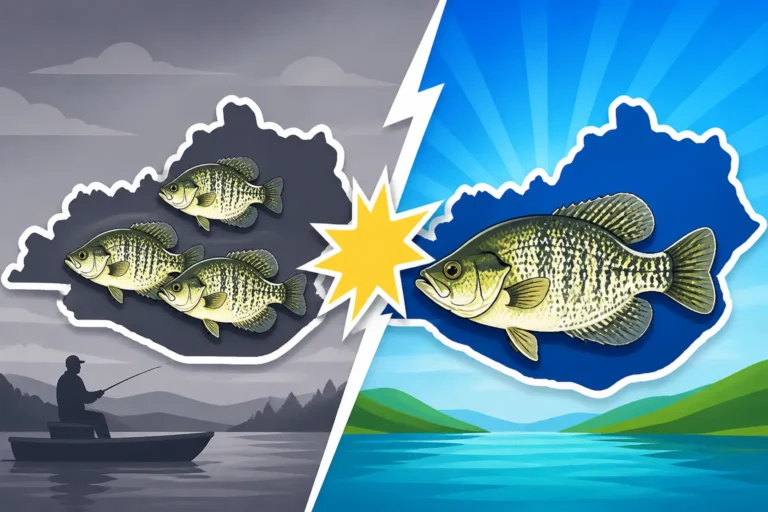
Kentucky statewide crappie regulations enforce a daily limit of twenty fish with no minimum size limit on most public waters.
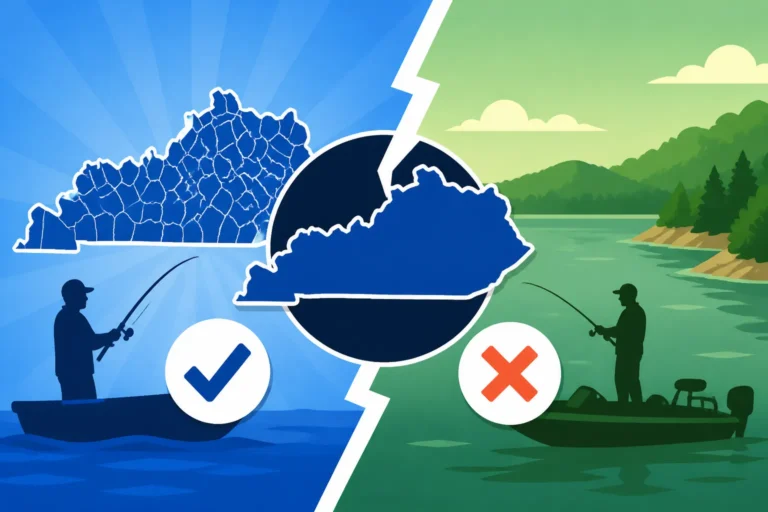
Kentucky statewide fishing limits and Lake Barkley rules differ, detailing black bass and crappie regulations for anglers.
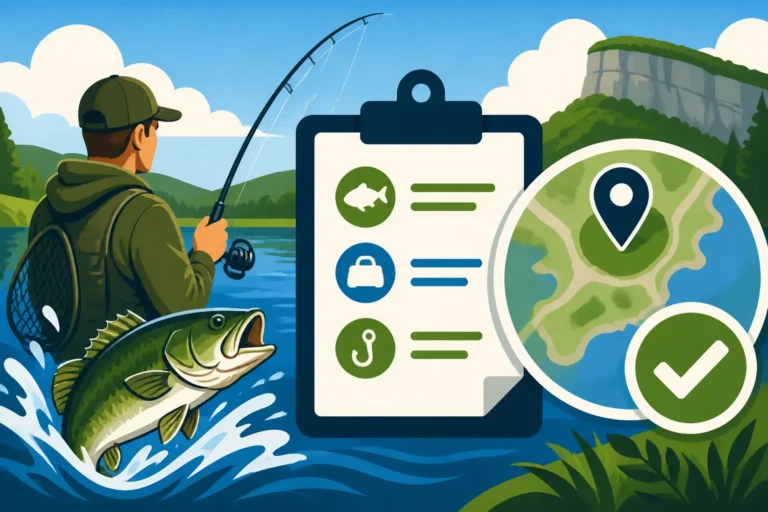
Kentucky lake and river fishing regulations explain why bass size limits differ from statewide rules on waters like Lake Barkley.

Kentucky fishing limits vary across lakes because ecosystems differ, and biologists use rules to balance harvest and protect spawning.

Kentucky bass bag limits, including the statewide six fish daily quota and size rules for lakes like Barkley, explained.