Kentucky Crappie Limit Compared to Barren River Lake’s Exception
It’s a common scenario: you’re out on a beautiful Kentucky lake, the crappie are biting like crazy, and you’re just in your element. But then that nagging thought creeps in – what are the limits here, exactly? It can be incredibly confusing when you realize that not every body of water follows the exact same rules, leading to frustration and sometimes even costly mistakes. This guide is here to untangle the nuances of Kentucky's crappie regulations, specifically diving deep into how the statewide crappie limit stacks up against the unique exception found at Barren River Lake, ensuring your next fishing trip is both fruitful and compliant.
Understanding Kentucky's Statewide Crappie Limit
Let's start with the basics, because understanding the baseline is crucial before we dive into any exceptions. For most of Kentucky's waters, the crappie regulations are pretty straightforward, designed to be easy for anglers to remember and adhere to, while still promoting healthy fish populations.
The Standard Rule for Crappie Anglers
Across the vast majority of Kentucky’s public lakes, rivers, and streams, the statewide regulation for both white crappie and black crappie is a daily creel limit of 20 fish. What's often overlooked, or perhaps misunderstood, is that for most of these waters, there is no minimum size limit on crappie. That means if you catch a crappie, no matter how small it is, it counts towards your 20-fish daily limit. This simple rule applies to countless popular fishing destinations, from the sprawling expanse of Kentucky Lake to smaller community ponds. It’s a design choice meant to simplify the experience for the casual angler, allowing them to focus more on the joy of fishing and less on the intricate details of a tape measure.
This blanket approach can be a real blessing for families or new anglers just getting into the sport. Imagine taking your kids out for a day of panfishing; they catch a dozen small crappie, and every one can be a keeper (within the daily limit, of course). It creates a low-stress environment where the emphasis is on participation and enjoyment. However, it also means that anglers need to be mindful of their total count, as hitting that 20-fish mark can happen quicker than you think when the bite is hot. For a broader overview of all the rules, be sure to check out our comprehensive guide on Kentucky Fishing Regulations Explained.
Why These Statewide Rules Exist
You might wonder why these specific limits are in place. The Kentucky Department of Fish and Wildlife Resources (KDFWR) doesn't just pull numbers out of a hat; these regulations are the result of extensive biological research, population surveys, and a deep understanding of crappie life cycles. The 20-fish daily limit, coupled with no minimum size, is often implemented in waters where crappie populations are robust and exhibit high natural reproduction rates. In such scenarios, removing a certain number of smaller fish doesn't harm the overall population and can even contribute to healthier growth rates for the remaining fish by reducing competition for food. It’s a delicate balance aimed at providing ample fishing opportunities while ensuring the sustainability of the crappie fishery for years to come.
Consistency is another key factor. Having a statewide regulation that applies to most waters helps minimize confusion for anglers who might fish different lakes throughout the year. It means less time poring over regulation books and more time casting a line. This approach generally works very well for managing many of Kentucky's fisheries, promoting both recreational success and ecological balance. It's a proactive measure to manage the resource effectively, allowing anglers to enjoy a consistent experience in most places, and it’s a good example of How Bag Limits Are Set for Popular Game Fish influences fishing success.
What This Means for Your General Fishing Trip
For most of your crappie fishing adventures in Kentucky, the statewide rule is your go-to. You can confidently head out knowing you can keep up to 20 crappie a day, regardless of their length. This simplifies planning, as you don't need to worry about sorting fish by size on the water. It also allows for a productive day if you're targeting crappie for a fish fry – those smaller, pan-sized crappie are often delicious and abundant. Just remember to count your fish carefully!
However, this ease can also lead to complacency, making it easy to forget that exceptions do exist. It's human nature to assume that if a rule applies to most places, it applies to all. That's why being particularly diligent when you venture to a new lake or river is so important. Always keep in mind that local regulations can and do deviate from the statewide standard, and ignorance of these rules is no excuse if a game warden happens to check your catch. Before you head out, especially if you're exploring new waters, make it a habit to perform a quick check of the current regulations.
Barren River Lake: A Notable Crappie Exception
Now, let's talk about those exceptions. While the statewide rule offers a comfortable baseline, specific bodies of water in Kentucky have unique biological conditions or management goals that necessitate different regulations. Barren River Lake is one of the most prominent examples for crappie anglers.
The Specific Regulation at Barren River Lake
If you're planning a crappie trip to Barren River Lake, you absolutely must be aware that the rules here are different. While the daily creel limit remains 20 crappie per person, just like the statewide regulation, there's a critical difference: Barren River Lake enforces a 10-inch minimum size limit on crappie. This means that any crappie you catch under 10 inches in length must be immediately released back into the lake. You can't just toss them into your livewell and count them towards your daily limit; they must be put back unharmed. This distinction is crucial and often catches unsuspecting anglers off guard.
This minimum size limit applies year-round, so there's no "off-season" where it doesn't apply. It's a fundamental aspect of fishing this particular lake, and neglecting it can lead to legal issues. This is a perfect example of why Kentucky Anglers: Check Site-Specific Rules Before You Fish is such vital advice. Even experienced anglers can sometimes forget these localized rules, especially if they primarily fish other lakes. Always double-check before you hit the water!
Why Barren River Lake Has a Different Rule
So, why the special treatment for Barren River Lake? It all comes down to the specifics of the fishery in that particular impoundment. Barren River Lake, located in south-central Kentucky, is known for its excellent fishing opportunities, but like any ecosystem, it has its own unique challenges and characteristics. The 10-inch minimum size limit for crappie was implemented by the KDFWR after careful study of the crappie population dynamics in the lake. Often, a size limit like this is put in place to protect crappie until they reach a certain age and size, allowing them to spawn at least once or twice, thereby contributing to the perpetuation of the species.
This strategy aims to improve the overall quality of the crappie fishery in Barren River Lake. By protecting smaller crappie, the hope is to increase the average size of the fish available to anglers, leading to more "slab" crappie and a more rewarding fishing experience over the long term. Without this protection, aggressive harvest of smaller fish could potentially lead to a stunted population, where crappie are numerous but never reach a desirable size. This local management decision is a prime example of Why Kentucky Fishing Limits Vary From Lake to Lake, adapting to the specific needs of each body of water.
Impact on Anglers Fishing Barren River Lake
For anglers accustomed to the statewide "no size limit" rule, fishing Barren River Lake requires a significant adjustment. You can no longer simply keep every crappie you catch up to your 20-fish limit. Instead, every crappie needs to be measured. This means you'll spend more time sorting your catch, carefully releasing those that don't meet the 10-inch threshold. It can be a bit more work, especially on days when the smaller crappie are particularly aggressive, but it’s a necessary step to comply with the regulations and contribute to the health of the fishery.
This also means you need to be prepared with the right tools. A reliable ruler or measuring tape is not just an option but a necessity. Many anglers opt for rulers permanently affixed to their boat or cooler lid for quick, accurate measurements. If you're looking for one, a quick search on Amazon will show you plenty of affordable options. You'll also want to prioritize proper fish handling techniques to ensure released fish have the best chance of survival. Even with the added effort, Barren River Lake remains a fantastic destination for crappie fishing, and understanding this specific rule will only enhance your success and enjoyment. Many experienced anglers head straight for Barren River Lake's Best Crappie Spots in Kentucky precisely because of the potential for larger fish.
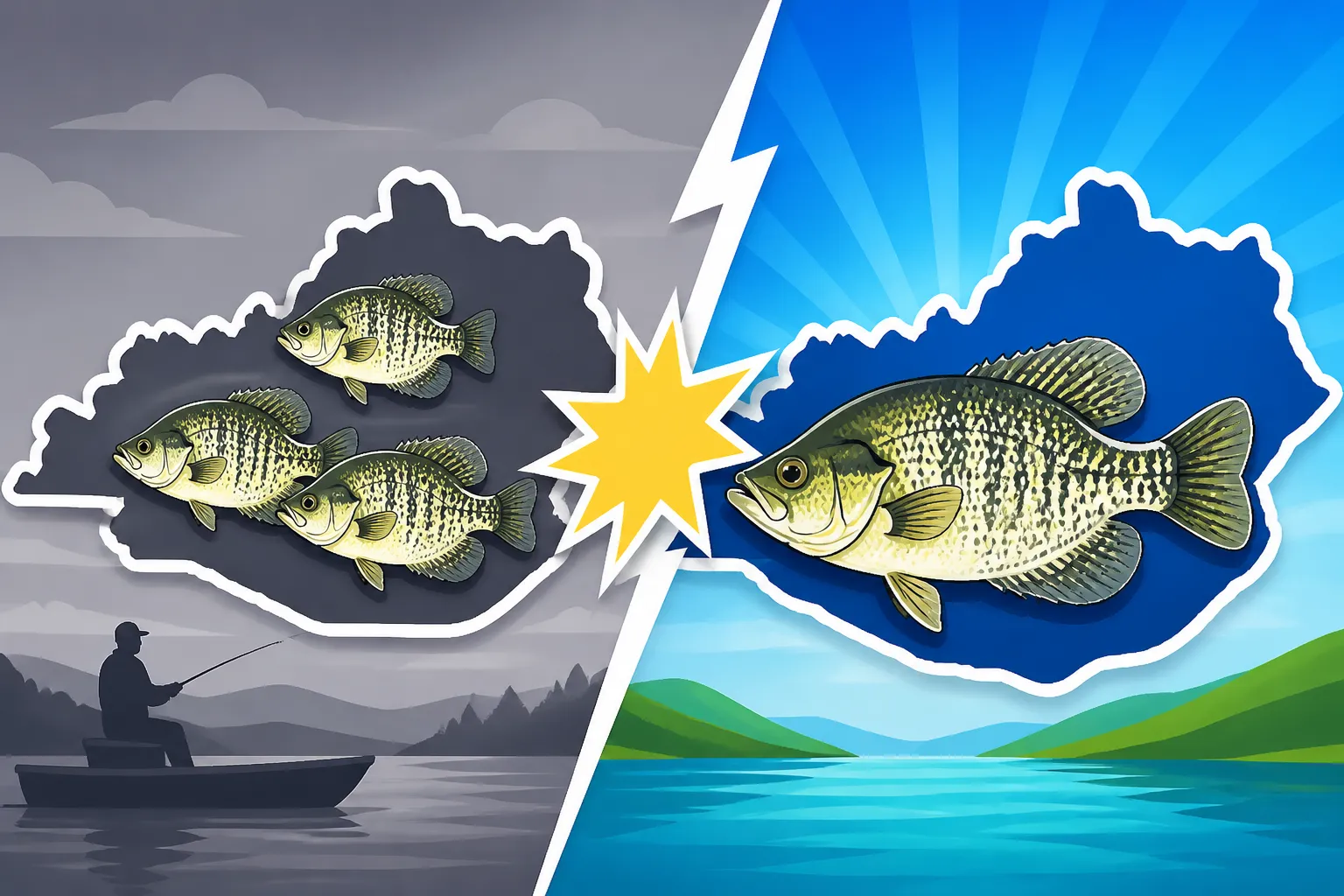
Here's a quick comparison of the two scenarios:
| Regulation Aspect | Most Kentucky Waters | Barren River Lake |
|---|---|---|
| Daily Creel Limit | 20 Crappie | 20 Crappie |
| Minimum Size Limit | None (All crappie count towards limit) | 10 inches (Crappie under 10" must be released) |
| Primary Goal | Provide abundant harvest opportunities | Enhance average crappie size, protect spawners |
| Angler Requirement | Count fish to ensure adherence to daily limit | Measure every crappie; release undersized fish |
| Tools Needed | Basic fishing gear | Basic fishing gear + reliable measuring device |
Practical Tips for Navigating Crappie Regulations
Navigating fishing regulations, especially when exceptions are involved, can feel like a minefield. But with a few practical habits and the right mindset, you can stay compliant and enjoy your time on the water without worry.
Always Check Site-Specific Rules
This cannot be stressed enough. Before every single fishing trip, especially if you’re heading to a new body of water or haven't fished a particular lake in a while, take a few minutes to check the current regulations. The Kentucky Department of Fish and Wildlife Resources (KDFWR) website is an invaluable resource. They have detailed regulation guides that are updated annually. Many state parks and local tackle shops also post current regulations prominently. Don't rely on memory or what you heard from a friend last year, as rules can and sometimes do change. A quick check of the online Kentucky Fishing Regulations Explained can save you a lot of headache and potential fines.
Think of it like this: you wouldn't drive a car without knowing the speed limit, right? Fishing regulations are no different. They are put in place for a reason, primarily to conserve fish populations and ensure fair chase. Investing a few minutes upfront will allow you to relax and truly enjoy your fishing experience, confident that you are abiding by the law. It’s a simple habit that will serve you well for all your angling adventures across the Commonwealth.
Essential Gear for Measuring and Handling
Given the 10-inch minimum size limit at Barren River Lake, having the right gear for accurate measuring and safe fish handling is non-negotiable. First and foremost, you need a reliable measuring device. This could be a sturdy, waterproof ruler, a soft tape measure, or even a specialized bump board designed for fish. Many boaters will affix a measuring decal to their livewell or cooler lid for quick, hands-free measurements. Make sure your ruler is clearly marked and easy to read, especially when wet. You can find many great options for fishing rulers and measuring devices on Amazon, which can be delivered right to your door.
Beyond measuring, consider your fish handling tools. If you’re catching a lot of crappie that need to be released, using a fish gripper or even just wet hands can minimize stress and harm to the fish. Avoid touching fish with dry hands, as this can remove their protective slime coat. A good, aerated livewell is also essential if you plan to keep your limit, ensuring your catch stays healthy until you're off the water. Remember, the goal is to release undersized fish unharmed so they can grow and contribute to future generations.
What to Do If You Accidentally Catch an Undersized Fish
It happens to the best of us: you're reeling in a feisty crappie, excited for a keeper, only to find it's just shy of the 10-inch mark. The key here is quick and proper release. Once you've measured and confirmed it's undersized, remove the hook as gently and quickly as possible. If the fish is deeply hooked, consider cutting the line close to the hook rather than trying to rip it out, which can cause internal damage.
Then, return the fish to the water immediately. Don't "revive" it by swinging it back and forth; simply place it gently back in the water, headfirst, and allow it to swim away on its own power. Minimizing handling time and stress is crucial for the survival of released fish. Practicing these proper catch-and-release techniques ensures that those smaller crappie have the best possible chance to grow into trophy-sized fish for another angler (or for you!) another day. This contributes to the long-term health of the fishery and makes sure you're doing your part for conservation.
Common Misconceptions and Clarifications
Fishing regulations can sometimes feel like a puzzle with missing pieces, leading to common misunderstandings. Let's clear up some of those hazy areas, especially regarding localized rules and their importance.
The Myth of "One Size Fits All" Regulations
One of the biggest misconceptions many anglers hold is that once they learn the rules for one lake, those rules apply everywhere. This "one size fits all" mentality is a trap that can lead to unintentional violations. As we've seen with Barren River Lake's crappie regulations, specific bodies of water often have unique needs that require tailored management strategies. These site-specific rules aren't arbitrary; they are meticulously crafted by fisheries biologists to address localized conditions such as genetics, forage availability, fishing pressure, and environmental factors.
For instance, a lake with a high crappie population but slow growth rates might benefit from a minimum size limit to protect smaller fish and allow them to reach a more desirable size. Conversely, a lake with an overabundance of small, stunted crappie might benefit from no size limit to encourage harvest of those smaller fish, reducing competition and promoting growth among the remaining population. This dynamic approach means that your responsibility as an angler extends beyond just learning the general rules; it requires diligence in checking the specific regulations for each and every location you choose to fish. It's a key part of understanding Why Kentucky Fishing Limits Vary From Lake to Lake.
Enforcement and Your Responsibility
It's natural to sometimes feel like regulations are just "on the books" and rarely enforced, especially on vast bodies of water. However, Kentucky's conservation officers (game wardens) are out there, and they take their job of protecting Kentucky's natural resources very seriously. They conduct routine checks, both on the water and at boat ramps, to ensure anglers are complying with licensing requirements, bag limits, and size restrictions. Being caught with undersized crappie or over the daily limit at a lake like Barren River can result in significant fines and penalties. For more details on potential repercussions, you might want to read about the Penalties for Fishing Without a License in Kentucky, as regulation violations often carry similar consequences.
Your fishing license is your proof of compliance, and it's essential to have it on you, whether in digital or physical form. During a check, a game warden will typically ask to see your license, then may inspect your livewell or cooler. They are trained to identify fish species and measure them accurately. Ultimately, the responsibility for knowing and following the regulations rests squarely on your shoulders. It’s not the warden’s job to educate you on the spot, but rather to enforce the rules that are already published and readily available. Think of it as a partnership: the KDFWR sets the rules to protect the resource, and anglers comply to ensure its longevity.
How Regulations Protect Future Fishing
Sometimes, it can feel like regulations are restrictive, hindering our ability to catch and keep as many fish as we'd like. However, viewing regulations through the lens of long-term sustainability reveals their true purpose. Every crappie regulation, whether it’s a daily limit or a minimum size, is a carefully considered strategy to ensure that future generations of anglers will have just as good, if not better, fishing opportunities. By allowing smaller fish to grow, reproduce, and contribute to the gene pool, these rules prevent overfishing and maintain healthy, diverse ecosystems.
For instance, the 10-inch minimum size at Barren River Lake is a direct investment in the lake's future crappie population. It ensures that crappie have a chance to reach sexual maturity and spawn, which is critical for replenishing the population. Without such measures, intensive fishing pressure could quickly deplete the numbers of larger, breeding fish, leading to a decline in catch rates and overall fish quality. So, next time you release an undersized crappie at Barren River Lake, remember you're not just following a rule; you're actively participating in the conservation efforts that keep Kentucky’s fishing vibrant and abundant. It's all part of the larger picture of How Bag Limits Are Set for Popular Game Fish to ensure sustainable angling.
Disclaimer
Please remember that fishing regulations can change. While this guide provides the most current information available at the time of writing, it is always your responsibility to consult the official Kentucky Department of Fish and Wildlife Resources (KDFWR) regulations before heading out on any fishing trip. This ensures you have the most up-to-date and accurate information to comply with all state and local laws.