Kentucky Catfish Daily Limit and Trophy Fish Rule
There’s nothing quite like the thrill of a strong tug on your line, the unmistakable fight of a powerful catfish, and the dream of landing a true lunker. But for many Kentucky anglers, the excitement quickly turns to confusion when trying to figure out exactly how many of these whiskered beauties you can keep, and what to do if you hook into a monster. It’s a common frustration, navigating the fine print of regulations, but this guide is here to clear up the muddy waters, explaining Kentucky’s daily catfish limit and the crucial "trophy fish rule" so you can fish with confidence.
Understanding Kentucky's Catfish Regulations
Let's be honest, fishing regulations can feel like a labyrinth, changing from one season to the next, and sometimes even from one lake to another. It's enough to make even the most seasoned angler scratch their head. But when it comes to catfish in Kentucky, the rules are designed to protect the species and ensure healthy populations for future generations of anglers. Understanding these basics is the first step toward a successful and legal day on the water.
Why Regulations Exist for Catfish
You might wonder why there are so many rules for catfish, especially since they seem to be abundant in so many Kentucky waterways. Well, it's all about balance. Catfish, particularly the larger blue and flathead species, can take a long time to reach trophy sizes. If everyone kept every big catfish they caught, those impressive populations would quickly dwindle, taking away the chance for anyone to catch a truly memorable fish. Regulations, including daily limits and size restrictions, are put in place by the Kentucky Department of Fish and Wildlife Resources (KDFWR) to manage fish populations sustainably. They help prevent overfishing, protect spawning stock, and ensure that the genetic quality of the fish remains strong. It's a long-term investment in our shared passion, ensuring our kids and grandkids will still have the opportunity to chase those giant blues and channel cats.
Where to Find the Official Rules
Before you even cast a line, it's crucial to know where to find the absolute latest and most accurate information. While articles like this one can provide a great overview, the official source is always the KDFWR. Their website is a treasure trove of information, and they also publish an annual "Kentucky Fishing Guide" booklet. This guide is usually available at bait shops, county clerk offices where you might pick up your Kentucky Fishing License, and sporting goods stores. Always make it a habit to glance through the current year's guide before your first trip out, even if you think you know the rules by heart. Sometimes, a specific lake or river might have a temporary regulation change that could catch you off guard. Ignorance of the law isn't a valid excuse, unfortunately, and game wardens are out there making sure everyone is playing by the rules. You can find detailed information on Kentucky's statewide limits by fish species in the official guide.
Breaking Down the Daily Limit for Catfish
The daily limit for catfish in Kentucky is one of those foundational rules that every angler needs to know inside and out. It’s not just a suggestion; it’s a hard and fast rule that impacts how you manage your catch throughout the day. Getting this wrong can lead to serious fines and even the loss of your fishing privileges, which nobody wants!
The Statewide Daily Creel Limit
For the vast majority of Kentucky's public waters, the statewide daily creel limit for catfish is pretty straightforward: 15 fish per person per day. This means that from the moment you start fishing until you pack up for the day, you cannot possess more than 15 catfish of any species. This limit applies whether you’re targeting channel catfish in a small farm pond, blue catfish in a large reservoir like Lake Barkley, or flatheads in the winding bends of the Ohio River. It’s important to understand that this is a daily limit, not a possession limit over several days. If you go home with 15 fish, you can't go out the next day and keep another 15 if you still have the previous day's catch in your freezer. The rules are designed for sustainability, and that often means responsible harvesting.
Counting Different Catfish Species Together
One of the most common questions I hear is about how to count different species. "Can I keep 15 channel cats and 15 blue cats?" The answer, quite simply, is no. The 15 catfish daily limit applies to all species combined. That means if you catch 8 channel catfish and 7 blue catfish, you've reached your limit for the day. It doesn't matter if you're targeting one specific type of catfish; all channel, blue, and flathead catfish count towards that single 15-fish total. This unified approach makes it easier for anglers to understand and follow, and it provides a broader protection for the overall catfish population rather than singling out one species. It’s like a mixed bag limit, where all the "catfish" species are grouped into one category. Understanding why blue and channel catfish count toward the same Kentucky limit helps clarify this.
Lake-Specific Exceptions to the Rule
Now, here’s where things can get a little tricky, and why checking the official regulations is always paramount. While the statewide limit of 15 catfish with one over 25 inches applies to most waters, some specific lakes or river segments may have special regulations that override these general rules. These exceptions are usually implemented to address specific conservation needs or management goals for that particular body of water.
For example, while the Ohio River shares many regulations with Kentucky’s inland waters, it's a massive, interstate waterway that often has unique rules due to its shared management with neighboring states. Always double-check the KDFWR guide for any notes on the Ohio River, or other major impoundments like Kentucky Lake or Lake Cumberland, as they might have nuances related to creel or size limits. It's not uncommon for biologists to implement stricter or sometimes even slightly more liberal rules if a specific population is booming or struggling in a particular location. These site-specific rules are vital for maintaining healthy fisheries everywhere. Always be sure to check site-specific rules before you fish.
The "Trophy Fish Rule" Explained
Hooking into a truly massive catfish is the dream for many anglers. That powerful run, the bending rod, the sheer size of the fish when it finally surfaces – it’s an experience that keeps us coming back. Kentucky recognizes the value of these trophy fish, both for the angling experience and for their importance in the ecosystem. That’s where the "trophy fish rule" comes into play, a regulation designed to protect those big breeding fish while still allowing anglers to harvest a special one.
What Qualifies as a "Trophy" Catfish
In Kentucky, a "trophy" catfish isn't necessarily defined by a state record weight, but rather by its length relative to the general population. Specifically, for the purpose of the daily limit, a catfish over 25 inches in length is considered a trophy-sized fish. This applies to all three major species: channel, blue, and flathead catfish.
Imagine you're out on the water, having a great day catching several channel cats around the 18-inch mark. Then, suddenly, you hook into something much bigger – a brute of a blue cat that measures 28 inches. That 28-inch fish immediately falls under the "trophy fish rule." The reason this 25-inch threshold is so important is that fish of this size are often mature, robust breeders, contributing significantly to the future generations of catfish in our lakes and rivers. Protecting a good number of these larger, older fish ensures a healthy and thriving fishery for years to come.
How the "One Over 25 Inches" Rule Works
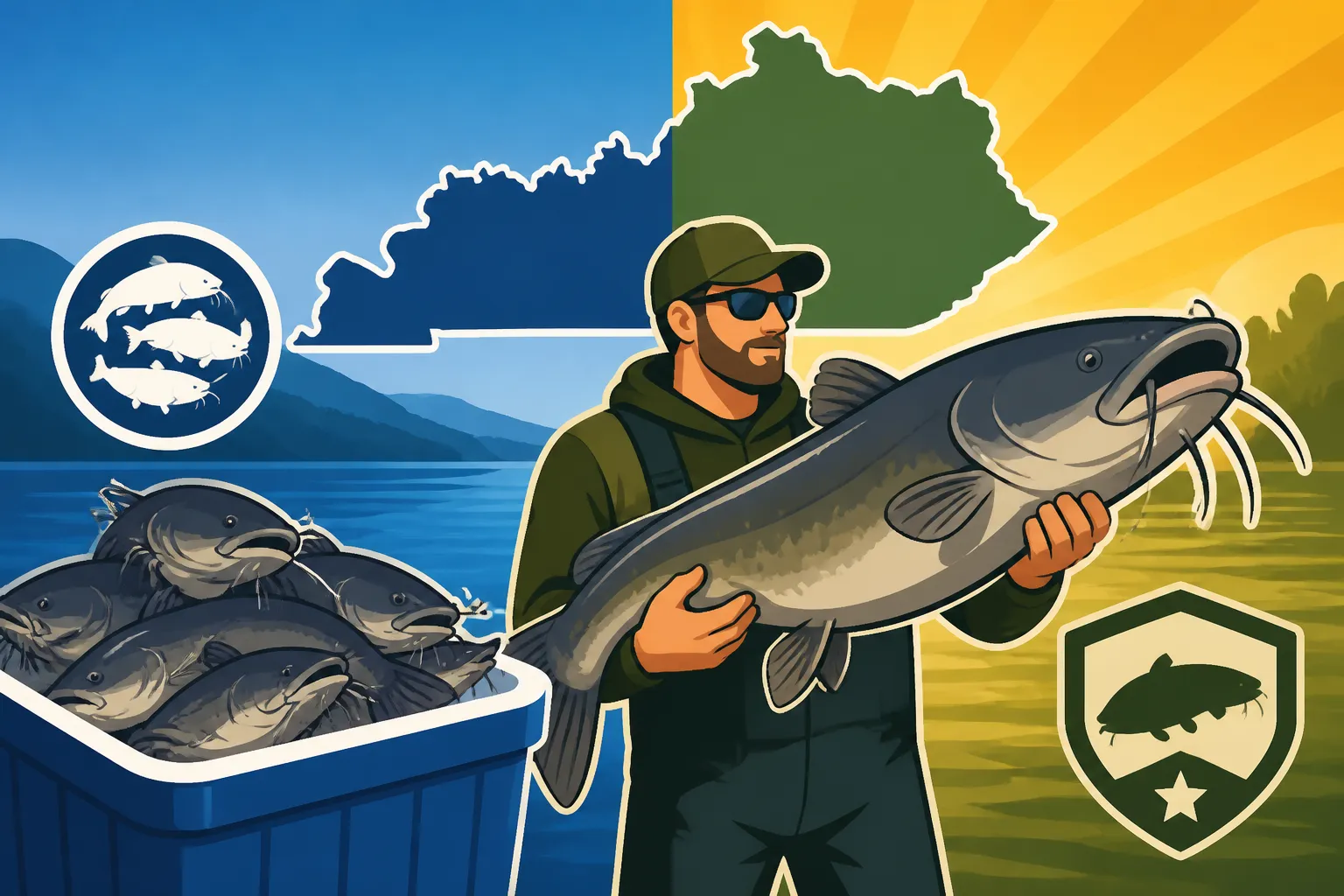
So, you've got your 15-fish daily limit. Here's the critical part: within that 15-fish limit, you are only allowed to keep ONE catfish that measures 25 inches or longer.
Let's walk through a hypothetical scenario. You're fishing the Green River, and the bite is on!
- You catch a 15-inch channel catfish. You keep it. (Count: 1 fish, 0 over 25 inches)
- Next, a 19-inch blue catfish. You keep it. (Count: 2 fish, 0 over 25 inches)
- Then, a truly impressive 27-inch flathead catfish. You decide to keep it. (Count: 3 fish, 1 over 25 inches)
- Later, you land another absolute giant, a 30-inch blue catfish. What do you do?
At this point, you've already kept your one fish over 25 inches. So, even though you might have room in your 15-fish creel limit, you must immediately release that 30-inch blue catfish. Releasing it unharmed is not just good sportsmanship; it's a legal requirement. Trying to keep a second fish over 25 inches, even if your total count is under 15, is a violation of the regulations and can result in penalties for fishing without a license. It’s a specific rule designed to allow for the occasional prize catch while ensuring the large breeding stock remains in the water. Remember, this rule is about the number of large fish, not just the total number.
Why This Rule is Important for Conservation
The "one over 25 inches" rule isn't just about limiting your take; it's a sophisticated conservation strategy. Larger, older catfish, especially blue and flathead catfish, are incredibly important for the overall health and genetic diversity of their populations. These fish have proven their ability to survive, grow, and often contribute significantly more to spawning success than smaller, younger fish.
By protecting the majority of these larger individuals, the KDFWR ensures that there are always plenty of robust breeders in the water. This helps maintain a strong gene pool, promoting the growth of healthy, fast-growing catfish in the future. It’s a win-win: anglers still get the chance to keep a trophy, and the catfish populations remain vibrant and sustainable. This rule helps prevent a situation where only smaller, less desirable fish are left, which could lead to a decline in the quality of the fishery over time. It’s a testament to good fishery management, balancing angler opportunity with ecological responsibility.
Species-Specific Catfish Rules in Kentucky
While the statewide daily limit and the "one over 25 inches" rule apply to all catfish species generally, it's worth taking a moment to appreciate the nuances of each type you might encounter in Kentucky waters. Knowing a bit about their habits and typical sizes can help you be a more effective and compliant angler. Kentucky is home to several fantastic catfish species, each offering a unique challenge and reward.
Channel Catfish Rules
Channel catfish are arguably the most widespread and popular catfish species in Kentucky. They're found in almost every major lake, river, and even many smaller ponds. They are generally identifiable by their forked tail, spotted sides (especially when younger), and typically range from 1 to 10 pounds, though much larger specimens are caught. For channel catfish, the statewide regulations are exactly as discussed: you can keep up to 15 combined catfish per day, with only one of those being 25 inches or longer. There is no minimum size limit for channel catfish in most Kentucky waters, meaning you can keep the smaller ones as long as you adhere to the overall creel limit and the trophy rule. This flexibility makes them a great target for anglers looking for a good meal, as smaller channel cats are often considered excellent table fare.
Blue Catfish Rules
Blue catfish are the true giants of Kentucky's catfish world. These magnificent fish are known for their incredibly broad, flat heads, distinct humped back, and a deeply forked tail, typically without spots. They can grow to enormous sizes, with the Kentucky state record weighing in at a staggering 106 pounds, 14 ounces! You'll find them primarily in larger river systems like the Ohio River, Mississippi River, and big impoundments such as Kentucky Lake, Lake Barkley, and the lower sections of the Cumberland and Tennessee Rivers. Just like channel cats, blue catfish fall under the statewide limit of 15 combined catfish per day, with only one of those permitted to be 25 inches or longer. Again, there's no statewide minimum size limit for blue catfish, but due to their potential for massive growth, many anglers practice catch-and-release with the biggest blues to ensure these trophy genetics remain in the water. This also helps maintain the impressive Blue Catfish Fishing Spots Near Kentucky's Ohio River.
Flathead Catfish Regulations
Flathead catfish are another formidable species, often preferred by anglers who love a powerful fight. They are easily distinguished by their flat, broad heads, small eyes, and a square or slightly rounded tail, rather than the deeply forked tail of channel and blue cats. Flatheads are predatory, preferring live bait, and can also grow to substantial sizes, though typically not as large as the biggest blue cats. You'll find them in large rivers and reservoirs, often preferring areas with heavy cover like log jams and brush piles. Similar to their whiskered cousins, flathead catfish are included in the overall 15 combined catfish daily limit, and the "one over 25 inches" rule applies to them as well. Like the others, there is no statewide minimum size limit for flathead catfish. Anglers often focus on these fish for their exceptional fighting ability and distinct flavor, making it important to adhere to all regulations to preserve their populations.
Practical Tips for Catfish Anglers in Kentucky
Knowing the rules is one thing, but applying them practically on the water is another. As a seasoned angler, I've seen countless situations where a little foresight and the right gear can make all the difference, not just for catching fish, but for staying compliant with the law and ensuring the fish you release have the best chance of survival.
Knowing Your Waters: Local Regulations
I cannot stress this enough: always check for lake-specific or river-specific regulations before heading out. While the statewide rules are a great baseline, certain bodies of water in Kentucky might have special provisions. These could include different creel limits, slot limits (where you can only keep fish within a certain size range), or even different gear restrictions.
A classic example often involves shared waterways, such as the Ohio River, where regulations might be influenced by agreements with bordering states like Ohio or Indiana. Sometimes, smaller, heavily fished lakes or those with specific management plans (like urban fishing lakes managed by the KDFWR) will have unique rules to protect their fish stocks. A simple search on the KDFWR website for the specific lake you plan to visit can save you a lot of headaches. It's truly worth the extra few minutes of preparation. For example, Kentucky Fishing Rules by Lake and Water provides a good starting point, but always dig deeper for your specific destination.
Essential Gear for Measuring and Releasing
To properly follow the "one over 25 inches" rule, you absolutely need reliable measuring equipment. A sturdy measuring board or tape measure is indispensable. Don't rely on guesswork or holding a fish up to your rod. Catfish can be squirmy, so a good measuring device will help you quickly and accurately determine length. Many anglers swear by rigid measuring boards that provide a flat surface to lay the fish on, ensuring an accurate reading. You can find excellent options on Amazon, designed specifically for fishing.
Beyond measuring, ethical catch-and-release practices are crucial, especially for those bigger fish you'll be letting go. A good pair of heavy-duty gloves can protect your hands from sharp fins and gill plates while handling a large catfish, allowing you to control the fish better for a quick measurement and release. A net large enough to safely scoop up a big cat is also highly recommended to minimize stress on the fish. Remember, the goal is to release these big breeders to fight another day, so handling them gently and returning them to the water quickly is key. Investing in a quality hook remover or dehooker can also significantly reduce harm to a deeply hooked fish.
Reporting Record Catfish
What if you actually land a fish that's truly gargantuan, something that could challenge a state record? Kentucky takes its state records very seriously, and landing one is a tremendous accomplishment. If you believe you’ve caught a state-record blue catfish, channel catfish, or flathead, there's a specific protocol you need to follow.
First, do your best to keep the fish alive and healthy if possible. Next, locate a certified scale, typically found at a tackle shop, grocery store, or even a local KDFWR office. The fish needs to be weighed on a scale that has been certified for accuracy. You'll also need a witness, usually the person who owns or operates the certified scale. Crucially, you'll need to contact the KDFWR directly as soon as possible. They will guide you through the process, which usually involves completing an official application, providing photographs, and sometimes even having a biologist verify the species. It’s an exciting process, but it requires careful attention to detail to ensure your catch is officially recognized. For more information on reporting, check out Kentucky's Blue Catfish State Record Explained.
Common Misconceptions and FAQs
Even with clear rules, misconceptions tend to float around, and new questions pop up all the time. Let’s tackle some of the most common misunderstandings and frequently asked questions about Kentucky’s catfish limits and rules. It’s better to ask than to assume and risk a violation!
Can You Keep Any Size Catfish?
This is a common one, especially for anglers used to other states or species. In Kentucky, for catfish, the answer is generally yes, you can keep any size catfish under 25 inches, as long as you stay within your 15-fish daily creel limit and haven't already kept your one fish over 25 inches. Unlike many other game fish that have strict minimum size limits (like bass or crappie in some waters), catfish generally do not have a statewide minimum size requirement in Kentucky.
This means if you're out jug fishing or trotlining and catch a bunch of small channel cats, say 10 to 12 inches, you're perfectly fine keeping them for a fish fry, provided you don't exceed your total count of 15. The KDFWR often encourages harvesting these smaller, more abundant catfish as it can actually help thin out populations, allowing the remaining fish to grow larger. However, always double-check the specific regulations for the water body you are fishing, as a very few particular lakes might have specific local rules. But statewide, no, there isn't a "too small to keep" rule for catfish.
What About Private Ponds?
Ah, the classic private pond dilemma! It’s a common question: if you're fishing on private property, do the state’s fishing regulations still apply? The general rule of thumb in Kentucky, and most states, is that state fishing license and regulations generally do not apply to private waters that are entirely contained on private land and have no connection to public waterways.
This means if you're fishing a pond on your friend's farm that's fed only by rainwater or a spring and has no inlet or outlet to a public stream or river, you typically don't need a fishing license, and the state's daily limits and size restrictions (like the 15-fish catfish limit or the one-over-25-inches rule) usually don't apply. The landowner effectively sets their own rules for their private fishery.
However, there's a big caveat: if that pond does have a connection to public waters, even a seasonal overflow or a culvert, then it falls under the purview of state regulations. It’s safer to assume regulations do apply if there's any doubt, or better yet, verify with the landowner and potentially the KDFWR. For more clarity on this, you might find License-Required Waters Versus Private Ponds helpful.
Encountering a Game Warden
Meeting a game warden is a normal part of fishing, and it’s important to know what to expect. Their job is to protect our natural resources and ensure everyone is fishing legally and safely. When a game warden approaches you, whether on the bank or in a boat, be polite, cooperative, and respectful.
They will typically ask to see your fishing license and, if you're in a boat, your boat registration and safety equipment. They may also ask to inspect your catch to verify you're within the legal limits. This includes checking the number of fish, their species, and their size. If you've caught a large catfish, they might ask to measure it. Always have your license readily accessible, whether it's a physical copy or a digital one on your phone. If you've followed the rules regarding the 15-fish limit and the one-over-25-inches rule, you'll have nothing to worry about. Cooperating makes the encounter quick and pleasant for everyone. Remember, they're there to help protect the sport we all love. For what wardens check, consider looking up Game Warden Enforcement and License Checks While Fishing.
| Catfish Species | Statewide Daily Creel Limit (Combined) | Trophy Rule (Over 25 inches) | Statewide Minimum Size Limit | Common Habitats |
|---|---|---|---|---|
| Channel Catfish | 15 (all catfish species combined) | Only 1 allowed within creel | None | Rivers, lakes, ponds (most common) |
| Blue Catfish | 15 (all catfish species combined) | Only 1 allowed within creel | None | Large rivers (Ohio, Mississippi), big reservoirs (Kentucky Lake, Barkley) |
| Flathead Catfish | 15 (all catfish species combined) | Only 1 allowed within creel | None | Large rivers, reservoirs (preferring cover) |
Disclaimer
Please remember that fishing regulations are subject to change. While this guide aims to provide accurate and up-to-date information, it is always your responsibility to consult the latest official Kentucky Department of Fish and Wildlife Resources (KDFWR) regulations before you go fishing. The KDFWR's annual Kentucky Fishing Guide is the definitive source for all current rules and exceptions.