Black Crappie Vs White Crappie: Key Differences
It's easy to get excited when you hook into a crappie here in Kentucky, but have you ever stopped to wonder if it's a black crappie or a white crappie? Many anglers, myself included, have often lumped them together under the general "crappie" umbrella. However, these two common species, while similar, have distinct characteristics and preferences that can actually influence how and where you fish for them. This guide will walk you through the key differences between black crappie and white crappie, helping you become a more informed and successful angler on our Kentucky waters.
Physical Characteristics: Telling Them Apart on the Water
When you pull a crappie from the water, a quick glance might not reveal the differences between a black and a white crappie. But if you know what to look for, these fish offer some pretty clear clues in their physical appearance. It's not just about color, although that's certainly a big part of it!
Body Shape and Dorsal Fin Spines
One of the most reliable ways to differentiate between black and white crappie lies in their body shape and the number of spines in their dorsal fin. It's a little trick that once you learn, you'll never forget.
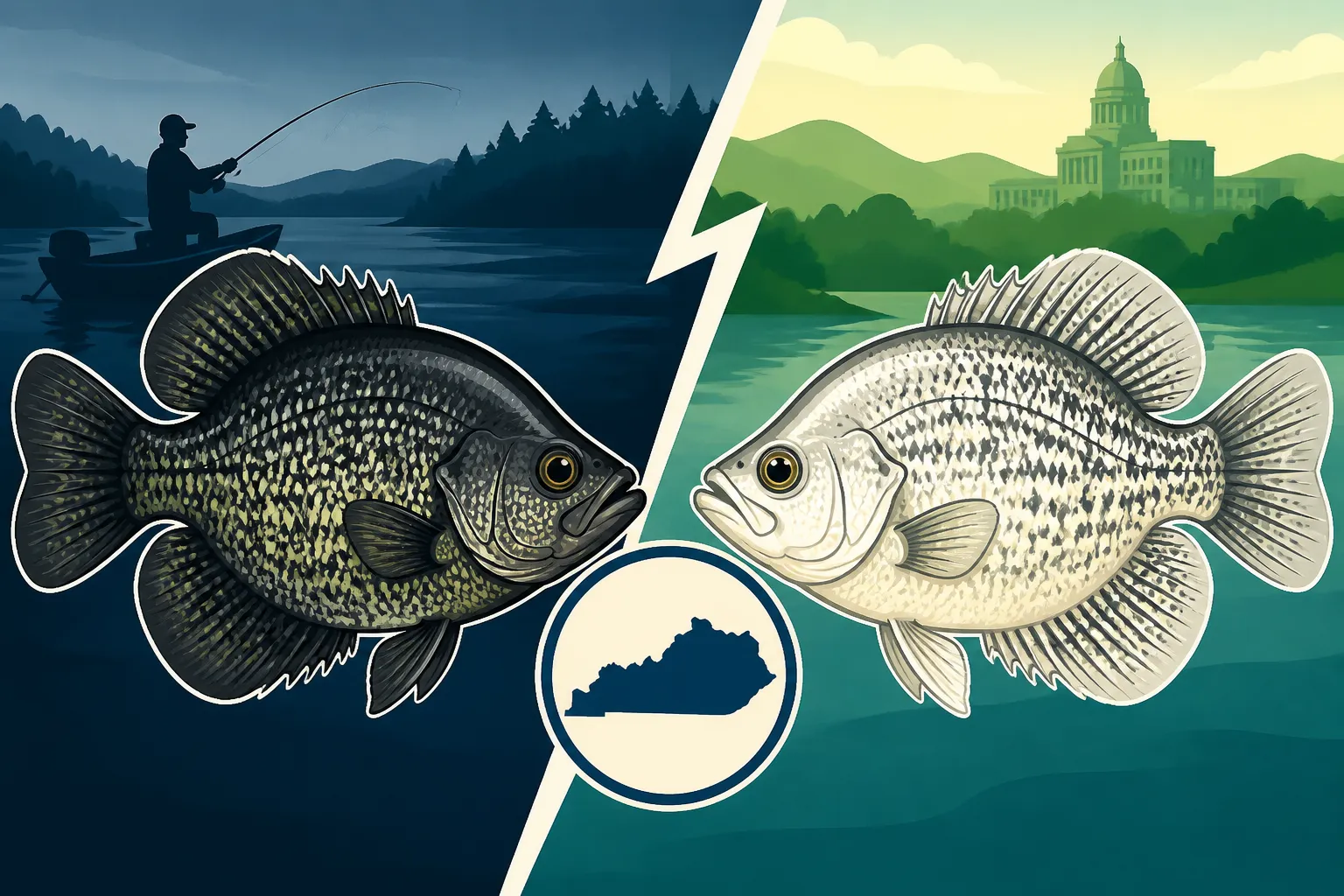
Black crappie tend to have a rounder, more compact body shape, almost like a dinner plate. They're a bit deeper-bodied in proportion to their length. But the real tell-tale sign is their dorsal fin. If you carefully count the stiff, sharp spines in the dorsal fin, a black crappie will almost always have 7 or 8 spines. This consistency is a dead giveaway. White crappie, on the other hand, usually have a more elongated, oval-shaped body, appearing a bit slimmer than their black crappie cousins. Their dorsal fin is also a key identifier: they typically have 5 or 6 dorsal fin spines. This difference in spine count is probably the most foolproof method for identification when you're out fishing. It's a small detail, but it makes a world of difference when you're trying to figure out what you've caught.
Coloration and Markings
While the names "black" and "white" crappie give you a general idea, the actual coloration can vary quite a bit depending on the water clarity, diet, and even the time of year. However, there are some patterns and markings that are pretty consistent.
Black crappie are known for their irregular, speckle-like dark spots scattered across their sides. These spots don't usually form any distinct vertical bars or patterns. Their overall color can range from a silvery-green to a dark, almost bluish-black, especially in clearer waters. The darker the water, the darker the fish tends to be. Their fins often have a mottled or spotted appearance as well. White crappie typically have more distinct vertical bars on their sides. These bars are usually darker than their body color, which tends to be a lighter, more silvery-white or pale green. The bars are often quite noticeable, though they might fade slightly in certain conditions or after the fish has been out of the water for a bit. Think of it like a zebra versus a leopard – the black crappie is the leopard with irregular spots, and the white crappie is the zebra with vertical stripes. Remembering these patterns can help you quickly identify your catch, even if the overall color is a bit ambiguous.
Mouth and Gill Plate Differences
Beyond body shape and markings, if you get up close, you can spot subtle differences in their head and mouth structure that further confirm their identity. These aren't as immediately obvious as the dorsal fin spines, but they're still valid clues.
Black crappie tend to have a slightly smaller mouth compared to white crappie. Their snout can appear a bit more pointed. If you look at the operculum, or gill plate, the black crappie's gill plate typically extends to about the middle of the eye. This isn't a hard and fast rule, as there can be some minor variations, but it's a general characteristic. White crappie, however, usually have a noticeably larger mouth that extends further back, often past the middle of the eye. Their gill plate will also tend to be longer, usually extending almost to the back of the eye. These subtle differences in mouth and gill plate size reflect their feeding habits and preferred prey, which we'll delve into a bit later. So, if you're ever in doubt, a closer inspection of the head can provide additional confirmation.
Habitat Preferences: Where You'll Find Them in Kentucky
Just like people have preferred neighborhoods, black and white crappie have distinct preferences for where they like to hang out in Kentucky's lakes and rivers. Knowing these habitat differences can be a game-changer for your fishing strategy, helping you pinpoint the right spots.
Water Clarity and Cover
The clarity of the water and the type of cover available are big factors in determining whether you're more likely to encounter black or white crappie. They each thrive in different environments, and understanding these can lead to a much more productive day on the water.
Black crappie generally prefer clearer, cooler waters with abundant submerged vegetation, brush piles, and standing timber. Think of the pristine, often deeper sections of lakes or quiet coves where sunlight can penetrate and aquatic plants can grow. They use this dense cover for ambush points and protection from predators. Lakes like Lake Cumberland or some of the clearer coves on Kentucky Lake might lean more towards black crappie habitat. They are often found tucked deep within these structures, making them a bit more challenging to extract, but incredibly rewarding.
White crappie, conversely, are often more tolerant of murkier, warmer, and sometimes more turbid waters. They are commonly found in rivers, large reservoirs with fluctuating water levels, and the main lake channels of many Kentucky lakes. They still appreciate cover, but they're often found around less dense structures like stump fields, riprap, or larger, more open brush piles. They don't need the dense vegetation as much as their black crappie cousins. You'll often find them thriving in areas affected by current or agricultural runoff, making places like the Ohio River tributaries or the main lake bodies of Kentucky Lake and Lake Barkley prime white crappie territory. This adaptability allows them to flourish in a wider range of conditions.
Depth and Structure Preferences
Beyond water clarity, the specific depth and type of underwater structure also play a crucial role in where each crappie species chooses to reside. This can shift throughout the year, but general tendencies remain.
Black crappie tend to favor deeper water, especially during warmer months. They'll often hold tight to complex, vertical structures like submerged trees, deep brush piles, or even artificial fish attractors that have been sunk in deeper coves. They are less prone to suspending in open water, preferring the security of dense cover. In spring, they will move into shallower areas to spawn, but once that's over, they quickly retreat to their deeper sanctuaries. They're often found at depths where the water temperature remains stable and comfortable. Anglers targeting them might use their fish finders to locate these deep structures, then present baits vertically.
White crappie are often more associated with shallower, flatter structures, or areas with a distinct breakline. They might be found over submerged roadbeds, creek channels, or the edges of flats near deeper water. While they'll certainly use brush piles, they don't seem to hug them quite as tightly or as deep as black crappie. They are also more likely to be found suspending in open water, especially over schools of baitfish. Their preference for these types of structures makes them a popular target for anglers who like to troll or spider rig, covering more water to find scattered schools. Understanding these depth preferences can greatly refine your search, whether you're on a familiar lake or exploring somewhere new.
Behavior and Feeding Habits: What Makes Them Tick
Knowing how black and white crappie behave and what they like to eat can give you a significant edge. Their slight biological differences lead to different approaches when it comes to enticing them to bite.
Schooling Tendencies and Group Dynamics
Both crappie species are schooling fish, but there are some nuances in how they organize themselves and interact. These subtle differences can influence how you approach a school once you've found it.
Black crappie typically form tighter, more cohesive schools. When you find one black crappie, you're often in a strong school of them, and they might be holding very close together around structure. This means if you can pinpoint the exact depth and location of a black crappie, you have a good chance of catching several more from that same spot. They tend to be a bit more territorial around their preferred cover, making multiple catches from a single brush pile a common occurrence. This behavior is partly why they're so sought after, as hitting a "hot spot" can lead to quick action.
White crappie, while still schooling, often form looser, more spread-out aggregations, particularly when they're suspending in open water or scattered along a long breakline. They might still be in a group, but not as tightly packed as black crappie. This can sometimes make them harder to "stay on" once you've caught a few, as the school might be moving or more widely dispersed. However, their tendency to roam means you might encounter larger schools spread across a broader area, making trolling or fan-casting highly effective. While both are social fish, the black crappie's tighter schooling can be a blessing for vertical presentations, while the white crappie's looser groups favor covering more ground.
Diet and Foraging Strategies
Their slightly different mouth structures and habitat preferences translate into subtle variations in what they eat and how they hunt for it. Adapting your bait and lure choices to these preferences can be crucial.
Black crappie, with their slightly smaller mouths, tend to feed on smaller prey items. They are primarily sight feeders, ambushing their prey from dense cover. Their diet consists heavily of small baitfish like shad and minnows, as well as aquatic insects, insect larvae, and small crustaceans. They are often found in areas with clearer water where their sight-feeding advantage is maximized. When targeting black crappie, smaller jigs and minnows are often the most effective baits, mimicking the tiny morsels they prefer. Using baits that perfectly replicate these food sources can make all the difference, and you can find a huge variety of micro-jigs and soft plastics online, even on platforms like Amazon.
White crappie, with their larger mouths and tolerance for murkier water, are often more opportunistic feeders. While they certainly eat small baitfish and insects, they can take on slightly larger prey. They are also known to feed more aggressively in areas with current or turbid conditions where their larger mouth can engulf prey more easily. Their diet often includes larger shad, minnows, and even smaller crustaceans. When fishing for white crappie, slightly larger jigs, crankbaits, or minnows can be quite effective. They are often less finicky about the presentation, sometimes hitting aggressively moving baits, especially when they're actively chasing baitfish in open water. Understanding these dietary nuances can help you select the perfect bait size and presentation to maximize your chances.
Fishing Techniques: Tailoring Your Approach
Because black and white crappie have different physical attributes, habitat preferences, and feeding behaviors, it makes sense that the most effective fishing techniques can also differ slightly. Knowing these distinctions can help you rig up for success.
Lure and Bait Choices
While both species will hit similar baits, there are nuances in lure selection that can make one type more appealing to a black crappie versus a white crappie. It often comes down to size, profile, and action.
For black crappie, given their preference for clearer water and smaller prey, subtle presentations and smaller baits often shine. Tiny jigs, usually 1/32 to 1/16 ounce, paired with small soft plastic bodies (often mimicking minnows or insects) are highly effective. Live minnows, particularly smaller ones, fished under a bobber or vertically jigged, are also fantastic choices. The key is a finesse approach: slow retrieves, subtle twitches, and presenting the bait right in their face when they're tucked in thick cover. Their shyer nature in clear water means you need to be precise and often less aggressive with your presentation. Many anglers swear by specific colors of tiny tube jigs or micro-spoons for black crappie, which can be easily sourced from online retailers or your local tackle shop.
White crappie, being a bit more aggressive and found in wider areas, are often more responsive to slightly larger baits and more active presentations. Jigs in the 1/16 to 1/8 ounce range, with chunkier soft plastics or small crankbaits, can be very productive. Live minnows are still a go-to, but you might find slightly larger minnows more appealing to a white crappie. Trolling with multiple rods, often referred to as "spider rigging," is a popular technique for white crappie, allowing you to cover vast areas and find scattered schools. The baits used for trolling often include small crankbaits or Road Runner-style spinnerbaits. Because they often suspend and chase baitfish, a little flash or vibration can go a long way in attracting a white crappie's attention. If you're looking to stock up on a variety of jig heads or soft plastics for different conditions, searching on Amazon can give you a lot of options.
Seasonal Patterns and Prime Times
Both crappie species follow similar seasonal movements related to water temperature and spawning, but their precise timing and preferred locations can vary. Understanding these patterns is key to being in the right place at the right time.
Spring is prime crappie fishing season in Kentucky for both species, as they move shallow to spawn. However, black crappie tend to spawn a bit earlier, when water temperatures are slightly cooler, typically in the low to mid-50s Fahrenheit. They'll often spawn in clearer, shallower coves with lots of submerged brush or vegetation. This means hitting those clear, brushy coves early in the spring could yield a fantastic black crappie bite. You can learn more about this by checking out When Does Crappie Spawning Start in Kentucky.
White crappie typically spawn slightly later, often when water temperatures reach the mid-50s to low-60s Fahrenheit. They'll also move shallow, but they might utilize more open areas, stump fields, or riprap banks, even in slightly turbid water. So, if the water is a bit stained and the black crappie bite has slowed, the white crappie might just be getting started. After the spawn, both species will retreat to deeper water, often suspending over creek channels or holding tight to deep structures. During the heat of summer, they become more lethargic, often moving to the cooler thermocline. In fall, as waters cool, they become active again, feeding heavily in preparation for winter, often moving into shallower depths as baitfish push up. Winter can be tough, but dedicated anglers can find them schooled tightly in deep channels or around major structure. For deeper dives into seasonal timing, you might find articles like Kentucky Lake Crappie Fishing: Best Time of Year or Kentucky Crappie Spawn Timing by Water Temperature helpful.
Size and Growth: What to Expect from Your Catch
While both black and white crappie are fantastic sportfish and delicious table fare, there are some differences in their growth rates and potential sizes that might influence which species you target for a trophy.
Average Size and Growth Rates
Generally speaking, you might notice a slight difference in the average size of black versus white crappie, though this can vary greatly from lake to lake based on genetics, food availability, and fishing pressure.
Black crappie often grow a bit slower than white crappie, and while they can certainly reach impressive sizes, they might be slightly smaller on average in many Kentucky waters. A "slab" black crappie in Kentucky is often considered anything over 12 inches, with 14-15 inches being a true trophy. They tend to live longer, which allows them to pack on the pounds over time, but their initial growth rate isn't as rapid as their white crappie counterparts. Their preference for clearer, cooler water might also play a role in their metabolism and growth.
White crappie generally have a faster growth rate and can reach larger sizes more quickly, especially in fertile, productive waters. It's not uncommon to pull 13-15 inch white crappie from many of Kentucky's large reservoirs. They tend to be more abundant and perhaps more forgiving in terms of population density, which can lead to more opportunities to catch larger individuals. While a 1-pound black crappie is a fantastic catch, a 1-pound white crappie might be slightly more common. However, both species can and do produce absolute monsters in Kentucky, challenging anglers to find that next record-breaker. For more insights on this, check out How Big Do Crappie Get in Kentucky Lakes?.
Trophy Potential and State Records
While both species offer exciting trophy potential, there are some interesting patterns when looking at state records and the likelihood of catching a truly massive specimen.
Kentucky has a healthy population of both black and white crappie, and both species can grow to impressive sizes. Historically, the state record for white crappie has often been slightly heavier than the black crappie record, reflecting their faster growth and potential to pack on pounds. However, a "trophy" crappie for either species is a fish over 2 pounds, and anything exceeding that is truly exceptional. The key to catching a trophy crappie, regardless of species, is fishing healthy waters that have good forage bases and a suitable environment for fish to grow old and large. Patience, persistence, and knowing the specific habits of the species you're targeting will increase your chances. Always be sure to check the Kentucky Crappie Daily Limit Rules to ensure you're fishing legally. You'll often find that certain lakes are renowned for producing bigger crappie of one species over another, so doing your homework on specific bodies of water can pay dividends.
Comparing Crappie: A Quick Look
To help you keep these distinctions straight, here's a handy table summarizing the key differences we've discussed. It's a quick reference guide to remember when you're out on the water.
| Feature | Black Crappie | White Crappie |
|---|---|---|
| Dorsal Fin Spines | 7-8 spines | 5-6 spines |
| Body Shape | Deeper-bodied, rounder, "dinner plate" | More elongated, oval, slimmer |
| Coloration/Markings | Irregular, speckled dark spots | Distinct vertical dark bars |
| Mouth Size | Slightly smaller, snout more pointed | Larger, extends past middle of eye |
| Gill Plate | Extends to middle of eye | Extends almost to back of eye |
| Preferred Water Clarity | Clearer, cooler water | More tolerant of turbid, warmer water |
| Preferred Cover/Structure | Dense submerged vegetation, deep brush, timber | Stump fields, riprap, creek channels, open water |
| Schooling | Tighter, more cohesive schools | Looser, more scattered schools |
| Diet | Smaller baitfish, insects, larvae | Slightly larger baitfish, opportunistic |
| Typical Lure/Bait | Smaller jigs (1/32-1/16 oz), small minnows | Slightly larger jigs (1/16-1/8 oz), larger minnows, small crankbaits |
| Growth Rate | Generally slower | Generally faster |
Final Thoughts on Crappie Identification
Understanding the differences between black and white crappie isn't just about trivia; it's about becoming a more effective and knowledgeable angler. Knowing what you're likely to catch in a particular type of water, or what bait might be most effective for the species you're targeting, can dramatically improve your success. Whether you're fishing a clear, brushy cove for black crappie or trolling a muddy river channel for white crappie, Kentucky offers incredible opportunities for both. So next time you're out on the water, take a moment to look closely at your catch. You might just learn something new that changes your whole fishing strategy! Don't forget to review the Kentucky Fishing Regulations Explained before you head out, and remember that Kentucky Fishing License Guide is your first step to a great day on the water.
Disclaimer
This article is for general informational purposes only and does not constitute professional advice. Laws, prices and regulations vary by location and change over time. Consult a qualified professional for guidance on your specific situation.