Rock Bass Fishing Spots in Mountain Streams
For anglers who love the peace and quiet of smaller waters, the thought of finding a hidden gem—a stream teeming with feisty, hard-fighting fish—is incredibly appealing. If you've ever dreamt of battling a surprisingly stout fish in a picturesque mountain setting, then chasing rock bass in Kentucky's clear, rocky streams might just be your next favorite adventure. This guide will help you pinpoint those prime rock bass hideouts, understand their behavior, and equip you with the knowledge to make your stream fishing trips successful and deeply satisfying.
Understanding Kentucky's Mountain Streams and Rock Bass Habitat
Kentucky is often lauded for its massive lakes and productive rivers, but tucked away in the eastern part of the state, particularly within the Appalachian foothills and the Daniel Boone National Forest, lies a network of mountain streams that are absolute havens for various fish species, including the often-underestimated rock bass. These streams offer a completely different fishing experience than the sprawling reservoirs, demanding a more intimate approach and rewarding those who pay attention to their subtle nuances.
The Character of Mountain Streams
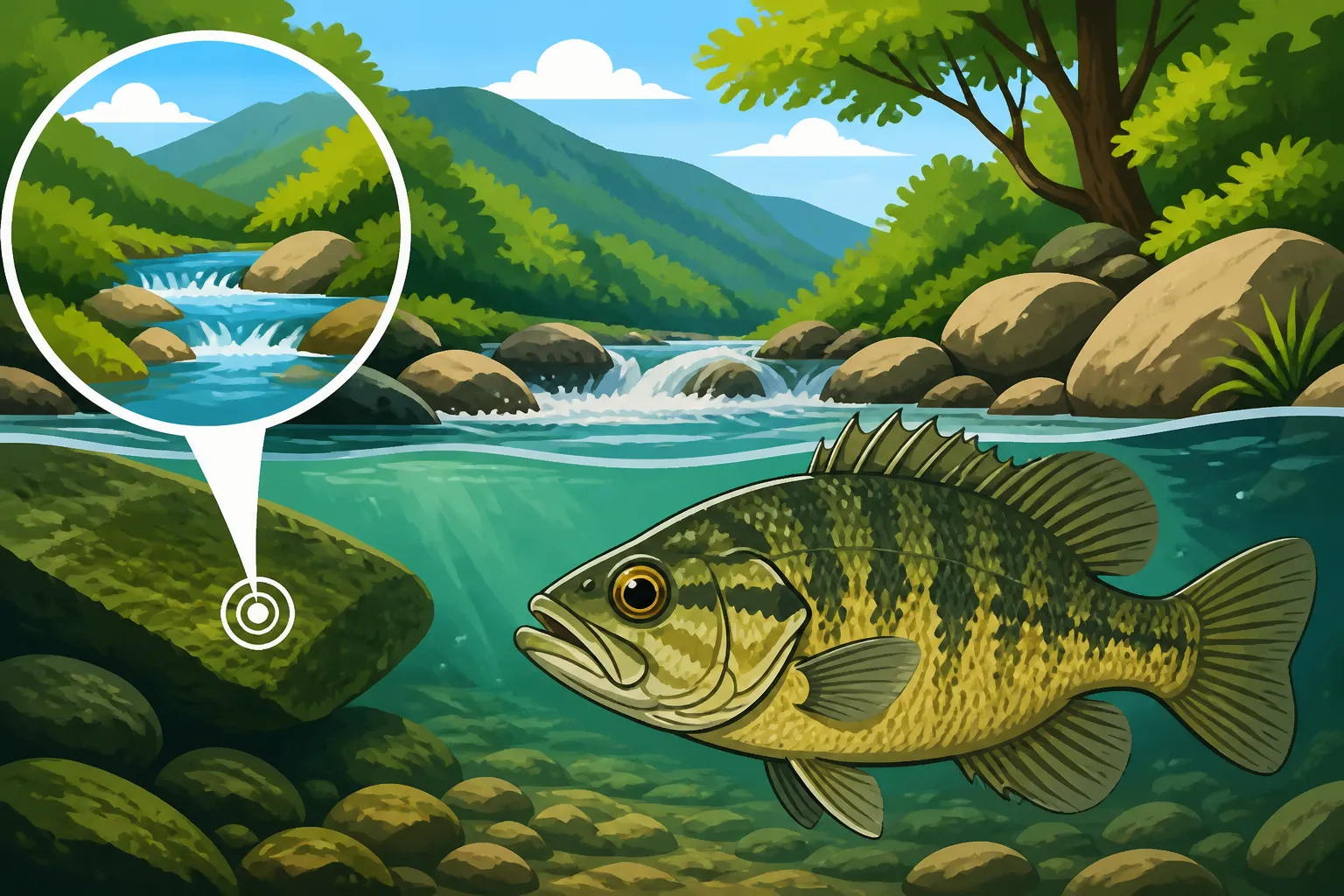
Imagine crystal-clear water cascading over bedrock, carving out deep pockets, and tumbling over rocky riffles. That's the typical scene in a Kentucky mountain stream. These waterways are characterized by their varying flows, from swift, oxygenated rapids to calm, shaded pools. The bottoms are usually a mix of gravel, cobblestone, and large boulders, providing an abundance of cover and food sources. The water is often cooler than in larger, open bodies, making it ideal for species that prefer a slightly colder, more oxygen-rich environment. The banks are frequently overgrown with rhododendron, hemlock, and various hardwoods, creating dense shade and contributing leaf litter and woody debris that further enhance the habitat.
Many of these streams are fed by natural springs, maintaining a consistent flow and water temperature even during drier spells. This stable environment is crucial for rock bass, as it provides a reliable source of clean water and invertebrate forage. You'll find that the water clarity in these streams is exceptional, which means your approach needs to be stealthy, but it also allows for incredible sight fishing opportunities. It's a stark contrast to the often murkier waters of some of our larger lakes, requiring a different set of skills and a keen eye for subtle fish movements.
Why Rock Bass Thrive Here
Rock bass, sometimes locally known as "redeyes" or "goggle-eyes" due to their distinctive red irises, are perfectly adapted to these rocky, flowing environments. Unlike their cousins, the largemouth bass, which prefer weed beds and woody cover in slower, warmer waters, rock bass are champions of the current and structure. Their scientific name, Ambloplites rupestris, literally translates to "blunt-nosed rock dweller," which tells you everything you need to know about where to find them.
They are ambush predators, often found tucked behind boulders, at the base of small waterfalls, or in the calmer eddies behind current breaks. The abundant crayfish, aquatic insects, and small minnows that call these streams home form a rich buffet for rock bass. The constant flow brings food directly to them, and the rocky substrate provides endless nooks and crannies for hiding from both predators and prey. They are incredibly hardy fish, capable of withstanding fluctuating water levels and temperatures, making them a reliable target throughout many months of the year. If you're looking for Rock Bass and Warmouth: Kentucky's Overlooked Panfish, you won't be disappointed by these feisty fighters.
Pinpointing Prime Rock Bass Fishing Spots
Finding rock bass in a mountain stream isn't about casting aimlessly; it's about reading the water and identifying the key features that attract these structure-loving fish. Once you learn to interpret the currents and cover, you'll start seeing potential rock bass haunts everywhere.
Classic Rock Bass Structures
When you're wading through a stream or peering from the bank, keep an eye out for these tell-tale structures. Each one offers a unique advantage for a rock bass looking for food or shelter.
- Boulders and Ledges: This is the most obvious one, given their name. Rock bass love to hide on the downstream side of large boulders or under rock ledges, where they can escape the main current while still having a clear view of anything drifting by. The bigger the boulder, the better, as it creates a larger current break and a more significant ambush point. Don't just cast at the boulder; aim for the calm pocket behind it or directly in front of it where the current slows.
- Current Seams and Eddies: Where faster water meets slower water, you'll find a current seam. These are conveyor belts for food. Rock bass will often position themselves just inside the slower water, darting out into the seam to snatch unsuspecting prey. Eddies, those swirling pockets of calmer water often found behind large obstructions or on the inside bends of the stream, are also prime real estate.
- Log Jams and Fallen Trees: While rocks are paramount, woody debris is also fantastic cover. A fallen tree or a tangle of branches can create excellent ambush points and provide overhead cover from avian predators. These spots also tend to accumulate natural food items. However, be prepared for snags, as your lure will inevitably get tangled if you're not careful.
- Undercut Banks: Over time, the force of the water can erode the bank, creating a hollowed-out section beneath the surface. These undercut banks provide deep, dark hiding places for rock bass, especially when the water levels are a bit higher. Present your bait right along the edge of the undercut to coax them out.
- Deep Pools: While rock bass love current, they also congregate in deeper pools, especially those with rocky bottoms or submerged structure. These pools often serve as resting areas or staging grounds, particularly during periods of bright sunshine or after heavy rains when the fish might seek refuge from strong currents.
Seasonal Movements and Time of Day
Like most fish, rock bass behavior can shift with the seasons and time of day. While they are generally active, understanding these patterns can significantly boost your success.
- Spring and Fall: These are often the best times for consistent action. In spring, as water temperatures rise, rock bass become very aggressive, feeding heavily after the leaner winter months and preparing for their spawn. They'll be found in relatively shallow water, often near spawning beds (which are typically shallow, gravelly areas). In fall, they're once again feeding aggressively to put on weight for winter, often moving into slightly deeper pools during colder snaps but still holding tight to structure.
- Summer: During the heat of summer, rock bass might become a bit more lethargic during the brightest parts of the day. You'll want to target them in heavily shaded areas, deeper pools, or during the cooler hours of early morning and late evening. They will still be near current breaks, but perhaps in slightly deeper pockets of water where temperatures are more stable. Overcast days can also provide excellent summer fishing.
- Winter: Fishing for rock bass in mountain streams during winter can be tough, but not impossible. They will retreat to the deepest, slowest-moving pools and concentrate in tight schools. Their metabolism slows, so presentations need to be slower and more subtle.
A useful table to help visualize common stream features and where rock bass might hold:
| Stream Feature | Rock Bass Location Preference | Best Fishing Approach |
|---|---|---|
| Large Boulders | Downstream side, calm pockets, directly in front of current break | Cast upstream, let bait drift naturally into pocket |
| Current Seams | Just inside slower water, darting into main current | Cast across seam, retrieve slowly with the current |
| Deep Eddies | Anywhere within the swirling, calmer water | Fan casts, work all depths with small jigs or spinners |
| Log Jams/Fallen Trees | Around the edges, under submerged branches | Accurate casts to edges, careful retrieves to avoid snags |
| Undercut Banks | Deepest, darkest sections under the bank | Pitch or flip bait along the bank's edge |
| Gravelly Riffles | Edges of deeper runs adjacent to fast water (feeding areas) | Drifting small baits, especially during low light |
| Deep Pools | Submerged structure, bottom features, shaded areas | Slow retrieves, bottom bumping, often good for sight fishing |
Gear and Techniques for Mountain Stream Rock Bass
Successfully catching rock bass in mountain streams doesn't require a ton of specialized gear, but using the right setup can make a huge difference in enjoyment and effectiveness. Simplicity and stealth are often key.
Essential Gear for Stream Fishing
Think light, agile, and robust enough to handle rocky terrain and feisty fish.
- Rods and Reels: An ultralight or light action spinning rod, typically 5 to 6.5 feet long, paired with a small spinning reel (size 1000 or 2000) spooled with 4-6 lb test monofilament or fluorocarbon line is perfect. This setup allows for accurate casting of small lures, provides excellent sensitivity to detect subtle bites, and makes even a small rock bass feel like a trophy. Many anglers find excellent options for Ultralight Spinning Gear for Trout Fishing equally suitable for rock bass. You can find some fantastic ultralight combos on Amazon that won't break the bank.
- Lures and Baits: Rock bass aren't usually picky, but matching the hatch can help.
- Small Spinners: Classic Mepps or Rooster Tail spinners in sizes #00 to #1 are deadly. Silver, gold, or black blades with white, black, or chartreuse dressings are very effective.
- Tiny Crankbaits: Micro crankbaits that imitate small minnows or crayfish are fantastic, especially when fished around deeper structure. Look for sizes under 2 inches.
- Jigs: Small marabou jigs or plastic grub jigs (1/32 oz to 1/8 oz) in natural colors like brown, olive, or black, or brighter colors like chartreuse, can be incredibly effective, especially when tipped with a small piece of worm.
- Soft Plastics: Tiny tubes, creature baits, or curly-tail grubs fished on a small jig head mimic the crayfish and insects rock bass feed on.
- Live Bait: Small worms (redworms, nightcrawlers), crickets, or even small minnows are irresistible to rock bass. Fish them under a small bobber or on a light bottom rig with a split shot.
- Wading Gear: Chest waders or even just quick-drying shorts and wading boots (with good grip!) are essential for navigating these streams. Felt or rubber soles with studs provide the best traction on slippery rocks. A wading staff can offer additional stability, especially in swifter currents or when crossing deeper sections.
- Other Essentials: A small tackle box or vest to keep your lures organized, a pair of pliers for hook removal, a small net, polarized sunglasses to spot fish and submerged structure, and plenty of water or snacks. Don't forget your Kentucky Fishing License Guide and a way to carry it legally!
Effective Techniques for Stream Rock Bass
The key to stream fishing is often a natural presentation and a keen eye for where fish might be holding.
- Upstream Cast and Drift: This is a go-to technique for stream fishing. Cast your lure or bait upstream and allow it to drift naturally downstream with the current, retrieving just fast enough to keep slack out of your line and impart some action to your lure. This mimics how natural food items drift through the water and often results in a strike as your offering passes a fish's holding spot. This technique is also excellent for How to Fish a Trout Stream in Spring.
- Targeting Structure Directly: Once you've identified a prime rock, log, or undercut bank, make precise casts to these areas. For a boulder, cast a few feet upstream of it and let your lure drift right into the calm pocket behind it. For an undercut bank, gently pitch your bait right along the edge.
- Fan Casting in Pools: In larger, deeper pools, fan cast your lures to cover as much water as possible. Start near the banks and gradually work your way towards the center. Experiment with different depths and retrieve speeds until you find what triggers a bite.
- Stealth and Approach: Mountain streams, especially clear ones, demand a stealthy approach. Wear natural colors, move slowly, and avoid making sudden movements or casting a long shadow over the water. Rock bass, much like trout, can be easily spooked. Keep a low profile, especially when approaching promising spots.
- Reading the Water: Developing an eye for reading water is paramount. Look for changes in current speed, depth, water color, and the presence of foam lines (which often indicate current seams). These visual cues will tell you where fish are most likely to be holding, feeding, or resting. Improving your ability to How to Read Water for Fish Location will benefit all your fishing trips.
Conservation and Enjoying Your Mountain Stream Experience
Fishing these beautiful mountain streams is about more than just catching fish; it's about experiencing the natural beauty of Kentucky and contributing to the health of these ecosystems.
Practicing Catch and Release
While rock bass are certainly tasty, many anglers choose to practice catch and release, especially for the larger, older fish. These streams are wild places, and keeping populations healthy ensures future generations can enjoy the same fantastic fishing. If you do decide to keep a few for a meal, always be mindful of local regulations. Kentucky Statewide Bass Size and Daily Limit Rules apply to rock bass as well, as they are part of the sunfish family.
Handle fish gently, especially if you plan to release them. Wet your hands before touching the fish, use barbless hooks or de-barb your hooks, and quickly return them to the water. A quick picture is fine, but minimize their time out of the water.
Respecting the Environment
These mountain streams are often nestled within public lands, like state forests or parts of the Daniel Boone National Forest. It's crucial to leave no trace. Pack out everything you pack in, and perhaps even pick up any litter you might find. Be respectful of private property if fishing near residential areas, and always check for access points.
Consider the impact of your wading. Avoid disturbing stream beds unnecessarily, especially during spawning seasons. These small actions help preserve the delicate balance of these aquatic environments. For information on general license requirements, check out the Kentucky Fishing License Guide.
Beyond the Catch: The Overall Experience
One of the greatest joys of fishing mountain streams for rock bass is the immersive experience it offers. You're not just fishing; you're hiking, exploring, and connecting with nature in a profound way. The sounds of rushing water, chirping birds, and rustling leaves create a symphony that's hard to beat. You might even spot other wildlife, from deer and wild turkeys to various bird species.
It's a chance to slow down, practice patience, and appreciate the smaller victories—a perfectly placed cast, a strong fight from a feisty rock bass, or simply the beauty of a pristine Kentucky stream. Whether you're a seasoned angler looking for a new challenge or a beginner wanting to escape the crowds, rock bass fishing in Kentucky's mountain streams offers a rewarding and memorable adventure.
Disclaimer
This article is for general informational purposes only and does not constitute professional advice. Laws, prices and regulations vary by location and change over time. Consult a qualified professional for guidance on your specific situation.