How to Read Water for Fish Location
There’s nothing quite as frustrating as showing up to your favorite Kentucky fishing spot, spending hours casting, and coming up empty-handed while someone else nearby is hauling them in. It often feels like they have some secret knowledge, doesn't it? Well, there's no magic spell, but there is an art to understanding fish behavior by observing their environment. This comprehensive guide is all about teaching you how to "read the water" – deciphering the subtle and not-so-subtle clues that tell you where fish are holding, feeding, and resting, so you can increase your chances of a successful day on the water.
Understanding the Basics of Fish Behavior in Water
Before you can truly read the water, it helps to understand why fish choose certain spots. They aren't just swimming around aimlessly; every move they make is driven by fundamental needs. Once you grasp these motivations, their preferred locations start to make a lot more sense.
Why Fish Hold Where They Do
Fish, just like us, have a survival instinct that dictates their daily lives. Their primary needs are quite simple: food, shelter, and comfort. When you're out on the water, whether it's the sprawling expanse of Kentucky Lake: The State's Top Bass Fishing Destination or a quiet little creek, every fish is looking for a place that satisfies these requirements. Think of it from their perspective: they need to eat, they don't want to be eaten, and they prefer to be in water that feels just right, not too hot, not too cold, not too fast, not too still.
Food sources are paramount. Fish will often position themselves near areas where baitfish congregate or insects fall into the water. This might be at the edge of a weed line where smaller fish hide, near submerged timber that attracts minnows, or even under overhanging branches where terrestrial insects might drop. Shelter is equally crucial. Fish are prey animals, and they need places to hide from predators like ospreys, herons, and even larger fish. This shelter also protects them from strong currents, bright sunlight, and even harsh weather. Think about brush piles, rock formations, fallen trees, docks, or even the shadows cast by a boat. Comfort ties into everything else – it's about optimal water temperature, dissolved oxygen levels, and current. Too much current and they expend too much energy; too little, and oxygen might be scarce. Different species have different comfort zones, which is why understanding the specific fish you're targeting is so important.
Seasonal Movements and Habitat Preferences
Fish don't just stay in one spot all year; their locations shift dramatically with the seasons and changing conditions. Understanding these broad movements is your first step in narrowing down where to look. In spring, for example, many species like bass and crappie move into shallower waters to spawn. This means they'll be found around submerged vegetation, gravel beds, or rocky shorelines that warm up quickly under the sun. They're focused on reproduction and feeding aggressively to prepare. If you're targeting crappie, knowing What Water Temperature Triggers the Crappie Spawn in Kentucky is key.
As summer heats up, many fish retreat to deeper, cooler water, or seek out shade and cover. They might move to thermoclines in larger lakes, hang out under boat docks, or burrow into dense weed beds. Catfish, however, might become more active in the warm nights, moving into shallower feeding flats. Fall sees fish becoming very active again, often feeding heavily to bulk up for winter, and they might be found chasing baitfish schools in open water or along prominent structures. Finally, winter brings a slowdown, with fish often congregating in deep holes, near drop-offs, or around structure in calm, stable water. Knowing these general seasonal patterns for species like Largemouth Bass Fishing in Kentucky: The Complete Guide] will save you countless hours of casting into empty water.
Reading Surface and Structure Cues
Now that we understand why fish hold where they do, let's talk about how to spot those prime locations. The surface of the water and visible structures are often the most obvious clues.
Surface Activity and Visual Indicators
The surface of the water can tell you a huge amount if you know how to read it. One of the most exciting and undeniable signs of fish is direct surface activity. This includes fish jumping, splashing, or schooling baitfish breaking the surface as they try to escape predators. Seeing a flurry of activity usually means game fish are actively feeding nearby. You might see a bass blow up on a shad, or a school of white bass churning the surface as they drive baitfish to the top. Keep an eye out for subtle ripples or boils, too, which could indicate fish feeding just below the surface, even if they aren't fully breaking it. A good pair of polarized sunglasses, easily found on Amazon, will cut the glare and let you see into the water better, revealing these subtle movements.
Beyond direct fish activity, look for signs of baitfish themselves. Are there small minnows dimpling the surface? Are flocks of birds like herons or ospreys actively fishing? Birds are often excellent indicators of where baitfish, and therefore game fish, are concentrated. Even floating debris or foam lines can indicate current breaks and eddy lines where food concentrates. If you're bank fishing, walk along the shore and observe how the water behaves near different features. For instance, sometimes you'll see tiny insects hatching, and then small fish will start to rise to feed on them, attracting larger predators. These visual cues are often your first and best hint that you're in the right neighborhood.
Submerged and Emergent Structure
Structure is any physical feature in or on the water that can provide fish with food, shelter, or comfort. This can be anything from a fallen tree to a subtle change in the lake bottom. Learning to identify and interpret structure is paramount. Emergent structure is easy to see: docks, bridge pilings, standing timber, lily pads, rock outcroppings, and weed lines. Fish love these features because they offer immediate cover and ambush points. Bass, crappie, and panfish will hold tight to dock pilings or the edges of lily pads, waiting for an unsuspecting meal to swim by. The deeper parts of a bridge piling can hold sauger or walleye, especially when there's current.
Submerged structure is trickier but often more productive because it's less pressured. This includes brush piles, rock piles, old roadbeds, submerged humps, ledges, and drop-offs. While you can't always see these from the surface, changes in current, depth, or even vegetation growth can hint at their presence. Your fish finder will be your best friend here, but even without one, you can often feel subtle changes in the bottom with your lure, or notice how the water flows differently. A good fishing map can also highlight these underwater features. Remember that the edge of any structure is often the most productive, as fish can dart out to feed and quickly retreat to cover. Consider looking for tackle and gear for bank fishing on Amazon, as a good telescopic rod might help you reach some of those trickier spots near emergent structure.
Interpreting Water Conditions and Currents
Beyond what you can see, what you can't see—the water itself—holds vital clues about fish location. Understanding temperature, clarity, oxygen, and current is like having X-ray vision into the fish's world.
Water Temperature, Clarity, and Oxygen
These three factors are massive drivers of fish behavior. Water temperature dictates a fish's metabolism and comfort level. Every species has a preferred temperature range. For example, cold-water species like trout thrive in cooler waters, while bass prefer warmer temperatures, often dictating their depth. In summer, surface temperatures can be too warm, driving fish deeper to the thermocline where cooler, more stable water is found. In winter, even small temperature differences in deeper holes can concentrate fish. A simple water thermometer, available through retailers like Amazon, can be an invaluable tool, especially when targeting specific species.
Water clarity also plays a huge role. Clear water often means fish are more wary and rely on sight to feed, so they might hug cover more tightly, or you might need to use more subtle presentations or smaller lures. Stained or muddy water reduces visibility, making fish rely more on their lateral line (which detects vibrations) and scent. In these conditions, brighter colored lures, those that displace more water, or baits with strong scents often perform better. Fish might also move closer to shore or shallower in murky water as their visibility advantage diminishes. Dissolved oxygen is an unseen but critical factor. Poor oxygen levels can stress fish and drive them away from an area. This is particularly relevant in stagnant backwaters during hot summers or under ice cover in winter. Aerated areas, like those near incoming creeks or spillways, can be oxygen oases.
Understanding Current and Slack Water
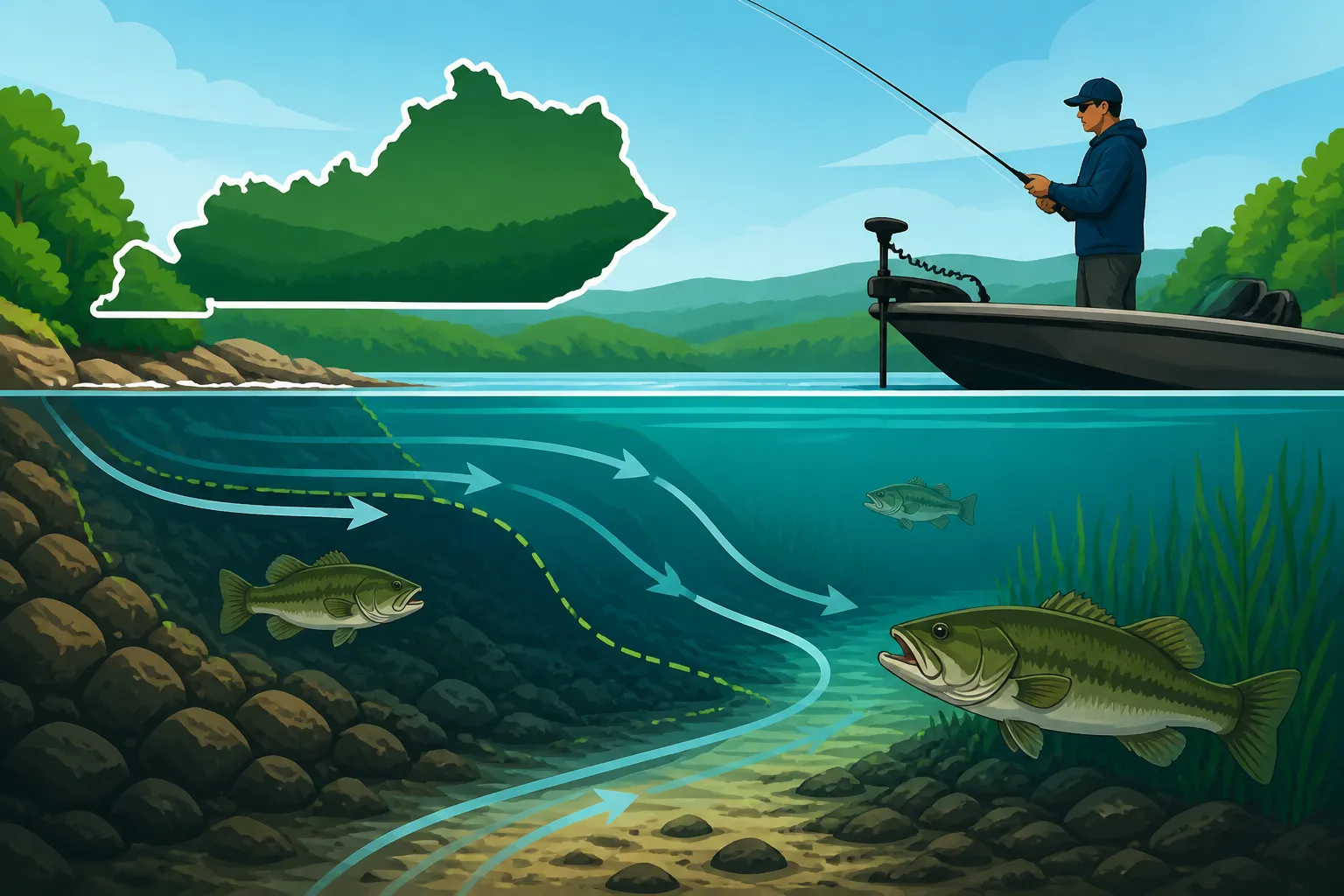
Current is essentially a conveyor belt for food, and fish will use it to their advantage. In rivers like the Ohio River or even larger lakes with significant current, fish position themselves to expend minimal energy while waiting for food to be delivered. This usually means they'll hold just out of the main current, in what's called "slack water" or an "eddy," looking towards the faster moving water. An eddy is a swirling pool behind an obstruction (like a rock, log, or bridge piling) where the current is significantly reduced or even reversed. Fish can sit comfortably in the eddy, darting out into the current to snatch passing baitfish or insects, then retreating. Learning how to read the current and identify these subtle seams and eddies is a game-changer for river fishing. If you're fishing on the Ohio River, understanding how to pinpoint Best Catfish Fishing Spots on Kentucky's Ohio River often means understanding how catfish relate to current.
The "seam" where fast water meets slow water is almost always a hotspot. Think about a river bend: the outside bend typically has faster, deeper water, while the inside bend has slower, shallower water. Fish will often hold on the slower side, or right on the current break. Below dams, you'll find powerful currents, but also large eddies and foam lines that concentrate bait and offer prime ambush points. Even in lakes, wind can create currents and "wave action" that moves baitfish and oxygenates the water, drawing game fish to the wind-blown side or points. Pay attention to how the current moves your boat or your line; it's telling you a story about where the fish are hiding.
Putting It All Together: A Systematic Approach
Reading the water isn't just about spotting one thing; it's about piecing together all the clues like a detective. It takes practice, but developing this skill will revolutionize your fishing success.
Developing Your "Fish Eye"
Developing your "fish eye" is all about training yourself to observe and interpret the environment around you. It's about consciously looking for those subtle clues we've discussed, rather than just blindly casting. Start by surveying the entire area before you even make your first cast. What does the surface look like? Are there any birds? What kind of structure is visible, both emergent and what you can infer is submerged? How is the wind affecting the water? Where are the shadows falling? Think about the sun's position and how it might be warming certain areas or creating shade.
It also involves a bit of trial and error. Make a cast and pay attention to how your lure behaves. Does it hit bottom quickly or slowly? Does it snag on structure? Does it get hung up in weeds? These actions tell you about the unseen environment beneath the surface. If you're on a boat, use your electronics to confirm what your eyes are telling you about depth, contours, and structure. Practice identifying different types of structure and imagining how a fish might use them. The more you consciously observe, the more intuitive it becomes. Over time, you'll start to recognize patterns that consistently hold fish in different conditions, turning you into a much more effective angler. You'll find yourself making less random casts and more targeted ones.
Combining Data for Better Decisions
The real magic happens when you start combining all the data points you're gathering. It's rarely one factor alone that tells you where the fish are; it's the confluence of several. For example, during a spring morning in Kentucky, you might see a shallow cove with lily pads (emergent structure), notice baitfish dimpling the surface (surface activity), and feel that the water temperature is slightly warmer in that area (water conditions). This combination of clues screams "bass spawning or feeding!" It's a much stronger indicator than any single clue on its own.
Think systematically. First, consider the season and time of day to understand general fish behavior (e.g., Kentucky Bass Fishing: The April-May Peak Season). Then, observe the water conditions: temperature, clarity, and current. Next, identify prominent structures – both visible and those you're aware of from maps or electronics. Finally, look for any direct signs of fish activity. Put it all into a mental (or even physical) checklist. Where do all these factors align to create the optimal food, shelter, and comfort zone for the fish you're targeting? That's your prime location. The more you practice this holistic approach, the better you'll become at predicting fish locations, and the more productive your fishing trips across Kentucky will be, whether you're using Best Fishing Kayaks for Kentucky Lakes and Rivers or fishing from the bank.
| Water Feature / Condition | Likely Fish Species | Why Fish are There | Optimal Conditions |
|---|---|---|---|
| Weed Lines / Lily Pads | Bass, Crappie, Panfish | Ambush cover, baitfish habitat, shade | Warm, clear to slightly stained water |
| Fallen Trees / Brush Piles | Bass, Crappie, Catfish | Shelter, ambush points, congregates bait | All seasons, especially when fish seek cover |
| Rock Piles / Ledges | Bass, Walleye, Sauger, Catfish | Structure, current breaks, food source | Vary by species, often deeper water |
| Docks / Bridge Pilings | Bass, Crappie, Panfish, Sauger | Shade, cover, current breaks, vertical relief | Sunny days, areas with current |
| Current Seams / Eddies | Catfish, Bass, Sauger | Resting, ambush points for drifting food | Rivers, dam discharges, windy points |
| Warm Water (Shallow) | Bass, Crappie, Panfish | Spawning, feeding (spring/fall) | Sunny, calm days in spring |
| Cooler Water (Deep) | Bass, Walleye, Trout, Catfish | Comfort, oxygen (summer/winter) | Hot summer days, clear water lakes |
| Cloudy / Stained Water | Catfish, Bass | Reduced visibility for predators, easier ambush | After rain, early mornings, low light |
Disclaimer
This article is for general informational purposes only and does not constitute professional advice. Laws, prices and regulations vary by location and change over time. Consult a qualified professional for guidance on your specific situation.