Kentucky Statewide Bass Size and Daily Limit Rules
Few things are more frustrating for a Kentucky angler than heading out to your favorite fishing spot, having a fantastic day on the water, only to realize you’re not entirely sure about the exact size and creel limits for the bass you've landed. It’s a common worry, especially with so many beautiful lakes and rivers across the Commonwealth, and knowing the statewide rules is your first, best line of defense against misunderstanding. This comprehensive guide is here to clear up the confusion, helping you understand the foundational bass regulations that apply across most of Kentucky's public waters.
Understanding Kentucky's General Bass Regulations
When you're out fishing for bass in Kentucky, it's easy to get caught up in the thrill of the catch. But before that fish hits the livewell, it's crucial to know the rules. The Kentucky Department of Fish and Wildlife Resources (KDFWR) sets these guidelines to ensure healthy fish populations for everyone, from seasoned pros to kids on their first outing. Most of the time, when we talk about bass, we're lumping together largemouth, smallmouth, and spotted bass under a general black bass umbrella for regulatory purposes.
The Statewide Largemouth Bass Rule
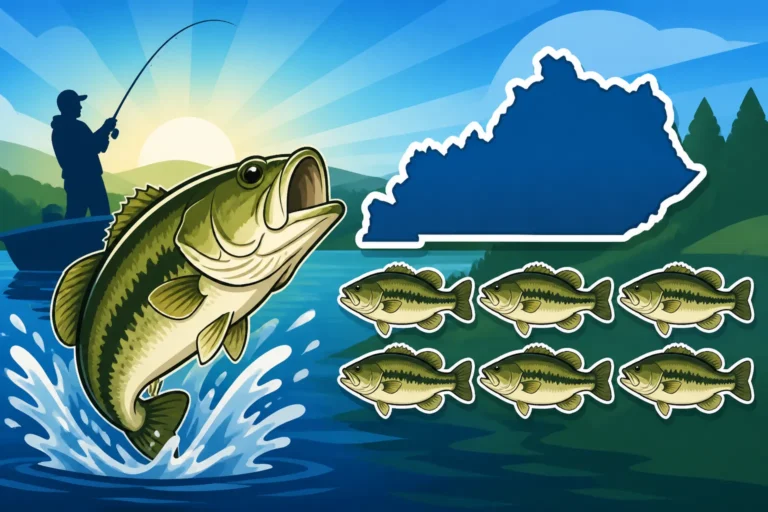
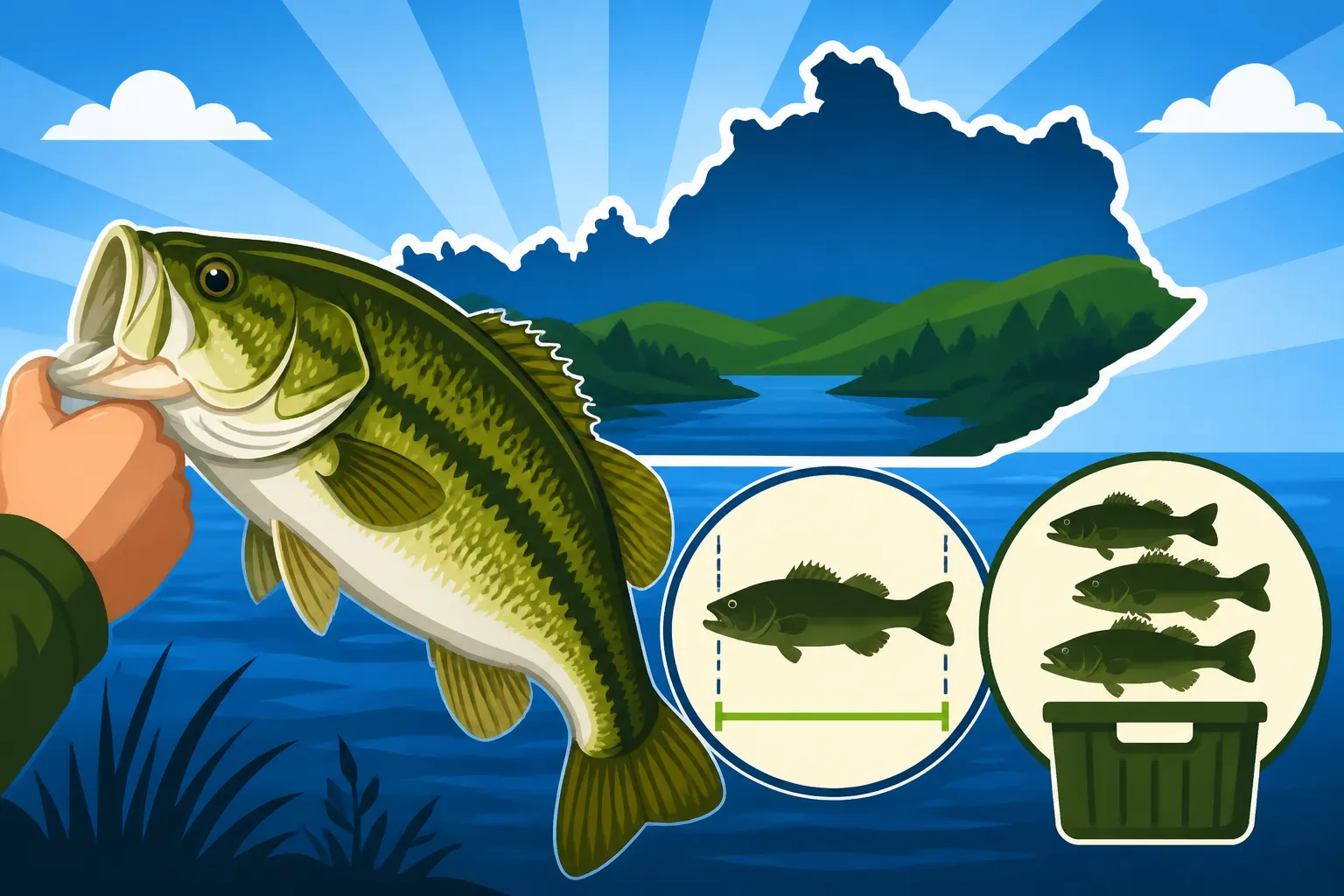
For the vast majority of Kentucky's lakes and rivers, the statewide regulation for largemouth bass is straightforward: there's a 12-inch minimum size limit, and a daily creel limit of 6 fish. This means any largemouth bass you catch must be at least 12 inches long from the tip of its closed mouth to the end of its squeezed tail to be legally kept. If it's shorter than that, it needs to go back into the water as quickly and safely as possible.
These limits aren't arbitrary; they’re carefully designed by fisheries biologists. The 12-inch minimum allows younger bass to grow to a reproductive age and spawn at least once, contributing to the next generation of fish. The 6-fish daily limit helps manage harvest pressure, preventing overfishing and ensuring that there are enough bass left in the lake to sustain a healthy ecosystem and provide good fishing opportunities year after year. Imagine a popular fishing spot like Guist Creek Lake. On any given weekend, you'll see dozens of boats. Without these regulations, the bass population could be severely depleted, making future fishing trips far less productive and enjoyable for everyone.
Smallmouth Bass and Spotted Bass: Are They Different?
This is where some anglers get a little fuzzy on the details, but it's simpler than you might think. For the purposes of Kentucky's statewide regulations, smallmouth bass and spotted bass typically fall under the same general umbrella as largemouth bass. That means the same 12-inch minimum size limit and 6-fish daily creel limit usually apply to them across the state's general waters, unless a specific lake or river has a special regulation in place.
So, if you're pulling a feisty smallmouth from a clear stream or a spotted bass from a deeper reservoir, and you're not on a body of water with special rules, you'll apply the same 12-inch and 6-fish limits. This grouping simplifies things immensely for anglers, as you don't need to learn a separate set of rules for each black bass species on every waterway. It allows you to focus more on the fishing itself and less on trying to identify subtle differences between species while on the water – though learning to tell a largemouth from a smallmouth can be a fun challenge for any angler! You can learn more about How to Identify a Largemouth Bass Vs a Smallmouth Bass to refine your identification skills.
Why Statewide Rules Matter and Where They Apply
Understanding the statewide bass size and daily limit rules isn't just about avoiding a ticket; it's about being a responsible angler and contributing to the health of Kentucky's fisheries. These rules are the foundation, the baseline for almost every fishing adventure you'll have in the state, unless you're specifically targeting a water body with its own unique set of regulations.
The "Default" for Most Public Waters
Think of the statewide bass rules as the "default setting" for Kentucky fishing. If you're heading to a lake, reservoir, or river and the Kentucky Department of Fish and Wildlife Resources (KDFWR) doesn't explicitly list a different rule for that specific body of water, then the standard 12-inch minimum size and 6-fish daily creel limit for bass are in effect. This applies to countless public access lakes, ponds, and river stretches across the state.
For instance, if you're fishing a community lake like Jacobson Park Lake in Lexington, or a smaller state-managed lake such as Kincaid Lake in Pendleton County, you'll find that these statewide regulations are the norm. They're designed to maintain a balanced fishery in a wide variety of environments, ensuring that these accessible spots remain productive for all anglers. It’s always smart to confirm the rules, even for familiar spots, by checking the KDFWR website or the current fishing guide. This proactive approach ensures you're always fishing legally and sustainably, regardless of how often you visit a particular spot. When planning any trip, it’s wise to consult the Kentucky Fishing Regulations Explained to ensure you're fully prepared.
Private Ponds vs. Public Waters
This is a frequently asked question, and it's easy to get confused. When it comes to fishing on private ponds in Kentucky, the general rule is that if you're the owner or a tenant of the land, along with your spouse and dependent children, you typically don't need a fishing license to fish on that property. However, this license exemption does not automatically waive statewide size and creel limits. In fact, for most species, including bass, those statewide limits generally apply to all waters of the state, public or private, unless specifically exempted by KDFWR.
So, even if you’re fishing your buddy’s private pond in rural Kentucky, that 12-inch minimum size and 6-fish daily limit for bass are still usually in play. The KDFWR's regulations state, "No person shall take from any waters of the state or possess more than the daily creel limit for a species, regardless of the waters from which they were taken." This means the intent is for these conservation measures to apply broadly. For pond owners who manage their own fisheries, while you might choose to implement more restrictive or liberal internal rules for your own use, legally, the state limits are the baseline. It's always a good idea for private pond owners to familiarize themselves with the KDFWR rules and even consider stocking and management plans that align with or exceed state conservation goals to ensure a healthy and vibrant fishery for years to come.
The Importance of Knowing Length and Creel Limits
Beyond simply following the rules, truly understanding and respecting length and creel limits is fundamental to being a responsible angler. These aren't just arbitrary numbers; they are critical tools for wildlife management, designed to protect fish populations and enhance the quality of fishing for everyone. Getting caught violating these limits carries real consequences, making proper measurement and adherence non-negotiable.
Measuring Your Catch Correctly
Accurately measuring your bass is paramount. The KDFWR specifies that fish must be measured from the tip of the jaw (mouth closed) to the tip of the tail (with the tail squeezed together to get the maximum length). This might seem like a small detail, but it’s crucial. A fish that measures 11 ¾ inches with its mouth slightly open or tail not squeezed could easily be interpreted as under the 12-inch minimum by a game warden, even if you believed it was legal.
To do this correctly, you'll want a reliable measuring board or tape. Many anglers prefer a bump board, which has a solid end to butt the fish's mouth against, ensuring a consistent starting point. You can find excellent, durable measuring boards and tapes on platforms like Amazon that are designed for easy use on the water. Always lay the fish flat, close its mouth, and gently squeeze the tail lobes together before noting the measurement. If you’re ever in doubt about whether a fish meets the minimum length, the safest and most ethical practice is always to release it. It's better to be conservative than to risk a fine or contribute to overharvesting.
Consequences of Exceeding Limits
The reality check here is serious: violating fishing regulations, whether it’s exceeding a creel limit or keeping an undersized fish, can lead to significant penalties. Game wardens in Kentucky are well-trained and dedicated to enforcing these rules, and they conduct checks regularly across all public waters. If you're caught with an undersized bass or more fish than the daily limit allows, you could face hefty fines, confiscation of your catch and gear, and even the suspension of your fishing privileges.
Imagine spending a weekend on Kentucky Lake, accidentally keeping seven bass instead of the legal six, or having one just shy of the 12-inch mark. A simple mistake can turn into a costly citation. Beyond the legal ramifications, there's the ethical consideration. Every fish kept over the limit or undersized detracts from the overall health of the fishery. These regulations are in place to ensure that Kentucky's abundant fish populations remain healthy and thriving for future generations of anglers. It's why understanding and adhering to guidelines like the Kentucky Resident Annual Fishing License Cost and general Kentucky Fishing Regulations Explained are so vital. Always remember, the regulations are a tool for conservation, and every angler plays a part in that effort. If you’re concerned about the specifics of enforcement, you might want to read about Kentucky Game Warden Checks: What to Have on Hand.
How to Stay Informed About Regulation Changes
Kentucky's fishing regulations aren't set in stone forever. They are dynamic, evolving based on scientific data, environmental factors, and the health of various fish populations. What was true last year might have a slight tweak this year, which is why staying informed is an essential part of responsible angling. Nobody wants to accidentally break a rule simply because they weren't aware of a change.
Checking the KDFWR Website and Guidebook
The absolute best and most authoritative source for Kentucky fishing regulations is the Kentucky Department of Fish and Wildlife Resources (KDFWR) itself. Their official website is a treasure trove of information, providing up-to-date regulations, fishing reports, and news. Every year, typically around March 1st (when the new license year begins), the KDFWR releases its annual Kentucky Fishing & Boating Guide. This guide is your bible for all things regulation-related, covering everything from statewide limits to lake-specific exceptions, license requirements, and much more.
You can usually pick up a physical copy of the guide at most bait and tackle shops, county clerk offices, or KDFWR offices. However, the most convenient way to access the latest information is often through their website. You can download a digital PDF version of the guide or simply navigate through the interactive regulations pages. It’s a good habit to check this resource before your first fishing trip of the new license year, and then periodically throughout the season, especially if you're planning to fish a new body of water or target a different species. This ensures you're always working with the most current information. You can even find information on how to get your Kentucky Fishing License Guide directly from their portal.
Local Bait Shops and Fishing Clubs
While the KDFWR website and guide are the official sources, don't underestimate the power of local knowledge. Your neighborhood bait and tackle shop owners, as well as members of local fishing clubs, are often on the front lines of knowing what's happening on the water. They're usually the first to hear about subtle changes, clarify confusing regulations, or offer practical advice on how rules apply to specific local spots.
Think about walking into a shop like Frank's Bait & Tackle near Lake Cumberland. The folks behind the counter live and breathe fishing, and they're fantastic resources for hyper-local details that might not be explicitly highlighted in the statewide guide. They can tell you if a specific cove on Lake Cumberland has a unique slot limit for bass that's still relatively new, or if there's a particular nuance to measuring fish in that area. Similarly, joining a local bass club or conservation group connects you with experienced anglers who often discuss regulations, share tips, and keep each other informed. These community resources are invaluable for supplementing the official information and gaining a real-world understanding of how to apply the rules effectively and ethically. They can offer insights that help clarify even the most specific rules, such as Kentucky Trout Permit Guide details for those targeting trout in addition to bass.
Comparing Statewide Limits to Lake-Specific Exceptions
The blanket statewide bass regulations are a great starting point, but Kentucky is a state rich with diverse fisheries, and managing them effectively often requires a more nuanced approach. That's why certain lakes and rivers have specific regulations that deviate from the general statewide rules. It's crucial for anglers to understand why these exceptions exist and how to navigate them.
Why Lake-Specific Rules Exist
Lake-specific regulations are implemented by KDFWR biologists for several important reasons, all aimed at optimizing the health and productivity of a particular fishery. These reasons can include factors like the unique genetic strain of bass in a lake, the lake's forage base, its water quality, fishing pressure, or a desire to produce trophy-sized fish. For example, a lake that receives heavy fishing pressure might have stricter slot limits or higher minimum lengths to protect larger, spawning-age fish. Conversely, a lake with an overabundance of smaller, stunted bass might have a more liberal limit on smaller fish to reduce competition for food and allow the remaining fish to grow larger.
One of the most well-known examples in Kentucky is Lake Barkley, which has a unique set of bass regulations. While the statewide rule is a 12-inch minimum, Lake Barkley often has a 15-inch minimum size limit for largemouth bass, with the daily creel limit still at 6 fish. This stricter limit is designed to help foster a population of larger bass in this popular lake, improving the quality of fishing for trophy-minded anglers. Understanding the "why" behind these rules helps us appreciate their importance. This is a perfect example of Why Some Lakes Have Stricter Bass Limits Than Others.
Navigating Different Rules on a Single Trip
Planning a fishing trip that might involve moving between different bodies of water in Kentucky can become a logistical puzzle if you're not careful. Let's say you start your morning fishing the main lake of Lake Barkley, where a 15-inch minimum bass limit applies, and then decide to move to a feeder creek or a different, smaller lake nearby where the statewide 12-inch limit is in effect. What happens if you have a legal 14-inch bass from the creek in your livewell and then move back to Lake Barkley? This is precisely why preparation is key.
Before any multi-water body trip, meticulously check the KDFWR regulations for each specific water you plan to fish. Many experienced anglers keep a printed copy of the relevant pages from the KDFWR guide or have the digital version readily accessible on their phone. Some even create a small laminated card with the rules for their target lakes. The best practice is to understand that the strictest rule applies if there's any ambiguity or if you might be transporting fish caught under different regulations. If you're on Lake Barkley and catch a bass between 12 and 15 inches, it must be immediately released, regardless of where else you might fish that day.
To help visualize the difference, here's a quick comparison of statewide limits versus an example like Lake Barkley for bass:
| Water Body Type | Species | Minimum Size Limit | Daily Creel Limit |
|---|---|---|---|
| Most Statewide Waters | Largemouth, Smallmouth, Spotted Bass | 12 inches | 6 fish |
| Lake Barkley Exception | Largemouth Bass | 15 inches | 6 fish |
| Barren River Lake | Largemouth Bass | 15 inches | 6 fish (only 1 can be >15") |
Note: Always consult the official KDFWR guide for the most current and comprehensive regulations, as these examples can change.
Best Practices for Responsible Bass Angling
Beyond simply adhering to the rules, responsible bass angling involves a set of practices that ensure the fish you catch, and especially those you release, have the best possible chance of survival and contribute to a healthy fishery. It's about respecting the resource and being a good steward of Kentucky's natural aquatic environments.
Catch and Release Techniques
Even if you're keeping your legal limit of bass, many anglers practice catch and release, particularly for undersized fish or trophy-sized individuals they wish to photograph and return. Proper catch and release techniques are vital for the fish's survival. First and foremost, minimize the time the fish is out of the water. Handle the fish gently with wet hands to protect its slime coat, which acts as a protective barrier against disease. Avoid holding bass by the jaw in a vertical position if they are heavy; instead, support their belly to prevent jaw injury.
For removing hooks, a pair of needle-nose pliers or a dedicated de-hooking tool can be incredibly useful. These tools, readily available on platforms like Amazon, allow for quick and safe hook removal, especially for deeply set hooks, minimizing stress and injury to the fish. If a fish is bleeding significantly from a gill or gut hook, it's generally best to keep it if it's a legal size, as its chances of survival upon release are low. However, for most common hook sets, a quick, gentle release is the goal. Taking these steps ensures that the future of bass fishing in Kentucky remains vibrant.
Understanding Your Role in Conservation
Every angler who casts a line in Kentucky plays a direct role in the conservation of its fisheries. The regulations aren't just an inconvenience; they are the framework for a sustainable future. By understanding and abiding by the Kentucky Fishing License Guide, the statewide size and daily limits, and all other rules, you're actively contributing to the KDFWR's efforts to maintain balanced and thriving fish populations. This is true whether you're targeting largemouth bass in the fertile waters of Kentucky Lake, or chasing smallmouth in the rocky rivers of Eastern Kentucky.
Beyond simply following the rules, conservation-minded anglers often go a step further. This can include picking up litter around fishing spots, reporting poaching or environmental violations, and educating fellow anglers about responsible practices. Consider getting more involved with local conservation efforts or fishing clubs that actively participate in habitat improvement or youth fishing programs. Your actions, big or small, collectively ensure that the joy of fishing for bass, crappie, catfish, and all other species in Kentucky remains a rich tradition for generations to come. Remember to check out Statewide Bag and Size Limits by Fish Species to get a holistic view of conservation efforts for other fish types as well.
Disclaimer
The information provided in this guide is intended for general informational purposes only and is not a substitute for official legal advice or the current regulations issued by the Kentucky Department of Fish and Wildlife Resources (KDFWR). Fishing regulations can change frequently, and it is the sole responsibility of each angler to consult the most recent KDFWR fishing and boating guide or their official website before engaging in any fishing activities. Compliance with all applicable laws and regulations is mandatory.