Best Electronics for Lake Fishing
There's nothing quite as frustrating as heading out onto a beautiful Kentucky lake, seeing promising structure on a map, and then spending hours without a single bite. You know the fish are there, but finding them in the vastness of water, understanding their behavior, and staying on top of them can feel like searching for a needle in a haystack. This guide is all about demystifying marine electronics, showing you how these incredible tools can transform your lake fishing experience, turning guesswork into informed, strategic angling.
The Game-Changing Power of Marine Electronics
For generations, anglers relied on intuition, experience, and maybe a depth sounder that gave a vague reading. While those skills are still invaluable, modern marine electronics have truly revolutionized how we approach fishing, especially on expansive bodies of water like Kentucky Lake or Lake Barkley. These aren't just fancy gadgets; they're essential tools that provide a window into the underwater world, helping you locate fish, understand their habitat, and navigate safely.
Why Modern Electronics are a Must-Have
Think about it: before these advancements, you'd spend countless hours idly trolling or casting blindly, hoping to stumble upon a school of fish or a productive piece of structure. Now, with a good fish finder, you can actively scout potential hotspots, identifying submerged trees, rock piles, ledges, and even individual fish arches or schools. This capability isn't just about saving time; it's about maximizing your time on the water, making every minute more productive. Whether you're chasing elusive bass or trying to fill a cooler with crappie, having real-time information at your fingertips makes all the difference. It reduces the "luck" factor and significantly increases your chances of success, allowing you to learn and adapt much faster.
Beyond just finding fish, these systems offer a level of situational awareness that was previously unimaginable. You can mark exact spots where you've had success, navigate back to those secret honey holes with precision, and even monitor critical environmental factors like water temperature. For anyone serious about Kentucky fishing, especially on larger lakes, embracing these technologies isn't optional; it's a fundamental part of a successful strategy.
From Basic Finders to Integrated Systems
The world of marine electronics can seem a bit overwhelming at first glance because there's such a wide spectrum of options. On one end, you have entry-level standalone fish finders that primarily show depth and basic sonar returns. These are fantastic for anglers just starting out or those with smaller boats, providing fundamental information without breaking the bank. They usually feature a simple transducer that sends out sound waves and interprets the echoes to paint a picture of the bottom and anything suspended in the water column. Even a basic unit can show you the difference between a hard bottom and soft mud, or indicate the presence of baitfish.
However, the technology has rapidly advanced, leading to sophisticated integrated systems that combine multiple functions into one cohesive unit. Imagine a single display on your console that shows your GPS map, a traditional 2D sonar view, high-resolution side imaging, and even real-time forward-facing sonar all at once. These advanced systems often network together with your trolling motor, shallow water anchors, and even your boat's engine, creating a "smart boat" environment. This integration streamlines your control and information flow, making complex tasks much simpler and more efficient. For serious tournament anglers or those who spend a lot of time on vast lakes like Kentucky Lake, these integrated setups offer an unparalleled advantage, allowing for precise boat control and comprehensive underwater exploration.
Essential Electronics Every Lake Angler Should Consider
When outfitting your boat for a day on the water, especially on our fantastic Kentucky lakes, certain electronics have become non-negotiable. They form the backbone of a modern angler's toolkit, providing the foundational information you need to be successful.
Fish Finders: Seeing What Lies Beneath
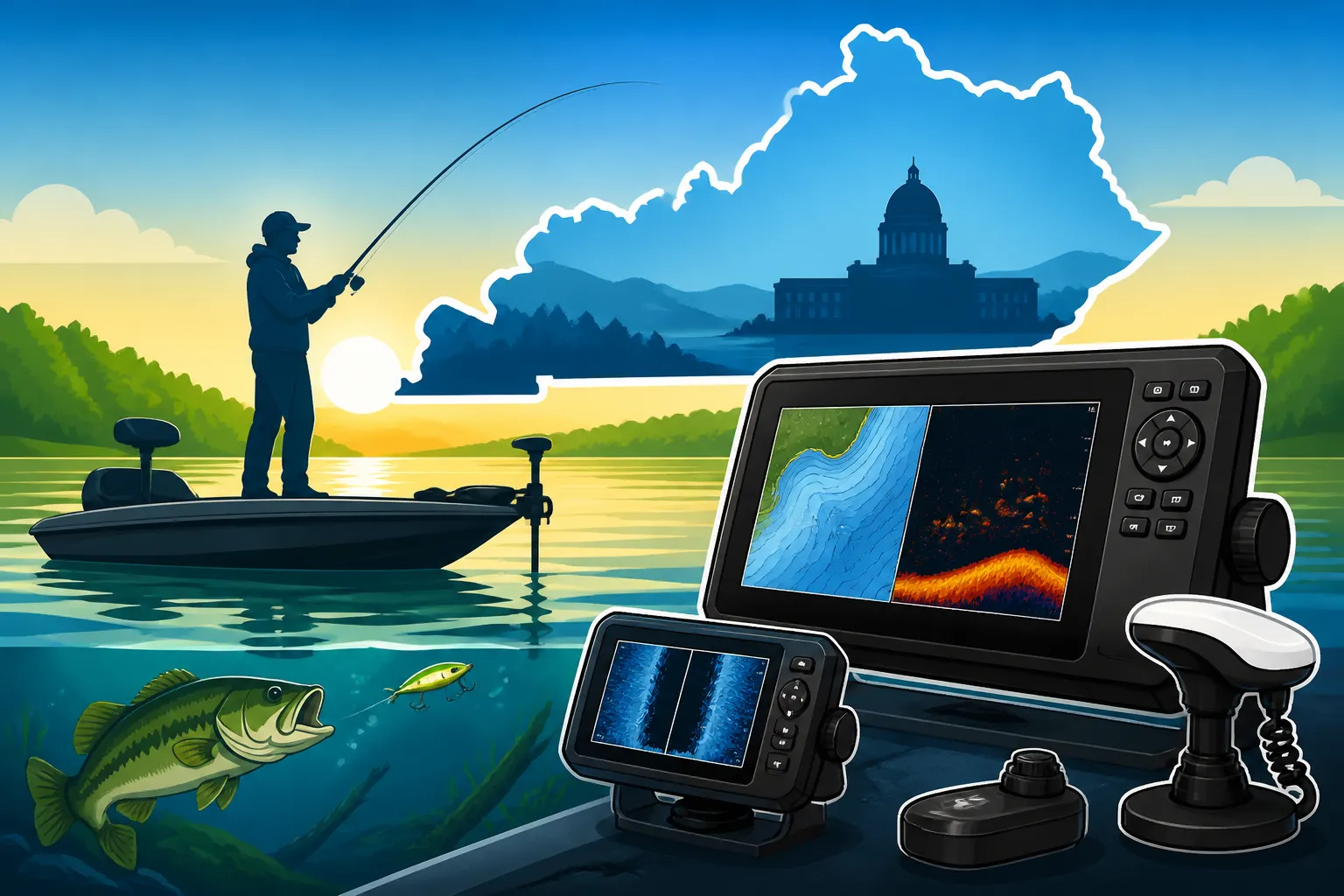
At the heart of almost every serious fishing setup is a high-quality fish finder. This isn't just a generic "depth sounder" anymore; these devices use sophisticated sonar technology to paint a detailed picture of the underwater world directly beneath your boat. Traditional 2D sonar, often called CHIRP sonar on newer units, uses a wide range of frequencies to provide incredibly clear target separation. This means you can distinguish between individual fish, bait balls, and structure with impressive clarity. You’ll see those tell-tale arches representing fish, often even indicating their size based on the thickness of the arch. It's the primary tool for identifying active fish and bottom contours.
But a fish finder’s utility extends far beyond just seeing fish. It's your eyes underwater, revealing hidden brush piles, submerged trees, rock beds, and sudden changes in depth that hold fish. Learning How to Read a Fish Finder for Bass Fishing is a skill that will dramatically improve your catch rate. For instance, if you're targeting bass on Lake Cumberland, being able to quickly locate deep ledges or humps off the main channel, then zoom in to see fish holding tight to that structure, is invaluable. Many units also offer temperature readings, which can be crucial for understanding fish behavior throughout the seasons.
GPS and Chartplotters: Never Get Lost, Always Find Your Spot
Imagine stumbling upon the perfect brush pile, hooking into several nice crappie, and then trying to find that exact spot again a week later on a sprawling lake like Lake Barkley. Without GPS, it's virtually impossible. This is where GPS and chartplotters become absolutely indispensable. A GPS unit uses satellite signals to pinpoint your exact location on the water, displaying it on a detailed map (chart) of the lake. These maps often show contours, navigation markers, and even submerged features.
The real power of a chartplotter comes from its ability to mark waypoints and create routes. Every time you find a productive fishing spot, see a school of baitfish, or even locate a dangerous submerged hazard, you can drop a waypoint. This creates a digital breadcrumb trail that allows you to return to that exact spot with precision, time and time again. This is particularly useful when exploring new waters or revisiting old favorites, ensuring you can quickly get back to productive areas. Many units come pre-loaded with detailed mapping for major Kentucky lakes, and some even allow you to create your own custom contour maps as you fish, giving you an even more granular understanding of the lake's bottom. For complex navigation or pinpointing those tiny, overlooked structures, a reliable GPS chartplotter is a true game-changer. You can find excellent options and detailed maps at retailers like Bass Pro Shops.
Trolling Motors with Integrated Technology
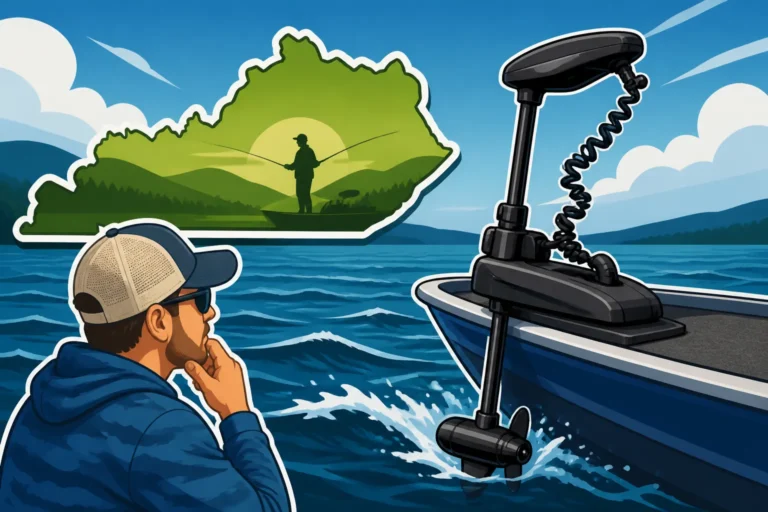
For many anglers, the trolling motor has evolved from a simple auxiliary propulsion device to a sophisticated, integrated piece of electronics. Modern trolling motors are no longer just about moving your boat silently; they offer advanced features that connect directly with your fish finder and GPS system, creating a seamless fishing experience. The most popular of these features is GPS anchoring, often called "Spot-Lock" by manufacturers like Minn Kota. With the press of a button, your trolling motor will automatically hold your boat in a precise position, compensating for wind and current. This frees you up to focus entirely on fishing, without constantly having to maneuver the boat. It's a fantastic feature for working specific pieces of structure or staying on top of a school of fish.
Beyond anchoring, many Best Trolling Motors for Kentucky Lake Bass Fishing also offer route tracking, allowing you to record a path and have the motor automatically follow it, perfect for covering a productive weed line or ledge. Some even have sonar transducers built directly into the lower unit, providing a clearer, unobstructed view of the water directly beneath the motor's head. This integration with your main fish finder display means less clutter on your boat and a more efficient flow of information. Whether you're making precise casts into shallow cover or meticulously dissecting a deep drop-off, a modern, technologically advanced trolling motor is an incredible asset for any serious lake angler.
Diving Deeper: Advanced Features and Technologies
Once you've got the essential fish finder, GPS, and a smart trolling motor, you might think you've reached the pinnacle of boat electronics. But the industry constantly innovates, bringing even more powerful and insightful technologies to the water. These advanced features offer unprecedented views of the underwater world, giving anglers a distinct edge.
Side Imaging and Down Imaging: A New Perspective
These two technologies have transformed how we scout and understand underwater structure. Unlike traditional 2D sonar that gives you a cone-shaped view directly beneath your boat, Down Imaging provides a photo-like representation of what's directly below. It uses a very narrow, high-frequency beam to create incredibly detailed images, making it easy to distinguish between a submerged tree, a rock pile, or even a school of baitfish from the bottom. It helps clarify what those ambiguous blobs on traditional sonar actually are.
Side Imaging, on the other hand, is arguably even more revolutionary. It uses high-frequency beams that shoot out horizontally from both sides of your boat, scanning a wide area – often hundreds of feet to either side. This allows you to literally "see" off to your port and starboard, revealing structure, contours, and fish that your boat might not even pass directly over. Imagine cruising down Kentucky Lake, and on your side imaging screen, you spot a brush pile 50 feet off to the left, complete with fish holding around it. You can then mark that waypoint with your GPS and move over to precisely cast to it. This vastly increases your search efficiency, allowing you to cover more water and locate hidden gems that traditional sonar would miss. It's especially effective for finding offshore structure or following contour lines on large lakes.
Forward-Facing Sonar: Real-Time Underwater Vision
Perhaps the most talked-about advancement in recent years is forward-facing sonar. Unlike traditional sonar or even side imaging which show you what you've already passed over or are directly above, forward-facing sonar gives you a real-time, live view of what's happening in front of your boat. Imagine casting a lure and actually seeing it descend, seeing a fish approach it, and even seeing the fish strike – all on your screen.
This technology allows you to cast more precisely to individual fish or specific pieces of cover. You can watch how fish react to your bait, adjust your presentation in real-time, and detect fish that might be suspended in the water column far from your boat. It’s particularly effective for targeting wary fish, sight fishing in deeper water, or navigating through complex underwater terrain without spooking the fish. Brands like Garmin and Lowrance offer leading versions of this technology. While it requires a bit of a learning curve to interpret, mastering forward-facing sonar can provide an unparalleled advantage, especially when chasing trophy bass or schools of active fish on expansive bodies of water.
Networking and Integration: Your Boat as a Smart Hub
The true power of modern marine electronics often comes when individual units are networked together. Instead of having separate, disconnected screens for your fish finder, GPS, and radar, you can link them all, allowing them to share information and even control each other. This creates a unified "smart hub" for your boat. For example, a waypoint marked on your chartplotter can instantly appear on your trolling motor's display, allowing for automatic navigation. Your fish finder data can be displayed on multiple screens throughout the boat, ensuring everyone has the information they need.
This integration extends beyond just displays. Advanced systems can communicate with your boat's engine, displaying RPM, fuel consumption, and other vital stats right on your main fishing screen. They can also integrate with shallow water anchors, autopilots, and even onboard cameras. This level of networking simplifies operation, reduces clutter, and ensures all your critical information is accessible at a glance. For anglers who spend extensive time on Kentucky Lake: The State's Top Bass Fishing Destination or other large reservoirs, a fully integrated system offers peak efficiency and control, allowing you to spend less time fiddling with gear and more time fishing.
Choosing the Right Electronics for Your Kentucky Lake Adventures
Deciding which marine electronics are best for you can feel like a big decision, especially with so many options out there. It really boils down to balancing your fishing style, the types of waters you fish, and, of course, your budget.
Matching Electronics to Your Fishing Style and Budget
First, consider the kind of fishing you do most often. Are you a weekend warrior who mostly fishes small local ponds and doesn't venture far? A basic fish finder with traditional 2D sonar and simple GPS functions might be all you need. These entry-level units provide fantastic value and can still significantly improve your success rate. You can often find great deals on these simpler units at outdoor retailers like Bass Pro Shops or even online through Amazon. They'll tell you the depth, show you basic structure, and help you navigate back to your launch.
However, if you're hitting larger bodies of water like Lake Barkley or Herrington Lake, and you're serious about targeting specific species like bass or crappie, you'll likely want to step up to units with Down Imaging and Side Imaging. These technologies are crucial for quickly locating offshore structure and covering vast areas efficiently. For tournament anglers or those who truly want every possible advantage, investing in a unit with forward-facing sonar, along with a powerful GPS-enabled trolling motor, becomes highly beneficial. This allows for unparalleled precision and real-time fish tracking. Remember, it's about investing in tools that will genuinely enhance your specific fishing experience, not just buying the most expensive gear. Look for units that offer good screen resolution and intuitive interfaces, as these will make a big difference in how effectively you use the technology.
Installation and Setup Considerations
Once you've chosen your electronics, proper installation is paramount to ensure optimal performance. A poorly installed transducer, for instance, can lead to noisy readings, lost depth at speed, and an overall frustrating experience. Many units come with detailed instructions, but for more complex systems, especially those involving multiple networked devices, professional installation might be a worthwhile investment. This is particularly true for through-hull transducers or the mounting of multiple large displays.
Consider the power requirements of your new electronics. More powerful units and larger screens draw more amperage, so ensure your boat's electrical system and battery bank are up to the task. You might need to upgrade your trolling motor batteries or add a dedicated cranking battery to handle the load. Also, think about the placement of your screens – ensure they're easily visible from your fishing position, protected from direct sunlight, and securely mounted to withstand the rigors of boating. Planning out cable runs to avoid interference with other electronics or potential damage is also key. Taking the time to properly install and configure your system will ensure you get the most out out of your investment and enjoy clear, reliable data on the water.
Brand Spotlight and Where to Buy
When it comes to marine electronics, a few brands consistently stand out for their innovation, reliability, and performance. Garmin, Lowrance, Humminbird, and Raymarine are among the industry leaders, each offering a wide range of fish finders, chartplotters, and integrated systems. Each brand has its loyal followers, often due to specific features or user interfaces they prefer. For example, some anglers swear by Humminbird's Side Imaging (often called Mega Imaging) for its incredible detail, while others prefer Garmin's LiveScope for its forward-facing sonar capabilities. Lowrance is also a strong contender with its ActiveTarget and excellent mapping solutions.
You can find a vast selection of these electronics at major retailers specializing in outdoor gear and marine supplies. Places like Bass Pro Shops and Cabela's offer a wide array of options, often with knowledgeable staff who can help guide your decision. These stores also frequently run promotions or bundle deals. For those who prefer the convenience of online shopping, Amazon provides an enormous selection, often with competitive pricing and detailed customer reviews. When purchasing, always ensure you're buying from a reputable dealer to guarantee warranty support and access to technical assistance if you need it. Doing a bit of research, comparing features across brands, and reading reviews specific to the models you're considering will help you make an informed choice for your specific Gear & Boats needs.
Maximizing Your Electronics: Tips for On-Water Success
Having the best electronics on your boat is only half the battle; knowing how to use them effectively is where the real magic happens. Mastering your marine electronics can turn good days into great ones, consistently putting you on fish.
Interpreting Sonar Readings Like a Pro
The screen on your fish finder might look like a jumble of colors and lines to a beginner, but with a little practice, you'll start to interpret those readings like a seasoned pro. The bottom line is pretty straightforward: it shows the lake bed, and its thickness and color often indicate hardness. A thin, soft line might be mud, while a thick, vibrant line usually suggests rock or hard clay. Fish often appear as arches or short lines, with clearer, stronger arches indicating larger fish directly under your transducer. Schools of baitfish show up as clouds or tightly packed clusters.
Pay close attention to changes in the bottom contour, often called "structure." Humps, ledges, creek channels, and sudden drop-offs are prime fish-holding areas. Learn to identify submerged timber or brush piles – these will look like irregular shapes rising from the bottom. Adjust your sensitivity and gain settings regularly; too low and you miss details, too high and you get too much clutter. On a lake like Lake Cumberland, where deep structure is key, adjusting your zoom to focus on a particular depth range can help you pinpoint fish holding tight to a ledge. With practice, you'll be able to tell the difference between a school of shad and a group of trophy bass.
Utilizing GPS Waypoints for Repeat Success
Your GPS unit isn't just for navigation; it's a powerful tool for building a personal map of productive fishing spots. Every time you find something interesting – whether it's a brush pile yielding fish, a significant depth change, or a schooling of baitfish – drop a waypoint. Don't be shy about marking everything! Over time, these waypoints will build up a valuable database of potential honey holes.
Categorize your waypoints if your unit allows, perhaps by species, type of structure, or even season. For instance, you might mark "Spring Crappie Brush" or "Summer Bass Hump." When you return to the lake, you can quickly pull up these waypoints and navigate directly to them, eliminating wasted time searching. This is especially useful on large, complex lakes where returning to an exact spot can be challenging without precise GPS coordinates. Combine this with your trolling motor's GPS anchoring feature, and you can hover exactly over your marked spot, making repeated casts without drift. This systematic approach to mapping out productive areas is a cornerstone of consistent success on the water. Check out Fish Finders and GPS for Kentucky Lake and Lake Barkley for more specific tips on these bodies of water.
Maintenance and Care for Longevity
Like any precision instrument, your marine electronics require proper care and maintenance to ensure they last for many seasons. The most critical component is often the transducer, which is exposed to the elements. Regularly inspect your transducer for any damage, marine growth, or debris, especially after launching and trailering. A clean transducer is a happy transducer that gives clear readings.
Keep your screens clean using a soft cloth and approved cleaning solutions; avoid harsh chemicals that can damage the protective coating. When not in use, cover your units to protect them from UV damage and moisture. Ensure all electrical connections are clean, corrosion-free, and securely fastened. If you frequently fish in saltwater or brackish water (though less common in Kentucky's freshwater lakes, it's good practice), rinse your electronics and connectors with fresh water after each trip. Before winter storage, ensure all units are properly shut down and disconnected, and consider removing batteries for trickle charging. Taking these simple steps will protect your investment and keep your electronics performing optimally, ensuring you're ready for every Kentucky Fishing Season that comes around.
| Electronic Type | Primary Function | Key Advantages | Ideal for |
|---|---|---|---|
| 2D/CHIRP Sonar | Shows depth and objects directly beneath boat | Excellent target separation, depth readings | General fish finding, identifying schools, bottom contour |
| Down Imaging | Photo-like view directly beneath boat | Highly detailed imagery of structure and fish below | Discriminating specific structure (e.g., individual tree limbs), precise bait placement |
| Side Imaging | Scans wide area to left and right of boat | Covers large areas quickly, finds off-boat structure/fish | Scouting large flats, identifying submerged timber, finding hidden channels |
| Forward-Facing Sonar | Real-time, live view in front of boat | See fish react to bait, cast precisely, sight fishing in depth | Targeting individual fish, navigating complex cover, active bait presentation |
| GPS/Chartplotter | Navigation, mapping, waypoint marking | Prevents getting lost, allows return to specific spots, safety | Navigating large lakes, marking productive areas, following routes |
| Integrated Trolling Motor | Silent propulsion, GPS anchoring, auto-pilot | Precise boat control, hands-free fishing, stealth | Holding position on structure, covering specific paths, shallow water fishing |
Disclaimer
This article is for general informational purposes only and does not constitute professional advice. Laws, prices and regulations vary by location and change over time. Consult a qualified professional for guidance on your specific situation.