Best Lures for Largemouth Bass on Big Water
Fishing for largemouth bass on Kentucky's expansive lakes like Kentucky Lake or Lake Barkley can be exhilarating, but it often comes with a unique set of challenges. The sheer vastness of these waters, coupled with varying depths and complex structures, can make choosing the right lure feel like a shot in the dark, leading to frustrating days with few bites. This guide is designed to cut through that confusion, helping you identify and understand the best lures specifically tailored for largemouth bass in these big water environments, so you can spend less time guessing and more time reeling in those trophy fish.
Understanding Big Water Challenges for Largemouth Bass
When you're out on a sprawling reservoir like Lake Cumberland or the Ohio River, it's a completely different ballgame than fishing a small pond or a narrow creek. Largemouth bass behave differently in these larger systems, and your lure choices need to reflect that. It's not just about finding fish; it's about finding fish that are willing to bite in a massive environment where they have endless places to hide and forage.
How Vastness Changes Bass Behavior
On big water, bass aren't always concentrated in obvious spots. They can be spread out over acres of submerged timber, vast flats, or along miles of channel swings. This means they often relate to subtle changes in structure, baitfish schools, or even current more acutely than their pond-dwelling cousins. You might find them suspended over deep water, chasing shad, or hunkered down in a specific type of cover that offers both ambush points and protection. The sheer scale of these lakes means bass have a huge pantry to choose from, and they're often chasing bigger, more active prey that requires a different presentation. Understanding these patterns is key to selecting a lure that stands out in a crowded underwater world.
The vastness also means that finding fish quickly is paramount. You can't just pick a corner and hope for the best. Often, you'll need to cover a lot of water efficiently to locate active schools. This necessitates lures that can be cast long distances, retrieved at various speeds, and accurately represent the forage base in that particular area. Think about the massive schools of shad or other baitfish that roam these larger bodies of water; bass will follow these schools, sometimes suspending in open water many feet deep, rather than always holding tight to cover. Your lure choice needs to be able to mimic these larger, open-water feeding behaviors.
Dealing with Depth and Structure
Big water lakes are notorious for their complex underwater topography. You'll encounter everything from shallow flats with scattered stumps to deep ledges, submerged roadbeds, creek channels, vast rock piles, and massive timber forests. Bass will use different types of structure and depth zones depending on the season, time of day, and weather conditions. This means no single lure will work all the time. You need a versatile arsenal that can probe various depths and navigate different types of cover without constantly getting hung up.
Consider a deep main lake point dropping off into 30 feet of water versus a shallow, murky cove full of lily pads. The bass in these two locations will be looking for entirely different meals and presentations. Lures that excel at bumping along hard bottom in 15 feet of water will likely be useless in dense vegetation. Similarly, a topwater frog, perfect for skipping under docks, won't get a bite from a bass suspended 20 feet deep over a channel. You need lures that can reach those depths, present a realistic profile, and trigger a strike when fish might not be overly aggressive. This challenge highlights why anglers often carry multiple rod and reel setups, each rigged with a different lure, to quickly adapt to changing conditions and target diverse structures. Best Rods and Reels for Kentucky Fishing can make a huge difference here.
Topwater Lures for Explosive Big Water Bites
There's nothing quite like a largemouth bass exploding on a topwater lure. On big water, especially during specific times of the day or year, topwater baits can be incredibly effective, drawing fish up from surprisingly deep cover for a heart-stopping strike. They excel in situations where bass are actively feeding near the surface or are holding in thick cover where other baits might get snagged.
Frogs and Toads for Mats and Cover
When you encounter vast expanses of lily pads, hydrilla mats, or dense grass beds on big lakes like Kentucky Lake, a hollow-bodied frog or soft plastic toad is an absolute game-changer. These lures are designed to be fished directly over the nastiest, most impenetrable cover imaginable, places where a conventional crankbait or jig would instantly snag. The weedless design allows you to skip them under docks, over matted vegetation, and through thick emergent grass where big bass love to hide, ambushing unsuspecting prey.
The key to fishing frogs and toads is to mimic a real frog or rodent scrambling across the surface. Cast it onto the mat, let it sit for a moment, then twitch and pause, allowing the legs or skirt to ripple. When a bass blows up on it, resist the urge to set the hook immediately. Wait until you feel the weight of the fish and then set the hook with a sweeping motion, often two or three times for good measure. These lures shine in warm water conditions, typically from late spring through fall, especially during low-light conditions like dawn and dusk, or on cloudy days. Many anglers find great success with a variety of colors, from natural greens and browns to more aggressive black or white patterns, easily found at retailers like Bass Pro Shops or on Amazon.
Walking Baits and Poppers for Open Water
For those times when bass are cruising open water, feeding on schooling baitfish, or positioned along sparse cover like rocky banks and seawalls, walking baits (like a Zara Spook) and poppers are your go-to topwater choices. Walking baits create a side-to-side "walk-the-dog" action that is incredibly enticing to aggressive bass. This rhythmic sashay imitates a struggling baitfish or a creature trying to escape, and it can call bass from a good distance away. They are fantastic for covering large areas quickly, especially over submerged points or along expansive flats where bass are chasing shad.
Poppers, on the other hand, create a distinct "blooper" or "chugging" sound and splash pattern when retrieved, mimicking a baitfish struggling on the surface or a frog jumping into the water. The noise and disturbance can be irresistible, particularly when bass are sluggish or the water is choppy. Both walking baits and poppers work best in calm to lightly choppy conditions and are excellent choices for targeting visible schooling activity or bass holding around isolated cover. Experiment with retrieve speeds and pauses; sometimes a slow, deliberate walk or a series of quick pops followed by a long pause is what it takes to trigger a strike.
Subsurface Lures for All Depths
While topwater action is thrilling, most of your big water largemouth bass fishing will occur beneath the surface. This category includes lures that cover a wide range of depths, from just under the surface to deep diving, allowing you to effectively target bass regardless of where they are holding in the water column. Best Lures for Largemouth Bass on Big Water often means having a diverse selection in your tackle box.
Crankbaits for Covering Water and Different Depths
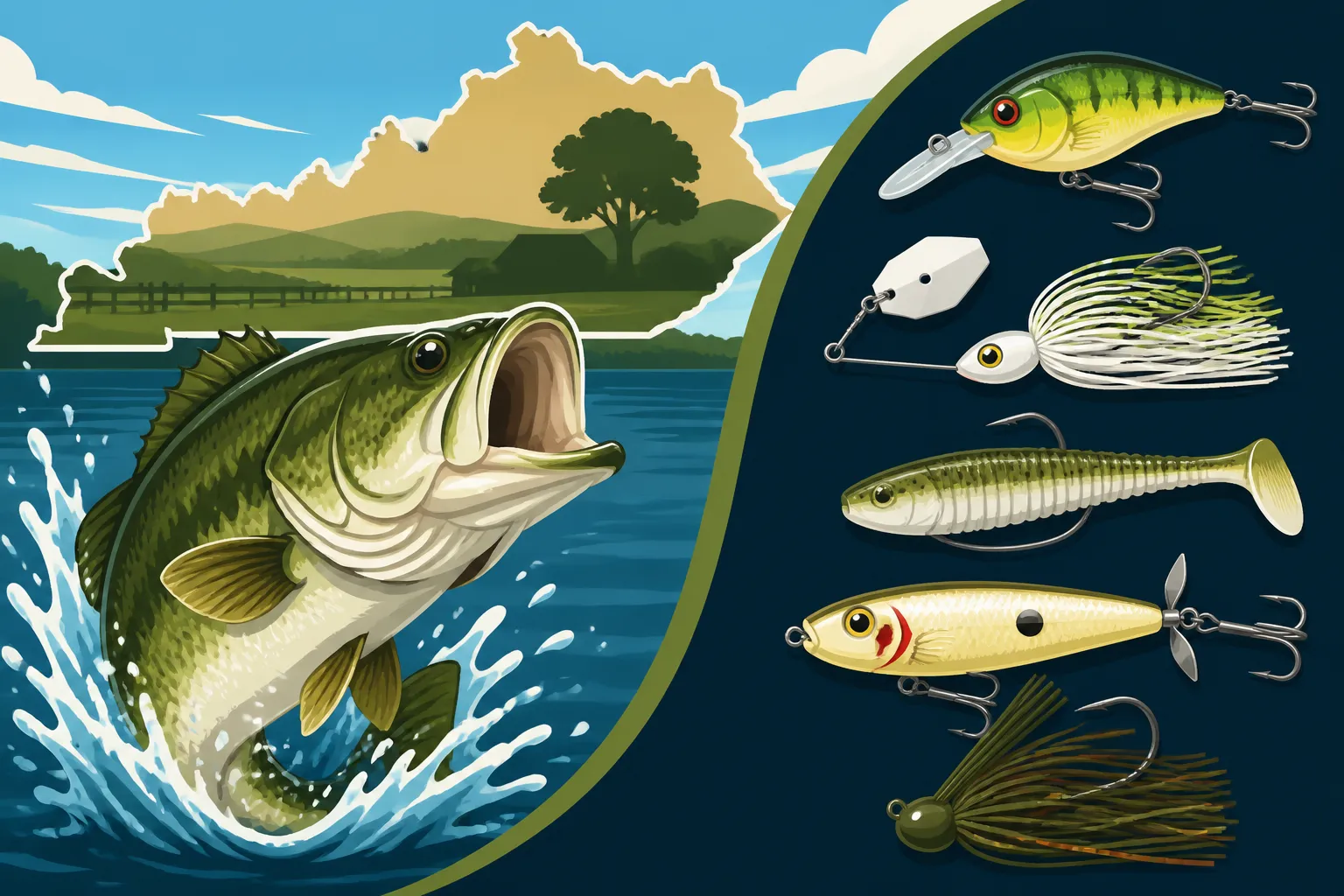
Crankbaits are arguably one of the most effective tools for covering water and systematically searching for bass in big lakes. They come in an astonishing array of shapes, sizes, and bill configurations, each designed to dive to a specific depth. Shallow-diving crankbaits (often called squarebills) are excellent for deflecting off stumps and rocks in water less than 8 feet deep, triggering reaction strikes. Medium-diving crankbaits are perfect for targeting bass on points, humps, and submerged roadbeds in the 8-15 foot range. Deep-diving crankbaits are invaluable for probing offshore ledges, channel swings, and brush piles in 15-25+ feet of water.
The beauty of crankbaits lies in their ability to mimic baitfish and generate powerful vibrations. The erratic action and deflections off cover often provoke an impulsive bite, even from non-feeding fish. Matching the crankbait's size and color to the local forage (shad, bluegill, crawfish) is crucial. Experiment with retrieve speeds – sometimes a steady retrieve works, other times a stop-and-go or a "rip and pause" can be more effective. When fishing these large bodies of water, having a good selection of dive depths is essential for success.
Spinnerbaits and Chatterbaits for Versatility
Spinnerbaits and chatterbaits are incredibly versatile lures that shine in a variety of big water scenarios, from shallow flats to rocky points, and especially around sparse to medium cover. Spinnerbaits, with their flashing blades and vibrating skirts, create a lot of commotion and visual appeal. They are excellent for fishing around submerged timber, brush piles, and grass lines, as the single hook and wire frame help them remain relatively weedless. They can be slow-rolled along the bottom, burned just under the surface, or even buzzed across the top. The flash and vibration mimic baitfish, making them a consistent producer.
Chatterbaits (or bladed jigs) combine the flash of a spinnerbait with the erratic action of a crankbait. The unique bladed head creates an intense vibration that bass feel long before they see the lure. This strong vibration, coupled with the flowing skirt, is irresistible to active bass. They are exceptional for fishing grass edges, skipping under docks, and working over shallow points. Like spinnerbaits, they are relatively weedless and can be retrieved at various speeds. Both of these lures are excellent "search baits" when you're trying to locate active fish over vast areas.
Swimbaits for Imitating Forage
Swimbaits, whether hard-bodied or soft plastic, are designed for one thing: to imitate natural forage with incredible realism. On big lakes where bass feed heavily on shad, herring, or even smaller panfish, a well-presented swimbait can be deadly. Hard-bodied swimbaits, with their segmented bodies, create a natural swimming action that can fool even the wariest of trophy bass. They are often used for targeting bigger fish that are looking for a substantial meal.
Soft plastic swimbaits, on the other hand, are extremely versatile. They can be rigged on a weighted swimbait hook, on a jig head, or as a trailer on a bladed jig. Their paddle tails or boot tails create a realistic thumping action that mimics a fleeing baitfish. These are fantastic for fishing around schools of baitfish, suspended over deeper water, or slowly retrieved along ledges. Different sizes allow you to match the prevalent baitfish size, from small 3-inch shad imitations to larger 6-inch plus baits for trophy hunting. Knowing how to present these realistic baits is key to Best Lures for Largemouth Bass on Big Water.
Soft Plastics for Finesse and Heavy Cover
When the bite gets tough, or bass are holding deep in impenetrable cover, soft plastics often become the most reliable option. They offer unmatched versatility in presentation, from subtle finesse techniques to powerful power fishing tactics, allowing you to target bass in almost any big water scenario.
Texas Rigs and Carolina Rigs for Bottom Contact
The Texas rig and Carolina rig are bedrock techniques for fishing soft plastics, particularly effective on big water where bass relate to bottom structure like rocks, gravel, stumps, and ledges. A Texas rig, with its bullet weight and weedless hook, is ideal for punching through and crawling over heavy cover without snagging. It's a fantastic choice for probing thick brush piles, submerged trees, or dense grass mats. The compact presentation allows you to feel subtle bites and effectively target bass hunkered down in cover. Worms, creature baits, and craws are popular choices for Texas rigging.
The Carolina rig, in contrast, uses a weight and swivel separated from the hook by a leader, creating a "float-and-fly" presentation along the bottom. This rig excels at covering vast areas of open bottom, dragging over points, humps, and flats. The unweighted bait behind the heavy sinker moves naturally, often suspended just off the bottom, making it incredibly appealing to bass, especially when they are lethargic or spread out. It's an excellent "search bait" when you're not sure exactly where the fish are concentrated. Both rigs allow for excellent bottom contact and sensitivity, which is crucial when fishing deep or in current.
Jigs for Punching Through Thick Vegetation
When you encounter incredibly dense vegetation mats, like those often found in the backwaters or quiet coves of big lakes, a heavy jig (often called a "punching jig" or "flipping jig") is your best friend. These jigs typically feature a heavy lead head, a stout weedless hook, and a skirt, often paired with a bulky soft plastic trailer like a craw or creature bait. The heavy weight allows the jig to punch through thick mats of hydrilla, coontail, or lily pads, reaching the dark, shaded water beneath where big bass often hide, seeking cooler temperatures and ambush points.
The key to fishing these jigs is to drop them precisely into small openings or through the mat itself, letting them fall quickly to the bottom. Once it hits, twitch it a few times, let it sit, and then retrieve it to repeat the process. This tactic is extremely effective for targeting the biggest, most aggressive bass that live in these seemingly impenetrable hideouts. Beyond punching mats, a standard casting jig or football jig can be extremely effective for fishing rocky bottoms, ledges, and deeper brush piles, especially when bass are feeding on crawfish. You can find a huge variety of these specialized jigs at outdoor retailers like Bass Pro Shops.
Swimbait Comparison for Big Water Bass
| Lure Type | Best Conditions | Key Benefits | Common Sizes |
|---|---|---|---|
| Topwater Frog | Dense vegetation, lily pads, matted grass, docks | Weedless, draws explosive strikes, covers mats | 2.5-4 inches |
| Walking Bait | Open water, sparse cover, schooling bass, rocky banks | Covers water, realistic erratic action, calls fish | 3-6 inches |
| Popper | Calm to light chop, ambush points, docks, schooling | Noise and splash, triggers reaction bites | 2-4 inches |
| Crankbait | Various depths (shallow to deep), points, ledges, rocks | Covers water efficiently, mimics baitfish, vibrates | 2-8 inches (dive depth varies) |
| Spinnerbait | Moderate cover, grass lines, stumps, windy conditions | Flash and vibration, weedless, versatile | 3/8 oz – 1 oz |
| Chatterbait | Grass edges, docks, shallow cover, reaction strikes | Intense vibration, erratic action, weedless | 1/4 oz – 1 oz |
| Soft Plastic Swimbait | Open water, suspended bass, baitfish schools | Realistic imitation, versatile rigging | 3-7 inches |
| Texas Rig (Soft Plastic) | Heavy cover, brush piles, submerged timber, grass mats | Weedless, precise presentation, bottom contact | Any soft plastic size |
| Carolina Rig (Soft Plastic) | Open flats, humps, ledges, deep water | Covers vast areas, subtle presentation, calls fish | Any soft plastic size |
| Jig (Flipping/Punching) | Dense vegetation, thick mats, deep brush piles | Penetrates heavy cover, trophy bass appeal | 1/2 oz – 1.5 oz |
When fishing the big waters of Kentucky, the ideal lure often depends on the specific conditions you encounter, including water temperature, clarity, time of year, and the type of cover present. Don't be afraid to experiment! Often, the fish will tell you what they want. Keep a variety of these proven big water lures in your tackle box, and you'll be well-prepared for whatever Kentucky's vast lakes throw your way. For more insights on seasonal patterns, check out our guide on Kentucky Bass Fishing: The April-May Peak Season or learn about specific spots in Kentucky Lake: The State's Top Bass Fishing Destination and Lake Barkley Fishing Guide for Kentucky Anglers. You might also find it useful to know about Best Lures for Largemouth Bass on Big Water in different conditions. And remember, always be aware of the Kentucky Statewide Bass Size and Daily Limit Rules for the waters you're fishing. For quick access to current regulations or to renew your license, check out our resource on How to Renew Your Kentucky Fishing License Online.
Disclaimer
This article is for general informational purposes only and does not constitute professional advice. Laws, prices and regulations vary by location and change over time. Consult a qualified professional for guidance on your specific situation.