Best Fishing Kayaks for Big Lakes
Oh, the allure of Kentucky's massive reservoirs! There’s nothing quite like dreaming of silently paddling through the coves of Kentucky Lake or exploring the expansive waters of Lake Barkley, but the reality can hit hard when you realize your casual pond kayak might not cut it on such big, open waters. It’s a common frustration for many anglers – you want the peace and access a kayak offers, but you also need safety and efficiency on those truly grand lakes. This guide is here to help you navigate the often-confusing world of fishing kayaks, specifically tailored for the unique demands of Kentucky's biggest fishing destinations, so you can pick the perfect vessel and hit the water with confidence.
Why Big Lakes Demand Specific Kayak Features
When you think about fishing in Kentucky, you probably picture quiet backwaters or small creeks. But for many of us, the real excitement lies on our big, beautiful lakes. Places like Lake Cumberland, Lake Barkley, and Kentucky Lake are not just large; they are vast, open, and can be incredibly challenging. This isn't your average pond or gentle river float, and your kayak needs to be up to the task. Trying to tackle these giants in a flimsy, short recreational kayak can quickly turn a peaceful day into a frustrating, even risky, experience.
Dealing with Wind and Waves
One of the first things you'll notice on a big lake is the wind. It can pick up unexpectedly, turning calm waters into a choppy mess in minutes. A short, wide recreational kayak, while stable on flat water, can feel like a cork bobbing in a bathtub when the waves start to roll.
You'll quickly get tired of constantly correcting your direction as the wind pushes you sideways. This constant struggle against the elements drains your energy and your patience, leaving little left for actually fishing. Nobody wants to spend their precious fishing time fighting their boat instead of fighting fish, especially when you've finally found a promising spot.
Covering Long Distances Efficiently
Kentucky's big lakes are, well, big! We're talking miles upon miles of shoreline, coves, and open water. If you want to get to those prime fishing spots that aren't right next to the boat ramp, you'll need a kayak that can cover some serious ground without exhausting you.
A shorter kayak might be maneuverable, but it demands a lot more paddle strokes to maintain speed, and it tracks poorly, making you work harder to keep it going straight. Imagine paddling for an hour to get to a good brush pile, only to be too worn out to cast effectively. That's a common scenario for anglers under-equipped for the vastness of these waters, and it can really put a damper on your fishing ambition.
Capacity for Gear and Safety
On smaller waters, you might just bring a tackle box, a rod, and a drink. But on a big lake, a responsible angler thinks about safety and preparedness. You'll want to carry extra water, snacks, a first-aid kit, perhaps an anchor, more tackle for different situations, and even some foul-weather gear.
Your kayak needs ample, accessible storage to accommodate all this. Not having enough space means leaving essentials behind, which can compromise your comfort and safety. You don't want to be caught miles from the ramp with changing weather and no extra layer, or running low on hydration because your kayak couldn't hold enough supplies for a full day.
Key Features to Look for in a Big Lake Fishing Kayak
Alright, now that we’ve talked about the challenges, let’s get into what makes a kayak truly excel on Kentucky’s grand waters. It’s not just about getting from point A to point B; it’s about doing it comfortably, safely, and effectively so you can focus on the fishing. Choosing the right features upfront will save you a lot of buyer's remorse and sore muscles down the line.
Stability is Non-Negotiable
On big lakes, stability isn't just a nice-to-have; it's absolutely crucial. You'll be dealing with boat wakes, wind chop, and the sometimes-unpredictable movements of fighting a big fish. A stable platform allows you to cast confidently, tie knots without tipping, and even stand up to sight fish or stretch your legs.
Look for kayaks with a wider beam (the width of the kayak) and a hull designed for initial stability (how stable it feels when you first get in) and secondary stability (how stable it feels when it's leaned over). Many fishing kayaks designed for larger bodies of water feature a pontoon-style hull or a cathedral hull, which displace water broadly and resist rolling. This type of design means you can focus on reeling in that trophy bass from Kentucky Lake: The State's Top Bass Fishing Destination without worrying about an unexpected swim.
Tracking and Speed for Open Water
As we discussed, covering distances efficiently on a big lake is paramount. You need a kayak that tracks straight, resisting the urge to wander off course with every paddle stroke or gust of wind. This is where a longer, narrower hull really shines. Longer kayaks generally have a better glide and can maintain speed with less effort, which is a blessing when you’re paddling against the current or heading back to the ramp after a long day.
Many big water kayaks also come equipped with a rudder or skeg system. A rudder, typically foot-controlled, helps you steer and maintain a straight line with minimal effort, especially in crosswinds. A skeg, a fin that drops down from the stern, helps with tracking but isn't steerable. Both are huge assets for conserving energy and getting to your fishing spots on Lake Barkley Fishing Guide for Kentucky Anglers more directly.
Storage and Rigging for Extended Trips
When you're out on the water for hours, perhaps miles from shore, you'll accumulate gear. Rods, tackle boxes, coolers, dry bags, safety equipment – it all needs a place. Look for kayaks with ample storage, including large open tank wells with bungee cords in the stern, dry hatches for valuables, and easily accessible tackle storage within arm's reach.
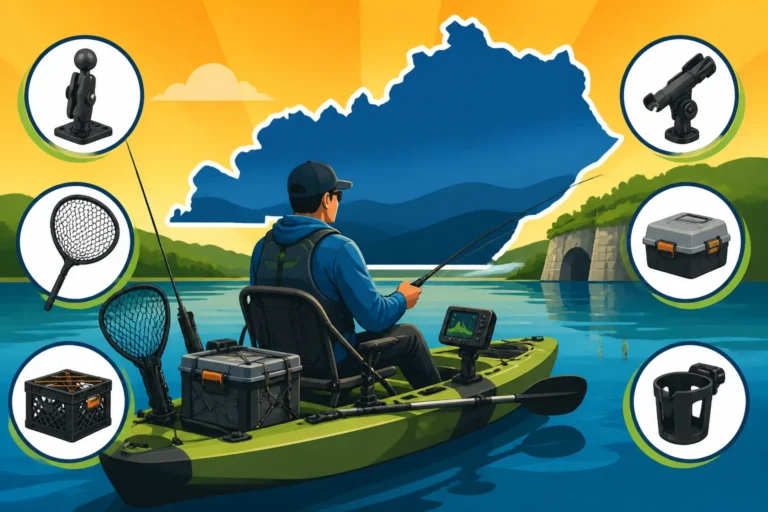
Beyond just storage, consider the rigging capabilities. Accessory tracks, often found on the gunwales, allow you to easily mount rod holders, fish finders, camera mounts, and other essential gadgets without drilling holes in your kayak. Bass Pro Shops is a great place to explore the vast array of accessories designed for kayak rigging, from specialized rod holders to anchor trolleys. Having these options makes customizing your kayak for maximum efficiency and enjoyment on the water much simpler.
Propulsion Options: Paddle, Pedal, or Motor?
How you move your kayak across the water is a huge factor on big lakes. Each propulsion method has its pros and cons, especially when you consider covering large areas and battling elements.
Traditional paddle kayaks are great for simplicity, stealth, and a good workout. They are often lighter and less expensive. However, on windy days or when covering long distances on Lake Cumberland: Kentucky's Best All-Around Fishing Lake, paddling can be incredibly taxing. You'll spend more energy just moving, leaving less for fishing.
Pedal-drive kayaks are a game-changer for many big lake anglers. Systems like those using fins or propellers allow you to propel the kayak using your legs, leaving your hands free for casting, reeling, or holding a snack. This significantly reduces fatigue over long distances and gives you an incredible advantage when fighting a fish while trying to maintain position. You can find excellent pedal-drive kayaks, as well as small electric motors and mounting kits for kayaks, on platforms like Amazon, expanding your options for covering vast distances with ease.
Finally, some kayaks are designed to accept a small electric trolling motor. This offers the ultimate in effortless propulsion, allowing you to cruise across large expanses, fight currents, and quickly relocate to new spots. While adding weight and requiring battery management, a motor can extend your range and fishing time dramatically on Kentucky's biggest waters.
Top Kayak Styles Suited for Kentucky's Big Waters
With so many kayaks on the market, it can feel like a maze trying to figure out which style is best for your big lake adventures. But don't fret! Certain designs are inherently better suited for the challenges and opportunities presented by Kentucky's larger reservoirs. Let's break down the most popular and effective styles.
Sit-on-Top Fishing Kayaks
For big lake fishing, sit-on-top (SOT) kayaks are overwhelmingly the most popular choice, and for good reason. Unlike traditional sit-inside kayaks, SOTs feature an open deck, meaning you sit on top of the hull rather than inside it. This design offers several critical advantages when you're far from shore.
First and foremost, SOTs are self-draining. Any water that splashes onto the deck, from waves or a big fish thrashing, simply drains out through scupper holes. This means you won't be bailing water if things get choppy, a huge safety and comfort factor on expansive lakes. Secondly, they offer easier re-entry if you happen to fall out, which can be a real concern in deeper, colder waters. Lastly, the open deck provides more room for gear and allows for greater freedom of movement, making it easier to manage rods, nets, and tackle. Many SOTs are also designed with stability in mind, making them ideal for rougher waters.
Pedal-Drive Kayaks
If you're serious about covering ground and maximizing your fishing time on Kentucky's biggest lakes, a pedal-drive kayak should be high on your list. These kayaks, as mentioned, employ a pedal system that drives a propeller or flippers beneath the boat, propelling you forward with your legs. This seemingly simple innovation is truly a game-changer.
Imagine being able to slowly troll a crankbait across a massive flat on Kentucky Lake, with both hands free to adjust your rod or check your Fish Finders and Electronics for Kentucky Lake Fishing. Or, picture fighting a trophy largemouth bass with one hand, while simultaneously pedaling to keep your kayak in position against the wind. The efficiency is unmatched, allowing you to reach distant spots without fatiguing your arms, and to maintain precise boat control while actively fishing. While they typically come with a higher price tag than paddle-only models, the benefits in comfort, range, and fishing effectiveness often make them a worthwhile investment for dedicated big lake anglers.
Tandem Kayaks for Solo or Duo Fishing
While often thought of for couples or parent-child outings, larger tandem kayaks can actually be a smart choice for solo anglers tackling big lakes, or for those who occasionally want to fish with a companion. Many modern tandem fishing kayaks are designed with flexibility in mind.
When used solo, the extra length and width of a tandem kayak translate directly into enhanced stability and impressive carrying capacity. You can spread out your gear, bring a larger cooler, or even a small dog without feeling cramped. Some designs even allow the angler to sit in the middle seat for optimal balance and paddling efficiency when alone. This versatility makes a tandem an interesting option, offering the best of both worlds – the ability to enjoy Best Fishing Kayaks for Kentucky Lakes and Rivers with a partner or revel in solo adventures with an abundance of space and stability.
Essential Accessories and Safety for Big Lake Kayak Fishing
Stepping up to big lake kayak fishing isn't just about the kayak itself; it's also about equipping yourself with the right accessories and, crucially, prioritizing safety. These expansive waters demand a higher level of preparation than your local farm pond. You'll want to think about everything from how you stay afloat to how you stay put in a stiff breeze.
PFDs and Other Safety Gear
This one is absolutely non-negotiable. A properly fitted, U.S. Coast Guard-approved Personal Flotation Device (PFD), or life jacket, is the most important piece of gear you own. On big lakes, conditions can change rapidly, and boat traffic can create unpredictable wakes. Even the strongest swimmers can get into trouble quickly if they unexpectedly fall into cold water or are hit by another boat. Always wear your PFD, not just have it on board.
Beyond your PFD, consider other essential safety items. A whistle or other sound-producing device is required by law and crucial for alerting others. A visible light (especially if you're out near dawn or dusk) and a signaling mirror can also be invaluable. Carry a waterproof bag with a fully charged cell phone (in a waterproof case), a basic first-aid kit, and enough water and snacks for longer than you anticipate being out. Understanding and adhering to Life Jacket Rules for Boats in Kentucky is paramount for every trip. Bass Pro Shops offers a wide selection of PFDs designed specifically for fishing, with extra pockets and comfortable fits.
Anchoring Systems for Holding Your Spot
Picture this: you've finally found the perfect submerged brush pile, you drop your line, and BAM! Fish on! But wait, the wind is pushing your kayak, and you're drifting away from the hotspot. Frustrating, right? An effective anchoring system is crucial for kayak fishing on big lakes.
There are several options. A simple drag anchor (a small grapnel anchor) with a rope can work, especially if paired with an anchor trolley system. An anchor trolley allows you to easily move your anchor line from the bow to the stern, giving you precise control over your boat's orientation relative to the wind or current. For shallower water, a stake-out pole can be silently pushed into the bottom, holding you firm. For those with pedal drives, a sophisticated shallow-water anchor system can deploy silently with the push of a button. Consider your fishing style and the depths you typically fish before deciding.
Fish Finders and Navigation
On sprawling lakes with countless coves, channels, and humps, a fish finder isn't just a luxury—it's almost a necessity. These devices help you locate fish, identify submerged structures, and understand bottom contours that are invisible from the surface. For kayak anglers, portable and compact models are popular, often powered by a small battery and mounted on a track system.
Many modern fish finders also incorporate GPS and mapping capabilities, allowing you to mark waypoints, track your path, and navigate confidently, even in unfamiliar territory or foggy conditions. Being able to return to that exact productive brush pile or drop-off can be the difference between a good day and a great day. Having a reliable navigation system is especially important on truly massive bodies of water, ensuring you can always find your way back to your launch point. Amazon has a great selection of portable fish finders and mounting hardware that can make your big lake kayak fishing much more efficient. Don't forget to study Kentucky Fishing Regulations Explained before you head out, and a reliable fish finder can help you stay within those limits by showing you what's down there.
Here's a quick look at how different kayak features align with the demands of big lake fishing:
| Feature | Ideal for Big Lakes | Why It Matters |
|---|---|---|
| Length | 12 feet or longer | Better tracking, increased speed, less paddling effort for long distances. |
| Width (Beam) | 32 inches or wider | Enhanced stability for waves, standing, and fighting fish. |
| Hull Design | Pontoon, cathedral, or modified V-hull | Maximizes primary and secondary stability against chop and boat wakes. |
| Propulsion | Pedal drive or electric motor ready | Hands-free fishing, efficient long-distance travel, battling wind/current. |
| Storage | Large tank well, multiple dry hatches, rod holders | Accommodates extensive gear, safety equipment, and supplies for long trips. |
| Rigging | Accessory tracks (e.g., GearTracs, YakAttack) | Easy mounting of fish finders, GPS, rod holders without drilling. |
| Rudder/Skeg | Essential for control | Improves tracking in wind, aids steering, reduces fatigue. |
| Seating | Elevated, comfortable, adjustable frame seat | Reduces fatigue, offers better visibility, keeps you dry. |
This article is for general informational purposes only and does not constitute professional advice. Laws, prices and regulations vary by location and change over time. Consult a qualified professional for guidance on your specific situation.