Best Kayak Accessories for Fishing
If you've ever tried to fish from a kayak without the right setup, you know the struggle is real. Picture this: your rod is slipping, your tackle box is sliding around, and you're fumbling for your pliers while a monster bass makes a run for it. It's frustrating, inefficient, and frankly, it takes all the joy out of what should be a peaceful day on the water. This guide is here to transform your kayak fishing experience by walking you through the essential accessories that will keep you organized, safe, and ready to reel in your next big catch on Kentucky's beautiful waters.
The Unique World of Kayak Fishing: Why Accessories Matter
Kayak fishing isn't just regular fishing from a smaller boat; it's an entirely different discipline that brings its own set of challenges and immense rewards. The stealth, the access to shallow, untouched waters, and the intimate connection with nature are unparalleled. However, to truly embrace these advantages without succumbing to the inherent limitations of a small craft, you need the right gear. It's not about cluttering your kayak, but about smart, strategic outfitting that makes every moment on the water more productive and enjoyable.
Space and Stability Constraints
Let's be honest, a kayak doesn't offer the sprawling deck space of a bass boat. Every inch matters, and every piece of gear needs to be thoughtfully placed and secured. This means bulky items are often out, and multi-functional or compact accessories are in. You’re constantly battling the elements of limited storage, keeping your balance, and preventing gear from taking an unplanned swim. It’s a delicate dance between having what you need and not being overwhelmed. Moreover, the stability of a kayak, while generally good for fishing kayaks, is still different from a traditional boat. You can't just throw things anywhere; weight distribution plays a big role in keeping you upright, especially when you're casting, fighting a fish, or reaching for tackle. Thinking about how each accessory impacts your space and balance is crucial for a safe and effective trip.
Stealth and Accessibility Advantages
The beauty of kayak fishing lies in its stealth and the ability to glide into skinny water that bigger boats can only dream of reaching. This quiet approach is key to getting closer to wary fish, whether you're targeting largemouth bass tucked deep into lily pads on Lake Barkley or smallmouth in a remote creek. The right accessories enhance these advantages rather than detract from them. For instance, a proper anchoring system allows you to hold your position silently without spooking fish with a noisy motor. Specialized gear for carrying multiple rods means you can quickly switch tactics without rummaging around, maintaining your quiet profile. Outfitting your kayak correctly allows you to fully exploit these unique benefits, turning potential frustrations into successful fishing opportunities. For more ideas on getting started, check out our guide on Best Fishing Kayaks for Kentucky Lakes and Rivers.
Essential Safety and Stability Gear for Your Fishing Kayak
Safety should always be your number one priority, especially when you're out on the water in a kayak. Even the most experienced anglers can face unexpected situations, and being prepared can make all the difference. Beyond just staying safe, certain accessories can dramatically improve the stability and comfort of your ride, letting you focus on the fish, not on keeping your balance.
PFDs and Safety Gear
A Personal Flotation Device (PFD), or life jacket, isn't just a recommendation; it's a non-negotiable piece of safety equipment. Even if you're an excellent swimmer, conditions can change quickly on Kentucky's rivers and lakes. An unexpected capsize in cold water or strong current can be disorienting and dangerous. Modern fishing PFDs are designed with kayak anglers in mind, featuring extra pockets for gear, high backs that don't interfere with your seat, and comfortable designs that you'll barely notice you're wearing. Brands like Bass Pro Shops offer a wide range of PFDs, from inflatable vests to traditional foam models, catering to different preferences and budgets.
Beyond the PFD, a few other safety items are absolute must-haves:
- Whistle: For signaling distress. Keep it attached to your PFD.
- Paddle Leash: This simple strap connects your paddle to your kayak, preventing it from drifting away if you drop it. It's an absolute lifesaver, especially when you're fighting a fish and need both hands.
- First-Aid Kit: A small, waterproof kit with essentials for cuts, scrapes, and minor emergencies.
- Communication Device: A fully charged cell phone in a waterproof bag, or even better, a marine radio if you're on larger bodies of water like Kentucky Lake or Lake Cumberland.
- Visibility Flag/Light: If you're out on busy waters, a tall flag makes you more visible to other boaters, especially important for low-profile kayaks. For dawn, dusk, or night fishing, a 360-degree white light is often required by law and is critical for safety. For a deeper dive into PFDs, don't miss our article on Best Life Jackets for Kayak Fishing and generally, Kentucky Boat Safety Certificate Requirements.
Here's a quick look at essential safety gear:
| Accessory | Purpose | Key Feature for Kayak Anglers |
|---|---|---|
| PFD (Life Jacket) | Keeps you afloat in case of capsize or fall overboard | High back, multiple pockets, comfortable fit, bright colors |
| Paddle Leash | Prevents paddle loss | Coiled or straight options, strong clips |
| Whistle | Audible distress signal | Loud, easily accessible, attaches to PFD |
| First-Aid Kit | Basic medical treatment for minor injuries | Waterproof, compact, well-stocked |
| Visibility Flag | Increases visibility to other boaters | Tall, bright, often collapsible, mounts easily |
| Marine Radio | Reliable communication in emergencies | Waterproof, floating, easy-to-use buttons |
Anchoring and Positioning Systems
Maintaining your position in a kayak can be a challenge, especially in wind or current. That's where a good anchoring system comes in. Forget trying to tie off to a tree branch or constantly re-paddling; a proper anchor allows you to hold steady over a fish-holding structure or in a strong current.
- Anchor Trolley System: This is arguably one of the most important accessories for kayak anglers. It's a line system that runs along the length of your kayak, allowing you to easily deploy your anchor from either the bow or the stern without having to reach awkwardly or dangerously. This flexibility lets you adjust your angle to the wind or current, ensuring you stay precisely where you want to be.
- Kayak Anchor: Unlike traditional boat anchors, kayak anchors are typically much smaller and lighter. A 1.5 to 3-pound grapple anchor (also known as a folding anchor) is a popular choice because its flukes fold up for compact storage and deploy easily to grab onto various bottom types. Stake-out poles are another fantastic option for shallow water, allowing you to quietly pole yourself into position and then stick the pole into the bottom to hold fast.
- Drift Chute/Sock: When the wind is pushing you too fast, a drift chute (or drift sock) acts like a parachute in the water, slowing your drift and allowing you to fish more effectively over larger areas. This is particularly useful for covering flats or targeting species that prefer slower presentations. Using these systems can truly enhance your Kayak Fishing Gear for Kentucky Lakes experience.
Maximizing Your Catch: Rod Holders, Storage, and Organization
Once you're safe and stable, the next step is to make your kayak a fishing machine. This involves smart solutions for managing your rods, tackle, and keeping everything within easy reach, so you're always ready for that next bite.
Rod Holders and Organization
You simply can't effectively fish from a kayak without good rod holders. Even if you're only planning to take one rod, there will be times you need to put it down – whether to land a fish, re-tie a lure, or simply paddle.
- Flush Mount Rod Holders: These are often built into the kayak's deck during manufacturing, offering a clean, low-profile look. They're great for storing rods when paddling or for passive trolling.
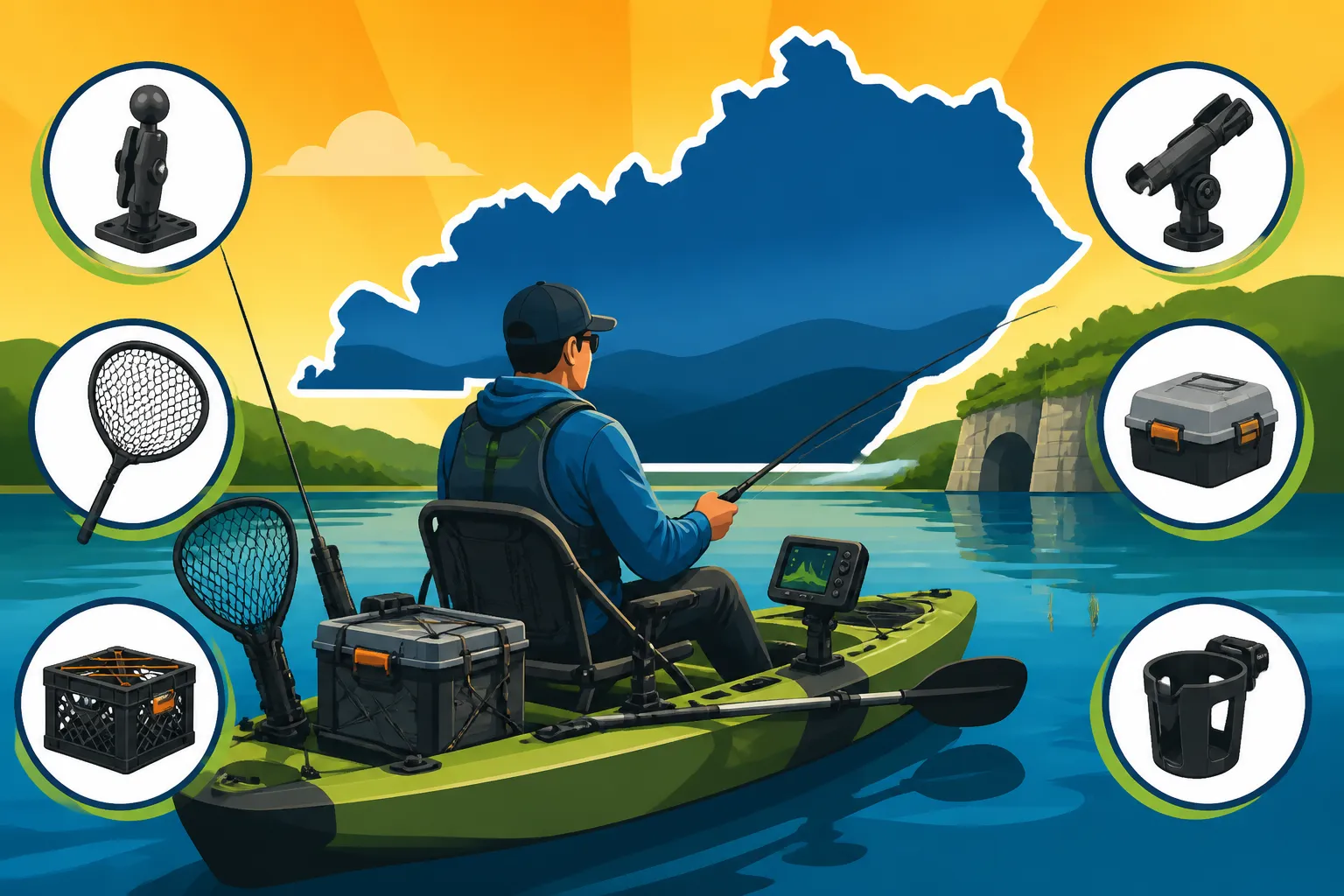
- Track Mount Rod Holders: This is where customization truly shines. Many modern fishing kayaks come with "gear tracks" (like those from YakAttack or Wilderness Systems) running along the gunwales. These tracks allow you to attach and adjust various accessories, including rod holders, anywhere along the track with a simple thumb screw. This versatility means you can easily change the angle and position of your rods for active trolling, bait fishing, or just holding a spare rod ready. You can find a vast array of these systems at retailers like Bass Pro Shops.
- Crate-Mounted Rod Holders: If you're using a fishing crate (which we'll discuss next), many are designed to accept individual rod holders that screw or clip onto the sides. This is a common and effective way to carry multiple rods vertically behind your seat. For more on what rods to pair with these holders, check out Best Rods and Reels for Kentucky Fishing.
Storage Solutions (Crates, Dry Bags, Tackle Boxes)
Storage is always at a premium on a kayak, so efficient solutions are key. You want your tackle accessible but secure.
- Fishing Crates: The humble milk crate has been a kayak fishing staple for years, but specialized fishing crates have elevated this concept. These are typically square or rectangular plastic boxes that fit perfectly into the tankwell (the open storage area behind the seat) of most kayaks. They often feature built-in or attachable rod holders, bungee straps, and sometimes even small compartments for tools. They provide an excellent base for organizing multiple tackle boxes, a cooler, and other gear. Some high-end options from brands like Hobie offer integrated tackle management systems.
- Dry Bags and Boxes: Water is everywhere when kayak fishing, so protecting electronics, keys, wallets, and extra clothing is vital. Dry bags come in various sizes and are designed to keep contents completely dry, even if submerged. Small waterproof tackle boxes are also fantastic for keeping delicate lures or spare components safe and dry. You can find a huge selection of dry bags on Amazon, making it easy to find the perfect size for your needs.
- Under-Seat Storage: Some kayaks offer mesh pockets or small compartments directly under or beside the seat. These are perfect for small, frequently used items like pliers, line cutters, or a small bait box.
- Hatch Storage: Many kayaks feature sealed hatches, offering internal storage. While not as easily accessible on the water, these are great for stashing extra layers of clothing, lunch, or more significant safety gear. Just make sure anything in a hatch is also in a dry bag for double protection.
Electronics and Navigation Accessories
In today's world, fishing electronics have become indispensable for many anglers, and kayak fishing is no exception. These tools can give you a massive advantage in finding fish and navigating unfamiliar waters.
Fish Finders and Mounts
A good fish finder can completely change your kayak fishing game. No more guessing; you can see structure, depth, and even fish arches right on your screen.
- Compact Fish Finders: Kayaks typically utilize smaller, more compact fish finders compared to those on larger boats. Brands like Lowrance, Garmin, and Humminbird offer excellent models designed for kayak use, often with screens in the 4-7 inch range. They're usually battery-powered (small 12V batteries are common) and designed to be robust and waterproof.
- Transducer Mounting: Mounting the transducer (the part that sends and receives sonar signals) is crucial. Many kayak anglers use a "shoot-through-hull" mount where the transducer is glued to the inside bottom of the hull, shooting through the plastic. Others prefer a "scupper hole" mount, utilizing existing drainage holes in the kayak, or an external arm mount that deploys the transducer into the water. The choice often depends on your kayak model and personal preference.
- Display Mounts: The fish finder display itself needs to be securely mounted where you can easily see it without interfering with your paddling or casting. RAM Mounts are incredibly popular for kayaks due to their versatility and strong ball-and-socket design, allowing for easy adjustment and quick removal.
- Battery Management: Since these units are battery-powered, having a waterproof battery box and understanding battery life is essential. Many anglers carry a spare, smaller battery or use a power bank for charging other devices. To learn more about these invaluable tools, take a look at our article on Fish Finders and Electronics for Kentucky Lake Fishing.
GPS and Communication Devices
While many modern fish finders include GPS functionality, dedicated GPS devices or even your smartphone with a reliable mapping app can be incredibly useful for navigation and marking hotspots.
- Dedicated GPS Units/Apps: Knowing exactly where you are, where you've been, and where you want to go is vital, especially on vast waters like Kentucky Lake or the winding rivers of the state. GPS helps you mark productive fishing spots, navigate safely back to your launch point, and even track your speed and distance. Many anglers use apps like Navionics or C-MAP on their smartphones, secured in a waterproof case and mounted to the kayak.
- Communication Beyond Cell Service: While cell phones are convenient, there are many remote areas in Kentucky where service is spotty or nonexistent. For those situations, a marine VHF radio is a smart investment, especially if you're venturing out on larger lakes or the Ohio River. These radios allow you to communicate with other boaters and emergency services. Always remember to check Kayak Fishing Safety Gear for Kentucky Waters before you head out.
Comfort and Convenience Enhancements
Fishing should be enjoyable, not a test of endurance. A few well-chosen accessories can significantly boost your comfort and overall convenience, making those long days on the water even better.
Seating Upgrades and Padding
Many entry-level kayaks come with basic seats that can quickly become uncomfortable after a few hours. Investing in a better seat can be a game-changer for your back and bottom.
- Aftermarket Seats: High-quality aftermarket kayak seats offer much better support, cushioning, and often a higher seating position for improved visibility and easier casting. Look for seats with adjustable straps and breathable materials. Some premium fishing kayaks even feature stadium-style seats that resemble small chairs, providing exceptional comfort.
- Seat Pads: Even if you have a decent seat, adding an extra layer of padding, especially made from marine-grade foam, can prevent fatigue and provide insulation from a cold or wet hull.
- Back Support: Good lumbar support is crucial for preventing back pain on longer trips. Many upgraded seats focus heavily on ergonomic design to keep you comfortable and allow you to focus on the fishing, not your aching back.
Paddle Leashes and Keepers
We've mentioned paddle leashes for safety, but they also fall under convenience. Imagine having to chase your paddle downwind or downstream every time you set it down to re-tie. Not fun!
- Coiled Leashes: These are popular because they stretch and retract, keeping the leash out of your way until needed.
- Paddle Keepers: These are small clips or bungee cords that attach to the side of your kayak, providing a designated spot to temporarily secure your paddle while you're busy with other tasks. This prevents it from sliding around or falling into the water. Having a spot to quickly stow your paddle when you hook a fish is invaluable.
Gear Tracks and Mounting Systems
Gear tracks are essentially the modular backbone of many kayak fishing setups, allowing for endless customization.
- Versatile Mounting: Already mentioned for rod holders, gear tracks allow you to mount almost any accessory – fish finders, camera mounts, cup holders, light poles, GPS units, and more. Brands like YakAttack and Scotty offer a wide range of track-compatible accessories and bases.
- Easy Adjustments: The beauty of a track system is the ability to slide, rotate, or remove accessories quickly and easily. This means you can adapt your setup for different fishing situations, transport, or storage without tools. It's especially useful if you need to quickly change your How to Rig a Fishing Kayak for Bass setup.
- DIY Potential: While many accessories are designed for tracks, you can also get creative with track-mounted bases and attach your own DIY solutions, allowing for truly personalized setups that cater to your specific fishing style and needs. You can often find a wide variety of these mounting options through online retailers like Amazon.
By thoughtfully equipping your fishing kayak with these accessories, you're not just adding gadgets; you're creating a more functional, safe, and ultimately more enjoyable platform for your angling adventures across Kentucky's diverse waterways.
Disclaimer
This article is for general informational purposes only and does not constitute professional advice. Laws, prices and regulations vary by location and change over time. Consult a qualified professional for guidance on your specific situation.