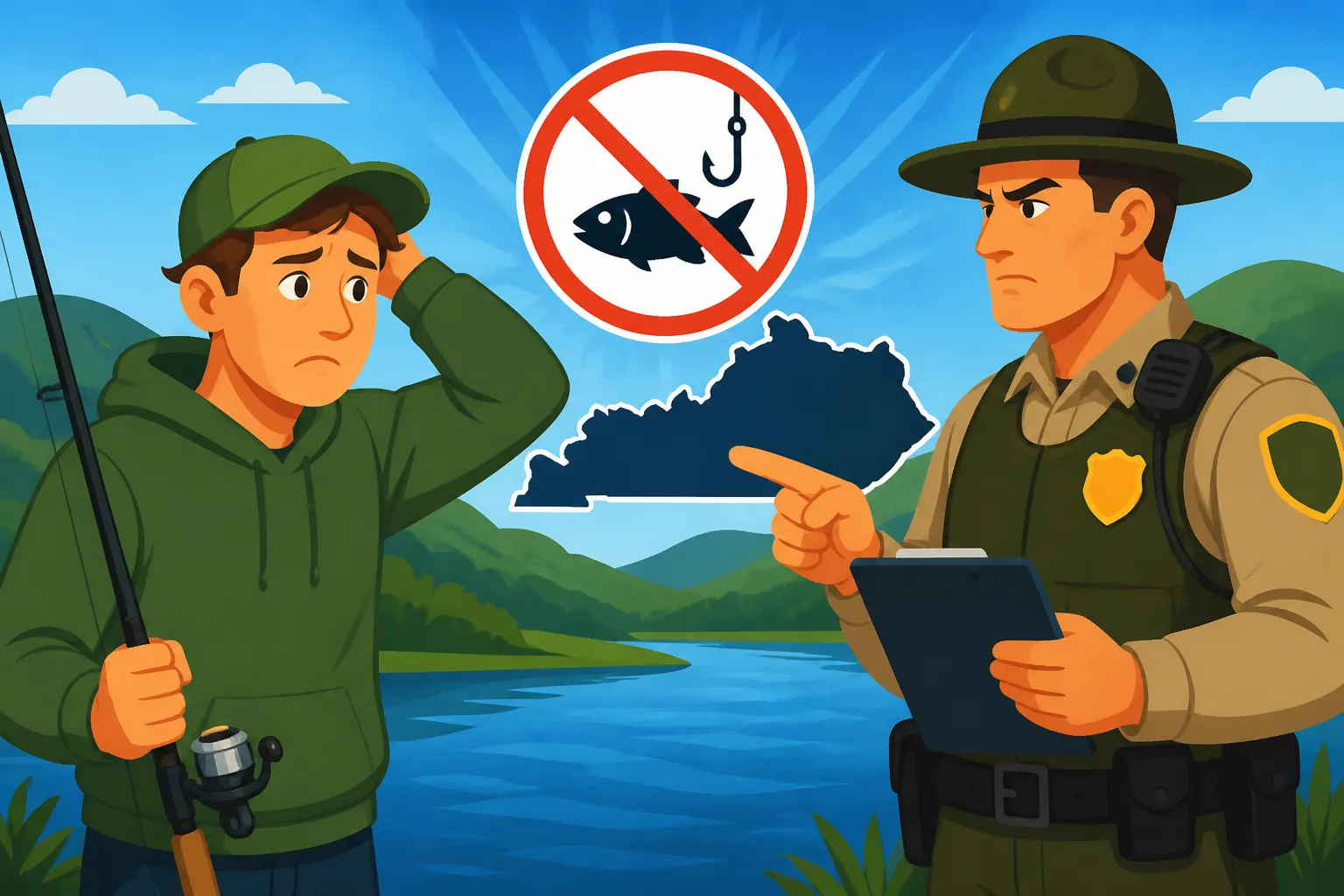
Fine for Getting Caught Fishing Without a License
It’s a scenario no angler wants to face: you’re out on the water, enjoying a peaceful day, when suddenly a Kentucky Fish and Wildlife Resources game warden pulls up, asks to see your license, and you realize you don’t have it. The knot in your stomach tightens as the reality sets in: you're fishing without a valid license. This guide is here to walk you through exactly what happens when you’re caught, the fines you might incur, and most importantly, how to easily avoid this stressful situation altogether.
The Immediate Consequences: What Happens When a Warden Checks Your License?
That moment when a game warden approaches can be nerve-wracking, even if you’ve got everything in order. But if you’re fishing without a valid license, that anxiety quickly turns into a much more serious situation. It's not just a minor oversight in the eyes of the law; it's a violation that carries real weight.
The Initial Encounter and License Verification
Most encounters with a game warden start cordially. They might pull alongside your boat, or approach you on the bank, introduce themselves, and politely ask to see your fishing license and any fish you've caught. They're doing their job, ensuring that Kentucky's precious natural resources are managed responsibly and that everyone is following the rules. This isn't usually an aggressive stop; it's a routine check designed to maintain fair play and conservation efforts.
When asked, you'll need to provide proof of your valid Kentucky fishing license. This could be a physical paper copy, often tucked into a wallet or tackle box, or a digital version displayed on your smartphone. Many anglers these days prefer the convenience of having their license on their phone, which is perfectly acceptable in Kentucky. Just make sure your phone is charged and accessible! If you're wondering about the specifics, our guide on Digital vs Printed Kentucky Fishing License on the Water can offer more details on what's considered valid proof. The warden will typically check the dates, verify your identity against the license, and make sure any required permits, like a trout permit, are also in order.
If You Don't Have a Valid License
This is where things can go south quickly. If you can’t produce a valid fishing license – whether you genuinely forgot it, it expired, or you never bought one – the warden’s demeanor will shift. While still professional, the interaction will become more formal. They are now dealing with a violation.
In Kentucky, fishing without a license is generally classified as a Class B misdemeanor. This isn't just a slap on the wrist. You will be issued a citation, which is essentially a legal summons to appear in court. The warden will collect your personal information, explain the charge, and hand you the ticket. There’s no arguing your way out of it at this point; the decision has been made. It can be incredibly embarrassing, especially if you're with family or friends. The feeling of being caught, knowing you made a mistake, and now facing legal consequences is a stark reminder of why it's so important to be prepared. This moment is often the first step in facing the Penalties for Fishing Without a License in Kentucky.
You might try to explain that you just "forgot" it, or that you "didn't realize" it expired, but unfortunately, ignorance of the law is rarely accepted as an excuse. The responsibility falls entirely on the individual angler to ensure they are properly licensed before casting a line in public waters.
Understanding the Monetary Penalties and Court Process
Getting that citation is just the beginning. The real consequences, financial and otherwise, typically unfold in the days and weeks that follow. It's important to understand that these aren't just minor fees; they can quickly add up and become a significant burden.
The Typical Fine for Fishing Without a License in Kentucky
For a first-time offense of fishing without a license in Kentucky, the monetary fine can vary, but generally, you're looking at a range from $50 to $250. However, that's often just the base fine. What many anglers don't realize is that these citations almost always come with additional court costs and fees, which can sometimes double or even triple the initial fine amount. So, a $100 fine could easily become a $200-$300 expense once all is said and done.
Think about that for a moment. A typical Kentucky Resident Annual Fishing License Costs $24.31. Even a short-term license like the Kentucky Resident 1-Day Fishing License Costs $7.40 is a fraction of the cost. When you compare these costs, paying the fine is significantly more expensive than simply purchasing a license in the first place. It's a tough lesson to learn, but one that many anglers have faced. These fines are designed to deter illegal activity and help fund the conservation efforts that benefit all anglers.
Going to Court and Pleading Your Case
When you receive a citation for fishing without a license, it typically includes a court date. You are legally obligated to appear in court on that date, or to take action to resolve the citation beforehand. You usually have a few options:
- Plead Guilty and Pay the Fine: This is the most common route. If you acknowledge you were in violation, you can often pay the fine and court costs before your court date, or appear and plead guilty. Paying the fine settles the matter, but the violation will remain on your record.
- Contest the Citation: If you believe you were wrongly cited or have a valid defense (e.g., you did have a license but the warden overlooked it, or there was a misunderstanding), you can appear in court and plead not guilty. You would then present your case to the judge. This path can involve legal fees if you hire an attorney and can be a more drawn-out process.
It’s crucial not to simply ignore the citation. If you fail to appear in court or fail to address the citation, the consequences can escalate dramatically. The court can issue a warrant for your arrest, and additional charges and fines can be levied. What started as a simple fishing violation can quickly turn into a much more serious legal problem.
Beyond the Fine: Other Potential Repercussions
While the monetary fine and court costs are the most immediate impacts, there can be other, less obvious repercussions for fishing without a license:
- Suspension or Revocation of Fishing Privileges: Depending on the severity of the violation, if you're a repeat offender, or if there were other infractions involved (like exceeding bag limits or fishing out of season), the Kentucky Department of Fish and Wildlife Resources might suspend or even revoke your fishing privileges for a period. This means you wouldn't be able to legally purchase a fishing license for a certain amount of time, essentially barring you from one of your favorite pastimes.
- Impact on Future Licenses: Having a history of violations can sometimes make it more difficult or scrutinized to obtain future licenses, though typically a single license violation won't prevent future purchases unless it's part of a pattern of serious offenses.
- Confiscation of Equipment (Rare but Possible): In severe cases, especially involving commercial poaching, repeat offenses, or other serious conservation violations, game wardens have the authority to confiscate fishing equipment, boats, and even vehicles used in the commission of a crime. While extremely rare for a simple "no license" infraction, it’s a powerful tool in a warden's arsenal for serious violations.
- Criminal Record: Since it’s a Class B misdemeanor, fishing without a license technically goes on your criminal record. While it's a minor offense, it can still appear on background checks, which could potentially impact certain job applications or other situations where a clean record is required.
It’s clear that the consequences extend far beyond just the cost of a license. The stress, the court appearance, the fines, and the potential impact on your fishing future make it abundantly clear why being properly licensed is a non-negotiable part of responsible angling.
Avoiding the Hassle: Easy Ways to Stay Legal
Nobody wants to deal with fines, court dates, or the embarrassment of getting caught. The good news is, avoiding this whole mess is incredibly simple! It just requires a little bit of planning and awareness.
Purchasing Your License: Options and What You Need
Getting a Kentucky fishing license is designed to be easy and accessible. You have several convenient options:
- Online: This is often the quickest and most popular method. You can purchase your license directly from the Kentucky Department of Fish and Wildlife Resources (KDFWR) website. It takes just a few minutes, and you can print your license immediately or save a digital copy to your phone. If you're looking for step-by-step instructions, our guide on How to Buy a Kentucky Fishing License Online is a great resource.
- In-Person Retailers: Many sporting goods stores, bait shops, and even some Walmarts across Kentucky are authorized license vendors. This is a great option if you prefer a physical transaction or need to pick up some last-minute bait anyway.
- County Clerk's Office: Your local County Clerk's office can also process fishing license purchases.
When you purchase your license, you'll need some basic information, including your full name, address, date of birth, and usually a form of identification like your driver's license number. Our post on What Information You Need on Hand to Buy a License provides a handy checklist to ensure you have everything ready. Remember, the Kentucky Fishing License Year Runs March 1 to February 28, so make sure you're always buying for the current license year!
Understanding License Types and Specific Regulations
Beyond just having a license, it’s important to have the right license and to understand the rules that apply to your specific fishing trip.
- Annual vs. Short-Term Licenses: For many residents, the annual license is the most cost-effective. But if you're just visiting for a weekend or only plan to fish one or two days out of the year, a short-term license, like the Kentucky Resident 1-Day Fishing License Costs $7.40, might be a better fit for your budget. Always consider your fishing frequency when choosing.
- Trout Permits: If you plan to fish for trout in designated trout waters, you’ll need a special Kentucky Trout Permit Guide in addition to your general fishing license. These are often small streams or specific sections of larger lakes where trout are stocked. It’s an extra step, but vital for staying legal.
- Species-Specific and Site-Specific Rules: A common mistake anglers make is assuming their license covers everything. While it covers the act of fishing, you still need to adhere to specific regulations regarding bag limits, size limits, and seasons for different fish species. These rules can even vary from lake to lake or river to river! For example, bass limits on Lake Barkley might differ from statewide regulations. Always consult the KDFWR fishing guide or check specific lake regulations before you head out. Our article, Kentucky Fishing Rules by Lake and Water, can help you navigate these nuances.
- Kentucky Free Fishing Weekend: There's also a special exception! Kentucky offers a Kentucky Free Fishing Weekend Guide usually in early June, where residents and non-residents can fish without a license for two days. This is a fantastic opportunity, especially for introducing kids to fishing, but all other regulations (bag limits, size limits) still apply.
Digital Proof and Keeping Your License Handy
Once you've bought your license, the next critical step is ensuring you have proof of it with you every time you fish.
- Smartphone Convenience: As mentioned, having a digital copy on your phone is incredibly convenient. Save it as a photo or a PDF on your device. To protect your phone and your digital license while on the water, consider investing in a waterproof phone pouch, easily found on Amazon, which will keep your device dry and your license accessible.
- Printed Copy: While digital is great, sometimes technology fails (dead battery, no signal). It’s always a good backup to have a printed copy. Many anglers laminate a printed copy or keep it in a small, waterproof bag in their tackle box.
- Dedicated License Holder: You can even find small, clear plastic wallets specifically designed for fishing and hunting licenses on Amazon. These are usually very affordable and can clip to a vest or sit securely in a tackle box, making it simple to grab and present when asked.
By taking these simple steps – purchasing the correct license, understanding the regulations, and keeping proof readily available – you can focus on the joy of fishing without the looming worry of a game warden encounter turning into a costly headache. Your peace of mind is worth far more than the minimal cost and effort of being prepared.
Summary of Penalties and Prevention
Here's a quick overview to keep you on the right side of Kentucky fishing law:
| Violation Type | Typical Consequence (First Offense) | How to Avoid |
|---|---|---|
| Fishing Without a License | $50 – $250 fine + court costs | Buy an annual or 1-day license |
| Missing Required Permits (e.g., Trout) | Additional fines, similar to no license | Add necessary permits when purchasing your license |
| Failure to Appear in Court | Arrest warrant, additional charges | Address your citation promptly (pay or contest) |
| Repeated Offenses | Heavier fines, license suspension/revocation | Always follow fishing regulations |
| Forgetting License at Home | Same as not having one (citation issued) | Keep digital copy on phone, carry printout |
This table highlights the significant difference between the small investment in a license and the potential costs of non-compliance. Don't let a momentary lapse in judgment or forgetfulness ruin your fishing day and empty your wallet. Being prepared and informed is truly the best defense.
Disclaimer
The information provided in this guide is intended for general informational purposes only and does not constitute legal advice. While we strive to provide accurate and up-to-date information, fishing regulations and legal penalties can change. Always consult the official Kentucky Department of Fish and Wildlife Resources regulations or a legal professional for the most current and specific information regarding fishing licenses and penalties in Kentucky.