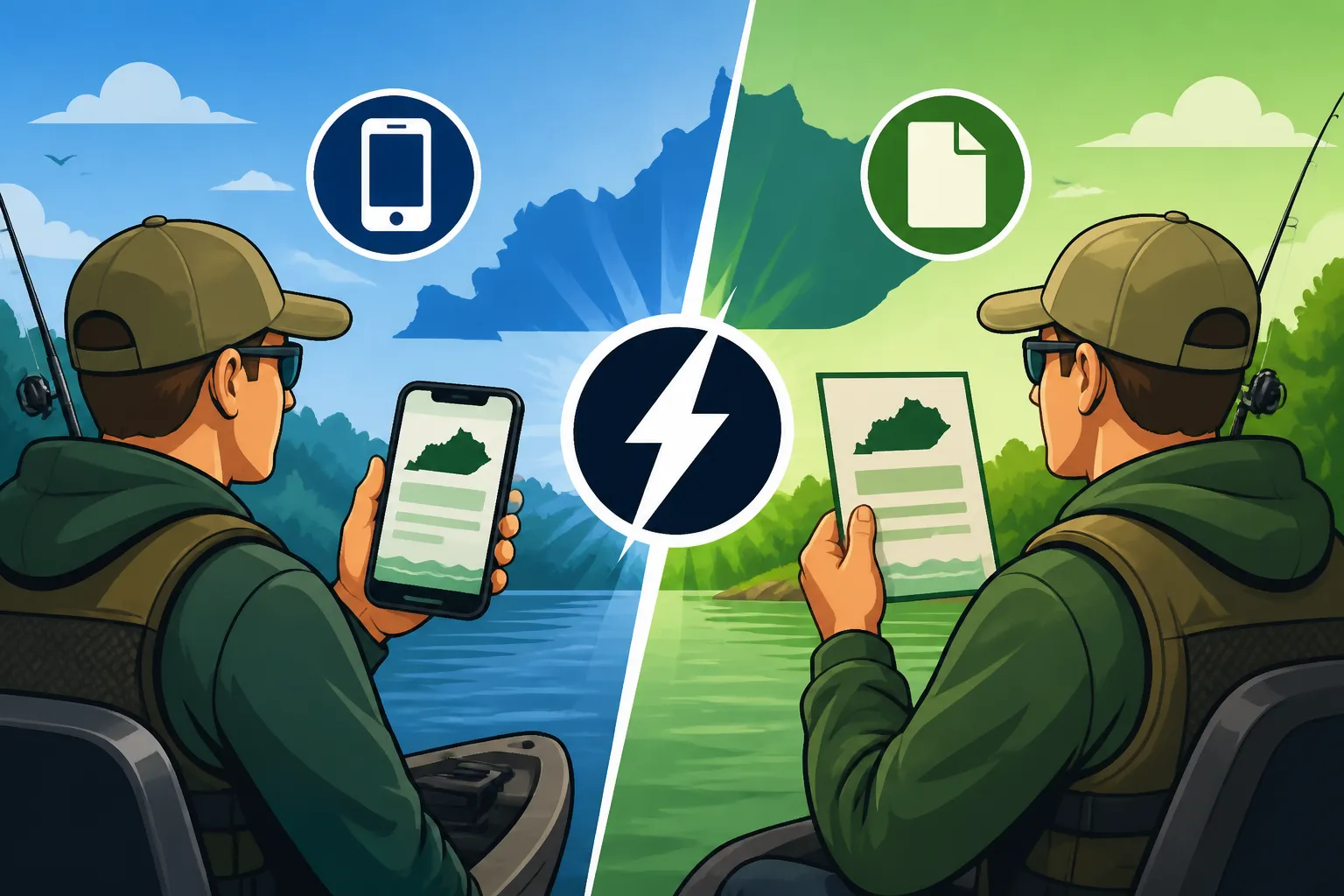
Digital vs Printed Kentucky Fishing License on the Water
There's nothing quite like the feeling of hitting the water in Kentucky, rod in hand, ready for a day of peace and possibility. But that feeling can turn to a knot of anxiety if you're suddenly wondering whether your fishing license is really valid in its current form. We've all been there: "Is this digital copy on my phone good enough, or do I need a physical printout?" This guide is going to walk you through the ins and outs of both digital and printed Kentucky fishing licenses, making sure you're always on the right side of the rules and can focus on what truly matters – catching fish.
The Convenience of a Digital Kentucky Fishing License
In our increasingly digital world, it makes perfect sense that something as essential as your fishing license would evolve. The Kentucky Department of Fish and Wildlife Resources (KDFWR) has embraced technology, allowing anglers more flexibility than ever before. But with that flexibility comes a few questions and considerations.
Instant Access and Portability
One of the biggest advantages of a digital fishing license is the sheer convenience. Imagine this: you've planned a spur-of-the-moment trip to your favorite fishing hole, say, a quiet cove on Lake Barkley. You get there, gear loaded, only to realize your wallet – with your physical license – is sitting on the kitchen counter at home. In the past, that might have meant a frustrating drive back or a missed opportunity.
With a digital license, that scenario changes entirely. As long as you have your smartphone, your license is with you. You can purchase or renew your license online, and within moments, it's accessible right on your device. Most anglers simply save a PDF copy to their phone or rely on the official KDFWR app, if available, which can display your license information instantly. This means you can be standing on the bank of the Ohio River, decide you want to fish, and potentially have a valid license in your hand (or on your screen) within minutes. This kind of instant access is a game-changer, especially for those busy folks who might forget a paper copy or simply prefer to travel light. Plus, it eliminates the worry of a paper license getting soggy or lost if it takes an accidental dip into the lake.
What Constitutes a Valid Digital License?
This is where things can get a little murky for some anglers, and it's a perfectly valid concern. Is a simple screenshot of your license enough? What if it's just a photo you took of a paper copy? The key here is clarity: the KDFWR generally accepts a digital image of your license displayed on an electronic device, such as a smartphone or tablet, as long as it contains all the necessary information and is clearly legible. This includes your name, license number, license type, and the expiration date.
However, relying solely on a screenshot can be risky. If a game warden needs to scan a barcode or verify information that isn't fully visible or clear on a basic screenshot, you could run into trouble. The safest bet is to access your official license PDF directly from the KDFWR website or through their designated app. These formats are designed to be complete and easily verifiable. Think about it: a well-rendered PDF pulled directly from the source is far more robust than a blurry photo you snapped of your computer screen. You can typically find detailed instructions on How to Buy a Kentucky Fishing License Online and download your digital copy. The main takeaway is that your digital license must be legitimate and accessible for a warden to view and verify its details. If your phone is dead, or you're in an area with absolutely no signal and can't pull up the digital file, it's as good as not having one at all.
The Reliability of a Printed Kentucky Fishing License
Despite the allure of digital convenience, many seasoned anglers, and even some newer ones, still swear by the trusty printed fishing license. There's a certain peace of mind that comes with a tangible piece of paper, and for good reason.
Tangible Proof and Peace of Mind
For some, the feeling of having that physical piece of paper tucked safely in their wallet or tackle box is simply more reassuring. There are no battery concerns, no worries about dropping your phone in the water (though, let's be honest, dropping your wallet in the water is also a concern!). A printed license is immune to spotty cell service, software glitches, or a sudden, unexpected "low battery" warning popping up just as a game warden approaches.
Consider a scenario where you're deep in the Daniel Boone National Forest, fishing a remote stream. Cell service is nonexistent, and your phone battery is notoriously unreliable. In this situation, a crisp, printed copy of your Kentucky Fishing License Guide is absolutely invaluable. It provides undeniable, tangible proof that you've complied with the regulations. This is particularly true for older anglers who might not be as comfortable with technology or who simply prefer the traditional method. There's something comforting about the old ways, especially when you're out enjoying nature and trying to unplug.
Printing Options and Best Practices
Getting a printed Kentucky fishing license is straightforward, and you have a few options. The most common is to purchase your license online through the KDFWR website and then print it yourself at home. This is often the quickest and most convenient method. Many local sporting goods stores, bait shops, and even some county clerks' offices are official KDFWR vendors, and they can print your license for you right on the spot, usually for a small service fee. This can be especially handy if you don't have a printer at home or prefer to handle the transaction in person.
Once you have your physical copy, it's a good idea to protect it. A standard piece of paper can easily get wet, torn, or faded over a day of fishing. Many anglers opt to laminate their license, which makes it waterproof and much more durable. You can find simple home laminating kits or even take it to a local office supply store. Another excellent option is to slip your license into a small, clear, waterproof document holder. These are readily available from retailers like Amazon and are designed to keep your important papers dry and protected, whether they're in your tackle box, on your boat, or even in your pocket. This small step can save you a lot of headache if you happen to get caught in a sudden downpour or an unexpected splash.
Navigating Game Warden Checks on the Water
Encountering a game warden is a routine part of fishing, and it's usually a quick, polite interaction designed to ensure everyone is following the rules and that the state's natural resources are being protected. Understanding what they're looking for can ease any nerves you might have.
What Wardens Are Looking For
When a Kentucky game warden approaches your boat or calls out from the bank, their primary goal is to verify that you are legally fishing. This includes confirming you have a valid fishing license, that you are adhering to all Kentucky Fishing Regulations Explained – especially bag and size limits for the species you're targeting – and sometimes checking your safety equipment if you're on a boat. They aren't looking to catch you out; they're ensuring fair play and conservation.
Regarding your license, whether it's digital or printed, they simply need to be able to see and verify the necessary information: your name, the license type, the unique license number, and the validity dates. If you present a digital license on your phone, they'll likely ask you to pull it up on your screen. If you have a printed copy, they'll want to see the physical document. The key is for the information to be readily available and clearly legible. Don't make them wait while your phone struggles to load a PDF, or while you dig through a messy tackle box for a crumpled piece of paper. The smoother and quicker the process, the better for everyone involved. For a more detailed look at these interactions, you might want to read up on What Wardens Check When They Stop an Angler?.
Potential Issues and How to Avoid Them
Even with the best intentions, unforeseen issues can arise. The most common problem with a digital license is a dead phone battery. Imagine being miles from a charging point, your phone goes kaput, and suddenly, your "valid" license is inaccessible. This is a real headache that can lead to being cited for fishing without a license – and trust me, the Penalties for Fishing Without a License in Kentucky are definitely something you want to avoid. Another digital pitfall is poor cell service. While many digital licenses can be downloaded and stored offline as a PDF, if you rely on accessing it through a web portal and you're in a dead zone, you're out of luck.
For printed licenses, the main adversaries are water and wear. A license that's turned into a soggy, illegible mess after a rainy day or an accidental dunk in the lake is just as problematic as a dead phone. Wardens need to be able to read all the details clearly.
To avoid these frustrations, preparation is key. If you're going digital, always ensure your phone is fully charged before you leave home, and consider carrying a portable power bank, especially on longer trips. For those fishing remote areas, downloading your license as a PDF beforehand is a must, so you don't rely on cell service. If you prefer a printed license, invest in that lamination or a good quality waterproof document holder. You can find excellent options on Amazon that are specifically designed for outdoor use. And honestly, the best solution often combines both approaches, which we'll discuss next. Always be prepared, and you'll avoid that sinking feeling when a warden asks for your papers. Having a quick reference to Kentucky Game Warden Checks: What to Have on Hand can be a real stress-reducer.
Making the Best Choice for Your Fishing Style
There's no single "right" answer for everyone when it comes to digital versus printed fishing licenses. Your ideal choice really depends on your personal preferences, your fishing habits, and even the specific conditions of your trip.
Factors to Consider for Digital Preference
The digital license is often the preferred choice for the modern, tech-savvy angler who almost always has their smartphone on them. If you're someone who uses apps for navigation, weather, and fish finders, integrating your license into your digital ecosystem is a natural fit. It’s perfect for short, spontaneous trips to easily accessible lakes or rivers, like perhaps an evening trip to a local pond near Louisville, where you know you'll have good cell service and your phone battery isn't likely to die.
Digital licenses are also fantastic if you tend to misplace paper documents or dislike clutter. Having everything neatly stored on your phone means one less thing to keep track of physically. For anglers who frequently purchase or renew their license online, the seamless digital delivery means less waiting and more fishing. This is particularly appealing for young adults and those who are comfortable with managing important documents through their mobile devices. Just be sure to read up on things like Kentucky Fishing License Requirements for Kids if you're fishing with younger family members, as their needs might differ.
When a Physical Copy is Prudent
Despite the digital age, a physical, printed license holds a distinct advantage in several scenarios. For longer fishing trips, especially those spanning multiple days or involving camping in remote wilderness areas like parts of the Red River Gorge, where charging options are limited and cell service is unreliable, a paper copy is a lifesaver. You won't have to worry about your phone dying mid-trip or scrambling to find a power outlet.
Many older anglers also simply prefer the traditional method. They've been using paper licenses for decades, and there's no real compelling reason for them to switch if they're comfortable. Moreover, if you're fishing in inclement weather—think heavy rain, high humidity, or even icy conditions in winter—a dedicated waterproof paper license can often be more reliable than a touchscreen phone that gets wet and unresponsive. For some, a printed license just feels more official and less prone to the technical glitches that can plague electronic devices. It's also an excellent option if you're Choosing the Right Fishing License Length for a Weekend Trip and want to be absolutely sure your license holds up for the duration.
The Hybrid Approach: Best of Both Worlds
Honestly, for most anglers, the absolute best strategy is to embrace both formats. Think of it as having a bulletproof backup plan. When you purchase your Kentucky Fishing License Year Runs March 1 to February 28, download the digital PDF to your phone and print out a physical copy.
Here's how this hybrid approach gives you maximum peace of mind:
- Digital Convenience: You have instant access on your phone for quick checks and easy display to a game warden in most situations. No need to rummage through your wallet every time.
- Physical Reliability: Should your phone battery die, or you venture into an area with no cell service, you have that laminated or protected paper copy tucked away. This safeguards you against accidental violations and ensures your day isn't cut short by technical difficulties.
You can print your license at home and then grab a simple, clear, waterproof document pouch from Amazon to protect it. Store the physical copy in your tackle box, in a zippered pocket of your fishing vest, or even in a small, sealed bag in your boat. Then, ensure the digital copy is saved directly to your phone's files (not just relying on a web page), and maybe even email a copy to yourself for cloud backup. This way, no matter what curveball Mother Nature or technology throws your way, you're prepared.
Digital vs. Printed Kentucky Fishing License: A Quick Comparison
To help you decide which approach works best for you, or to confirm that the hybrid method is the way to go, here's a quick rundown of the pros and cons of each format.
| Feature / Aspect | Digital Kentucky Fishing License | Printed Kentucky Fishing License |
|---|---|---|
| Accessibility | Instant access on phone/tablet. | Physical copy in hand. |
| Portability | Always with you if you carry your phone. | Requires carrying a physical document. |
| Durability | Susceptible to phone damage (water, drops), battery drain. | Susceptible to water, tearing, fading (if not protected). |
| Reliability | Requires charged device, cell service (if not saved offline). | No reliance on technology; always "on." |
| Verification Ease | Quick display on screen, may require scanning. | Quick presentation of physical document. |
| Backup Options | Easy to share via email, cloud. | Can make photocopies as backup. |
| Cost | License fee only (unless app costs). | License fee + potential printing/laminating costs. |
| Best For | Tech-savvy anglers, short trips, urban/suburban fishing. | Remote areas, long trips, unpredictable weather, preference. |
| Common Frustration | Dead battery, no signal, screen visibility in bright sun. | Losing/damaging the paper, forgetting it at home. |
As you can see, while both have their distinct advantages, they also have their potential drawbacks. That's why having both a digital and a well-protected printed copy is often the most prudent strategy for any Kentucky angler. And remember, you can always Renewing a Kentucky Fishing License Online Before It Expires to ensure you're never caught without a valid license.
Disclaimer
The information provided in this guide is for general informational purposes only and does not constitute legal advice. While we strive to provide accurate and up-to-date information, fishing regulations can change. Always refer to the official Kentucky Department of Fish and Wildlife Resources (KDFWR) website or publications for the most current and authoritative rules and regulations before you head out to fish.