Missouri Anglers Need a Kentucky License on Shared Waters
It can be incredibly frustrating to plan a fishing trip to a shared waterway, only to find yourself scratching your head about which state's fishing license you actually need. Many anglers, especially those from Missouri looking to fish along the mighty Mississippi River that borders Kentucky, often assume reciprocity or get caught up in confusion. This guide is here to clear up those murky waters, providing a clear understanding of why Missouri anglers absolutely need a Kentucky fishing license when venturing into the Commonwealth's side of shared waters.
The Crucial Rule: Missouri Anglers and Kentucky Waters
When you're out on the water, enjoying a peaceful day of fishing, the last thing you want is a surprise visit from a game warden that ends with a fine or a confiscated catch. For Missouri anglers, this scenario is a very real possibility if you're fishing waters that Kentucky claims jurisdiction over without the proper Kentucky fishing license. It's a common misconception that if you're in a boat launched from Missouri, or if the river technically "flows past" Missouri, your home state license covers you everywhere. That's just not how it works with Kentucky.
Imagine you've launched your boat from a ramp in Missouri, headed out onto the Mississippi, and you're casting towards what looks like prime structure near the Kentucky shoreline. In this situation, even if your boat is registered in Missouri, and you have your Missouri fishing license proudly displayed, you are very likely in Kentucky waters. The lines of jurisdiction on large border rivers can be incredibly complex, and unlike some other state boundaries where reciprocal agreements exist, Kentucky and Missouri generally do not have such agreements for fishing licenses. This means if you're fishing in Kentucky's slice of the river, you need to play by Kentucky's rules and hold a valid Kentucky license. It’s a bit of a headache, yes, but it’s essential to understand to avoid trouble.
Understanding Border Water Jurisdictions
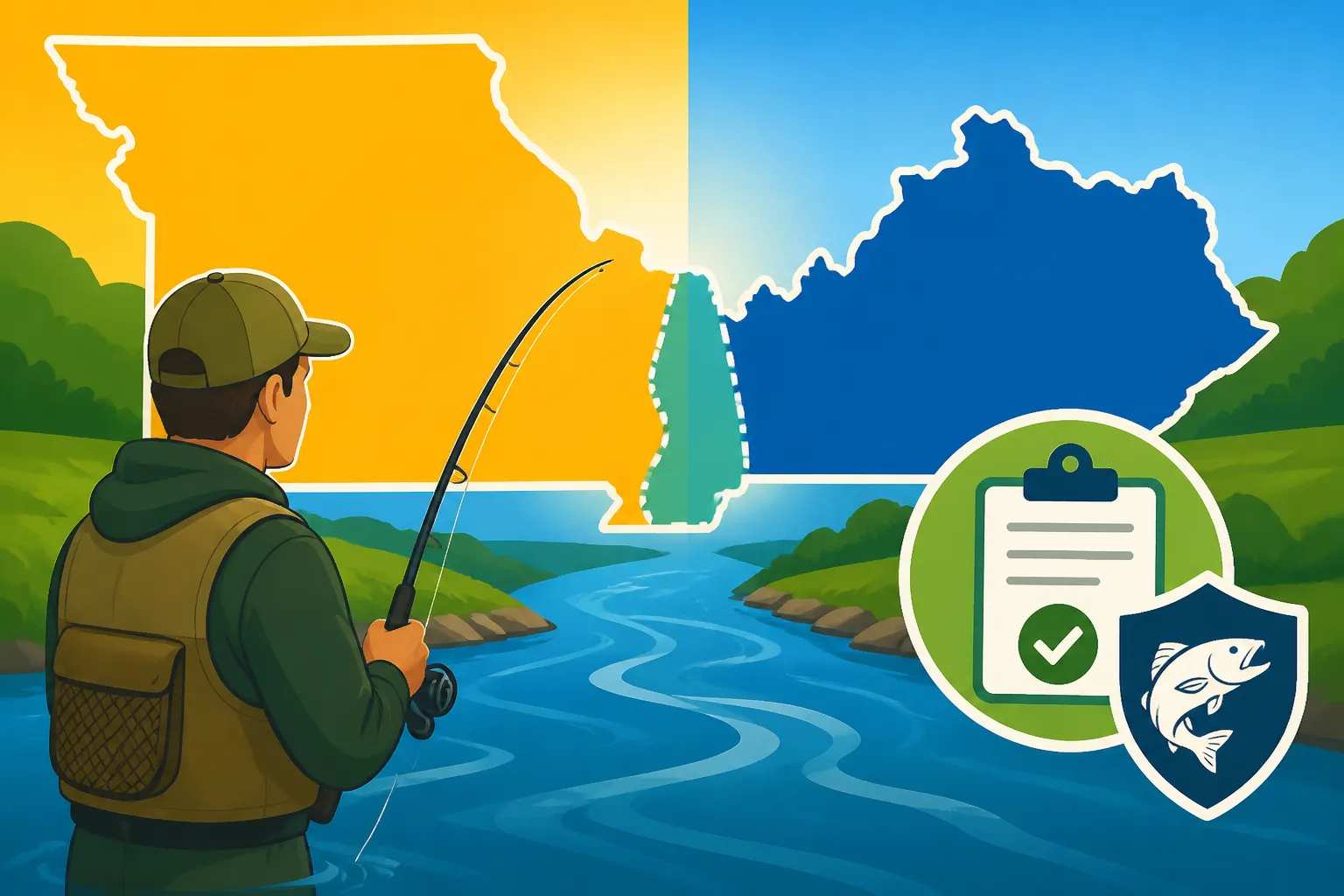
The concept of border water jurisdiction can feel like a legal maze, and for good reason—it often is. When we talk about states sharing a river, it’s not always a neat line down the middle. For the Mississippi River between Kentucky and Missouri, the state line is often defined by the deepest channel (the thalweg) or by historical survey lines, which can sometimes meander quite a bit. This means that parts of the river that might look like they belong to Missouri could actually be under Kentucky’s jurisdiction, and vice-versa.
Consider a scenario where you're drifting downstream, enjoying the current, and you're focused on a promising eddy near the Kentucky side. You might think you're still safely in the middle, but if that eddy is technically on the Kentucky side of the established boundary, then boom—you're in Kentucky's jurisdiction. The same goes for fishing directly from the Kentucky bank, or if you decide to pull your boat ashore on a Kentucky island for a break. These are all situations where a Kentucky fishing license would be mandatory. The frustration here is totally understandable; these aren't always intuitively marked boundaries, and it can feel like you need a legal degree just to cast a line. It's why doing your homework beforehand is so critical, especially when planning a trip to a vast and important river like the Mississippi.
When is a Kentucky License Absolutely Required?
Let's break down the specific situations where a Missouri angler absolutely must have a Kentucky fishing license. There's no getting around these, so it's best to be prepared.
First and foremost, if you are fishing from the Kentucky bank or shoreline, you need a Kentucky fishing license. This might seem obvious, but sometimes anglers on trips think "I'm just visiting," and that somehow absolves them. Nope, the rules apply. If your feet are on Kentucky soil, and you're fishing, you need that license.
Secondly, if you launch your boat from a public or private ramp located within Kentucky, regardless of where you plan to fish on the shared water, you will need a Kentucky license. Kentucky considers the act of accessing its waters from its land as requiring adherence to its regulations. This applies even if you intend to immediately head to what you believe are Missouri waters. The moment your boat touches Kentucky water from a Kentucky launch, you're expected to comply.
Finally, and perhaps most confusingly, if you are operating your boat or fishing tackle in the main navigable channel or any other waters clearly designated as within Kentucky's jurisdiction, you need a Kentucky license. This is where the maps and boundary lines really come into play. While the Mississippi is a big river, the dividing line isn't always perfectly down the center. Game wardens are well-versed in these boundaries, and they can and will enforce them. This means even if you're not touching the Kentucky bank, if your lines are cast into an area designated as Kentucky water, you're required to have the appropriate license. For a deeper dive into the specific rules, checking the official Kentucky Fishing Regulations Explained is always a smart move.
Navigating the Mississippi River: A Unique Challenge
The Mississippi River is an incredible fishery, a truly iconic American waterway that draws anglers from all over. However, its immense size and role as a border between so many states also make it a hotbed for licensing confusion. For Missouri and Kentucky anglers, the Mississippi forms a significant portion of their shared boundary, presenting specific challenges for those crossing between state jurisdictions. It's not like fishing a small, contained lake; the river's constantly shifting dynamics and vastness can make it easy to unknowingly drift into different state waters.
Many anglers might look for a quick solution, perhaps searching on Amazon for a waterproof map that clearly shows the state lines on the river, or checking forums for local knowledge. While these resources can be helpful for general navigation, they won't replace the official word from the Kentucky Department of Fish and Wildlife Resources (KDFWR). It's always best to assume you need the license if there's any doubt at all, especially on such a large, active border river.
The Myth of Reciprocity on the Mississippi
Reciprocal fishing license agreements are a beautiful thing. They simplify life for anglers who live near a state border, allowing them to fish certain shared waters with just one state's license. Unfortunately, for the stretch of the Mississippi River that borders both Kentucky and Missouri, this kind of blanket reciprocity for fishing licenses generally does not exist. This is where a lot of the frustration comes from. Anglers from states like Ohio or Tennessee might be accustomed to reciprocal agreements on rivers like the Ohio River or the Mississippi itself further south, and assume the same applies to Kentucky and Missouri. It doesn't.
Kentucky has specific agreements with some neighboring states, such as Tennessee for certain portions of Kentucky Lake and Lake Barkley, or with Ohio for parts of the Ohio River. These agreements allow anglers from those specific states to fish certain shared waters with their home state license. However, Kentucky does not currently have such a reciprocity agreement with Missouri for the Mississippi River when it comes to fishing licenses. This means if you're a Missouri angler, your Missouri fishing license is only valid on the Missouri side of the line. The moment you cross into Kentucky's jurisdiction on the Mississippi River, you need a Kentucky license. It’s a stark difference that many anglers find out about the hard way, so it's crucial to be aware of this distinction. Don't rely on assumptions based on experiences in other border regions; always verify for Kentucky's waters.
Practical Steps for Missouri Anglers Fishing Kentucky Side
So, if you're a Missouri angler planning to cast a line in Kentucky waters along the Mississippi, what's the game plan? It's actually pretty straightforward once you know the process. You'll need to purchase a Kentucky Nonresident Fishing License.
Here’s how you can go about it:
-
Online Purchase: The easiest and most convenient way to get your Kentucky fishing license is online through the Kentucky Department of Fish and Wildlife Resources (KDFWR) website. You can typically do this from the comfort of your home, even right before your trip. Just visit the KDFWR licensing portal, select "non-resident," and choose the appropriate license type. You’ll need some basic personal information, and you can usually print a temporary license immediately or have a permanent one mailed to you. Many anglers find the "How to Buy a Kentucky Fishing License Online" guide incredibly helpful for this process.
-
In-Person Purchase: If you prefer a more traditional approach, you can purchase a license in person at various vendors across Kentucky. This includes most county clerk offices, sporting goods stores (like larger Walmart or Bass Pro Shops locations), and other authorized license agents. Just be sure to bring a valid ID and the necessary payment. Knowing "What Information You Need on Hand to Buy a License" can save you a trip.
When it comes to license types, as a non-resident, you have a few options:
- Annual Nonresident Fishing License: This is a great value if you plan multiple trips throughout the year. The Nonresident Annual Fishing License Cost in Kentucky is currently around $58.14. It's valid from March 1st through the last day of February the following year.
- 1-Day Nonresident Fishing License: Perfect for a quick weekend trip or if you're just dipping your toes into Kentucky waters for a single day. The Nonresident 1-Day Fishing License Price in Kentucky is about $15.86.
- 7-Day Nonresident Fishing License: A good option for extended vacations or a week-long fishing excursion. The Kentucky Nonresident 7-Day Fishing License Costs about $37.
Choosing the right license type depends on the duration and frequency of your fishing trips into Kentucky. It's always smart to factor this into your trip budget. Before you head out, confirm the current costs and regulations directly on the KDFWR website, as prices can change.
Penalties and Enforcement: Don't Risk It
Nobody wants a great day on the water ruined by a run-in with law enforcement, especially when it could have been easily avoided. Fishing without the required license in Kentucky waters is not just a minor oversight; it's a violation of state law, and the consequences can be significant. It’s a gamble that’s simply not worth taking, especially when obtaining the correct license is relatively easy. Game wardens in Kentucky are out there actively patrolling, and they take their job of protecting the state's natural resources seriously. They're not just looking for obvious violations; routine checks are a standard part of their duty, and ignorance of the law is rarely an excuse.
You might be thinking, "What are the chances I'll actually get checked?" The answer is, higher than you think. Wardens patrol by boat, vehicle, and even on foot along riverbanks. They know the popular fishing spots and regularly engage with anglers. Even if you're just passing through or think you're "mostly" on the Missouri side, if a warden suspects you're in Kentucky waters, they have every right to check your license. Don't put yourself in a position where a casual fishing trip turns into a stressful legal issue. Understanding the rules is key to enjoying your time responsibly.
What Happens if You're Caught Without a Kentucky License?
So, you're out on the Mississippi, happily reeling in some catfish or bass, and a Kentucky game warden pulls up alongside your boat. They ask to see your fishing license, and all you have is your Missouri one. What then? The experience can range from an educational warning to serious penalties, depending on the specifics and the officer's discretion, but typically, it's not a pleasant encounter.
The immediate consequence for fishing without a license in Kentucky is usually a citation and a fine. These fines can vary, but they are often substantial enough to make that annual or 1-day license seem like a bargain in hindsight. We're talking hundreds of dollars, potentially. In addition to the fine, you might also face court costs and administrative fees. Furthermore, the game warden has the authority to confiscate your fishing equipment—your rods, reels, and even your catch for the day. Imagine losing your prized fishing gear because you skipped a $15 daily license! For more details, you can look into the specific Penalties for Fishing Without a License in Kentucky.
In some cases, especially for repeat offenders or if other violations are present, fishing without a license can even lead to suspension of your fishing privileges in Kentucky, and potentially other states through interstate agreements. It's also worth noting that getting a citation can create a legal record, which is something nobody wants. The hassle of dealing with court dates, paying fines, and potentially losing your gear far outweighs the small cost and effort of buying the correct license upfront. Just ask any angler who's been through it – they’ll tell you it’s just not worth the risk.
The Importance of Checking Current Regulations
Fishing regulations are not static; they can change from year to year, or even mid-season, depending on biological factors, conservation efforts, and legislative adjustments. What was true last year might not be true today. This is especially pertinent when dealing with border waters like the Mississippi River, where multiple state agencies might have a hand in managing fish populations. Relying on outdated information or hearsay from a friend can lead to unintended violations.
Before every trip, particularly if you haven't fished Kentucky waters in a while, it is absolutely essential to check the most current regulations. The official source for all Kentucky fishing rules is the Kentucky Department of Fish and Wildlife Resources (KDFWR) website. Their site is usually very user-friendly, with dedicated sections for licensing, statewide bag and size limits by fish species, and even lake-specific exceptions. They often provide printable guides that you can keep with you on the water.
This proactive approach not only helps you stay legal but also enhances your fishing experience by making you aware of any new opportunities or restrictions. For instance, there might be new length limits on certain species, or specific bait restrictions for certain areas. A quick check can prevent a lot of headaches. Plus, knowing you're fully compliant means you can truly relax and enjoy your time on the water, without that nagging worry in the back of your mind. Consider setting a reminder on your phone to check the KDFWR site before each season, or before purchasing a new license.
Kentucky Nonresident Fishing License Options and Costs
To help Missouri anglers quickly understand their options, here's a breakdown of the common Kentucky Nonresident Fishing Licenses and their typical costs. Remember, these prices are subject to change, so always verify on the KDFWR website before purchasing.
| License Type | Eligibility | Current Cost (Approx.) | Validity Period | Best For |
|---|---|---|---|---|
| Annual Nonresident Fishing | Non-Kentucky Residents | $58.14 | March 1 – Feb 28/29 (next year) | Multiple trips throughout the license year |
| 1-Day Nonresident Fishing | Non-Kentucky Residents | $15.86 | 24 hours from selected start time | Single-day fishing excursions |
| 7-Day Nonresident Fishing | Non-Kentucky Residents | $37.00 | 7 consecutive days from start date | Week-long vacations or extended trips |
| Annual Nonresident Hunting & Fishing Combo | Non-Kentucky Residents | $140.00 | March 1 – Feb 28/29 (next year) | Anglers who also plan to hunt in Kentucky |
| Trout Permit | All anglers (in addition to fishing license) | $10.57 | Same as base fishing license | Required to keep or attempt to take trout |
Remember, the Trout Permit is an add-on. If you plan to target trout in Kentucky's designated trout waters, even if you’re fishing for other species, you’ll need to purchase this in addition to your base fishing license. For more information, please consult the Kentucky Trout Permit Guide.
It's clear that while the cost of a nonresident license might seem like an extra expense, it's a necessary investment for any Missouri angler wanting to legally enjoy Kentucky's incredible fishing opportunities on shared waters. Planning ahead, understanding the rules, and getting the right license will ensure your fishing trips are filled with enjoyment, not legal woes. You can find many useful fishing accessories, from tackle boxes to mapping tools, on Amazon to help you prepare for your trip.
Disclaimer
The information provided in this guide is intended for general informational purposes only and does not constitute legal advice. While we strive to provide accurate and up-to-date information, fishing regulations and license requirements in Kentucky are subject to change. Always consult the official Kentucky Department of Fish and Wildlife Resources (KDFWR) website or contact them directly for the most current and authoritative information before engaging in any fishing activities. Compliance with all applicable laws and regulations is the sole responsibility of the individual angler.