License Rules for Fishing From a Boat vs the Bank
It's a question that pops up a lot when you're planning a fishing trip in the Bluegrass State: "Do I really need a license if I'm just casting from the bank, or is that only for boat anglers?" Many folks assume there's a different set of rules depending on whether your feet are on solid ground or you're out on the water. This guide is here to clear up that confusion once and for all, making sure you understand the Kentucky fishing license rules so you can enjoy your time responsibly and legally.
The Fundamental Rule: A License Is Almost Always Required
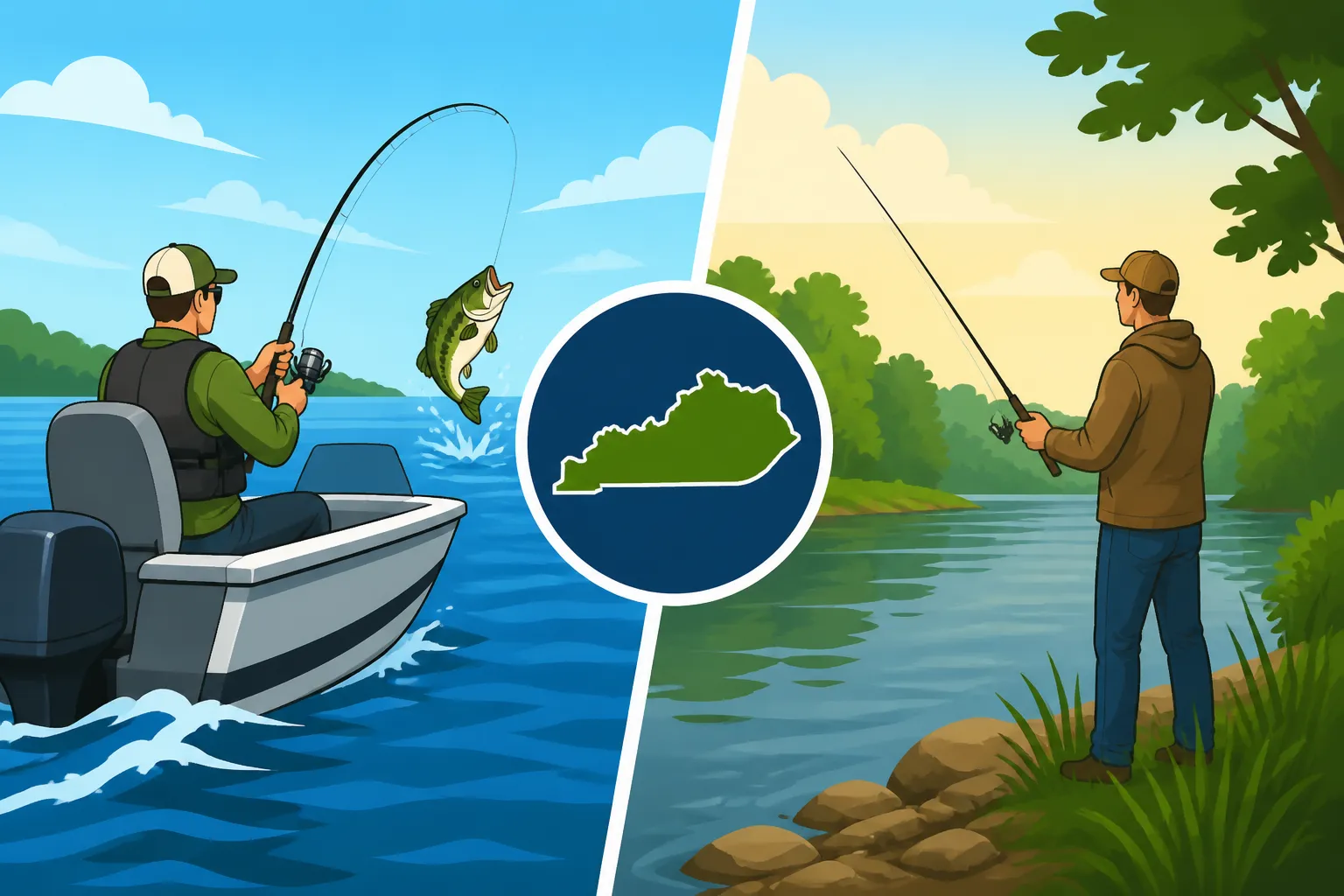
Let's cut right to the chase because this is where a lot of confusion begins. The simple truth is, in Kentucky, the requirement for a fishing license generally hinges on where you're fishing, not how you're fishing. If you're dropping a line into any public water body—be it a sprawling reservoir like Kentucky Lake, a winding river, or even a local city park pond that's open to the public—you're going to need a license, full stop. The method of access, whether from the comfort of your boat or standing on a peaceful shoreline, doesn't change this core regulation.
Understanding Kentucky's General Fishing License Mandate
Kentucky's Department of Fish and Wildlife Resources (KDFWR) is pretty straightforward about this: if it's public water, and you're of age, you need a license. This mandate isn't about collecting fees from boaters specifically; it's about funding conservation efforts, fish stocking programs, and habitat management across all of Kentucky's incredible waterways. Think of it as your direct contribution to ensuring future generations can enjoy the same fantastic fishing opportunities we have today. Every license purchase helps keep those lakes and rivers healthy and teeming with fish.
For instance, whether you're chasing bass on Lake Cumberland or trying for crappie on a smaller state-managed lake, the principle remains the same. The water itself is considered public, making a license necessary. It’s a common misconception that if you’re not in a boat, the rules are relaxed. Unfortunately, that’s not the case for public access points. Even if you're just dipping a toe in, if you're fishing, you need to be properly licensed. If you're wondering about the specifics of what that entails, our comprehensive guide on How to Get a Fishing License in Kentucky walks you through the entire process.
Who Needs a License and When No Matter the Method
So, who exactly needs to carry one of these licenses? Generally speaking, if you are 16 years of age or older, you need a Kentucky fishing license to fish in public waters. This applies to both residents and non-residents, though the fees and types of licenses might differ. For our younger anglers, it's a fantastic perk: kids under 16 can usually fish without a license. This makes fishing a super accessible family activity, giving parents an easy way to introduce their children to the joys of the outdoors without extra paperwork.
Beyond age, residency plays a role. If you've been a bona fide resident of Kentucky for at least 30 days, you're eligible for resident rates, which are typically more affordable. Non-residents, on the other hand, will need to purchase a non-resident license. This distinction is important and helps the state manage its resources for its local population while still welcoming visitors. Don't forget that certain species, like trout, might require an additional permit, regardless of whether you're fishing from a boat or the bank. Make sure you understand the Kentucky Trout Permit Guide if you plan on targeting those cold-water beauties. The point is, the license requirement is driven by who you are (age, residency) and where you are (public water), not how you're fishing.
Fishing from a Boat: Navigating Waterways and Licenses
When you're out on the water in a boat, whether it's a sleek bass boat, a comfortable pontoon, or even a modest jon boat, the rules for fishing licenses remain consistent with the general mandate. The fact that you're afloat doesn't create a separate category of exemption; in fact, it often highlights the importance of being properly licensed as you're typically covering more ground and potentially interacting with more diverse waters.
When Your Boat Requires a License for Every Angler Onboard
This is a critical point that sometimes catches anglers off guard, especially when they're fishing with friends or family. If you're on a boat in Kentucky's public waters and everyone on board is actively fishing, then every single person who is 16 years of age or older needs their own valid Kentucky fishing license. It doesn't matter if you own the boat, if you're just a passenger, or if the boat itself is registered in another state; if you've got a rod in your hand and a line in the water, you need to be licensed. This is true whether you're fishing for largemouth bass on Kentucky Lake, jigging for crappie on Lake Barkley, or casting for catfish on the Ohio River.
Imagine a scenario: you've got your buddies out for a weekend fishing trip. One friend has their license, another thinks they're covered because the boat owner has one, and a third just "forgot" to renew. A Kentucky game warden pulls up for a routine check, and suddenly, two of your friends are facing citations for Penalties for Fishing Without a License in Kentucky. It's a real bummer and totally avoidable. Everyone needs their individual license. It's not a "one per boat" kind of deal. Even if you're just "helping out" by holding a rod for a moment, you're considered to be fishing. Always ensure everyone on your vessel is compliant to avoid any unwelcome surprises. Having a digital copy accessible on your phone or a printed one in a waterproof bag is always a good idea.
Special Considerations for Border Waters and Reciprocity
Kentucky shares borders with several states, and some of these borders are defined by major waterways like the Ohio River or Dale Hollow Lake. This can lead to some tricky situations regarding fishing licenses. For instance, if you're fishing the Ohio River, which forms Kentucky's northern border, you might wonder if an Ohio fishing license is valid on the Kentucky side. The good news is that Kentucky has some reciprocal agreements with bordering states for shared waters, meaning that in specific areas, a license from a neighboring state might be honored.
However, and this is a big however, these reciprocity agreements are often very specific and only apply to certain parts of the water body. For instance, Ohio Anglers Fishing in Kentucky Waters might find specific zones where their Ohio license is recognized, but stepping even a few yards outside that zone into purely Kentucky waters would require a Kentucky license. It’s never a blanket rule for the entire river or lake. The KDFWR website is the absolute best place to check for the most up-to-date and specific reciprocity rules. My personal advice? If you plan on fishing any part of Kentucky's waters, even a border water, it's always safest and simplest to just buy a Kentucky fishing license. This eliminates any doubt and ensures you're completely legal, no matter where the current takes your boat. Always double-check current regulations before you head out, especially if you're venturing near state lines.
Fishing from the Bank: Simpler Access, Same Rules
While fishing from the bank might feel more casual than heading out in a boat, the regulatory expectations regarding licenses remain the same. The KDFWR emphasizes that the public status of the water body is the deciding factor, not the type of access point you choose.
The Unwavering Need for a License on Public Shorelines
Just because your feet are on dry land doesn't mean you get a pass on needing a fishing license for public waters. Whether you're casting a line from a fishing pier at a state park, wading into a creek, or simply sitting on a bucket along a riverbank, if that water is considered public in Kentucky, you need a license. This applies to countless popular spots like the shores of Taylorsville Lake, Green River Lake, or any of the smaller community fishing lakes managed by the state. These are public resources, and your license helps maintain them.
Think about walking along a river and seeing a promising eddy. You might pull out a compact spinning rod and toss a lure. Without a license, even that quick, spur-of-the-moment cast could land you in hot water. Game wardens regularly patrol these areas, not just boat ramps. They're looking for compliance everywhere anglers might be. It’s a common scenario for folks enjoying a picnic at a state park to bring a rod along "just in case." If that "just in case" turns into actual fishing, a license is required. Before you head out, especially if you're targeting specific areas, take a moment to look up Kentucky Fishing Regulations Explained to be sure you're covered.
Private Ponds and the License Exception: A Key Distinction
Now, there is one major exception to the "always need a license" rule, and it applies specifically to private ponds. In Kentucky, you generally do not need a fishing license to fish in a pond that is entirely on private land and is not connected to any public stream, lake, or other waterway. This is a big deal for landowners and those with permission to fish such ponds. If you own a pond on your property that's completely self-contained, or if you're visiting a friend who has one, you can usually fish there without a state license.
However, this exception comes with some very important caveats. The pond must truly be private. This means it cannot have an inflow or outflow that connects to public waters, even intermittently. A pond that's part of a larger stream system, even if it's on private land, would still likely fall under public water regulations. Also, you must have the landowner's permission to fish on their property. Trespassing is never okay. So, while private ponds offer a fantastic, license-free option for fishing, make absolutely sure the pond meets the definition of a truly private, unconnected water body, and that you have explicit permission. For more detailed insights into this distinction, check out our article on License-Required Waters Versus Private Ponds. This is often where the line gets blurry, so clarity is key.
Navigating the Purchase and Staying Compliant
Understanding that you need a license is only half the battle; knowing how to get one and what to do if you're checked by a game warden is equally important. Compliance is easy once you know the ropes, and it ensures your fishing trips are enjoyable and stress-free.
Where to Obtain Your Kentucky Fishing License
Getting your Kentucky fishing license is actually quite easy these days, offering several convenient options to fit your schedule. The most popular method, by far, is purchasing it online through the Kentucky Department of Fish and Wildlife Resources website. It’s a super quick and secure process that you can do from your computer or even your smartphone. You simply fill out your information, select the license type you need (annual, one-day, youth, etc.), pay, and you’ll receive an immediate digital copy. This is usually what I do myself, then I either save it to my phone or print an extra copy to keep in my tackle box.
If you prefer to buy in person or need some gear for your trip, you can also head to authorized vendors across the state. These include many county clerk's offices, bait and tackle shops, sporting goods stores, and even some large retailers like Walmart or even smaller shops you might find on Amazon. Just remember, when you go in person, you'll need to provide some basic identification and residency information. It’s worth checking the KDFWR website for a list of authorized vendors near your fishing destination. Remember, your license is valid from March 1st through the last day of February each year, so if you're planning a trip around the changeover, be mindful of the Kentucky Fishing License Year and Renewal Dates.
What Happens If You're Caught Without a License
This is the part nobody wants to think about, but it's crucial to address. Fishing without a valid Kentucky license in waters where one is required is a violation of state law, and it can lead to some unpleasant consequences. A game warden, or conservation officer, has the authority to stop you, check your license, and enforce regulations. They're not just there to ruin your fun; they're protecting the state's natural resources and ensuring everyone is contributing their fair share. For more on what to expect during an encounter, you might find our article on Game Warden Enforcement and License Checks While Fishing helpful.
If you're caught fishing without a license, the initial consequence is typically a citation and a fine. These fines can vary, but they're often more expensive than the actual license itself, making the initial cost of compliance a much better deal. Depending on the severity of the offense or if you're a repeat offender, there could be additional penalties, including court appearances, suspension of fishing privileges, or even confiscation of gear. It's truly not worth the risk. Just think about it: for the price of a few cups of coffee, you can get an annual license and fish worry-free all year long. It's a small investment for endless days on the water.
Comparing Fishing License Rules: Boat vs. Bank
To make things even clearer, here’s a quick overview comparing the license requirements for boat and bank fishing in Kentucky. As you'll see, the core rules are remarkably consistent.
| Feature / Scenario | Fishing from a Boat | Fishing from the Bank | Key Rule / Distinction |
|---|---|---|---|
| Public Waters (General) | License required for every angler 16+ | License required for every angler 16+ | The type of water (public) dictates the need, not the access method. |
| Private Ponds (Truly Isolated) | No license required (with permission) | No license required (with permission) | Pond must be fully contained on private land, no connection to public waterways. |
| Age Requirement | Anglers 16 years and older need a license. | Anglers 16 years and older need a license. | Kids under 16 fish for free, regardless of method. |
| Residency | Kentucky residents vs. non-residents pay different rates. | Kentucky residents vs. non-residents pay different rates. | Residency determines pricing, not the fishing method. |
| Trout Permit | Additional permit required for trout (if applicable). | Additional permit required for trout (if applicable). | Species-specific permits apply to all methods. |
| Enforcement | Game wardens check licenses on the water. | Game wardens check licenses along shorelines. | Enforcement is active in all public fishing areas. |
| Border Waters | Specific reciprocity rules may apply; KY license always safest. | Specific reciprocity rules may apply; KY license always safest. | Reciprocity is limited and complex; always verify. |
Remember, the goal here is to help you stay compliant and enjoy your time fishing in Kentucky. Whether you're cruising across a vast reservoir or enjoying the tranquility of a quiet creek bank, a valid license is your ticket to a legal and worry-free angling experience.
Disclaimer
The information provided in this guide is for general informational purposes only and does not constitute legal advice. While we strive to provide accurate and up-to-date information, fishing regulations can change. It is always the angler's responsibility to consult the most current Kentucky Department of Fish and Wildlife Resources regulations before fishing.