How to Fish a Jig for Bass in Cold Water
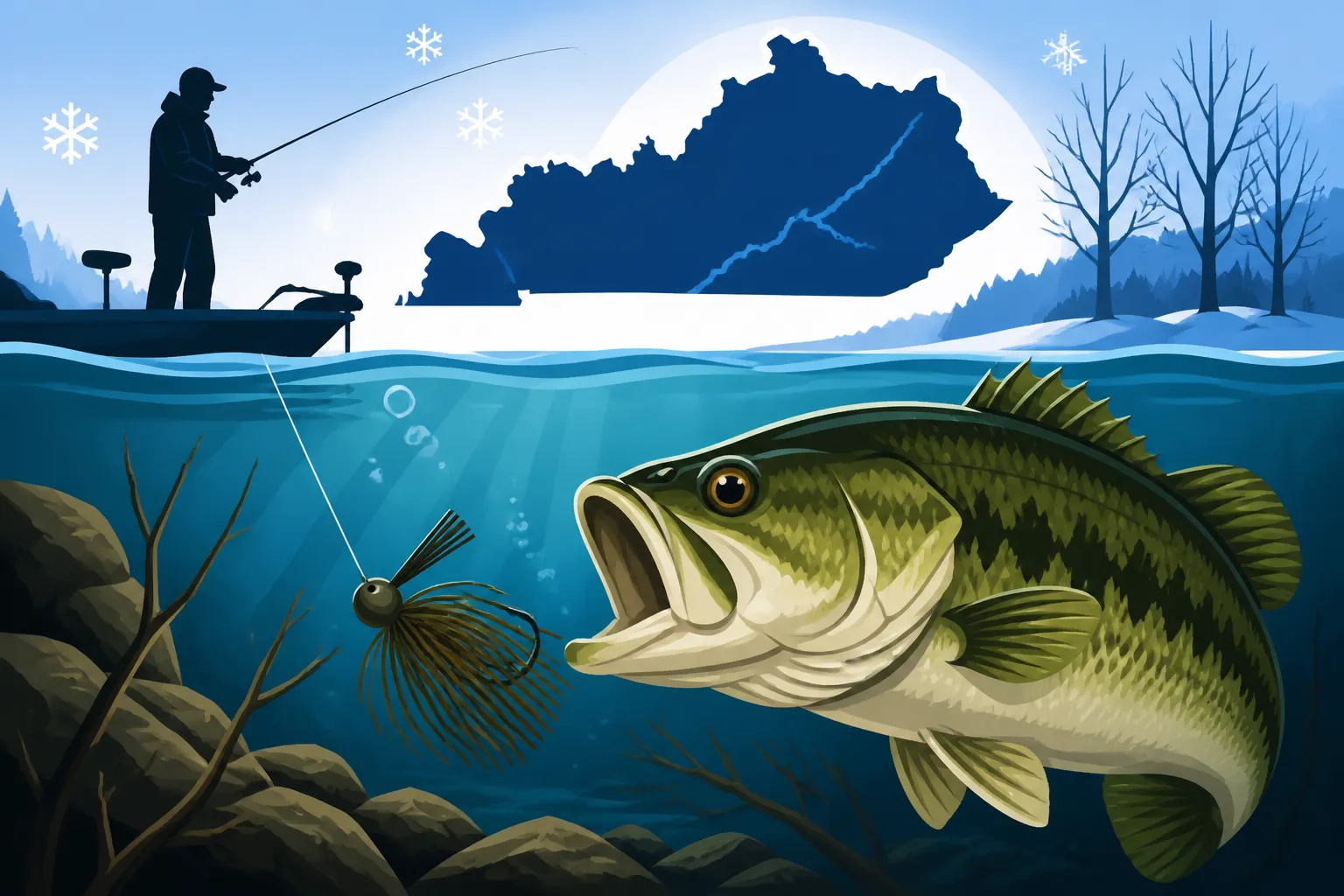
When the mercury drops and a chill settles over Kentucky’s lakes and rivers, many anglers pack away their bass gear, thinking the season is over. But for those of us who know the secret, cold water doesn't mean no bass – it just means different bass. Fishing a jig for bass in cold water can be incredibly effective, but it requires a fundamental shift in strategy, technique, and a boatload of patience. If you've been frustrated by slow winter days or just want to learn how to keep catching those hawgs all year long, this guide is going to walk you through exactly how to adapt your jig fishing for chilly conditions and entice those sluggish cold-water lunkers.
Understanding Cold Water Bass Behavior
Fishing in cold water isn't just about throwing a different lure; it's about understanding how bass react to the plummeting temperatures. Their entire world slows down, and if you don't adjust your approach to match their changed metabolism and habits, you'll be staring at empty livewells more often than not. It's a completely different ballgame than the frenetic action of spring or summer.
Metabolic Slowdown and Locational Changes
Think of it like this: when it gets cold outside, do you want to run a marathon or curl up on the couch? Bass are no different. As water temperatures fall below 50-55 degrees Fahrenheit, their metabolism slows significantly. They don't need to eat as often, and they conserve energy whenever possible. This means they're not going to chase a fast-moving bait across a cove. They want an easy meal, and they want it presented right in front of their faces, often practically bumping them on the nose.
This metabolic slowdown also dictates where they live. Instead of roaming vast flats or shallow coves, cold-water bass seek out stable water temperatures and available cover. They often gravitate towards deeper water, especially areas with vertical structures like bluff walls, ledges, or deep timber. They might also suspend in the water column over deep creek channels or at the mouths of coves where deep water meets a flat. These spots offer them thermal refuge and often have baitfish congregated nearby. Understanding this critical shift is the first step to success. If you've been wondering Where Do Fish Go in Winter, deep water structures are usually the answer.
Winter Forage and Feeding Windows
Even though they're sluggish, bass still need to eat. They just don't do it with the same frequency or aggression as in warmer months. Their diet shifts to larger, more calorie-dense meals that provide more bang for their buck, energetically speaking. Crawfish are a prime target, especially those that inhabit rocky bottom structures. Gizzard shad and other baitfish that have grouped up in deeper, stable water are also on the menu.
Another key factor is the feeding window. In cold water, bass are opportunistic and will often feed during the warmest parts of the day. This usually means late morning to mid-afternoon, when the sun has had a chance to penetrate the water column, even slightly, or when warmer water from a feeder creek enters the main lake. You might find that the bite that was completely absent at 7 AM suddenly turns on at 1 PM. It's all about patience and being present when those brief windows open. This directly relates to the Best Time of Day to Catch Bass in colder conditions.
Choosing the Right Jig and Trailer
Once you understand the bass's cold-water mindset, selecting the right jig and trailer becomes paramount. This isn't the time for flashy, high-action baits; instead, you need something that mimics a slow, easy meal and can effectively probe the depths where these fish hide. The subtleties here can make all the difference.
Jig Styles and Weights for Cold Water
When cold-water jig fishing, subtlety and efficient bottom contact are key. Here are the main jig styles you'll want in your arsenal:
- Football Jigs: These are your bread and butter for deeper, rockier bottoms, especially on ledges or points. Their football-shaped head helps them crawl over rocks and maintain bottom contact without getting snagged constantly. They stand up well at rest, presenting the trailer enticingly. Look for weights from 1/2 ounce to 1 ounce, depending on depth and wind.
- Flipping/Pitching Jigs: While often associated with heavy cover in warmer water, a well-placed flipping jig can be deadly in cold water around submerged timber, brush piles, or docks. Their compact design and weed guard allow them to penetrate cover effectively. Opt for 3/8 ounce to 1/2 ounce for most cold-water applications, allowing a slow fall.
- Bladed Jigs (Chatterbaits): While typically considered a reaction bait, slower retrieve speeds with bladed jigs can be effective in cold water, especially on slightly warmer winter days or if you're fishing areas with suspended baitfish. The vibration can call in sluggish bass from a distance. Use them sparingly and focus on slower presentations.
You can find a wide selection of these jig types, often bundled for convenience, on platforms like Amazon. Having a variety of weights is crucial for adjusting to different depths and currents you might encounter in Kentucky's diverse waterways, from Kentucky Lake's vast expanses to the more confined waters of Herrington Lake.
Trailer Selection and Importance
The trailer is not just an accessory; it's a vital part of your cold-water jig presentation. It adds bulk, subtle action, and scent (if impregnated) to mimic the slow-moving forage.
- Craw-style Trailers: These are perfect for imitating crawfish, a staple in a bass's cold-water diet. Look for trailers with minimal, subtle action – think small claws that barely move when the jig is slowly dragged. Brands like Zoom or Strike King make excellent options.
- Chunk-style Trailers: These are essentially a chunk of soft plastic, often with two small tails. They provide bulk and a very subtle flapping action. These are excellent for slower presentations when you want to keep the jig profile compact.
- Soft Plastic Grubs/Swimbaits: For a bladed jig, a small, subtle swimbait or grub can enhance the action without overpowering it. The key is minimal paddle tail action that creates just a gentle thump.
Cold Water Jig & Trailer Combinations
| Jig Style | Weight Range (oz) | Preferred Trailer Type | Typical Water Depth (ft) | Key Application |
|---|---|---|---|---|
| Football Jig | 1/2 – 1 | Craw, Chunk | 15 – 40+ | Deep ledges, rocky points, offshore humps |
| Flipping Jig | 3/8 – 1/2 | Craw, Chunk | 5 – 20 | Submerged timber, brush piles, docks |
| Bladed Jig | 3/8 – 1/2 | Small Swimbait, Grub | 5 – 15 | Transition zones, slightly warmer days |
When it comes to colors, dark and natural tones are your best bet in cold water. Black and blue, green pumpkin, brown, and natural shad patterns are consistently effective. These mimic crawfish or dormant baitfish and provide a strong silhouette in the often-clearer winter water. You can find virtually any color combination of trailers needed to match local forage patterns on Amazon, ensuring you’re always prepared.
Mastering the Presentation
This is where many anglers falter. You can have the perfect jig and trailer, but if your presentation isn't painstakingly slow and deliberate, you'll simply be pulling your bait past uninterested bass. Cold-water jigging is a dance of patience and precision, not power.
Slow and Deliberate Retrieval
Remember, those bass are conserving energy. They're not going to chase. Your jig needs to look like an injured crawfish or a stunned baitfish, slowly crawling or hopping along the bottom, an easy meal.
- Dragging: This is arguably the most effective cold-water jig technique. Cast your jig out, let it sink to the bottom, and then slowly drag it along with your rod tip pointed down. Use your reel to take up slack, but the primary movement comes from sweeping your rod. Pause frequently, sometimes for 5-10 seconds, letting the jig sit motionless on the bottom. Many strikes happen on these pauses.
- Short Hops: Instead of long sweeps, use slight wrist movements to hop the jig a few inches off the bottom, then let it fall and settle. This mimics a crawfish scuttling. Again, incorporate pauses.
- Shaking/Wiggling: Once the jig is on the bottom, or during a pause, gently shake your rod tip without moving the jig forward. This causes the trailer to quiver and pulsate, creating a subtle action that can tempt a lethargic bass into biting. This technique is often used when fishing around specific cover like brush piles or stump fields.
The key across all these methods is feel. You're looking for that subtle "thunk" or mushy sensation that indicates a bite, which can be incredibly light in cold water. If you feel anything out of the ordinary, set the hook!
Targeting Key Structures
Cold-water bass aren't just deep; they're often concentrated around specific types of cover or structure. Knowing these spots will increase your chances exponentially.
- Deep Ledges and Humps: Bass will often position themselves on the deeper edges of main lake ledges or humps, especially those with rock or timber. They use these as ambush points and thermal breaks. Focus your casts to the deep side and work the jig up the face of the structure.
- Brush Piles and Submerged Timber: These are absolute magnets for cold-water bass. They offer shelter, ambush points, and often hold baitfish. Use a flipping jig with a strong weed guard and work it meticulously through and around the branches. If you're looking for Winter Fishing Techniques for Bass, brush piles are always a top contender.
- Rock Piles and Riprap: Rocky areas, especially those on points or transitions from hard to soft bottom, retain heat better and attract crawfish. Football jigs shine here, allowing you to effectively crawl over the irregular bottom. Riprap along bridges or causeways can also hold fish.
- Channel Swings and Creek Mouths: Where a creek channel swings close to the bank, or where a major creek mouth meets the main lake, can create deep ambush points. Bass will often stage on these contours, waiting for an easy meal to pass by.
Remember to vary your retrieve and spend a lot of time on each piece of cover. A cold-water bass might need several presentations before deciding to bite.
Gear, Colors, and Patience
Beyond the jig and technique, your gear choices, color selections, and overall mindset play a huge role in cold-water jig fishing success. These seemingly small details can be the difference between a productive day and a frustrating one.
Rod, Reel, and Line for Jigs
Your equipment needs to be sensitive enough to detect those subtle cold-water bites, yet powerful enough to handle a big bass in heavy cover.
- Rod: A medium-heavy power, fast-action casting rod is ideal. The medium-heavy power gives you the backbone to drive a hook through a bass's mouth and pull it out of cover, while the fast action provides the sensitivity needed to feel light bites and subtle bottom changes. Rods between 7' and 7'6" are versatile choices. For Best Rod and Reel Combo for Beginners, this setup is a great foundation for jig fishing.
- Reel: A baitcasting reel with a gear ratio in the 6.X:1 range (e.g., 6.4:1 or 6.8:1) is perfect. This slower gear ratio allows for a deliberate retrieve and provides more cranking power when fighting a fish.
- Line: Fluorocarbon line is the undisputed champion for cold-water jig fishing. Its low stretch provides incredible sensitivity, allowing you to feel every bump, tick, and faint bite. It's also virtually invisible underwater, which can be critical in often-clearer winter water. Use 15-20 lb test for most applications. You can find high-quality fluorocarbon lines from various brands on Amazon. Understanding Best Fishing Line for Big Lake Bass will certainly steer you toward fluorocarbon for jigging.
Color Choices and Water Clarity
While dark and natural tones are generally preferred, always consider the water clarity.
- Stained/Murky Water: In stained or muddy conditions, darker colors like black and blue, black, or chocolate brown stand out better and create a strong silhouette. These are often the "go-to" colors in such conditions.
- Clear Water: When the water is clear, more natural and subdued colors tend to be more effective. Green pumpkin, peanut butter and jelly, brown, and darker shad patterns blend in better and appear more realistic. How to Choose Lure Color for Clear Water is a whole topic in itself, but for jigs, natural tones usually win.
Always have a variety of colors available and be willing to experiment until you find what the fish prefer on that particular day. Sometimes a subtle color shift can make all the difference.
The Virtue of Patience
Finally, and perhaps most importantly, cold-water jig fishing demands immense patience. This isn't a numbers game; it's a quality game. You might only get a handful of bites all day, but those bites often come from the biggest, healthiest bass in the lake.
Don't get discouraged if you're not getting bites quickly. Slow down even more. Work that jig meticulously around every piece of cover. Cast to the same spot multiple times from different angles. Take long pauses. Remember, a single, deliberate bite from a chunky cold-water bass makes all those slow hours worth it. Sometimes, just having a little extra knowledge, like understanding How to Fish After a Cold Front, can help you manage your expectations and increase your patience for when the bite does finally turn on. Embrace the solitude and the challenge, and you'll be rewarded with some of the most satisfying catches of the year.
Disclaimer
Fishing involves inherent risks, including but not limited to drowning, injury from hooks or equipment, and exposure to environmental elements. Always prioritize safety by wearing appropriate personal flotation devices, being aware of weather conditions, and understanding local regulations. The information provided in this guide is for informational purposes only and should not replace professional advice or local expertise. Always check current Kentucky Department of Fish and Wildlife Resources regulations before fishing.