Do You Need Two Licenses to Fish a Shared Border Lake?
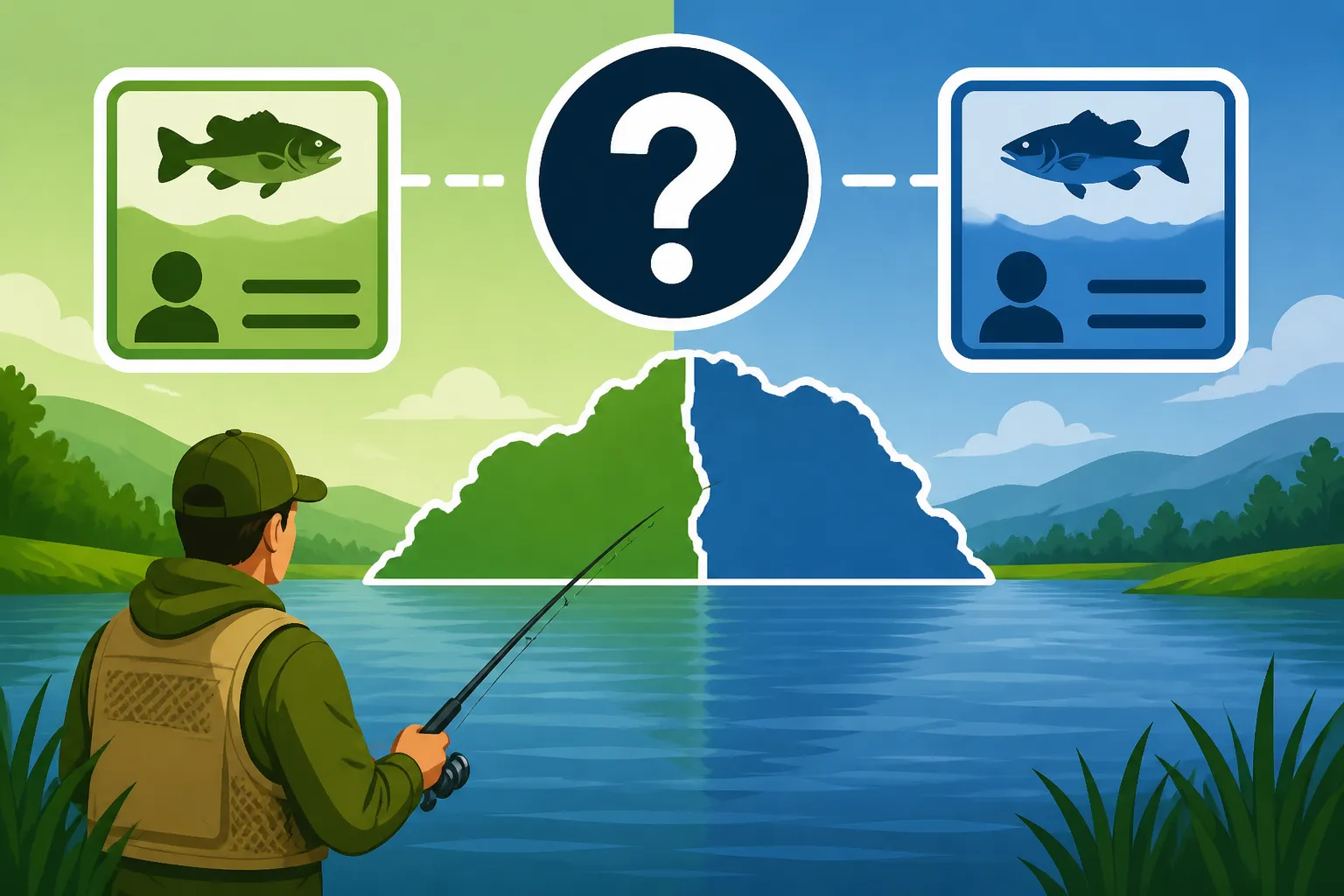
It’s a common scenario: you’re out on the water, the sun is shining, and the fish are biting, but suddenly a thought nags at you. You’re on a huge body of water that clearly straddles two different states. Do you actually need a separate fishing license for each side? This question causes a lot of anxiety and confusion for anglers in Kentucky, especially when you’re fishing a shared border lake or river. This guide will clarify the rules so you can cast your line with confidence, knowing you're fully compliant.
The Common Confusion About Border Lake Fishing Licenses
Anglers often find themselves scratching their heads when confronted with shared waterways, and honestly, who can blame them? Imagine you’re out on the vast expanse of Kentucky Lake. One minute you're casting near the Kentucky shoreline, and the next you drift a few hundred yards and realize you might be in Tennessee waters. The lines aren't painted on the water, there are no "Welcome to Tennessee" buoys, and yet, the legal implications can be very real. This kind of geographical ambiguity is precisely why the question of needing two licenses crops up so frequently. It’s frustrating to have your peaceful fishing trip interrupted by the worry of accidentally breaking a regulation you didn’t even know existed.
The core of the confusion stems from the fundamental rule: fishing licenses are typically issued by individual states, granting you permission to fish within that state's jurisdiction. So, if you're fishing in Kentucky waters, you need a Kentucky fishing license. If you're in Tennessee waters, you need a Tennessee fishing license. This seems straightforward enough on land, but when a lake or river acts as a state boundary, it blurs the lines significantly. Many anglers assume that if they launched their boat in one state, that state's license covers them everywhere on that body of water. Unfortunately, that's often not the case, leading to potential fines or run-ins with game wardens who are just doing their job. Understanding these nuances is crucial for any responsible angler.
Kentucky's Approach to Shared Border Waters and Reciprocity
Kentucky, like many states, has specific agreements and rules for its shared border waters. These agreements are often established to make life easier for anglers who frequent these boundaries, but they aren't uniform across all state lines. It’s important to remember that “reciprocity” isn’t a blanket term; it applies differently depending on which state line you’re crossing and which body of water you’re on. If you've ever heard rumors about "reciprocal licenses," it means that under certain conditions, a fishing license from one state might be honored in the bordering state's waters on a shared body of water. However, these agreements can be quite specific, sometimes only applying to certain sections of a river or specific lakes.
The Ohio River: A Special Case
Let’s talk about the big one: the Ohio River. This majestic waterway forms Kentucky’s northern border, stretching for hundreds of miles alongside Ohio, Indiana, and Illinois. For a long time, the rules here have been a bit more lenient. Generally, if you possess a valid fishing license from any of the states bordering the Ohio River (Kentucky, Ohio, Indiana, or Illinois), you are permitted to fish the main stem of the Ohio River. This means if you have a Kentucky fishing license, you can fish the entire main channel of the Ohio River, even up to the opposing bank, without needing an Ohio, Indiana, or Illinois license, provided you stay on the main river. This is a huge relief for many anglers, allowing them to chase those trophy catfish or sauger across the river without constant worry. However, this general rule typically does not extend into tributaries, embayments, or oxbow lakes that are entirely within a bordering state. If you decide to venture up a creek on the Ohio side, you would indeed need that state’s license. For specific details, make sure to read up on how Ohio Anglers Fishing in Kentucky Waters are affected, or what applies to Indiana and Illinois Anglers Fishing Kentucky Waters.
Kentucky-Tennessee Border Lakes: Dale Hollow, Kentucky Lake, and Lake Barkley
When it comes to the border shared with Tennessee, the situation is slightly different, but still designed to facilitate cross-state fishing. Kentucky and Tennessee share three major fishing destinations: Dale Hollow Lake, Kentucky Lake, and Lake Barkley. These are massive impoundments, famous for their incredible bass, crappie, and catfishing. Due to their popularity and the fact that they are truly shared resources, both states have established a reciprocal agreement. What this means in practice is that a valid fishing license from either Kentucky or Tennessee will generally allow you to fish the waters of these specific lakes, regardless of which state’s side you’re on. So, if you have your Kentucky fishing license in hand, you can fish the Tennessee portions of Dale Hollow, Kentucky Lake, and Lake Barkley without needing a separate Tennessee license, and vice versa. This agreement simplifies things immensely for anglers who want to explore these fantastic fisheries without hassle. However, much like the Ohio River, this reciprocity applies only to the main body of these specific lakes and typically not to any streams or rivers that flow into them exclusively within one state's boundary. For a comprehensive overview, checking out the details on Tennessee-Kentucky Fishing License Reciprocity Rules is highly recommended.
Specific Border Water Rules You Need to Know
Even with reciprocity in place, it’s critical to understand the fine print. These agreements are fantastic for making fishing accessible, but they aren’t an excuse for ignorance. The devil is always in the details, and the nuances of each border water can save you from a headache or even a penalty. For example, while the main channel of the Ohio River might be open to you with just a Kentucky license, the moment you steer your boat into a small bay or creek that is entirely within Ohio, you are technically in Ohio waters that fall outside the reciprocal agreement. This means you would then need an Ohio fishing license. It's a subtle but important distinction that many anglers overlook, assuming the "river" license covers everything connected to it.
Similarly, on the Kentucky-Tennessee border lakes, the reciprocal agreement covers the lakes themselves. But what if you're fishing a small tributary creek that flows into Kentucky Lake, but that creek is entirely within Tennessee before it hits the main lake? In that specific stream, you would likely need a Tennessee fishing license. Always verify whether the reciprocal agreement applies to the exact stretch of water you plan to fish. Boundaries can be tricky, especially on large, winding rivers or lakes with countless coves and inlets. When considering whether Do You Need Two Licenses to Fish a Shared Border Lake, it's usually safer to assume yes for tributaries unless explicitly stated otherwise.
Here’s a quick overview of the general rules for Kentucky's major shared border waters:
| Shared Waterway | States Involved | General License Requirement | Important Caveats |
|---|---|---|---|
| Ohio River | KY, OH, IN, IL | A valid fishing license from any of the bordering states (KY, OH, IN, IL) allows fishing the main stem of the Ohio River, up to the opposite bank. | Does not cover tributaries, embayments, or other waters entirely within one state’s boundaries. |
| Dale Hollow Lake | KY, TN | A valid fishing license from either Kentucky or Tennessee allows fishing the entire main body of Dale Hollow Lake. | Does not cover tributaries or streams flowing into the lake that are entirely within one state's boundaries before reaching the main lake. |
| Kentucky Lake | KY, TN | A valid fishing license from either Kentucky or Tennessee allows fishing the entire main body of Kentucky Lake. | Same as Dale Hollow: does not cover tributaries or streams that are entirely within one state. |
| Lake Barkley | KY, TN | A valid fishing license from either Kentucky or Tennessee allows fishing the entire main body of Lake Barkley. | Same as Dale Hollow/Kentucky Lake: does not cover tributaries or streams entirely within one state. |
| Mississippi River | KY, MO (and IL, AR on other sides) | Anglers holding a valid Kentucky fishing license are generally permitted to fish the Kentucky portion of the Mississippi River. Reciprocity with Missouri exists for some portions. | Specific agreements vary; it's essential to confirm the exact reciprocal terms with Missouri, especially if fishing close to the Missouri bank. |
| Big Sandy River | KY, WV | A valid fishing license from either Kentucky or West Virginia allows fishing the main stem of the Big Sandy River. | Similar to Ohio River: does not extend to tributaries or waters entirely within one state. |
Always keep in mind that these are general guidelines. Regulations can change, and interpretations can vary. For up-to-the-minute information, your best bet is always to consult the Kentucky Department of Fish and Wildlife Resources (KDFWR) website. They have detailed maps and regulations that address these specific border waters. You can also find additional context in resources like Missouri, Virginia and West Virginia Anglers Fishing in Kentucky.
How to Ensure You're Compliant and Avoid Penalties
Navigating the world of fishing licenses, especially on border waters, can feel like a minefield. But with a little preparation and vigilance, you can easily ensure you’re always on the right side of the law. The biggest frustration for many anglers is the fear of being caught off guard, leading to a fine or, worse, having their trip cut short. The key to avoiding these unpleasant scenarios is proactive research and understanding how game wardens typically operate.
First and foremost, always consider the source of your information. While advice from fellow anglers at the boat ramp is well-intentioned, it might not always be current or entirely accurate. The Kentucky Department of Fish and Wildlife Resources (KDFWR) website is your ultimate authority for all things related to Kentucky Fishing Regulations Explained. Their site offers detailed guides, maps, and specific rules for various bodies of water. Before heading out, especially to a border lake you're unfamiliar with, take a few minutes to check their most recent regulations. These details can change from year to year, so don't rely on last season's memory.
If you find yourself needing to purchase an additional license for a bordering state, or even if you're just looking to get your initial Kentucky Fishing License Guide, it’s never been easier. Most state wildlife agencies now offer online purchasing options, allowing you to buy and print your license from the comfort of your home. This is incredibly convenient for last-minute trips or when you realize you've crossed into different state waters. You can even keep a digital copy on your phone, though it's always wise to have a printed backup. While you can’t buy your fishing license on Amazon, you can certainly find all the other essentials there, from updated fishing maps to state-specific regulation books that might clarify complex border rules.
Understanding Game Warden Enforcement
Game wardens are out there to protect the state’s natural resources and ensure fair play for all anglers. They are also highly knowledgeable about the intricate rules of border waters. When a warden stops you on the water, they are primarily checking for a valid fishing license and adherence to size and bag limits. If you’re fishing on a border lake, they will ask to see your license. If you're relying on a reciprocal agreement, be prepared to explain which state's license you have and how it applies to the waters you're in. Having a clear understanding of the rules yourself makes the interaction much smoother.
It's not uncommon for wardens from neighboring states to patrol the same border waters, and they often cooperate. So, don't assume that because you see a Kentucky game warden, you're only subject to Kentucky laws. An Indiana warden might patrol the Ohio River and could cite you if you're not compliant with the reciprocal agreement as it pertains to their state. The Penalties for Fishing Without a License in Kentucky can range from significant fines to confiscation of gear, so it's really not worth taking the risk.
Best Practices for Anglers
- Always Carry Your License: Whether it’s physical or digital, ensure you have your valid fishing license on your person at all times while fishing.
- Know Your Waters: Before you launch, familiarize yourself with the specific body of water you intend to fish. Understand where state lines fall and if any reciprocal agreements apply to those exact locations. Consider investing in a good GPS unit for your boat or even a detailed map that shows state boundaries on the water.
- Check Regulations Annually: Fishing laws and reciprocal agreements can change. Make it a habit to check the KDFWR website and the bordering state’s wildlife agency website each year before your first trip to a shared water.
- When in Doubt, Buy Both: If you are genuinely unsure, and you plan to fish extensively on both sides of a border, the safest bet is often to purchase fishing licenses for both states. While it’s an extra cost, it provides complete peace of mind and ensures you can fish freely without fear of violations. For example, if you plan to do a lot of fishing around the border of Lake Barkley, getting both your Kentucky and Tennessee licenses ensures you’re covered no matter where you cast. You can pick up any additional gear you might need for either state's specific fishing techniques or regulations from a reputable online retailer like Amazon, which often has a wide selection of fishing guides and state-specific equipment.
- Stay Informed: Beyond official websites, join local fishing forums or clubs. Experienced local anglers often share valuable, up-to-date information regarding specific nuances of border water fishing.
By taking these steps, you can avoid unnecessary stress and simply focus on the joy of fishing, no matter which side of the state line the big one bites on.
Disclaimer
Please note that fishing regulations can change. While every effort has been made to provide accurate and up-to-date information, it is always the angler's responsibility to verify current regulations with the Kentucky Department of Fish and Wildlife Resources (KDFWR) and any relevant bordering state wildlife agencies before fishing. This guide is for informational purposes only and does not constitute legal advice.