How to Identify a Largemouth Bass
Have you ever reeled in a beautiful bass from a Kentucky lake or river, only to pause, scratch your head, and wonder, "Is this a largemouth, smallmouth, or a spotted bass?" It's a common dilemma for even seasoned anglers, and it's totally understandable when you're caught up in the excitement of a catch. This guide is here to clear up that confusion, helping you confidently identify that trophy largemouth bass the next time it's on the end of your line.
The Classic Green Machine: What Makes a Largemouth Bass Stand Out?
When most people picture "bass fishing," they're often thinking about the largemouth. This fish is a true icon of Kentucky's waters, from the sprawling expanse of Kentucky Lake to the quiet coves of smaller impoundments. But what exactly defines this popular game fish beyond its reputation?
General Body Shape and Coloration
A largemouth bass typically has a stout, somewhat elongated body that feels solid and powerful. Their backs are usually a dark green, which can sometimes appear almost black, especially if they've been hanging out in deep, shaded water or areas with thick vegetation. This deep green gradually fades to a lighter green or even a yellowish-white on their belly. This countershading is a classic defense mechanism, helping them blend in with both the darker bottom when viewed from above and the brighter sky when viewed from below.
You might notice a rather distinct horizontal band or blotchy pattern running down their sides. This lateral line pattern is often broken or irregular, sometimes looking like a series of connected splotches rather than a continuous stripe. The intensity of this pattern can vary wildly depending on the water clarity, light conditions, and even the fish's mood. Fish caught from muddy, stained water might appear almost uniformly dark, while those from clear lakes can display a vibrant, intricate pattern.
Size and Weight Expectations in Kentucky
Largemouth bass are known for their impressive growth potential, making them a thrilling target for anglers across Kentucky. While many fish you catch might be in the 1-3 pound range, it's not uncommon to land much larger specimens. Kentucky has a rich history of producing truly massive largemouths, especially in its larger reservoirs like Kentucky Lake and Lake Barkley. These fish can grow upwards of 5-8 pounds, with occasional giants pushing into the double-digits.
Their growth is heavily influenced by their environment – access to abundant forage, water temperature, and overall habitat quality all play a role. A healthy largemouth population in a nutrient-rich lake can produce incredibly fat and heavy fish. When you're out there, remember that the sheer heft and broad shoulders of a big largemouth are often the first clues that you've got the right species before you even look closely at its features.
Key Identification Marks: Eyes, Mouth, and Lateral Line
While the overall look gives you a good starting point, it's the specific anatomical features that truly nail down the identification of a largemouth bass. These aren't just details; they're the genetic blueprints that differentiate it from its cousins.
The Defining Mouth Feature
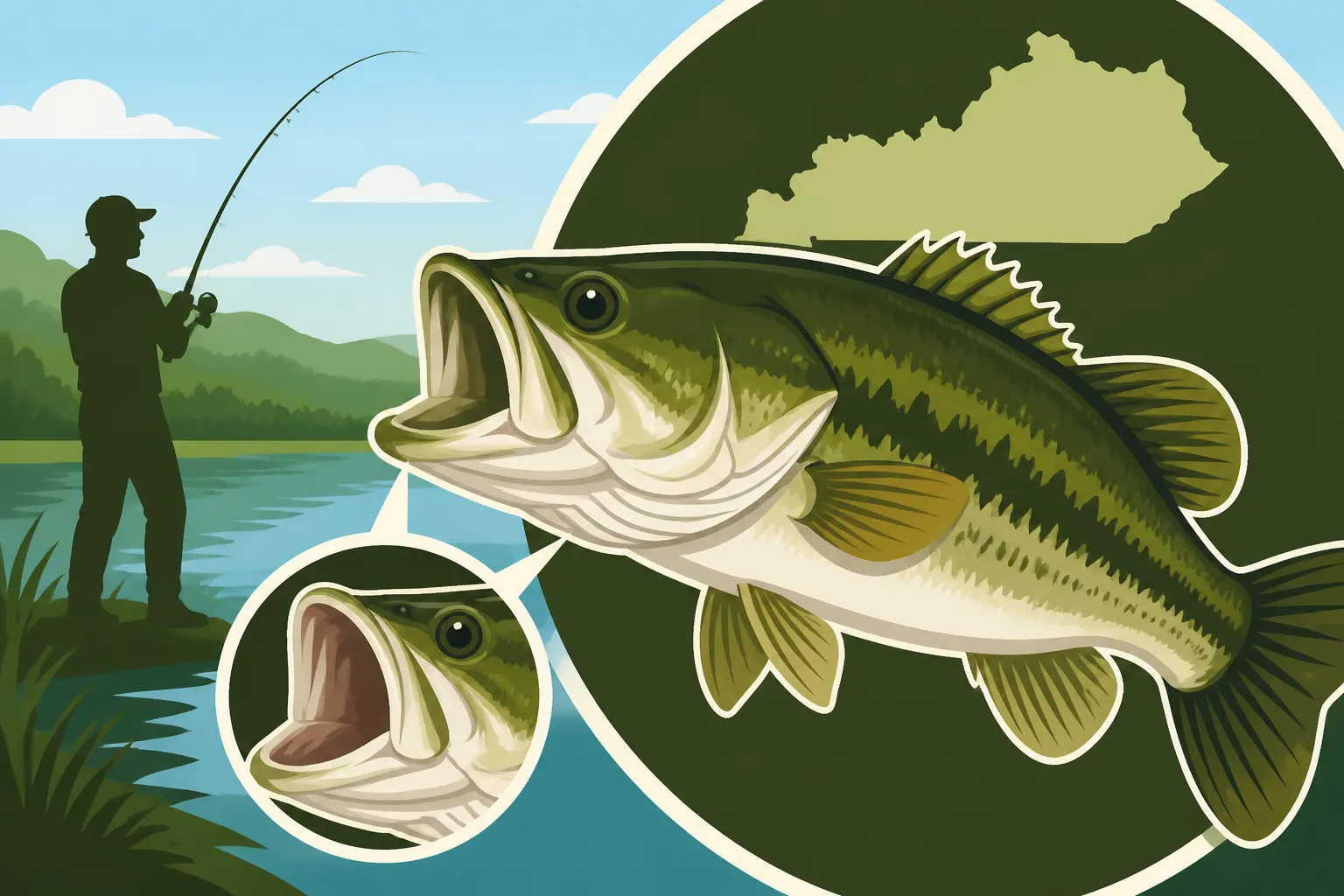
This is arguably the most crucial and easiest-to-spot distinguishing characteristic of a largemouth bass. When you gently close the fish's mouth, pay attention to where the corner of its jaw (the maxilla) extends. For a largemouth, the corner of the jaw will extend beyond the back edge of its eye. It's like they've got this wonderfully oversized grin, ready to engulf whatever meal comes their way.
Take a moment to carefully open the fish's mouth and observe the size and shape. You'll notice it's quite broad and cavernous, perfectly adapted for ambushing prey like smaller fish, frogs, or even small ducks! This large, flexible mouth is a key predatory tool and a dead giveaway for the species. Many anglers have accidentally mistaken a smaller bass for another species until they check this one crucial feature.
Lateral Line and Scales
Remember that horizontal band we talked about? That's the lateral line, and it's often irregular and broken into a series of distinct dark blotches on a largemouth, rather than a solid, unbroken stripe. It might look more like a dotted line or a collection of smudges rather than a perfectly drawn continuous stripe. This pattern is less defined and more splotchy compared to some other bass species.
As for the scales, largemouth bass have relatively large, overlapping scales that feel smooth to the touch when running your hand from head to tail. The overall texture is quite robust. You can often count around 58 to 69 scales along the lateral line, though you're probably not going to be doing that while you're out on the water! What's more practical is observing the scales on the cheek: a largemouth's cheek scales are generally smaller than those on the gill cover, but they are still easily visible and numerous.
Eye Color and Position
A largemouth bass typically has eyes that range from golden to reddish-brown, often with a hint of bronze. They're generally not as large or as prominently positioned as those of a smallmouth bass. The eye is set somewhat forward on its head, giving it excellent frontal vision for hunting prey.
One subtle detail, if you want to get super specific, is that the space between the eye and the corner of the mouth is often greater on a largemouth compared to a smallmouth, reiterating that overall "big mouth" appearance. It might not be the first thing you check, but it's another piece of the puzzle that helps cement your identification.
Habitat and Behavior Clues: Where You'll Find Them
Sometimes, knowing where you caught a fish can be just as helpful as examining its physical characteristics. Largemouth bass have a preferred lifestyle that makes certain types of water their go-to spots.
Preferred Waters and Cover
Largemouth bass are typically warm-water fish. They absolutely thrive in lakes, ponds, and slow-moving rivers with abundant aquatic vegetation, submerged timber, rock piles, and other forms of cover. They are ambush predators, meaning they love to hide in these structures, waiting for an unsuspecting meal to swim by. Think lily pads, cattails, fallen trees, brush piles, or even boat docks and piers. If a body of water is shallow, murky, or has lots of weeds, chances are it's a largemouth haven.
You'll find them in the quiet backwaters of the Ohio River, the sprawling flats of Kentucky Lake, or the countless farm ponds dotted across the state. They aren't usually found in fast-flowing, cold, rocky streams like smallmouth bass are. If you're fishing a clear, gravel-bottomed creek with a strong current, you're less likely to pull out a largemouth. They prefer the calm, sheltered zones where they can hide and conserve energy.
Schooling Patterns and Feeding Habits
While you might catch a few largemouths in close proximity, they aren't typically schooling fish in the same way some other species are. Instead, they are more territorial and often relate to specific pieces of cover. You might find several individual fish holding to different parts of the same brush pile, but they're not moving as a synchronized unit.
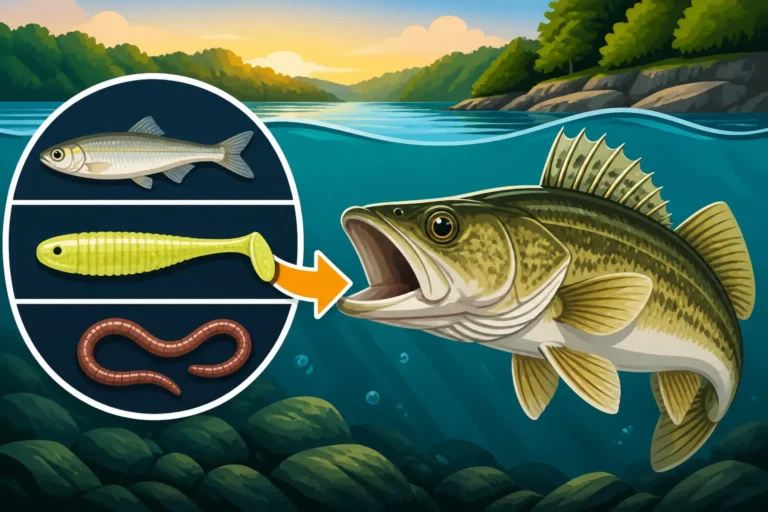
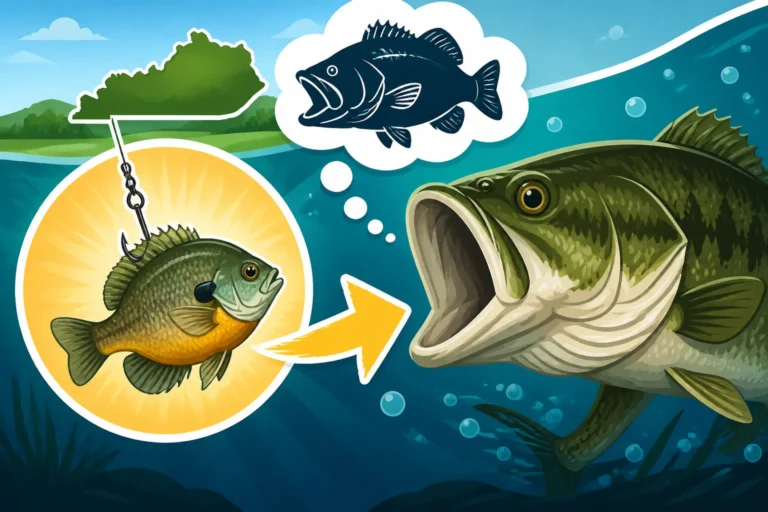
Their feeding habits are aggressive and opportunistic. They'll eat just about anything that fits in their enormous mouth: smaller fish like shad and bluegill, crayfish, frogs, snakes, and even mice or ducklings that fall into the water. This broad diet is why a variety of lures, from crankbaits to soft plastics and topwater frogs, are effective for them. They tend to be most active during dawn and dusk, or on cloudy days, but they can be caught throughout the day, especially if they are actively feeding or defending a spawning bed. For tips on when they're most active, check out Best Time of Day to Catch Bass.
Distinguishing From Look-Alikes: Largemouth vs. Smallmouth vs. Spotted
This is where the rubber meets the road. Kentucky is home to several types of black bass, and it's easy to get them mixed up. Knowing the subtle (and sometimes not-so-subtle) differences will make you a much more confident angler. We often talk about the "Kentucky Bass," which is another name for the Spotted Bass, adding to the potential confusion!
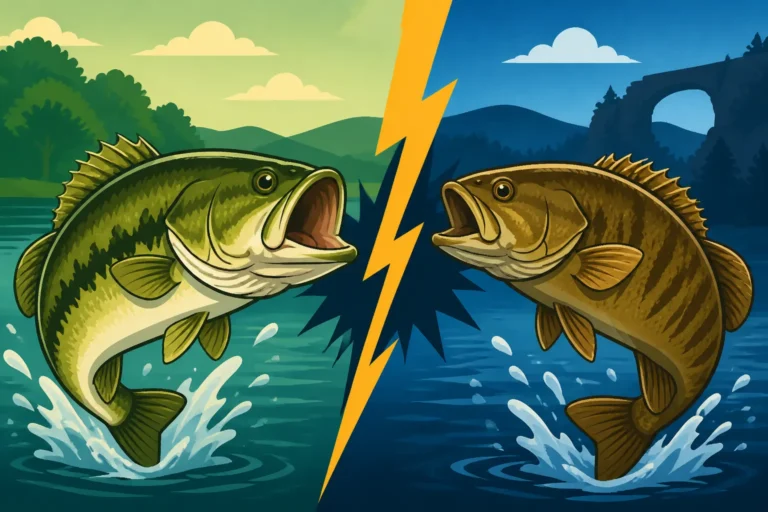
Largemouth vs. Smallmouth Bass: The Tale of Two Mouths
The most common mix-up is between the largemouth and the smallmouth. Here's how to tell them apart quickly:
- Mouth Size: This is the big one. As discussed, a largemouth's jaw extends beyond the eye when closed. A smallmouth's jaw typically does not extend beyond the middle of its eye, or at most, only slightly past it. Its mouth is noticeably smaller.
- Dorsal Fin: The dorsal (back) fin of a largemouth bass has a deep, almost complete, division between the spiny front section and the soft-rayed back section. It looks like two distinct fins connected at the base. A smallmouth's dorsal fin is much less deeply notched, appearing more like a single continuous fin.
- Coloration: Smallmouth bass are generally a more uniform bronze or brown color, often with vertical bars or stripes, rather than the distinct horizontal blotches of a largemouth. Their bellies are usually whiter.
- Habitat: Smallmouths prefer colder, clearer water with rocky bottoms and current – think rivers and deep, clear lakes like parts of Lake Cumberland. Largemouths like warmer, weedier, calmer water. For a full breakdown, read How to Identify a Largemouth Bass Vs a Smallmouth Bass.
Largemouth vs. Spotted Bass: The "Kentucky Bass" Confusion
Spotted bass, often called "Kentucky Bass," are another common catch and can be tricky to distinguish from largemouths.
- Mouth Size: The spotted bass's jaw typically extends to or slightly past the back of its eye, but usually not as far back as a largemouth's. It's an intermediate size, often causing the confusion.
- Tongue Patch: This is the absolute best way to tell a spotted bass apart from a largemouth. Gently open the fish's mouth and feel for a small, rough patch of teeth on the middle of its tongue. A spotted bass has this; a largemouth bass does not. This little detail is a game-changer!
- Lateral Line and Spots: Spotted bass have a more defined, continuous lateral line with dark spots below it, almost arranged in rows, making their belly appear spotted (hence the name). Largemouths have those broken, irregular blotches.
- Dorsal Fin: Like the largemouth, a spotted bass also has a deep notch in its dorsal fin, similar to two separate fins. This makes it different from a smallmouth but doesn't help distinguish it from a largemouth.
- Pyloric Caeca: This is a super scientific one, but spotted bass have more branched pyloric caeca (internal digestive glands) than largemouths. You won't be checking this on the water, but it's a biological difference!
- Cheek Scales: Spotted bass tend to have noticeably smaller scales on their cheeks compared to largemouths.
For a more in-depth look, check out Spotted Bass Vs Largemouth Bass: How to Tell Them Apart.
Here's a quick comparison table to help you keep these black bass species straight:
| Feature | Largemouth Bass | Smallmouth Bass | Spotted Bass ("Kentucky Bass") |
|---|---|---|---|
| Mouth Jawline | Extends beyond the back of the eye. | Rarely extends beyond the middle of the eye. | Extends to or slightly past the back of the eye. |
| Dorsal Fin | Deep, almost complete division/notch. | Shallow notch; appears more continuous. | Deep division/notch, like largemouth. |
| Lateral Line | Irregular, broken, blotchy horizontal band. | Often has vertical bars or faint stripes. | Fairly continuous line, with rows of spots below. |
| Tongue Patch | No patch of teeth on the tongue. | No patch of teeth on the tongue. | Distinct rough patch of teeth on the tongue. |
| Body Color | Dark green back, lighter belly, prominent blotches. | Brown to bronze, often with vertical bars. | Green to brassy, with distinct spots on lower sides. |
| Habitat | Warm, still, weedy lakes and ponds. | Cold, clear, rocky rivers and deep lakes. | Moderate current rivers, clear to turbid lakes. |
Why Accurate Identification Matters
Beyond bragging rights, knowing exactly what kind of bass you've caught is crucial for legal reasons. Kentucky often has different size and creel limits for different bass species, and these can vary from lake to lake. For instance, Lake Barkley has a stricter bass limit than many other parts of Kentucky for certain species. Misidentifying your catch could lead to unknowingly violating fishing regulations. Always double-check the current Kentucky Fishing Regulations Explained for the specific water body you're fishing.
Having a waterproof fish identification card or a reliable guide on your phone (or even a small, laminated chart you can grab from somewhere like Amazon) can be a real lifesaver on the water. It prevents guesswork and ensures you're always fishing responsibly.
Disclaimer
This article is for general informational purposes only and does not constitute professional advice. Laws, prices and regulations vary by location and change over time. Consult a qualified professional for guidance on your specific situation.