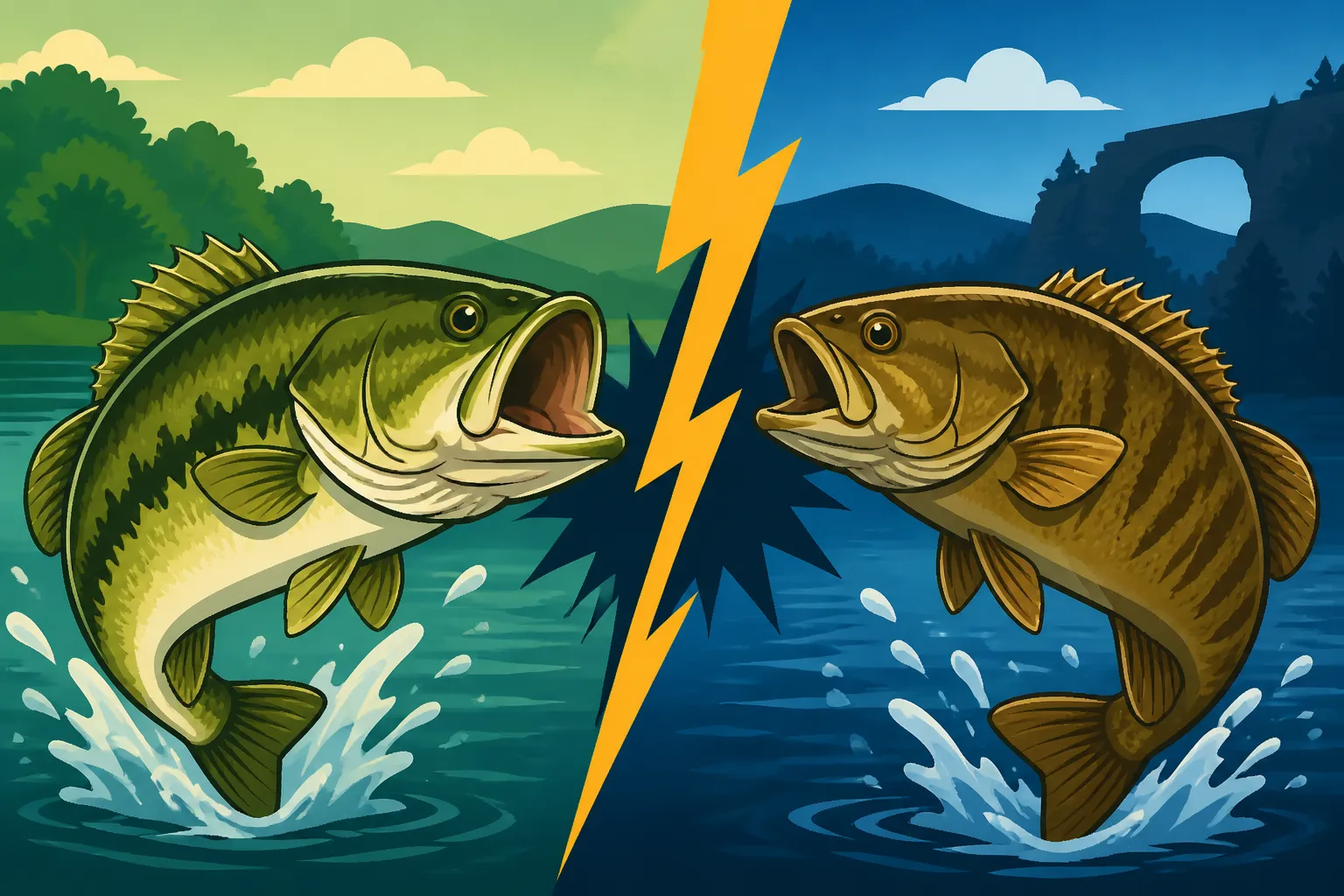
Largemouth Bass Vs Smallmouth Bass: Which Is Harder to Catch?
Every angler in Kentucky has likely stared at their tackle box, contemplating a day on the water, and asked themselves that age-old question: "Which one will it be today? Largemouth or Smallmouth?" And then, almost immediately, the follow-up: "Which one is going to give me the tougher fight?" It's a debate as old as bass fishing itself, and the truth is, there's no single, easy answer. The "difficulty" of catching a largemouth versus a smallmouth bass in Kentucky truly depends on where you are, the conditions you're facing, and your personal angling style. This guide will dive deep into the specific challenges each species presents, helping you understand why one might feel harder to catch than the other on any given day.
Understanding the Core Differences in Bass Behavior
Before we even cast a line, it's crucial to understand that largemouth and smallmouth bass are like two different personalities, even though they share the "bass" family name. Their preferred hangouts and dinner menus dictate almost everything about how we approach catching them.
Habitat Preferences and Their Impact on Angling
When you're chasing bass in Kentucky, knowing where each species likes to live is half the battle. Think of it like knowing whether your friend prefers a quiet coffee shop or a bustling sports bar—you wouldn't look for them in the wrong spot, right?
Largemouth bass, those green giants we all love, are generally structure-oriented and prefer shallower, warmer waters. You'll find them lurking in thick lily pads, submerged timber, around boat docks, and nestled deep within dense weed beds. They love cover because it provides ambush points for unsuspecting prey and offers shade from the relentless Kentucky sun. This means if you're fishing a lake like Kentucky Lake or Lake Barkley, you'll be focusing your efforts on shoreline cover, shallow flats, and backwater coves. The challenge here is getting your lure into these tight, snaggy spots without getting hung up, and then having the power to yank a big bass out of the thick stuff once it bites. It's a power game, often requiring heavy lines and robust gear. If you want to learn more, check out our Largemouth Bass Fishing in Kentucky: The Complete Guide.
Smallmouth bass, on the other hand, are the nomadic wanderers of Kentucky's waterways. They thrive in clearer, cooler, and often deeper waters, typically associated with rock structures, current, and gravel bottoms. Think of the deep, clear reservoirs like Lake Cumberland, or the flowing waters of the Cumberland River. They don't typically hide in dense vegetation like largemouth; instead, they relate to subtle contours, isolated rock piles, main lake points, and river eddies. Locating smallmouth often requires a more technical approach, relying heavily on electronics to scan vast expanses of water for subtle depth changes or isolated boulders that might hold a school of fish. It's less about visible cover and more about interpreting sonar signals and understanding underwater topography. This difference alone dramatically shifts the perceived difficulty for many anglers.
Feeding Habits and Aggression Levels
Beyond their homes, how these two bass species go about their dining provides another layer of distinction in their catchability. Each has its own table manners, so to speak.
Largemouth bass are classic ambush predators. They're often content to sit hidden in cover, waiting for a meal to swim by. When they strike, it's usually with a violent explosion, a sudden thud on the line that leaves no doubt you've got a bite. They're not always the pickiest eaters, especially if a lure presents an easy, enticing meal. You can often provoke a reaction strike from a largemouth by just getting a bait close to them. This can make them feel "easier" to catch for anglers who enjoy aggressive topwater blow-ups or strong, unmistakable tugs. Their bite is often described as more confident, less finicky, particularly when they're actively feeding.
Smallmouth bass tend to be more curious and investigative. While they can certainly hit a bait hard, their bites are often more subtle, sometimes feeling like a light "tick" or just added weight on your line. They'll often follow a lure, inspecting it closely before committing. When hooked, though, that's when their true personality shines: they are incredibly tenacious fighters, known for their acrobatic jumps, long, drag-screaming runs, and a never-say-die attitude. This can make landing them a real challenge, even if the initial bite wasn't as dramatic. The difficulty in catching them sometimes comes less from getting the bite and more from keeping them hooked and getting them to the boat. They might not tear up a frog on the surface as dramatically as a largemouth, but the underwater tug-of-war they initiate is legendary.
The Largemouth Bass Challenge: Stealth and Presentation
While many anglers consider largemouth bass easier to catch due to their prevalence and willingness to strike, they present their own unique set of difficulties, especially in highly pressured waters or specific conditions.
Navigating Dense Cover and Structure
The largemouth's love for heavy cover means you're often fishing in places where getting a lure in and out is an exercise in frustration. Imagine trying to thread a needle while blindfolded, that's what it can feel like at times.
When you're flipping a jig into a mat of lily pads or pitching a Texas-rigged worm under a tangled fallen tree, precision is paramount. A sloppy cast often means a snag, a lost lure, and a disturbed fishing spot. Even with a perfect cast, the challenge doesn't end. Once a bass bites deep within that cover, you have to extract it, and they'll use every branch, root, and stem to try and break your line. This requires heavy rods, stout line (braid is your friend here!), and a quick, powerful hookset followed by an immediate "winch" to get the fish moving towards open water. This can be physically demanding and requires a strong understanding of how to manage line tension and angle to prevent break-offs. It’s not just about getting the bite; it’s about winning the tug-of-war in a very unforgiving environment.
This constant battle with snags can lead to a lot of lost tackle and frustration, especially for beginners. It's not uncommon to spend a good portion of a day on Kentucky Lake untangling lines or retying after breaking off a big fish that wrapped you around a submerged log. This aspect of largemouth fishing, while exhilarating when successful, certainly adds to its "difficulty" when you factor in the gear lost and the patience required. Picking up a good bulk pack of weedless hooks from Amazon can save you some money in the long run!
Pressure and Picky Bites in Shallow Waters
While largemouth can be aggressive, they are also highly susceptible to fishing pressure, especially in shallow, clear water. A popular dock on Lake Cumberland might hold bass, but those fish see a lot of lures, and they get smart.
In these scenarios, largemouth can become incredibly finicky, requiring subtle presentations, light lines, and a stealthy approach. A heavy boat presence, loud noises, or even a shadow cast over their position can spook them instantly. Post-frontal conditions, where the weather has been stable and then a cold front moves through, can make them incredibly challenging to catch, causing them to hug the bottom and refuse all but the most perfect, slow-moving baits. This is when the "easy" largemouth becomes a true test of an angler's skill, demanding patience, a keen eye for subtle bites, and a wide array of finesse techniques. It's a far cry from the aggressive topwater bite often associated with them.
The presentation often needs to be impeccable. A jig that falls naturally, a weightless worm that glides slowly, or a shaky head that tantalizes on the bottom—these are the presentations that excel when largemouth are pressured. This requires an understanding of how to work your lure with minimal movement, often relying on minute rod twitches and long pauses, which can be a difficult skill to master. You'll often find yourself trying a dozen different baits and retrieves before finding the one that triggers a strike.
The Smallmouth Bass Challenge: Location and Fight
Smallmouth bass, with their preference for deep, clear, and rocky environments, bring a different set of challenges to the table, often leading anglers to consider them the tougher catch overall.
Locating Smallmouth in Vast, Deep Waters
One of the primary reasons smallmouth are often perceived as harder to catch is the sheer difficulty in finding them. Unlike largemouth, which are often visually identifiable in cover, smallmouth roam vast, open water, making them needles in a haystack.
In large reservoirs like Lake Cumberland or the expansive rivers, smallmouth can be anywhere. They don't have obvious weed lines or docks to relate to. Instead, they relate to subtle underwater features: a deep hump that rises a few feet off the bottom, a current seam created by a submerged rock pile, or a gravel point that drops off into deep water. Pinpointing these locations often requires high-quality fish finders, a solid understanding of hydrography, and countless hours on the water mapping out productive spots. For anglers without advanced electronics or experience in reading structure, this can be an incredibly frustrating search, often resulting in long stretches of no bites. Our guide to Smallmouth Bass Fishing in Kentucky: The Complete Guide can offer more insights into this exciting pursuit.
Moreover, smallmouth are often highly mobile. A school of fish you found yesterday might be miles away today, following baitfish or reacting to changes in current or water temperature. This means anglers need to constantly adapt, cover water efficiently, and be prepared to search for fish rather than waiting for them in a specific, known spot. This constant search-and-find mission adds a layer of intellectual challenge that many find more demanding than the power fishing often associated with largemouth. They are known for their preference for cold water, so checking out Kentucky's Lake Cumberland Trout Season Explained might give some hints about the types of areas they inhabit.
The Tenacious, Aerobatic Fight
Even once you've successfully located and enticed a smallmouth to bite, the battle is far from over. In fact, for many, this is where the real challenge begins.
Smallmouth bass are widely regarded as one of the hardest-fighting freshwater fish, pound for pound. They are incredibly powerful for their size and possess an explosive, unpredictable fighting style. When hooked, a smallmouth will often immediately leap clear out of the water, shaking its head violently to throw the hook. If that doesn't work, they'll make long, blistering runs, stripping line from your reel, and then often dive deep, trying to rub your line against rocks or any available structure. This combination of aerial acrobatics and brute strength makes landing a smallmouth a heart-pounding experience that requires a delicate balance of rod control, drag management, and quick reflexes. You can't just winch them in; you have to fight them. Many anglers swear by the Best Lures for Smallmouth Bass in the Cumberland River to trigger these incredible battles.
Their hard mouths and aggressive head shakes also mean that hooks can easily pull free, especially if there's any slack in the line. This leads to a higher rate of "missed" fish compared to largemouth, who often engulf baits more thoroughly. The difficulty here isn't just getting the fish to the boat, but keeping it pinned all the way. It’s a true test of an angler's fighting technique and the reliability of their knots and tackle.
Gear, Techniques, and The Angler's Skillset
Ultimately, the perceived difficulty of catching largemouth versus smallmouth often boils down to the gear you use and the techniques you employ. An angler proficient in one style might struggle with the other, and vice-versa.
Adapting Your Tackle for Each Species
The tackle you choose for each species is a fundamental difference and directly impacts the challenge. Using the wrong gear makes either species harder to catch.
For largemouth bass, especially when targeting them in heavy cover, the emphasis is often on power. This means using heavier action rods—medium-heavy to heavy—paired with baitcasting reels spooled with strong, abrasion-resistant line, often braided line in the 30-65 pound test range. This setup allows you to cast heavier lures, penetrate thick cover, and winch fish out of snags. Examples include flipping jigs, heavy Texas rigs, and frogging setups. If you're looking to gear up, Amazon offers a wide selection of suitable rods and reels that can handle the toughest largemouth battles. A sturdy rod is essential for those powerful hooksets and fighting fish out of vegetation.
Smallmouth bass fishing often leans towards finesse and sensitivity. Lighter action rods (medium-light to medium) are more common, especially for spinning gear, allowing for longer casts with lighter baits and better feel for those subtle bites. Fluorocarbon lines (6-10 pound test) are preferred for their invisibility and sensitivity, allowing you to detect the faintest taps. Common smallmouth baits include dropshot rigs, tube jigs, small grubs, and hair jigs—all requiring a delicate touch. This lighter tackle setup, while excellent for detecting bites and presenting small baits, can add to the challenge when a powerful smallmouth decides to make a run for it. Managing a strong fish on light line requires a different level of finesse and patience, as overpowering them will quickly lead to a broken line. Our article on Best Rods and Reels for Kentucky Fishing provides a broader overview of choices for various species.
Mastering Different Lure Presentations
Just as tackle differs, so do the most effective lure presentations for each bass species. Mastering these varied techniques is key to consistently catching both.
For largemouth, especially when they're in their "ambush predator" mode, presentations that mimic struggling prey or invade their personal space are often highly effective. Think of a frog walking across the top of a lily pad, a jig punching through a mat of weeds, or a squarebill crankbait deflecting off submerged timber. These are aggressive presentations designed to provoke a reaction strike. Understanding how to work a topwater bait, how to "feel" a jig through cover, or how to vary your crankbait retrieve are crucial skills. Check out our guide on How to Fish a Crankbait Around Cover for some tips. There are many fantastic videos and tutorials online that can walk you through the nuances of these presentations, helping you pick up new tricks that will make a big difference, and you can usually find the specific lures mentioned on Amazon.
Smallmouth, given their nomadic nature and preference for rocky, clear environments, often respond better to presentations that are more subtle and natural. Dropshot rigs, where a small plastic bait is suspended above a weight, are deadly for tempting smallmouth that are hugging bottom structure. Slowly dragging a tube jig or a grub across a rocky bottom can imitate crayfish, a favorite smallmouth meal. Vertical jigging spoons or blade baits are excellent for suspended fish in deep water. These techniques require a high degree of "feel" and concentration to detect the bite, which is often very light. An angler must learn to differentiate between a rock, a piece of wood, or a subtle bite. The finesse required to effectively present these baits, often in deep water where visibility is limited, adds a significant layer of difficulty that rewards patience and precise boat control. If you're struggling with this, our Drop Shot Rig Technique for Bass Fishing article can offer some invaluable advice.
Comparing the "Harder" Factors
Let's break down some of the key factors that contribute to the perceived difficulty of catching each bass species. This isn't exhaustive, but it highlights common challenges.
| Difficulty Factor | Largemouth Bass | Smallmouth Bass |
|---|---|---|
| Locating Fish | Often relate to visible cover (weeds, docks, wood). | Relate to subtle, deep, offshore structure; mobile. |
| Bite Detection | Generally aggressive, unmistakable strike. | Can be subtle, light "tick" or added weight. |
| Hookset | Often firm, powerful to penetrate cover. | Can be quick, precise due to subtle bite. |
| Fight Characteristics | Powerful pull, often head-shaking, dives into cover. | Aerobatic jumps, long runs, never-give-up attitude. |
| Line & Snags | Heavy line needed, high risk of snags in cover. | Lighter line preferred, less snag risk, but line can break on rocks. |
| Tackle Requirements | Heavier rods, baitcasters, strong line. | Lighter rods, spinning gear, sensitive line. |
| Environmental Impact | More sensitive to pressure in shallow, clear water. | Can be sensitive to pressure, but often deeper. |
Which Is Harder to Catch? It Depends on You and the Day
So, after all that, which one truly takes the cake as the "harder" catch in Kentucky? The honest, veteran angler's answer is: it really depends.
For many new anglers, or those who prefer a more direct, power-fishing approach, smallmouth bass can feel significantly harder. The challenge of finding them in vast, clear waters, interpreting subtle sonar signals, and then dealing with their relentless, acrobatic fight on lighter tackle can be quite intimidating. You might spend hours without a bite, then suddenly hit a productive rock pile and experience an hour of non-stop action before they move on. This unpredictability and technical demand often elevate smallmouth to the "harder" category for many. If you're planning a trip around the Kentucky Bass Fishing: The April-May Peak Season, be prepared for either challenge.
Conversely, for anglers who thrive on finesse tactics, precise casting, and a patient, systematic approach, the smallmouth might feel more rewarding, and perhaps, not as "hard" as the largemouth in dense, snag-filled cover. For them, wrestling a big largemouth out of a submerged tree with heavy gear might be the greater frustration, leading to more lost lures and frayed nerves. The challenges of fishing highly pressured largemouth in clear, shallow water, where one wrong move can spook the fish, can also be incredibly demanding.
Ultimately, both largemouth and smallmouth bass in Kentucky offer fantastic angling opportunities and unique challenges. Neither is consistently "easy," and both can be incredibly frustrating or gloriously rewarding, depending on the day, the conditions, and your skillset. The best advice? Don't pick one! Embrace the unique thrill each species offers, adapt your techniques, and enjoy the diverse fishing experiences Kentucky's waters provide. Learning to fish for both will undoubtedly make you a more versatile and skilled angler.
Disclaimer
This article is for general informational purposes only and does not constitute professional advice. Laws, prices and regulations vary by location and change over time. Consult a qualified professional for guidance on your specific situation.