How to Title a Boat in Kentucky
Navigating the paperwork for a boat can feel like paddling upstream without a paddle, especially when it comes to official processes like titling. For many Kentuckians, the thought of government forms and requirements can be daunting, but properly titling your vessel is a crucial step to legal ownership and peace of mind on the water. This guide is designed to cut through the confusion, offering Kentucky boat owners a clear, step-by-step roadmap to properly title their vessel, ensuring you're legally ready to hit the water.
Understanding Kentucky's Boat Titling Requirements
Before you even think about setting foot in the county clerk's office, it's vital to understand which boats actually need a title in Kentucky and which are exempt. This is where a lot of the initial confusion can creep in, leading to wasted trips and frustration. Knowing the specific rules will save you a lot of time and effort down the line, ensuring you gather the correct documentation from the start.
When a Boat Needs a Title and When It Doesn't
In Kentucky, the general rule of thumb is that most motorized vessels and sail-powered vessels over 16 feet in length are required to be titled. This covers everything from your speedy bass boat tearing across Kentucky Lake: The State's Top Bass Fishing Destination to a leisurely sailboat enjoying the breeze on Lake Cumberland. The title serves as official proof of ownership, much like a title for a car, and is absolutely essential for buying, selling, or transferring a boat legally. Without a title, proving you own the vessel can become a real headache, making future transactions incredibly difficult.
However, not every vessel needs a title. Kentucky law provides exemptions for certain types of watercraft. Generally, non-motorized vessels such as canoes, kayaks, paddleboards, and rowboats are exempt from titling requirements, though they still might need registration if they meet certain criteria for public water use. Federally documented vessels, typically larger commercial or recreational boats registered with the U.S. Coast Guard, are also exempt from state titling, although they still need to be registered with the state for operational purposes. It’s always best to double-check with the Kentucky Department of Fish and Wildlife Resources (KDFWR) or your local County Clerk if you're unsure about your specific vessel, especially if it's a unique craft.
Key Documents You'll Need for the Process
Preparing your paperwork is perhaps the most critical part of the entire titling process. Without the right documents, your trip to the county clerk will be a bust. Think of it like preparing your tackle box before a big fishing trip – you wouldn't head out without your favorite lures, right? The same goes for your boat title application. Having everything in order ensures a smooth and efficient experience.
The core documents you'll typically need include:
- Proof of Ownership: This is paramount. If your boat is new, you'll need the Manufacturer's Statement of Origin (MSO). If you bought it used, you'll need the previous owner's properly assigned title. In some cases, if a title was never issued or lost, a notarized bill of sale might suffice, but it's crucial that it contains specific information about the boat and seller. This is where things can get tricky, so verify exactly what's acceptable.
- Application for Kentucky Certificate of Title: This is the official form you'll fill out, detailing your boat's specifications and your personal information. You can often find these forms online on the KDFWR website or at your local county clerk's office.
- Identification: A valid driver's license or state-issued ID is necessary to verify your identity as the applicant.
- Payment for Fees: Be prepared to pay the necessary titling and any applicable registration fees. We'll discuss fees more in a moment, but remember that specific amounts can vary.
Gathering these documents beforehand will make your visit to the county clerk's office much more efficient. For more details on what counts as proof, you can look into Proof of Ownership Documents for Kentucky Boat Registration.
The Step-by-Step Boat Titling Process in Kentucky
Once you understand the requirements and have a grasp on the necessary documents, the actual titling process becomes much clearer. It's essentially a three-step journey, and breaking it down can make it feel far less intimidating. You'll be well on your way to officially owning your vessel, ready for countless adventures on Kentucky's beautiful waterways.
Gathering Your Essential Paperwork
This is where the rubber meets the road. Before you leave your house, lay out every single document you believe you'll need. If you're buying a brand new boat, your dealer should provide you with the Manufacturer's Statement of Origin (MSO). This document is like a birth certificate for your boat, indicating its initial ownership from the factory. Make sure all the details – hull identification number (HIN), make, model, and year – are accurate. Any discrepancies could cause delays.
For a used boat, the process revolves around the existing title. The previous owner must properly sign and transfer the title to you. Ensure their signature matches the name on the title and that all fields for the buyer (that's you!) are correctly filled out. If the previous owner lost the title, they might need to apply for a duplicate before they can transfer it to you. In rare cases where a boat is very old and a title was never issued, or proof of ownership is otherwise difficult, you might need a notarized bill of sale along with an affidavit of ownership. In these complex situations, getting legal advice or contacting your county clerk's office for specific guidance is always recommended. Even getting simple forms notarized can sometimes be tricky; some Bass Pro Shops locations might have information on local notary services, or you might find resources online.
Visiting Your Local County Clerk's Office
With all your paperwork meticulously prepared, your next destination is your local County Clerk's office. This is the government entity responsible for handling boat titles and registrations in Kentucky. It's not a complicated process, but going prepared can make a huge difference. You'll typically find dedicated counters or staff members who handle vehicle and boat titling. It's a good idea to call ahead or check their website for their hours of operation and any specific requirements they might have, like needing to make an appointment.
When you arrive, you'll present your completed Application for Kentucky Certificate of Title form along with your proof of ownership (MSO or assigned title), and your identification. The clerk will review your documents for accuracy and completeness. They might ask for additional information or clarification, so be ready to answer questions about the boat's history or specifications. If everything is in order, they will process your application, collect the necessary fees, and issue you a temporary registration. Your official title will typically be mailed to you within a few weeks. For a deeper dive into the procedural aspects, you can refer to Kentucky County Clerk Boat Registration Process Explained.
Understanding Fees and Payment
One aspect that often catches people off guard is the various fees associated with boat titling and registration. While I can't provide exact figures, it's important to understand the types of costs you'll encounter. First, there's the titling fee itself, which is a fixed charge for processing and issuing your boat's certificate of title. Beyond that, you'll also pay an annual registration fee, which can vary based on the length or type of your vessel. These registration fees are what allow you to legally operate your boat on public waters for the current license year.
You might also encounter other potential costs, such as sales tax if you purchased the boat recently, or late fees if you're titling a boat past a certain deadline. Some county clerks might accept credit cards, while others prefer cash or checks, so it’s always wise to inquire about accepted payment methods beforehand. Budgeting for these fees in advance will help ensure a smooth transaction. You can learn more about general fees by checking out Kentucky Boat Registration Fees by Vessel Length.
Common Hurdles and How to Overcome Them
Even with the best preparation, sometimes unexpected issues can pop up during the boat titling process. It's easy to get discouraged when you hit a snag, but many of these common hurdles have straightforward solutions. Knowing what to do if you encounter a problem can save you a lot of stress and prevent multiple trips to the clerk's office.
Missing or Incorrect Documentation
This is probably the most frequent hiccup. Imagine you buy a used boat, and the seller accidentally forgot to sign the title, or perhaps the Hull Identification Number (HIN) on the bill of sale doesn't match the actual boat. These seemingly small errors can halt your titling process. If a previous title is lost or was never issued, you might be asked to provide additional documentation like a notarized bill of sale, an affidavit of ownership, or even a bond in some cases, which guarantees your ownership.
Your best first step is to contact the previous owner if there’s a discrepancy. A quick phone call can often resolve simple issues like a missing signature. If the title is truly lost, the previous owner is typically responsible for applying for a duplicate title before they can transfer it to you. If a title was never issued for an older boat, the county clerk will guide you on the specific affidavits or forms required to establish ownership. Always be honest and thorough with your explanation; the clerks are there to help you navigate these unique situations, even if it feels like a maze.
Out-of-State Purchases and Transfers
Bringing a boat into Kentucky from another state adds a few extra layers to the titling process, primarily concerning sales tax and verifying out-of-state documentation. If you purchased the boat in another state, you will likely owe Kentucky sales tax on the purchase price, unless you can prove you already paid a comparable sales tax in the previous state. The amount will be calculated based on the purchase price listed on your bill of sale or the previous title.
You'll also need the out-of-state title, which must be properly assigned to you by the seller. Different states have slightly different title formats, but the core information – HIN, make, model, and seller's assignment – should be present. The county clerk will examine this carefully to ensure a legal transfer. Don't be surprised if they ask for extra proof of sale or residency if anything seems amiss. For comprehensive guidance on initial registration, consult Kentucky Boat Registration Requirements Explained.
Federally Documented Vessels and State Titling
For larger vessels, especially those used for commercial purposes or extensive cruising, owners sometimes choose to "document" their boats with the U.S. Coast Guard. This is a federal registration that essentially replaces a state title. Federally documented vessels do not receive a Kentucky state title. This is a common point of confusion for new owners of such boats.
However, even federally documented vessels still need to be registered with the State of Kentucky for operational purposes and to pay property taxes. So, while you won't get a state title, you still need to complete a registration process with the county clerk. You'll present your Certificate of Documentation from the Coast Guard along with your registration application. Understanding this distinction is key to avoiding unnecessary steps or confusion. This exemption is important for many boaters, and you can delve further into it with Kentucky Boat Titling Exception for Coast Guard Documented Vessels.
Beyond Titling: What Comes Next?
Titling your boat is a massive step, but it’s just one piece of the puzzle to ensure you're fully compliant and ready for the water. Once your boat is officially titled in your name, there are a couple of other crucial steps you'll need to take to legally and safely enjoy Kentucky's fantastic fishing and boating opportunities.
Registering Your Boat After Titling
It’s important to remember that titling and registration are two separate, albeit closely related, processes. While the title proves ownership, the registration allows you to legally operate your vessel on public waters. When you title your boat at the county clerk's office, you'll typically complete the initial registration at the same time. This involves paying the annual registration fees, which are often based on the length of your boat. Once processed, you'll receive your boat's registration certificate and the decals you need to display on your hull.
These registrations are not a one-and-done deal. They are annual and have specific renewal dates. In Kentucky, the boat registration year typically runs from March 1st to February 28th, with renewals often due by April 30th. Forgetting to renew can lead to penalties or even citations on the water. It’s a good idea to set a reminder on your calendar so you don't miss the deadline. You can find more details about renewal specifics in Kentucky Boat Registration Renewal Deadline: April 30.
Ensuring Your Boat is Legally Ready for the Water
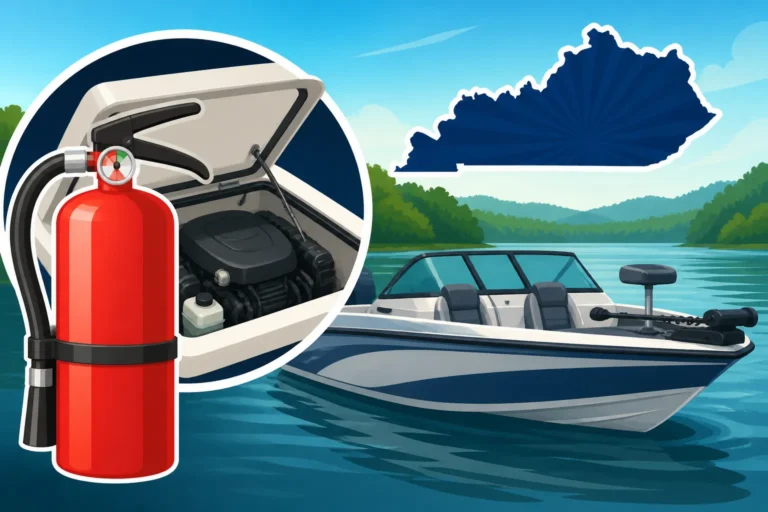
Beyond the paperwork, operating your boat safely and legally involves a few more considerations. Every boat needs certain safety equipment onboard. This includes Coast Guard-approved life jackets for every person, readily accessible and correctly sized, especially for children under 12 who have specific wear requirements. You'll also need a fire extinguisher if your boat has an enclosed engine compartment or permanent fuel tanks. Other requirements might include a sound-producing device (like a whistle or horn), navigation lights for night operation, and a throwable flotation device. You can pick up many of these essential items from retailers like Amazon or your local Bass Pro Shops.
Kentucky also has requirements for boating education. If you were born on or after January 1, 1975, you are generally required to possess a Kentucky Safe Boating Certificate to operate a motorboat or personal watercraft (PWC). Even if you're exempt, taking a boating safety course is always a smart idea to enhance your knowledge and safety on the water. Taking these steps ensures that not only your boat, but also you as the operator, are fully compliant and ready to enjoy your time fishing or cruising the beautiful waters of Kentucky. Learn more about operating requirements in Kentucky Boat Safety Certificate Requirements and Life Jacket Rules for Boats in Kentucky.
Here’s a quick summary of key documents and their roles:
| Document Type | Purpose | Where to Get It / Who Provides It |
|---|---|---|
| Manufacturer's Statement of Origin | Proof of ownership for new boats | Boat dealer |
| Assigned Previous Title | Proof of ownership for used boats | Previous owner |
| Notarized Bill of Sale | Supplemental proof, especially for older vessels | Seller (must be notarized) |
| Application for KY Title | Official form to apply for title | KDFWR website / County Clerk's office |
| Valid Photo ID | Identity verification for the applicant | State DMV / Driver's License |
| Coast Guard Documentation | Federal registration (replaces state title) | U.S. Coast Guard (for documented vessels) |
This article is for general informational purposes only and does not constitute professional advice. Laws, prices and regulations vary by location and change over time. Consult a qualified professional for guidance on your specific situation.