Best Rod Action and Power for Bass Fishing
Have you ever spent a day on the water, throwing every lure in your tackle box, only to feel like your rod just wasn't "right"? Maybe you missed a ton of bites, or a big lunker shook off right at the boat. The truth is, choosing the best rod action and power for bass fishing can feel like trying to solve a puzzle, but it's absolutely crucial to maximizing your success. This guide is going to break down these often-confusing terms and help you select the perfect rod for every bass fishing scenario you encounter in Kentucky and beyond.
Demystifying Rod Action and Power: What Anglers Need to Know
Let's face it, fishing rods come with a lot of jargon – "fast action," "medium-heavy power," "extra-fast taper." It can feel like a secret language only spoken by seasoned pros. But these terms aren't just for show; they describe how a rod behaves under load and how it interacts with your lure and the fish. Understanding them is the first step to truly elevating your game, whether you're chasing Largemouth Bass Fishing in Kentucky: The Complete Guide or targeting aggressive smallmouth.
Rod Power: The Strength to Tackle Bass
Think of rod power as the brute strength of your fishing rod. It refers to how much force it takes to bend the rod blank. Essentially, it's the rod's lifting power and its ability to handle different lure weights and line strengths. You’ll typically see power ratings like Ultra-Light, Light, Medium, Medium-Heavy, Heavy, and Extra-Heavy.
A rod with "Light" power, for instance, is designed for lightweight lures and smaller fish. It bends easily, offering maximum sensitivity for those subtle bites. Imagine you're fishing a clear, calm pond and trying to entice a spooky bass with a tiny finesse worm. A light power rod would give you the finesse needed. On the other hand, a "Heavy" power rod is a beast, built to handle heavy lures and pull big, angry bass out of thick cover. Picture a situation where you've punched a jig through a dense mat of lily pads, and a 5-pound largemouth inhales it. A heavy power rod allows you to turn that fish's head instantly, preventing it from burying itself deeper in the vegetation. It's the muscle you need to control the fight. The appropriate power also correlates directly with the suggested line weight and lure weight ranges printed on most rod blanks – always pay attention to those!
Rod Action: Where the Rod Bends
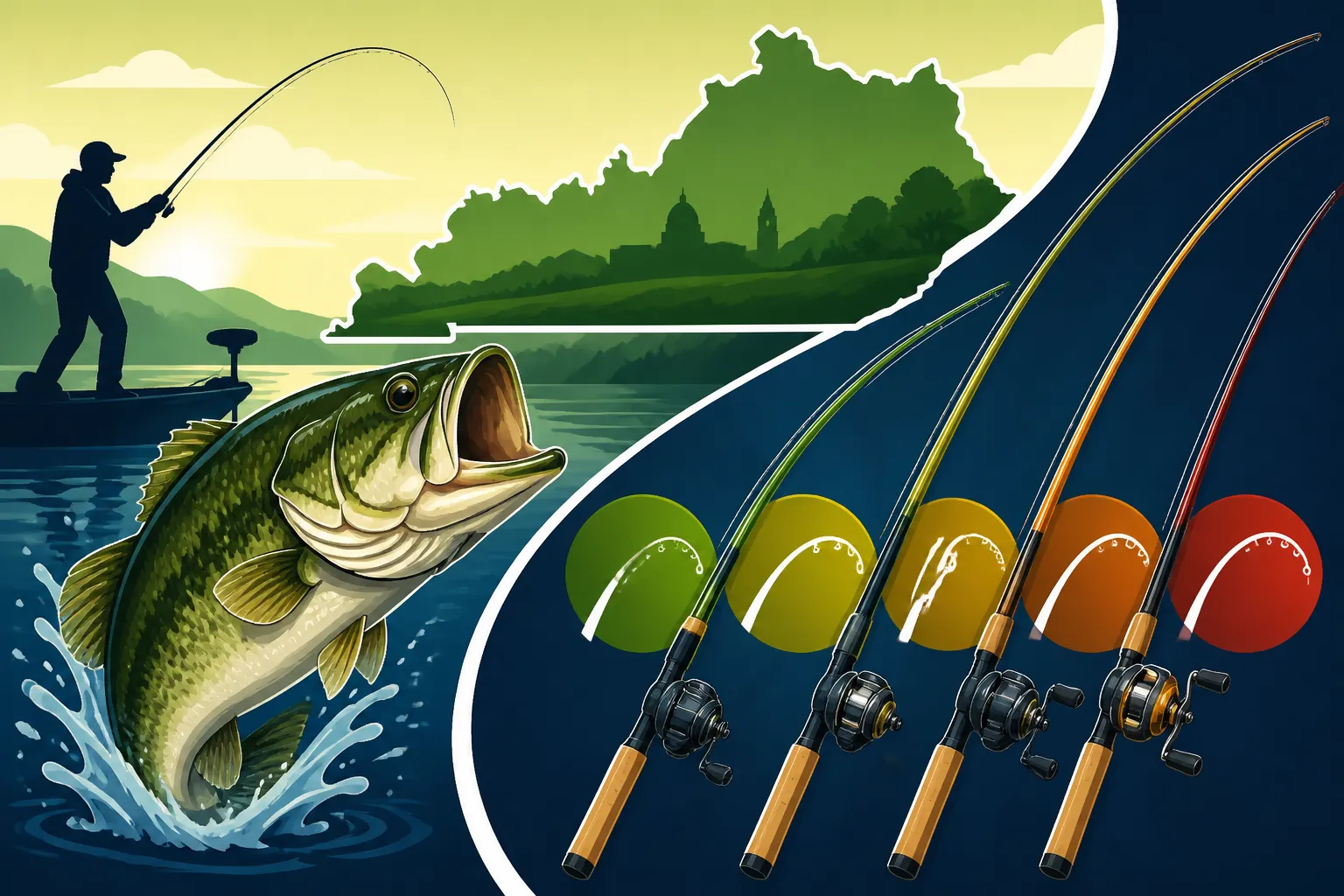
While power dictates the overall strength, rod action describes where along the blank the rod bends when put under pressure. This characteristic is critical for casting distance, lure presentation, and how effectively you can set the hook and fight a fish. Common actions include Slow, Moderate, Moderate-Fast, Fast, and Extra-Fast.
A "Fast" action rod, for example, bends mostly in the tip section, while the rest of the rod remains relatively stiff. This design provides maximum sensitivity because even the slightest tap on your line will telegraph clearly up the rod blank to your hand. It also allows for quick, powerful hook sets, which are crucial when you're using single-hook baits like jigs or Texas-rigged worms. Imagine you feel a faint "thump" while dragging a worm along the bottom. That fast action lets you react almost instantaneously with a sharp upward snap of the wrist, driving the hook home before the bass spits it out. Conversely, a "Slow" action rod bends evenly throughout its entire length, almost like a noodle. These rods are less common for bass but are excellent for delicate presentations, absorbing shock, and keeping fish pinned on treble hooks where a sudden jerk could tear the hooks out. It’s all about finding that sweet spot for your technique.
Choosing the Right Power for Kentucky Bass
Kentucky waters, from the vast expanses of Kentucky Lake to the winding rivers, offer diverse bass fishing opportunities. Having the right rod power for the specific technique and conditions you're facing can make all the difference between a frustrating day and a memorable one.
Light to Medium-Light Power: Finesse and Smaller Lures
When the bite is tough, the water is clear, or you're targeting pressured fish, light to medium-light power rods truly shine. These rods are incredibly sensitive, letting you feel even the most subtle "tick" of a bass mouthing your bait. They're perfect for throwing very small jigs, shaky heads, small drop-shot rigs, or tiny swimbaits. Think about those glassy, calm mornings on Herrington Lake where the bass are wary. You're using a 1/8 oz jig head with a tiny plastic, trying to skip it way back under a dock. A medium-light rod offers the precise casting control and soft landing you need to present that bait naturally without spooking the fish.
While they won't pull a giant out of thick timber, these rods excel in open water or around sparse cover where you don't need immense stopping power. They allow for delicate presentations and make fighting even a smaller bass a lot of fun, helping you master the art of finesse. Remember, sometimes less is more, especially when the fish are playing hard to get.
Medium to Medium-Heavy Power: The Everyday Workhorse
If there's one rod power that every bass angler in Kentucky should own, it's a medium to medium-heavy. These rods are the true all-around workhorses, capable of handling a vast array of common bass fishing techniques and lure weights. They strike an excellent balance between sensitivity and backbone, making them incredibly versatile.
Consider yourself fishing a spinnerbait along a rocky bank on Lake Barkley. You need a rod that can cast that spinnerbait a good distance, allow the blades to thump, and then have enough power to drive a large single hook into a bass's jaw. A medium-heavy rod fits the bill perfectly. It’s also ideal for Texas rigs, Senko-style worms, ChatterBaits, and even some smaller crankbaits. You can typically fish anywhere from 1/4 oz to 3/4 oz lures effectively with this power range. This is the rod you'll reach for when you're not sure what the bass will be doing, or when you need a dependable setup that can handle a variety of situations. For a comprehensive overview, checking out Best Rods and Reels for Kentucky Fishing will give you even more options in this versatile range. Many popular rods from brands like Bass Pro Shops fall into this category because of their broad appeal and effectiveness across various techniques.
Heavy to Extra-Heavy Power: Dominating Heavy Cover
Now we're talking about serious power! Heavy and extra-heavy rods are purpose-built for tackling the nastiest, thickest cover that Kentucky lakes and rivers can throw at you. If you're flipping a jig into dense laydowns on the Ohio River, punching a creature bait through a thick mat of hydrilla on Kentucky Lake, or throwing oversized swimbaits, these are the rods you need.
The sheer backbone of a heavy power rod allows you to use heavy braided line and large hooks, and then apply maximum pressure to rip a big bass out of its sanctuary before it has a chance to wrap you around a submerged tree. Imagine dropping a 1 oz tungsten weight with a bulky soft plastic into a matted grass bed. The bass hits, and your line instantly goes slack. You need to rear back with all your might, driving a heavy hook through the roof of its mouth and immediately turning its head to steer it away from the cover. That's where heavy power rods excel. They are not subtle, nor are they designed for delicate presentations. They are tools for brute force and command, giving you the upper hand when battling true monsters in extreme conditions.
Understanding Action for Optimal Bass Fishing Performance
Just as rod power dictates strength, rod action is all about feel, hook setting, and how the rod performs during the fight. Pairing the right action with your chosen lure and technique is paramount.
Fast to Extra-Fast Action: Sensitivity and Quick Hooksets
When you hear "fast action," think precision and rapid response. These rods flex primarily in the top 10-25% of the blank, leaving the majority of the rod stiff. This design provides incredible sensitivity, allowing you to feel every pebble, every grass blade, and every subtle bite your lure encounters. It's like having an extension of your fingertips directly connected to your bait.
Fast action is a favorite among anglers who use single-hook lures where a quick, decisive hookset is essential. Jigs, Texas-rigged worms, Carolina rigs, and shaky heads are prime examples. Picture yourself on Lake Cumberland, slowly dragging a jig along the bottom in deep water for smallmouth. That faint "tick" could be a bite. With a fast-action rod, you instantly recognize it and can deliver a lightning-fast hookset that drives the hook deep. The stiff backbone of the rod ensures that most of the energy from your hookset is transferred directly to the fish, not absorbed by the rod bending. Many of the specialized rods you find on Amazon or in a Bass Pro Shops for specific techniques like drop-shotting will feature a fast or extra-fast action.
Moderate-Fast Action: A Great Compromise
If fast action is a scalpel, moderate-fast action is a very sharp, versatile chef's knife. These rods bend from the tip through the upper third or so of the blank. This gives them a blend of sensitivity and flexibility, making them incredibly adaptable for a wider range of techniques. They still offer good sensitivity for detecting bites but have enough give to cast lighter lures further and absorb some shock when a fish surges.
Moderate-fast action rods are fantastic for reaction baits like crankbaits, spinnerbaits, and topwater plugs. When a bass smashes a crankbait, a rod with a little more flex (like a moderate-fast) acts as a shock absorber. This keeps the treble hooks from tearing out of the fish's mouth, especially important during a hard fight or when the fish shakes its head violently. The slight give also aids in casting, allowing the rod to load up more fully, resulting in longer, more accurate casts. So, whether you're throwing a squarebill around flooded timber or working a buzzbait over submerged grass, a moderate-fast action rod provides that perfect balance of control and forgiveness.
Moderate to Slow Action: Crankbait and Treble Hook Specialists
Moving to the other end of the spectrum, moderate and slow action rods bend much deeper into the blank – sometimes all the way down to the handle. These rods are often referred to as "parabolic" because of their smooth, continuous bend. While they might lack the pinpoint sensitivity of fast-action rods, they excel in specific situations, particularly with treble-hooked baits.
The deep, forgiving bend of a moderate or slow action rod is a huge advantage when fishing crankbaits, lipless crankbaits, and some topwater lures. When a bass strikes these baits, the rod's soft action allows the fish to fully inhale the lure before you feel the bite. Then, during the fight, the rod acts like a giant spring, absorbing every head shake and surge. This keeps constant pressure on the fish without putting too much strain on the small treble hooks, significantly reducing the chances of the fish throwing the bait. Furthermore, these rods load up exceptionally well on the cast, often allowing for truly prodigious casting distances – perfect for covering vast flats or bombing deep-diving crankbaits to offshore structure. You'll often find anglers dedicating specific moderate action rods for Best Lures for Largemouth Bass on Big Water, especially crankbait models, because of this unique benefit.
Putting It All Together: Matching Rods to Techniques
Now that we've broken down power and action, let's see how they come together for common bass fishing techniques. This is where the magic happens – choosing the right tool for the right job.
Finesse Fishing: Light Power, Fast Action
For techniques like drop-shotting, shaky heads, Neko rigs, and light finesse jigs, you want a rod that is both sensitive and responsive. A light to medium-light power rod with a fast or extra-fast action is your go-to. The fast action provides extreme sensitivity to detect those super subtle bites when bass are barely breathing on your lure. The light power allows for delicate presentations and prevents you from overpowering small hooks or light line, which is typically 6-10 lb fluorocarbon or monofilament.
Imagine you're on a tough day, fishing a clear Kentucky reservoir like Lake Cumberland. The bass are suspended, lethargic, and barely ticking your drop shot rig. That extra-fast tip lets you see and feel the lightest of bites, and the quick action ensures you can set a small hook effectively with minimal rod movement. This combination is all about maximizing feel and precise lure manipulation. For more on delicate presentations, you might find tips in How to Tie a Fishing Knot for Beginners to ensure your light line is secure.
Reaction Baits: Medium-Heavy Power, Moderate-Fast Action
When you're throwing moving baits like spinnerbaits, chatterbaits, squarebill crankbaits, lipless crankbaits, or even some topwater lures, you want a rod that can cast well, allow the lure to work effectively, and keep fish hooked on treble hooks. A medium-heavy power rod with a moderate-fast action is often the perfect choice. The medium-heavy power gives you the backbone to cast heavier baits and handle larger fish, while the moderate-fast action provides enough flex to load up on the cast for distance and absorb the shock of hard strikes.
Think about burning a spinnerbait parallel to a weed line. A bass blows up on it, and you need that rod to cushion the strike to keep those treble hooks securely embedded. The moderate-fast action allows the rod to bend further into the blank than a fast-action, which acts as a buffer against violent head shakes. This combination is excellent for a wide variety of situations and is a staple for many anglers when chasing bass in the spring during the Kentucky Bass Fishing: The April-May Peak Season.
Heavy Cover: Heavy Power, Fast Action
For aggressive tactics like flipping, pitching, punching, or throwing big swimbaits into dense vegetation or thick timber, you need a rod built for battle. This calls for a heavy to extra-heavy power rod with a fast or extra-fast action. The heavy power is non-negotiable here; it gives you the raw strength to haul big bass out of the thickest cover imaginable. The fast action, in this case, ensures a powerful and instant hookset, driving heavy gauge hooks through thick plastic baits and into the bony mouth of a big bass.
Imagine you're punching a 1.5 oz weight and a beaver-style bait through a dense mat of surface vegetation. A bass crushes it. You need to instantly rip that fish out of the mat, preventing it from burrowing deeper and tangling your line. This rod combination allows for that immediate, dominant control. It's a specialized setup for high-stakes, high-reward fishing scenarios, often paired with braided line upwards of 50-65 pounds. To truly conquer these spots, check out guides like How to Flip and Pitch for Bass in Heavy Cover. You'll find a great selection of these specialized rods at places like Bass Pro Shops.
Here’s a quick overview of common techniques and ideal rod pairings:
| Technique | Recommended Rod Power | Recommended Rod Action | Ideal Lure Weights | Key Benefits |
|---|---|---|---|---|
| Finesse Jigs/Worms | Light to Medium-Light | Fast to Extra-Fast | 1/16 oz – 1/4 oz | Max sensitivity, precise casts, quick hooksets for subtle bites. |
| Drop Shot/Shaky Head | Light to Medium-Light | Fast to Extra-Fast | 1/8 oz – 3/8 oz | Superior feel for light baits, keeps fish pinned on light line. |
| Crankbaits (small) | Medium | Moderate-Fast | 1/4 oz – 1/2 oz | Good casting, shock absorption for trebles, prevents tear-outs. |
| Spinnerbaits/Chatter. | Medium-Heavy | Moderate-Fast | 3/8 oz – 3/4 oz | Versatile, strong casts, solid hooksets, manages hard-fighting fish. |
| Texas Rig/Jigs | Medium-Heavy | Fast | 1/4 oz – 1 oz | Excellent sensitivity, powerful hooksets, good for moderate cover. |
| Flipping/Punching | Heavy to Extra-Heavy | Fast to Extra-Fast | 1/2 oz – 1.5 oz+ | Maximum power for heavy cover, immediate fish control, strong hook penetration. |
| Large Swimbaits | Heavy to Extra-Heavy | Moderate-Fast to Fast | 1 oz – 8 oz+ | Casts heavy lures, controls large fish, handles aggressive strikes. |
| Topwater (walking/popper) | Medium-Heavy | Moderate-Fast | 1/2 oz – 1 oz | Good casting, allows fish to take bait, prevents hooks from tearing. |
Choosing the right rod action and power truly is a game-changer for bass fishing. It's not just about having a rod; it's about having the right rod for the moment. Don't be afraid to experiment, and remember that local tackle shops, as well as online retailers like Amazon, offer a vast selection to help you find your perfect match. Happy fishing, and may your rod always bend with a lunker!
Disclaimer
This article is for general informational purposes only and does not constitute professional advice. Laws, prices and regulations vary by location and change over time. Consult a qualified professional for guidance on your specific situation.