Kentucky Boat Safety Certificate Requirements
Navigating Kentucky's beautiful lakes and rivers offers incredible opportunities for fishing and recreation, but the rules of the water can sometimes feel a bit murky. Many boaters, especially those new to operating a vessel or those who haven't updated their knowledge in a while, get confused about who needs a boating safety certificate and what it entails. This comprehensive guide is designed to clear up all that confusion, detailing Kentucky's boat safety certificate requirements to help you stay legal, safe, and confident on the water.
Understanding Kentucky's Boating Safety Education Law
Kentucky is absolutely committed to ensuring the safety of everyone enjoying our waterways, and that commitment extends to requiring certain boat operators to have a valid boating safety education certificate. It’s not just about avoiding a ticket; it’s about making sure every operator has a foundational understanding of safe practices, navigation rules, and how to react in an emergency.
Who Needs a Boating Safety Certificate in Kentucky?
Let's cut right to the chase because this is where most people have questions. In Kentucky, if you're going to operate a motorized vessel, including personal watercraft like jet skis, and you were born on or after January 1, 1975, you are required by law to possess a Kentucky Boating Safety Certificate. This isn't just a suggestion; it's a firm regulation aimed at reducing boating accidents and promoting a safer environment for all. Think of it as your driver's license for the water – you wouldn't drive a car without one, so why operate a boat without the proper training?
The rationale behind this date-specific requirement is pretty straightforward: it targets generations that might not have grown up with formalized boating education as a commonplace expectation. By requiring younger operators to get certified, the state aims to instill good habits and essential knowledge from the start. This includes everything from understanding the rules of the road (or rather, the water) to knowing how to react in sudden storms or mechanical failures. It’s about being prepared for the unexpected, which is a huge part of boating safely. For instance, if you're planning a fishing trip to Kentucky Lake and you were born in, say, 1980, you absolutely need this certificate before you even think about starting your boat's engine.
The "Born Before 1975" Exemption
Now, for those seasoned salts among us, there's often a bit of a sigh of relief. If you were born before January 1, 1975, you are generally exempt from the mandatory boating safety certificate requirement in Kentucky. This exemption acknowledges that many older boaters have years, if not decades, of practical experience and knowledge accumulated over countless hours on the water. It’s not that their safety is any less important, but the assumption is that they've already learned the ropes through experience.
However, "exempt" doesn't mean "ignorant." Even if you're in this age bracket, taking a boating safety course can still be incredibly beneficial. Regulations change, new technologies emerge, and a refresher course can update your knowledge, perhaps even teaching you a trick or two you hadn't considered. It’s always a good idea to stay current with safety practices, even if the law doesn't strictly demand it. You might think you know everything about navigating the Ohio River, but a course might introduce you to new interpretations of right-of-way rules or updated emergency signaling protocols. For more on this specific rule, you might want to read Kentucky Safe Boating Certificate and the 1975 Birthdate Rule.
Personal Watercraft PWC Operators and the Certificate
When it comes to personal watercraft (PWCs), often called jet skis, the rules for the boating safety certificate are generally the same as for other motorized vessels. If you were born on or after January 1, 1975, you'll need that certificate. However, there's an added layer of emphasis here due to the nature of PWCs. These machines are often faster, more agile, and can be involved in accidents more frequently if operated recklessly.
The state recognizes the unique risks associated with PWCs. Their speed and maneuverability, while fun, also require a heightened sense of awareness and respect for other boaters, swimmers, and wildlife. Therefore, getting your certificate is especially critical for PWC operators. The courses often include specific modules dedicated to PWC safety, covering topics like safe operating distances, avoiding wake-jumping, and understanding maneuverability limitations. If you're zooming around Lake Barkley on a PWC, imagine the immediate danger if you don't understand how to avoid a collision or properly signal turns. It's a significant responsibility, and the certificate ensures you've at least covered the basics. You can find more targeted information on Kentucky Boating Certificate for PWC Operators.
How to Obtain Your Kentucky Boating Safety Certificate
Alright, so you’ve figured out you need the certificate. Now what? Getting your Kentucky Boating Safety Certificate is a pretty straightforward process, with options to fit different learning styles and schedules. The goal is to make boating education accessible, not a hurdle.
Online Course Options
For many people, the sheer convenience of an online course is a game-changer. You can take it from the comfort of your home, at your own pace, and fit it around your work or family commitments. This flexibility is a huge plus, especially for busy individuals who can't commit to a fixed schedule. There are several state-approved online providers that offer comprehensive courses. When choosing one, make sure it's certified by the National Association of State Boating Law Administrators (NASBLA) and approved by the Kentucky Department of Fish & Wildlife Resources (KDFWR).
These online courses typically break down the material into manageable modules, often with quizzes after each section to reinforce your learning. You'll cover everything from navigation rules and marker systems to emergency procedures and legal requirements. At the end, there's usually a final exam. Once you pass, you'll receive a certificate that you can print out or keep digitally. It's an efficient way to gain essential knowledge, whether you're a first-time boater or just need to refresh your memory on the latest regulations.
In-Person Class Opportunities
While online courses are fantastic for flexibility, some people simply learn better in a classroom environment. If you prefer direct interaction with an instructor, the ability to ask questions in real-time, and learning alongside other boaters, then an in-person class might be perfect for you. These traditional courses are often offered by various organizations throughout Kentucky, including the U.S. Coast Guard Auxiliary, the U.S. Power Squadrons, and sometimes even local KDFWR offices or community centers.
The benefits of in-person classes are numerous: you get hands-on demonstrations, can participate in group discussions, and benefit from the instructor’s real-world experience. These classes usually span a few days or a series of evenings, providing a structured learning environment. They can be particularly helpful for visual learners or those who appreciate the camaraderie of learning with a group. To find a class near you, check the KDFWR website or contact your local boating organizations. It's a great way to not only get your certificate but also to connect with other passionate boaters in your area. For more detailed instructions, check out How to Get a Kentucky Safe Boating Certificate.
What the Course Covers: Key Topics
Regardless of whether you choose an online or in-person course, the core curriculum is designed to equip you with critical knowledge for safe boating. You’ll delve into a wide range of topics, ensuring you’re well-prepared for various situations on the water. Here's a glimpse of what you can expect:
- Navigation Rules: Understanding who has the right-of-way, how to pass other vessels, and interpreting aids to navigation like buoys and markers. This is essentially the "rules of the road" for the water, crucial for avoiding collisions.
- Boating Safety Equipment: Learning about required safety gear such as life jackets (Personal Flotation Devices or PFDs), fire extinguishers, sound-producing devices, and visual distress signals. You'll understand why each item is necessary and how to use it.
- Emergency Procedures: What to do in case of capsizing, someone falling overboard, a fire, or engine trouble. This includes basic first aid, rescue techniques, and how to call for help.
- Safe Operating Practices: Covering topics like maintaining a safe speed, operating in different weather conditions, anchoring properly, and understanding boat capacity limits.
- Environmental Responsibility: Learning about proper waste disposal, preventing pollution, and respecting wildlife habitats. Boaters have a responsibility to protect our natural resources.
- Legal Responsibilities: Understanding boating under the influence (BUI) laws, registration requirements, and other Kentucky-specific regulations.
These courses are designed to be practical and comprehensive, covering everything you need to know to safely and legally operate a boat. Knowing these topics isn't just about passing a test; it’s about making sure you and your passengers have a fun, safe, and memorable time on the water.
Common Misconceptions and Clarifications
It's easy to get tangled up in what you think you know about boating regulations versus what the law actually requires. Let's clear up some common misunderstandings about the Kentucky Boating Safety Certificate.
Does Owning a Boat Exempt You from the Certificate?
This is a big one I hear all the time: "I own the boat, so I know how to drive it, right?" Wrong. Owning a boat, whether it's a sleek bass boat you got from Bass Pro Shops or a sturdy pontoon you found online, does not automatically exempt you from the requirement to have a boating safety certificate. The certificate is tied to the operator of the vessel, not the owner.
Think about it this way: you can own a car, but if you don't have a valid driver's license, you can't legally drive it. The same principle applies to boats. The state wants to ensure that the person at the helm has received formal education on safe boating practices, regardless of who holds the title to the vessel. This is particularly important if you lend your boat to a friend or family member. If they are born after January 1, 1975, they must have their own certificate to legally operate your boat. So, while you might be proud of your new vessel, remember that safe operation requires proper training for every eligible operator.
Boating Certificate vs. Driver's License
Another frequent point of confusion is whether a regular state-issued driver's license is sufficient for operating a boat. The short answer is: no, it is not. While both licenses demonstrate your ability to operate a vehicle, the skills and knowledge required for land-based driving are significantly different from those needed on the water.
A driver's license proves you know how to navigate roads, understand traffic signals, and react to other cars. A boating safety certificate, on the other hand, focuses on water-specific challenges: understanding marine navigation markers, interpreting weather patterns on a lake, knowing right-of-way rules for vessels (which differ from cars), and handling emergencies like swamping or person-overboard scenarios. The environments are distinct, and so are the necessary competencies. You could be an excellent driver on I-65, but without specific training, you might be completely lost trying to navigate the currents of the Kentucky River. Each requires its own specialized education for a reason.
Temporary Residents and Out-of-State Certificates
What if you're visiting Kentucky from another state, or you've recently moved here? Do you need to get a Kentucky-specific certificate? Generally, Kentucky offers reciprocity for boating safety education. This means if you have a valid boating safety certificate or card issued by another state, and that certificate is approved by NASBLA (the National Association of State Boating Law Administrators), Kentucky will typically recognize it. This is great news for anglers who travel, perhaps fishing one day on Dale Hollow Lake, which borders Tennessee, and the next on Lake Barkley.
However, it's always wise to double-check. Laws can sometimes vary, and it's your responsibility to ensure your out-of-state certificate meets Kentucky's requirements. If you're a new resident planning to make Kentucky your long-term boating home, it might be a good idea to eventually get the Kentucky certificate, just to avoid any potential hassle down the line. But for a weekend trip, your home state's NASBLA-approved certificate should typically suffice. When in doubt, a quick call to the KDFWR can save you a lot of headache.
Here's a quick summary table regarding who needs a certificate:
| Operator Category | Born On or After Jan 1, 1975 | Born Before Jan 1, 1975 | Out-of-State Certificate (NASBLA approved) |
|---|---|---|---|
| Motorized Vessel Operator | YES (Required) | NO (Exempt) | YES (Recognized) |
| Personal Watercraft (PWC) | YES (Required) | NO (Exempt) | YES (Recognized) |
| Non-Motorized Vessel | NO (Not Required) | NO (Not Required) | N/A |
| Passenger Only | NO (Not Required) | NO (Not Required) | N/A |
Importance of Boating Safety Beyond the Certificate
While the boating safety certificate covers the foundational knowledge, true safety on the water goes far beyond just ticking a box. It’s about cultivating a mindset of preparedness and responsibility every single time you launch your boat. Think of the certificate as your academic degree, but practical application is where real safety lives.
The Role of Life Jackets and Flotation Devices
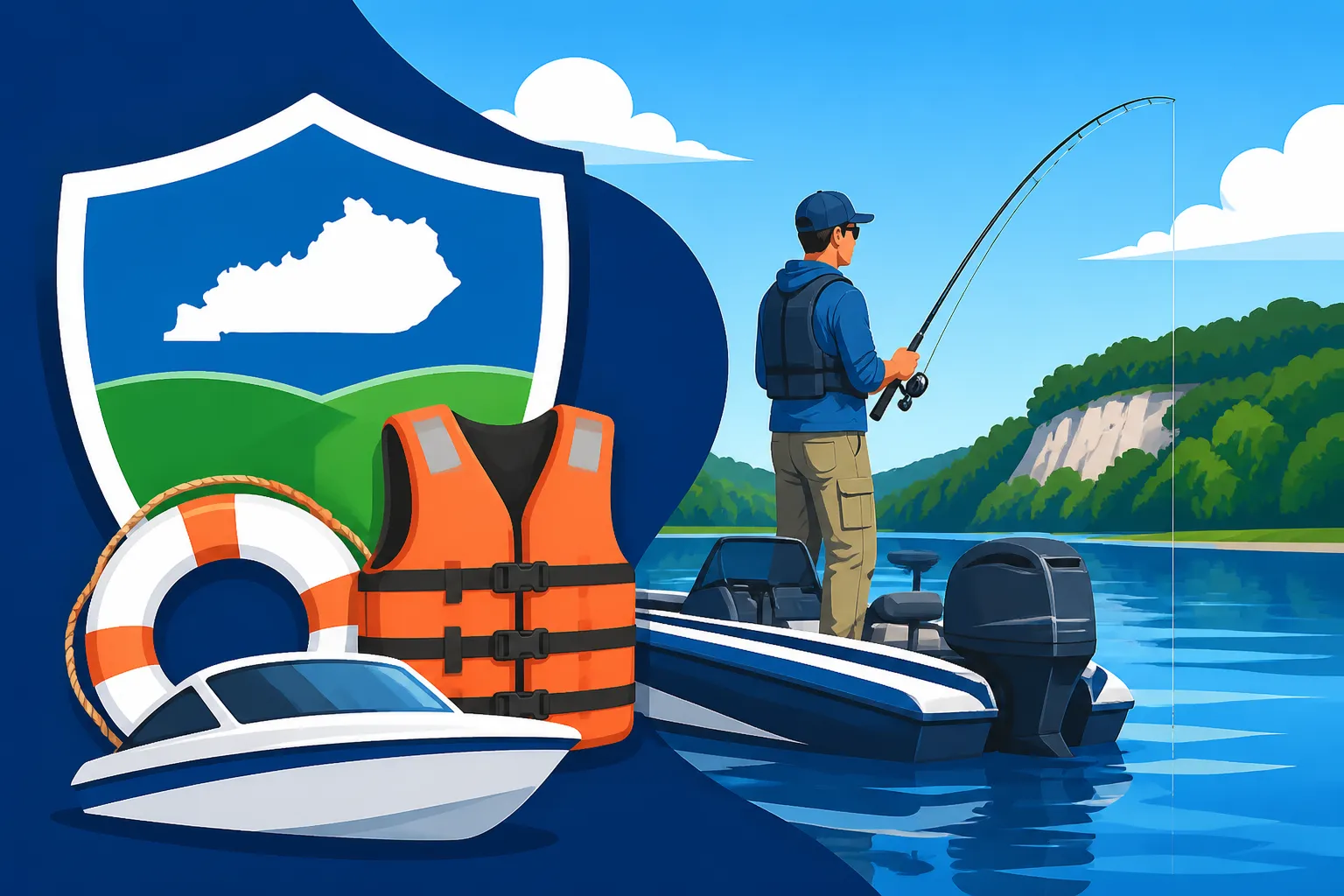
Perhaps the most critical piece of safety equipment on any boat is the life jacket, or Personal Flotation Device (PFD). It’s not just a legal requirement; it’s a potential lifesaver. In Kentucky, there are specific rules for children: Kentucky Life Jacket Law for Kids Under 12 requires all children 12 years of age and younger to wear a U.S. Coast Guard-approved PFD while on the open deck of a moving vessel. But honestly, why stop there? For adults, while it’s not always required to wear one, having enough PFDs for every single person on board and ensuring they are easily accessible and in good condition is non-negotiable.
Choosing the right PFD is important. They come in various types and sizes, designed for different activities. A PFD for waterskiing will be different from one for recreational boating or fishing. Make sure everyone has a properly fitting, Coast Guard-approved life jacket. You can find a fantastic selection of PFDs at stores like Bass Pro Shops, or even online through retailers like Amazon, ensuring you get quality and compliance. Don't cheap out on safety; a good life jacket can be the difference between a scary moment and a tragedy. And please, wear it! It's much harder to put on a life jacket when you're already in the water struggling.
Essential Onboard Safety Equipment
Beyond life jackets, several other items are legally required or highly recommended to have on board for safe operation and to be prepared for various scenarios. These aren't just arbitrary rules; each piece of equipment serves a vital purpose in preventing accidents or responding to emergencies.
- Fire Extinguishers: Any boat with an enclosed engine compartment or fixed fuel tank typically requires a U.S. Coast Guard-approved fire extinguisher. Even smaller boats without these features can benefit from having one. You never know when an electrical short or a spilled fuel might ignite, and having a functioning extinguisher can prevent a small spark from becoming a disaster. For specific requirements, see Fire Extinguisher Requirements for Kentucky Boats With Enclosed Engines.
- Sound-Producing Devices: Whistles, air horns, or other sound-producing devices are crucial for signaling other vessels, especially in fog or low visibility. They can also be used to signal for help.
- Visual Distress Signals (VDS): While not always mandatory for recreational boats under a certain size on inland waters, having a VDS (like flares, a distress flag, or an electronic signal) is smart for any substantial trip. If you break down on a large lake like Lake Cumberland, a VDS can help rescuers find you.
- Navigation Lights: If you plan to operate your boat between sunset and sunrise, or during periods of restricted visibility, proper navigation lights are absolutely mandatory. These lights indicate your vessel's position and direction to other boaters, preventing collisions in the dark.
Having these items on board, and knowing how to use them, shows true seamanship. It's about being proactive and responsible, not just reactive when a problem arises.
Safe Boating Practices and Environmental Responsibility
Ultimately, the certificate and required equipment are tools to support safe boating, but it’s your practices that make the real difference. Safe boating is a continuous commitment to vigilance, common sense, and respecting both the water and other users.
- Sober Boating: Just like driving, operating a boat under the influence of alcohol or drugs is illegal and incredibly dangerous. Alcohol impairs judgment, slows reaction time, and diminishes your ability to operate safely. Boating Under the Influence (BUI) carries severe penalties and, more importantly, puts lives at risk.
- Maintaining Safe Speeds: Always operate at a safe speed for the conditions. This means considering visibility, traffic density, and proximity to shore or other hazards. A slow wake zone isn't just a suggestion; it's a safety and courtesy requirement.
- Weather Awareness: The weather can change rapidly on Kentucky's large lakes and rivers. Always check the forecast before heading out, and be prepared to cut your trip short if conditions deteriorate. A clear sky can quickly turn into a thunderstorm, bringing high winds and dangerous waves.
- Respecting Wildlife and Environment: Be mindful of local wildlife, especially in nesting areas. Avoid littering—pack out everything you pack in. Proper disposal of fishing line, bait containers, and other refuse protects our beautiful Kentucky waters for everyone.
By embracing these practices, you're not just complying with regulations; you're contributing to a positive, safe, and enjoyable experience for yourself, your passengers, and the entire boating community.
Penalties for Non-Compliance and Enforcement
No one wants to encounter a game warden or law enforcement officer on the water for a violation, especially one that could have been easily avoided. Understanding the penalties for not complying with boating safety certificate requirements is crucial, not just to avoid fines, but to grasp the seriousness of the regulations.
What Happens if You're Caught Without a Certificate?
If you're operating a motorized vessel in Kentucky and you're required to have a boating safety certificate (i.e., you were born on or after January 1, 1975) but you don't have one, you could face consequences. Typically, getting caught without the required certificate is considered a violation, which can lead to fines. These aren't usually small, "slap on the wrist" tickets; they can be substantial and, depending on the circumstances, may even require a court appearance.
Game wardens and other law enforcement agencies patrol Kentucky's waterways specifically to ensure compliance with all boating and fishing regulations. They have the authority to stop your vessel and request to see your documentation, including your boating safety certificate. Imagine being out on a beautiful day, enjoying the fishing on Barren River Lake, only to have your trip interrupted by a stop that results in a costly citation simply because you hadn't taken the necessary steps to get certified. It’s a completely avoidable situation that can put a serious damper on your day. Just like fishing without a license carries penalties, operating a boat without the proper certification can too. You can learn more about general enforcement in Kentucky Game Warden Checks: What to Have on Hand.
The Importance of Carrying Proof
Having your certificate is one thing, but being able to prove you have it when asked is another. Just like with a driver's license or fishing license, you need to have a physical or digital copy of your Kentucky Boating Safety Certificate with you while operating a vessel.
A physical card or printout is always a reliable option. Many people laminate their cards to protect them from water damage. Alternatively, a digital copy stored on your smartphone or another device can also serve as proof, as long as it's readily accessible and legible. The key is that if a law enforcement officer asks to see it, you must be able to present it immediately. Don't keep it buried at the bottom of a tackle box or in a file cabinet back home. Keep it in a waterproof container, perhaps with your Kentucky Fishing License Guide and other essential documents, where it's easy to retrieve. Failing to provide proof can lead to the same penalties as not having the certificate at all, as the officer can't verify your compliance.
Broader Consequences: Accidents and Insurance
Beyond the immediate fines and legal headaches, operating a boat without the required safety certificate can have far more serious implications, especially in the event of an accident. If you're involved in a collision or other boating incident and you don't possess the necessary certification, it could significantly impact your liability.
Courts might view your lack of certification as negligence, potentially holding you more responsible for damages or injuries. This could lead to substantial financial repercussions. Furthermore, your boat insurance policy could be affected. Many insurance companies have clauses that require operators to comply with all state and federal boating laws. If you're found to be operating illegally due to a lack of a certificate, your insurance company might deny coverage for damages or medical claims, leaving you personally responsible for potentially massive costs. It's a risk simply not worth taking. The certificate isn't just a piece of paper; it's a layer of protection for yourself, your passengers, and your financial well-being.
Preparing for Your Boating Trip: A Safety Checklist
Even after getting your certificate, true confidence and safety on the water come from thorough preparation before every trip. It's not just about the rules; it’s about anticipating challenges and minimizing risks. A little planning goes a long way, whether you're heading out for some serious bass fishing or a leisurely cruise.
Pre-Departure Vessel Check
Before you even think about leaving the dock, pier, or boat ramp, conduct a thorough check of your vessel. This routine inspection can catch small issues before they become big problems out on the water. It’s like a pilot’s pre-flight check, but for your boat!
- Fuel Levels: Always ensure you have enough fuel for your intended trip, plus a reserve. Running out of gas miles from shore is an avoidable, frustrating, and potentially dangerous situation.
- Engine and Battery: Check your engine's oil, fluid levels, and belts. Make sure your battery is fully charged and connections are secure. A dead battery or sputtering engine can quickly ruin a day on the water.
- Lights: Test all navigation lights and any interior or accessory lights, especially if there's any chance you'll be out after dark.
- Drain Plugs: This sounds basic, but it's a common oversight! Ensure the drain plug is securely in place before launching to prevent your boat from taking on water.
- Safety Gear: Confirm all required safety equipment is on board, in good working order, and easily accessible. This includes PFDs for everyone, fire extinguishers, sound devices, and visual distress signals.
- Steering and Throttle: Briefly test your steering and throttle controls to make sure they're functioning smoothly.
Taking just 10-15 minutes for this checklist can save you hours of trouble, or even prevent an emergency. It's a habit every responsible boater should adopt.
Passenger Briefing and Float Plan
Once your boat is ready, take a few minutes to brief your passengers, especially if they are new to boating or haven't been on your specific vessel before. This helps them understand what to do in case of an emergency and contributes to overall safety.
- Passenger Briefing: Show everyone where the life jackets are and how to put them on. Point out the fire extinguisher, first aid kit, and any other emergency equipment. Explain basic safety rules, like where to sit, keeping hands and feet inside the boat, and what to do if someone falls overboard. Let them know what to do if you (the operator) become incapacitated.
- Float Plan: Before embarking on any significant trip, especially to a less-traveled area or if you'll be out for an extended period, leave a float plan with a trusted contact on shore. A float plan is a document that tells someone where you're going, your planned route, your estimated departure and return times, the number of people on board, and descriptions of your vessel. If you don't return as planned, this information can be vital for search and rescue efforts. It’s a simple step that provides an invaluable safety net.
Weather Awareness and Trip Planning
Mother Nature calls the shots on the water, and being prepared for her moods is paramount. Good trip planning involves not just knowing where you're going, but also what the weather might do.
- Check the Forecast: Always check the marine weather forecast before you leave. Pay attention to wind speeds, wave heights, and any advisories for thunderstorms or severe weather. Don't just look at the general weather; look for marine-specific forecasts.
- Monitor Conditions: Even after you've launched, keep an eye on the sky and listen for weather updates on a marine radio or your phone. Conditions can change quickly, especially in Kentucky's spring and summer months.
- Have a Plan B: If the weather looks iffy, have a backup plan. This might mean rescheduling your trip, choosing a more sheltered body of water, or cutting your day short. No fish or scenic view is worth risking your safety. Know your limits and the limits of your vessel in challenging conditions.
By taking these proactive steps, you're not just adhering to regulations; you're building a culture of safety that will make every boating adventure more enjoyable and worry-free.
Disclaimer
This article is for general informational purposes only and does not constitute professional advice. Laws, prices and regulations vary by location and change over time. Consult a qualified professional for guidance on your specific situation.