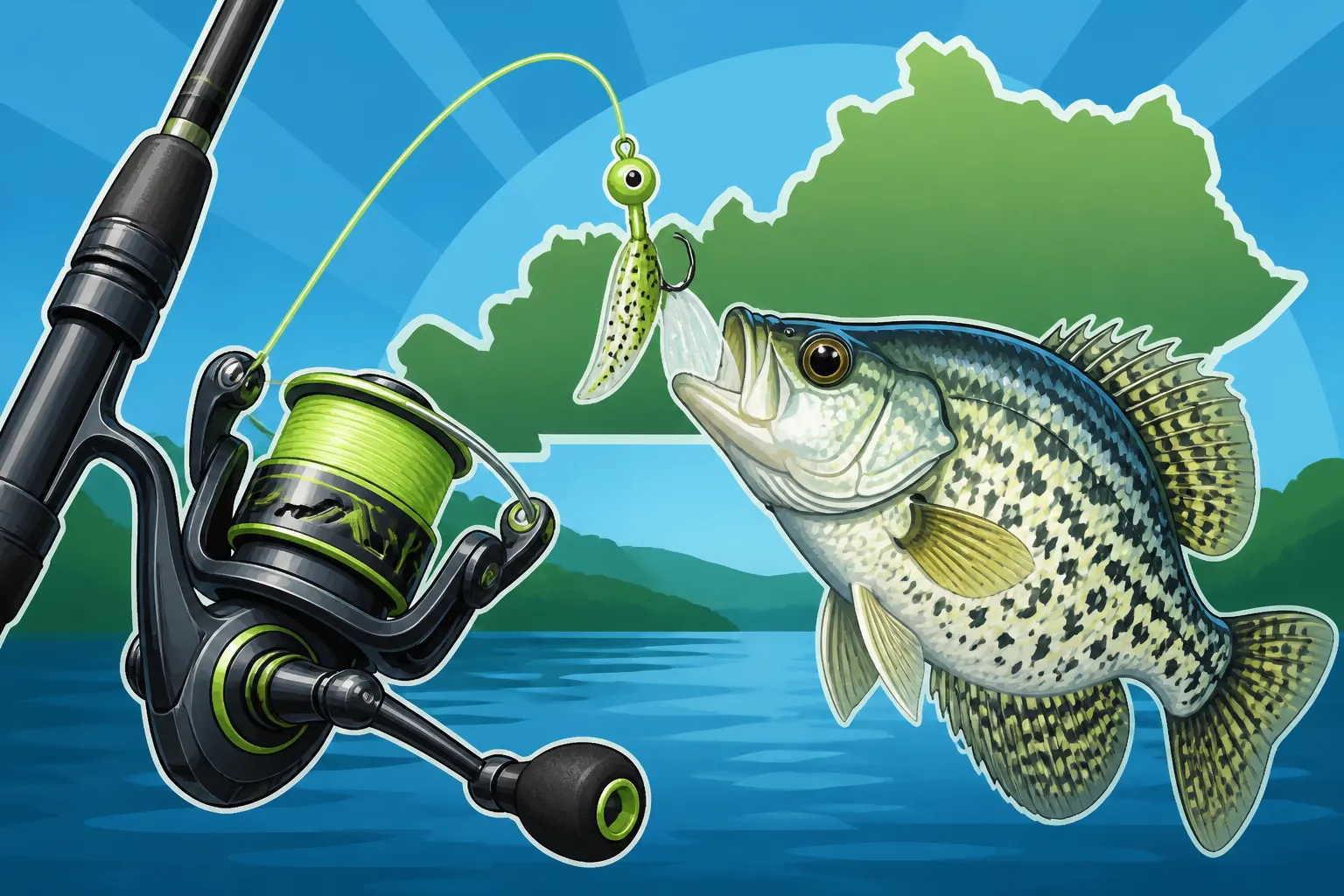
Best Reels for Crappie Fishing on Big Lakes
For any angler who loves the thrill of a crappie bite on Kentucky's sprawling reservoirs like Kentucky Lake or Lake Barkley, you know the struggle: you're out there, the fish are biting, but your reel just isn't cutting it. Whether it's balky casting, a drag system that lets big slabs run wild, or just a general feeling of unreliability, a sub-par reel can turn a great day into a frustrating one. This guide will walk you through the best reels for crappie fishing on big lakes, helping you choose equipment that can truly handle the challenge.
Understanding the Demands of Big Lake Crappie Fishing
Fishing for crappie on big lakes isn't quite the same as pulling them out of a farm pond. On vast bodies of water like Lake Cumberland or even the expansive Ohio River, you're often dealing with deeper water, longer casts, and sometimes a bit more wind. The crappie themselves might be larger, more powerful fish due to the abundant forage. This means your reel needs to be up to the task – capable of handling longer fights, precise presentations, and the general wear and tear of big water angling.
Longer Casts and Deeper Water Presentations
When you're out on a large lake, crappie might be holding in brush piles far from the boat, suspended over deep channels, or hugging a drop-off a good distance from shore. A reel that can effortlessly send a light jig or a minnow-rigged bobber exactly where you need it, and do so repeatedly, is invaluable. Similarly, when targeting crappie suspended at 15-20 feet over 40 feet of water, the reel's retrieve speed and line capacity play a role. You need something that feels smooth and controlled, whether you're making a long pitch or dropping straight down.
Imagine you're spider rigging on Lake Barkley, with multiple rods fanning out from the boat. Each reel needs to be consistent, allowing for precise depth control and smooth line release when a fish hits. Or maybe you're casting a small jig to a visible laydown on the edge of a channel on Taylorsville Lake; a reel that casts like a dream means more time in the strike zone and less time wrestling with tangles. This is where the right reel truly makes a difference in your catch rate and overall enjoyment.
Fighting Larger, Stronger Crappie
While crappie are known for their delicate bite, the ones found in Kentucky's larger lakes can grow to impressive sizes. A 2-pound slab crappie, especially a black crappie, can put up a surprisingly strong fight, darting into cover or making strong runs. Your reel's drag system becomes paramount here. A smooth, consistent drag is critical to preventing line breaks and lost fish. If the drag sticks or is jerky, even a modest crappie can snap light line when it makes a sudden surge.
Think about hooking into a monster crappie near a submerged tree on Green River Lake. If your drag isn't butter-smooth, that fish will pull free or break you off in the branches. You need to be able to apply just enough pressure to turn its head without snapping your 4-6 pound test line. This balance is what separates a good crappie reel from a frustrating one. The reel should also be built with durable components that can withstand the constant cranking and reeling that comes with a productive crappie bite.
Spinning Reels: The All-Around Workhorse for Crappie
For most crappie anglers, especially those tackling big lakes, the spinning reel is the undisputed champion. It’s versatile, relatively easy to use, and incredibly effective for presenting the light baits and lines typically used for crappie. The design inherently minimizes line twist and allows for excellent casting distance with small lures.
Ease of Use and Versatility
Spinning reels are generally the easiest type of reel to learn and master, making them a fantastic choice for both seasoned anglers and those just getting into crappie fishing. The open-faced design allows for simple line management, and the bail system makes casting intuitive. You simply open the bail, hold the line, cast, and then close the bail to start your retrieve. This simplicity means you can focus more on finding the fish and less on fighting your gear.
Their versatility is another huge plus. Spinning reels can handle a wide range of crappie fishing techniques, from casting small jigs and minnows under a bobber to vertical jigging over brush piles. Whether you're casting from the bank of Barren River Lake or drifting across a wide flat on Kentucky Lake, a spinning reel will adapt. They pair well with lighter action rods, creating a balanced setup that makes even the lightest crappie bite detectable. Many anglers, myself included, have several spinning combos rigged for different situations, from ultra-light setups for spooky fish to slightly heavier ones for punching through thick cover.
Key Features for Crappie Spinning Reels
When choosing a spinning reel for crappie on big lakes, there are a few key features to keep an eye on. These will directly impact your success and enjoyment on the water.
Size and Weight Considerations
For crappie, you'll generally want a smaller, lighter spinning reel. Sizes typically range from 500 to 2000 (or sometimes 05 to 20), with a 1000 or 1500 series being a fantastic sweet spot for balance and performance. A smaller reel means less weight, which translates to less fatigue during a long day of casting and more sensitivity to feel those subtle crappie bites. You want a reel that balances perfectly with your crappie rod, usually a light or ultra-light action rod, to create a comfortable and effective fishing tool.
Imagine holding an unbalanced setup for hours while slow-trolling for crappie on Lake Barkley; your wrist will be screaming. A lightweight reel, like something you'd find from brands sold at Bass Pro Shops, paired with a sensitive rod, becomes an extension of your arm, letting you detect the slightest tap.
Smooth Drag System
We touched on this earlier, but it truly bears repeating: a smooth, consistent drag system is non-negotiable for crappie. You'll be using light monofilament or fluorocarbon lines, typically 4 to 6-pound test, which don't have a lot of breaking strength. When a large crappie makes a sudden dive, a jerky drag will cause your line to snap instantly. A quality drag will allow line to peel off smoothly and evenly under pressure, absorbing the shock of the fish's runs and protecting your line.
Test the drag when you're looking at reels. Pull line off the spool by hand; it should come off without hesitation, jerking, or grinding. This ensures that when that 2-pound slab makes its last ditch effort to escape, your reel's drag will handle it gracefully, increasing your chances of landing it. Look for reels that feature multi-disc drag systems, as these tend to offer superior smoothness and consistency.
Gear Ratio and Retrieve Speed
The gear ratio tells you how many times the spool rotates for every single turn of the handle. For crappie, a mid-range gear ratio, something around 5.0:1 to 6.2:1, is often ideal. This provides a good balance between power for retrieving fish and speed for working baits. A higher gear ratio (e.g., 6.2:1) means faster line retrieve, which can be useful for quickly bringing in slack line or rapidly moving between fishing spots. A lower ratio (e.g., 5.2:1) offers more cranking power, which might be helpful if you're pulling in heavier rigs or fighting a particularly large fish.
Most crappie fishing doesn't require extreme speed or power, so a versatile middle-ground gear ratio will serve you well for most situations on Kentucky's big lakes. What's more important than an extreme ratio is a consistent, reliable retrieve.
Spincast Reels: Simplicity for Certain Situations
While spinning reels dominate, spincast reels do have a place, particularly for beginners, younger anglers, or those who simply prefer their straightforward operation. They are extremely easy to cast and virtually eliminate backlash, which can be a major frustration for new anglers.
The Appeal of Simplicity
The main draw of a spincast reel is its incredible ease of use. With a push-button release for casting and a closed face that protects the line, spincast reels are wonderfully user-friendly. There's almost no learning curve. You press the button, cast, and release the button. It's that simple. This makes them perfect for introducing kids to fishing, or for anglers who prefer not to deal with the nuances of an open-faced spinning reel.
For a casual crappie trip on a smaller boat or from a fixed dock, a spincast reel can be a perfectly adequate choice. They are robust and can handle a lot of knocks, making them a good option for rough-and-tumble use.
Limitations for Big Lake Angling
However, when it comes to serious crappie fishing on big lakes, spincast reels often fall short. Their primary limitations include casting distance, line capacity, and drag performance.
Limited Casting Distance and Line Control
The closed-face design and typically smaller spools of spincast reels mean they don't cast as far or as smoothly as spinning reels, especially with lightweight crappie jigs. The line comes off the spool through a small hole, creating more friction and limiting how far your lure can fly. On a large lake where crappie might be holding 40-50 feet away, this can be a significant disadvantage.
Furthermore, line control can be an issue. The push-button mechanism doesn't offer the same level of finesse as feathering the line on a spinning reel spool, which is crucial for precise presentations and managing delicate baits in windy conditions. If you're trying to make a soft landing with a tiny jig near a dock on Herrington Lake, a spincast might drop it with a splash rather than a gentle plop.
Reduced Drag Performance and Durability
While spincast reels have drag systems, they are often not as smooth or as finely adjustable as those found on quality spinning reels. This can be a real problem when fighting larger crappie on light line. A sudden surge can easily overpower a lesser drag, leading to snapped lines or pulled hooks. Their internal components also tend to be less durable than those of higher-end spinning reels, meaning they might wear out faster under consistent use.
For serious anglers targeting trophy crappie or fishing frequently on vast waters, the limitations of a spincast reel often outweigh its ease of use. While you can certainly catch crappie with one, you might find yourself wishing for better performance when a big one is on the line.
Baitcasting Reels: A Niche Choice for Crappie
Baitcasting reels are powerful, precise tools, but they are rarely the first choice for crappie fishing. Their design is geared towards heavier lines and lures, requiring more skill to cast. While some specialized techniques might incorporate them, they aren't the go-to for most crappie enthusiasts.
Why They're Less Common for Crappie
Baitcasting reels excel at casting heavier lures accurately and fighting big, strong fish. This makes them perfect for bass fishing with a heavy jig or a crankbait, but not so much for a 1/16 oz crappie jig.
Heavier Line and Lure Requirements
The fundamental design of a baitcasting reel means it performs best with heavier lines (8-pound test and up) and lures that have enough weight to pull the line off the free-spooling reel. Crappie fishing typically involves ultra-light jigs, tiny spoons, or small minnows, often weighing less than 1/8 ounce. Trying to cast these light presentations with a baitcaster is incredibly challenging and often results in frustrating backlashes (a tangled mess of line on the spool).
Furthermore, the rods paired with baitcasting reels are generally stiffer and have heavier actions, which greatly reduces the sensitivity needed to detect a crappie's notoriously light bite. You'd struggle to feel the subtle 'thump' of a crappie inhaling a jig if you're using a medium-heavy bass rod and baitcaster setup.
Steep Learning Curve
Baitcasting reels also have a much steeper learning curve than spinning or spincast reels. Mastering the thumb control necessary to prevent backlashes takes practice, often leading to frustrating tangles for beginners. For crappie anglers who want to focus on technique and fish location, adding the complexity of a baitcaster simply isn't worth it for the vast majority of situations.
When a Baitcaster Might Be Considered
There are very specific, niche scenarios where a baitcaster might make sense for crappie, though they are rare.
Heavy Cover or Larger Baits
If you're targeting giant crappie in extremely heavy cover where you need to muscle them out quickly, or if you're using unusually large crappie baits (like big swimbaits or larger minnows) specifically to tempt trophy-sized fish, a light baitcasting setup could be considered. This would involve a finesse baitcasting reel and a light action baitcasting rod, which is a specialized setup not commonly found. This scenario is far from the typical crappie fishing experience on most Kentucky lakes. Most anglers would still opt for a slightly heavier spinning setup for this kind of work, as it offers more versatility with lighter presentations.
Essential Reel Features to Prioritize
Now that we've looked at the types of reels, let's dive into the core features that any crappie reel needs, regardless of type, especially for big lake fishing.
Bearings and Smoothness
The number and quality of ball bearings in a reel directly impact its smoothness and overall performance. More bearings generally mean a smoother retrieve and longer casting distance, but quality trumps quantity. A reel with 4-6 high-quality stainless steel bearings will outperform a reel with 10 cheaper, lower-quality bearings.
When you crank the handle, the reel should feel fluid, without any grinding, wobble, or stiffness. This smoothness not only makes fishing more enjoyable but also helps you detect those subtle crappie bites. A reel that feels like it's fighting you on the retrieve can mask important feedback from your line. Many reputable brands offer excellent reels with a solid bearing count in the range of 5-7+1 (meaning 5-7 ball bearings plus one anti-reverse roller bearing) which is ideal for crappie. You can often find great options on platforms like Amazon or at your local Bass Pro Shops.
Reel Body Material and Durability
Crappie fishing, particularly on big lakes, can be hard on gear. Your reel will be exposed to sun, water, and occasional knocks against the boat or bank. The material of the reel body affects its weight, strength, and corrosion resistance.
Graphite vs Aluminum
- Graphite: Generally lighter and more corrosion-resistant, but can be less rigid than aluminum, especially under heavy loads. For crappie, where heavy loads are rare, a quality graphite body is perfectly sufficient and often preferred for its weight savings.
- Aluminum: Heavier and more rigid, offering greater strength and durability. Some higher-end crappie reels might use aluminum or a combination of materials for critical components to enhance their lifespan and performance.
For most crappie setups, a lightweight graphite body is an excellent choice, offering a comfortable feel for long fishing sessions without sacrificing necessary strength. Always consider saltwater-rated reels if you ever plan to venture into brackish waters, but for Kentucky's freshwater lakes, corrosion resistance is still important for longevity.
Spool Design and Line Management
The spool is where your line lives, and its design significantly impacts casting performance and line life.
Line Capacity
For crappie, you won't need an enormous line capacity, as you're typically using light line (4-6 lb test) and crappie don't make incredibly long runs. However, having enough line to make long casts and still have a good reserve is important. Most 1000-2000 size spinning reels will have more than enough capacity for crappie lines.
Spool Lip Design
A well-designed spool lip, often beveled or angled, helps the line peel off smoothly with minimal friction during casting, which translates to longer, more accurate casts. This is particularly noticeable when trying to cast tiny jigs.
Line Roller
The line roller on a spinning reel prevents line twist and ensures the line lays evenly back onto the spool. A high-quality, smooth-running line roller with a bearing is critical for preventing kinks and twists in your light crappie line. A poorly designed roller can wreak havoc on your line, causing tangles and reducing its strength.
Recommended Reel Sizes and Pairings for Big Lake Crappie
Choosing the right size reel and pairing it correctly with your rod is crucial for a balanced, sensitive, and effective crappie setup.
Optimal Reel Sizes for Spinning
For spinning reels, which we've established as the top choice for big lake crappie, consider the following sizes:
- 500 Size: Ultra-light, extremely sensitive. Best for very small baits, ultra-light lines (2-4 lb), and situations where maximum sensitivity and lightness are paramount. Great for vertical jigging or very short, precise casts.
- 1000 Size: The sweet spot for most crappie fishing on big lakes. Excellent balance of lightness, line capacity, and casting performance for 4-6 lb line. This is the go-to size for casting jigs, fishing minnows, and spider rigging.
- 2000 Size: A slightly larger option that offers a bit more line capacity and potentially a slightly beefier drag. Still light enough for crappie but can handle slightly heavier lines (6-8 lb) if needed, or if you're targeting larger crappie or frequently fishing in areas with heavier cover. This size might also be preferred for longer crappie rods, like those used for dock shooting or long-lining.
Here's a quick comparison of common reel types for crappie fishing:
| Reel Type | Ease of Use | Casting Distance (Light Lures) | Drag Smoothness | Best for Crappie on Big Lakes | Typical Line Size (lb) |
|---|---|---|---|---|---|
| Spinning | Easy | Excellent | Excellent | Yes | 4-6 (up to 8) |
| Spincast | Very Easy | Fair to Good | Fair | Limited, best for beginners | 6-10 |
| Baitcasting | Difficult | Poor (with light lures) | Excellent | No (niche applications only) | 8+ |
Rod and Line Pairing
The reel is only half of the equation; pairing it with the right rod and line completes your crappie fishing system.
Rod Action and Power
For crappie, you'll generally want a light or ultra-light power rod, with a fast or extra-fast action.
- Power refers to the rod's lifting strength. Light or ultra-light power means the rod is designed for small fish and light lines.
- Action refers to where the rod bends. Fast action means the rod bends mostly in the tip, providing excellent sensitivity and quick hook sets, which is perfect for crappie's light bite.
A 6-foot to 7-foot, light or ultra-light power, fast action spinning rod is a fantastic all-around choice for big lake crappie. For specialized techniques like spider rigging or dock shooting, you might go with longer, more specialized rods, but the principles of light power and sensitive action remain. Need more information on rods? You can find a lot of great advice on Best Rods and Reels for Kentucky Crappie Fishing.
Line Type and Strength
- Monofilament: A classic choice for crappie. It's affordable, has some stretch (which can be forgiving on light lines), and is easy to tie knots with. Stick to 4-6 pound test for most applications.
- Fluorocarbon: Less stretch than mono, excellent abrasion resistance, and nearly invisible underwater. A good choice for clear water or when you need a little more sensitivity. Can be a bit pricier.
- Braided Line (with fluorocarbon leader): Offers maximum sensitivity and incredible strength-to-diameter ratio. However, braided line is highly visible, so it's usually paired with a few feet of fluorocarbon or monofilament leader at the business end. This setup is excellent for deep water jigging where sensitivity is key. Learn more about optimal line choices in Best Fishing Line for Big Lake Bass which covers general big lake fishing.
The most common and effective setup for crappie on big Kentucky lakes would be a 1000-size spinning reel, spooled with 4-6 pound test monofilament or fluorocarbon, paired with a 6-foot, 6-inch light power, fast action spinning rod. This combination offers superb casting, sensitivity, and fighting power for the delicate crappie.
Maintenance and Care for Your Crappie Reel
Just like any piece of valuable fishing gear, your crappie reel needs a little love to perform its best and last for years. Proper maintenance can prevent issues like stiff retrieves, grinding gears, and unresponsive drags.
Post-Trip Cleaning
After every few trips, especially if you've been out in the rain or splashing water, it's a good idea to give your reel a quick clean.
Rinsing and Drying
Gently rinse your reel with fresh water to remove any dirt, mud, or lake residue. Avoid using a high-pressure hose, as this can force water into the internal components. A gentle stream from a garden hose or even a damp cloth is usually sufficient. Once rinsed, thoroughly dry the reel with a soft cloth. Pay special attention to crevices where water can sit and cause corrosion.
Ensure the reel is completely dry before storing it, especially if you plan to put it away for an extended period. This simple step goes a long way in preventing rust and ensuring smooth operation next time you hit the water.
Checking for Wear and Tear
While cleaning, take a moment to inspect your reel for any signs of wear. Check the line roller for any rough spots or corrosion that could damage your line. Inspect the bail arm for any bends or stiffness. Feel the handle for any looseness or wobble. Catching these issues early can prevent them from becoming bigger problems down the road. If you find a component that needs replacing, many spare parts can be ordered, or you can take it to a professional for repair.
Lubrication and Storage
Periodically, your reel will benefit from lubrication to keep its internal mechanisms running smoothly.
Oiling and Greasing Moving Parts
Refer to your reel's manual for specific lubrication points, but generally, a light oil for bearings and a dab of reel grease for gears will keep things purring. Don't overdo it; a little goes a long way. Excessive lubrication can attract dirt and actually hinder performance. A quick online search or a visit to a fishing tackle shop like Bass Pro Shops can also provide guidance on appropriate lubricants and application techniques.
Proper lubrication ensures that your reel continues to perform with that silky-smooth retrieve you rely on for feeling those subtle crappie bites. This is particularly important for drag washers, which can dry out and cause jerky performance if not occasionally cleaned and lightly greased with specialized drag grease.
Long-Term Storage Tips
When the crappie season winds down, or if you plan to store your reels for a few months, follow these tips:
- Loosen the Drag: Back off the drag knob completely to prevent the drag washers from compressing and sticking over time.
- Clean and Lubricate: Perform a thorough cleaning and lubrication.
- Store in a Dry Place: Keep your reels in a cool, dry place, away from direct sunlight or extreme temperature fluctuations.
- Use Reel Covers: Soft reel covers can protect against dust and scratches.
By taking these simple steps, your reels will be ready for action when the crappie start biting again on your favorite Kentucky lake. And knowing your gear is in top shape means one less thing to worry about on your next fishing adventure. If you're looking for more general maintenance tips, you might check out Best Tackle Box Setup for Bass and Crappie for ideas on keeping all your gear organized and ready.
Final Thoughts on Choosing Your Crappie Reel
The world of fishing reels can seem overwhelming, but for crappie fishing on Kentucky's big lakes, the choice largely boils down to a quality spinning reel in the 1000-2000 size range. Prioritize a smooth drag, a lightweight yet durable body, and excellent line management features. The goal is to have a reel that feels like an extension of your arm, allowing you to cast precisely, detect the lightest bites, and confidently fight those impressive slabs.
Remember, the best reel isn't always the most expensive one, but rather the one that perfectly suits your fishing style and the demands of the water you're fishing. Whether you're casting jigs into brush on Lake Barkley or dipping minnows over deep structure on Lake Cumberland, having the right reel will significantly enhance your experience and your catch rate. Happy fishing, and may your drag sing often!
Disclaimer
This article is for general informational purposes only and does not constitute professional advice. Laws, prices and regulations vary by location and change over time. Consult a qualified professional for guidance on your specific situation.