Best Ice Fishing Gear for Southern Lakes
So, you've heard whispers about ice fishing down here in Kentucky, right? Maybe you've seen those incredible photos from up north, bundled-up anglers pulling fish through a hole in what looks like solid glass. And then you look at our milder winters and think, "Is that even possible here?" The truth is, while we don't get the consistent deep freeze of Minnesota or Michigan, there are opportunities for safe and productive ice fishing on our southern lakes during those truly cold snaps. But you can't just wing it. This guide is all about helping you gear up smart for those rare, magical days when Kentucky lakes offer up hard water fishing.
The Unique Challenges of Southern Ice Fishing
Before we even talk about rods and reels, let's address the elephant in the room: ice fishing in Kentucky isn't like ice fishing in the Great Lakes region. Our winters are, shall we say, a bit less predictable, and that means our ice is often a lot less reliable. You can't approach it with the same casual attitude you might see up north; here, safety is absolutely paramount, and understanding the specific quirks of southern ice is your first, most important piece of gear.
Understanding Ice Formation in Kentucky
Unlike states where lakes might be locked up solid for months, Kentucky's ice fishing season is typically fleeting and localized. A few nights of hard freezing temperatures might put a skim on a small pond, but a sunny afternoon or a quick warm-up can turn that solid surface back into a dangerous slush in a hurry. This fickle nature means that constant vigilance and re-evaluation of conditions are non-negotiable. You’ll find that large, deep reservoirs like Kentucky Lake or Lake Cumberland rarely, if ever, form ice thick enough for safe access across their main bodies. Their sheer size, depth, and often constant current make widespread ice formation highly improbable. Instead, safe ice is usually limited to smaller, shallower ponds, private lakes, or the very back coves of larger impoundments where water is still and protected.
This inconsistency also means that ice thickness can vary dramatically even within a small area. What might be six inches of solid ice near the shore could quickly drop to two inches just a few feet out, especially over springs, inlets, or areas with submerged timber that can absorb heat. It's a landscape of constant change, and you need to be aware of how quickly conditions can shift. Always assume the ice is thinner than it looks, and never take anything for granted.
Safety First: The Golden Rule for Southern Ice
If there's one thing you take away from this guide, let it be this: safety isn't just a suggestion when ice fishing in Kentucky; it's the absolute rule. The unpredictable nature of our ice means you should never, ever venture out alone. Always bring a buddy, and make sure someone back home knows exactly where you are going and when you expect to return. This isn't being overly cautious; it's being smart.
Carrying proper safety equipment is also non-negotiable. This includes a spud bar to test ice thickness as you walk, a set of ice picks around your neck (for self-rescue if you do fall through), and a length of throwable rope. Dress in layers, including a flotation suit or a life vest worn over your outer layers, which can provide crucial insulation and buoyancy if the worst happens. Remember, even a quick dip in near-freezing water can lead to rapid hypothermia. While you’re thinking about essential safety measures, it’s worth reviewing broader guidelines, and some of the principles discussed in Essential Safety Gear for Every Boat in Kentucky can be adapted to your ice fishing preparations. Always prioritize your well-being above chasing a fish.
Essential Gear for Safe and Productive Southern Ice Fishing
Now that we've covered the critical safety aspects, let's dive into the fun stuff: the actual gear! Because our ice conditions are often more marginal, you'll want to prioritize portability and efficiency. You might not need the heaviest-duty equipment designed for permanent ice shacks, but you'll definitely need specialized tools to make the most of your limited time on the hard water.
Ice Augers: Manual vs. Power Options
When it comes to punching holes in the ice, you have a couple of main choices for an auger. For the typically thinner ice we encounter in Kentucky, a good old manual auger is often your best bet. They’re lighter to carry, require no fuel or batteries, and are significantly less expensive. If you're only planning a few holes in 4-6 inches of ice, a manual auger will get the job done efficiently without weighing you down or requiring extra gear.
However, if you anticipate thicker ice (which does happen in rare, extended cold snaps) or you plan to drill a lot of holes quickly to find active fish, a power auger can be a game-changer. Cordless electric augers, powered by rechargeable batteries, have become incredibly popular. They're quieter, don't emit fumes (great for enclosed shelters), and are much lighter than gas-powered models. They're an excellent compromise between power and portability for southern conditions. No matter what kind you choose, make sure your blades are always sharp; dull blades make for a miserable drilling experience. You can often find a good selection of augers at Bass Pro Shops, which is a great spot to compare different types and get advice from their knowledgeable staff.
Shelter and Seating: Staying Comfortable and Mobile
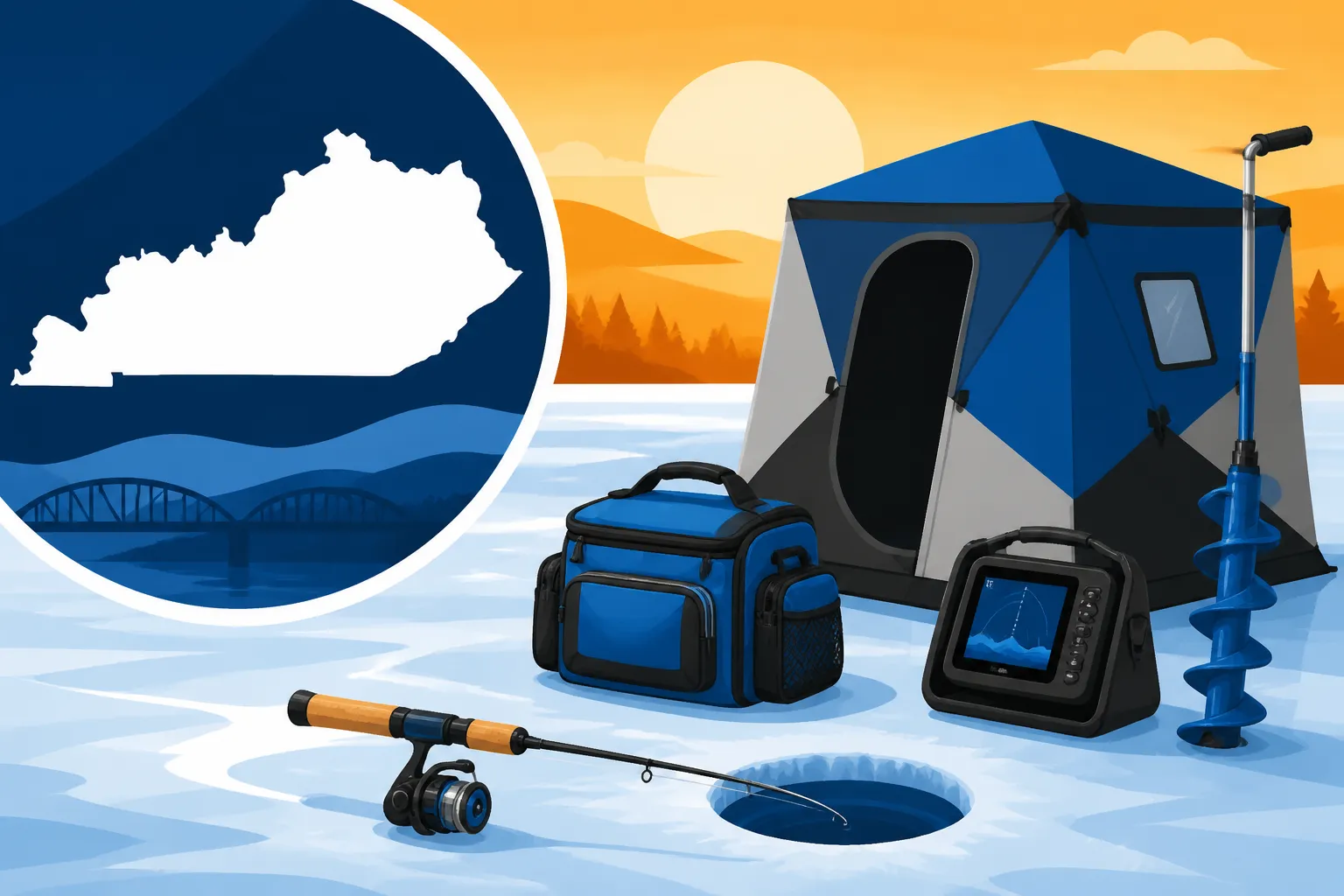
While you might envision a cozy, heated ice shack, the reality for southern ice fishing often leans more towards mobility. Portable shelters are perfect for our conditions. Flip-over shelters attach to a sled, making them easy to move from hole to hole, and they set up in seconds. Hub-style shelters are also popular, offering more space and easy setup, though they take a bit longer to move. Both types provide crucial protection from the biting wind and can make a huge difference in your comfort levels on those truly cold days. Many even come insulated, which can be a real luxury.
For seating, simplicity is key. A five-gallon bucket with a padded lid is a classic for a reason – it serves as a seat, storage, and even a livewell for your catch. Lightweight, folding ice fishing chairs are another excellent option, designed to be comfortable without adding unnecessary bulk. Remember, you might be moving around a lot, so whatever you bring should be easy to pack up and carry.
Ice Fishing Rods, Reels, and Line
Forget your usual bass or crappie setups; ice fishing requires specialized tackle. Ice fishing rods are much shorter, typically ranging from 24 to 36 inches, which makes them easier to handle in tight spaces like shelters and allows for precise jigging. They also have extremely sensitive tips to detect those subtle cold-water bites that feel like nothing more than a tiny tap or a slight slackening of the line.
Pair these rods with small, lightweight spinning reels, matching the reel size to the target species. For panfish, ultralight reels are perfect, while a slightly larger reel might be better if you're hoping for a winter bass or catfish. As for line, many anglers opt for light fluorocarbon lines (2-6 lb test) because of their low visibility and minimal stretch, which improves bite detection. Braided line can also be effective, especially with a fluorocarbon leader, but make sure to use a line conditioner to prevent it from freezing up on your spool. To ensure you're getting the right combination, check out articles like Best Rods and Reels for Kentucky Fishing for general guidance on selecting appropriate gear.
Safety Gear: Your Non-Negotiables
We can't emphasize this enough: proper safety gear is just as important, if not more important, than your fishing tackle. Beyond what we've already mentioned, let's break it down:
- Ice Picks: These are paramount. Worn around your neck, they provide grip on the ice if you fall in, allowing you to pull yourself out. They are literally a lifesaver.
- Spud Bar: This heavy metal bar is used to repeatedly strike the ice in front of you as you walk. If the bar goes through the ice with one or two strikes, the ice is likely unsafe. It's your first line of defense against thin ice.
- Throw Rope: A coil of rope (at least 50 feet) with a floatable bag is essential for rescuing a fishing buddy who falls through. Practice throwing it!
- Life Vest or Flotation Suit: Even if the ice holds, accidents happen. A life vest provides buoyancy and warmth if you end up in the water. Flotation suits are even better, offering full-body insulation and flotation. While not exactly the same, some principles about what constitutes a good personal flotation device are covered in resources like Life Jacket Requirements for Kids Under 12 in Kentucky, and they highlight the importance of proper fit and Coast Guard approval.
- First-Aid Kit: A basic kit for minor cuts, scrapes, or other injuries.
- Charged Cell Phone: For emergencies, kept in a waterproof bag.
- Whistle: To signal for help if you're in distress.
Don't skimp on these items. You can find reliable options at places like Amazon or your local sporting goods store. They're an investment in your well-being.
The Right Tackle and Techniques for Southern Species
Once you're safely set up on the ice, the next step is to actually catch some fish! While many species can be caught through the ice, certain ones are more common targets in southern waters. The key to success is often finesse, understanding how fish behave in cold water, and choosing the right baits and lures.
Targeting Panfish: Crappie and Bluegill
Panfish, especially crappie and bluegill, are often the primary targets for Kentucky ice anglers. Their smaller size and schooling behavior make them ideal for ice fishing. In cold water, fish metabolism slows down, so they're less likely to chase fast-moving baits. Finesse is key.
- Crappie: Look for crappie suspended over deeper structure like submerged brush piles, old creek channels, or near weed lines. Small jigging spoons, tiny tungsten jigs (often 1/32 to 1/16 oz) tipped with a single wax worm, spike, or a piece of crappie minnow are incredibly effective. A slow, subtle jigging action is usually best – just enough to make the bait quiver. You'll often find that the bite is incredibly light, sometimes just a slight "mushy" feeling or a tiny twitch in your rod tip. Pay close attention to your electronics! If you’re serious about crappie, don’t miss our guide on Best Crappie Jigs for Kentucky Waters.
- Bluegill: Bluegill often congregate in shallower areas, especially around green vegetation or the edges of drop-offs. Like crappie, they prefer small baits. Tear drop jigs, micro jigs, or small horizontal jigs tipped with a couple of spikes or a wax worm are deadly. Sometimes, a bare jig is all it takes. Often, they'll just inhale the bait, and your bobber will subtly lift or move sideways, rather than plunge down. For beginners or those introducing kids to ice fishing, bluegill are a fantastic target, and many of the tips in Bluegill Fishing Tips for Beginners can be adapted to ice.
Going for Bass and Catfish Through the Ice
While panfish are the main event, you can certainly hook into larger species if conditions are right and you scale up your gear.
- Bass (Largemouth and Smallmouth): Bass can be caught through the ice, though they are generally less active than in warmer months. Look for them holding tight to structure like stumps, logs, or rock piles. Larger jigging spoons, Rapala Jigging Raps, or even a live minnow fished under a bobber can entice a strike. The bites might still be subtle, but the fight will be a lot more robust! Make sure your drag is set properly, as these fish can pull hard even in cold water. You'll want to review general regulations like Kentucky Statewide Bass Size and Daily Limit Rules before keeping any bass.
- Catfish (Channel and Blue): Believe it or not, catfish can also be caught through the ice, especially in shallower backwaters where they might still be active. Set up on the bottom with cut bait, chicken liver, or shrimp. A slip bobber rig can also work, suspending your bait a foot or two off the bottom. Remember that catfish often have a generous daily limit in Kentucky, but it's always good to check Kentucky Catfish Daily Limit and Trophy Fish Rule for specific regulations. The cold water won’t stop them from biting if they are hungry. For specific bait suggestions, Best Bait for Channel Catfish Fishing offers excellent starting points.
Electronics: Fish Finders for Ice Fishing
A flasher unit or a portable fish finder is one of the most valuable tools an ice angler can have, especially in unfamiliar waters or when fish are finicky. These devices transmit a sonar signal that bounces off fish and the bottom, displaying them on a screen in real-time.
- Locating Fish: They help you quickly determine water depth, identify submerged structure, and, most importantly, pinpoint schools of fish. No more drilling holes blindly!
- Understanding Behavior: A flasher shows you your lure, the fish, and how the fish react to your presentation. You can see if a fish is approaching, ignoring, or rising to your bait, allowing you to adjust your jigging action or depth accordingly.
- Efficiency: When precious ice time is limited, a fish finder significantly increases your efficiency and reduces the amount of unproductive time spent over empty water. Many of the principles discussed in Fish Finders and Electronics for Kentucky Lake Fishing apply directly to ice fishing, just in a more compact, portable form.
Planning Your Southern Ice Fishing Adventure
Ice fishing in Kentucky is an exercise in preparation and seizing the moment. It requires careful planning, constant vigilance, and an understanding of where and when to find safe conditions. It's not a sport you can decide to do on a whim; it demands respect for the elements and the conditions.
Where to Find Safe Ice in Kentucky
As mentioned, widespread safe ice on Kentucky's major reservoirs is exceedingly rare. Your best bets for ice fishing opportunities will almost always be on smaller bodies of water.
- Farm Ponds and Private Lakes: These are often the first to freeze solid enough for safe ice. If you have permission from a landowner, these can offer some excellent, unpressured fishing. Always ensure you have explicit permission to access private land. Remember the distinction between License-Required Waters Versus Private Ponds. Even on private ponds, local regulations may still apply, especially if the pond connects to public waterways.
- Small Public Lakes: Many state parks and wildlife management areas have smaller lakes that freeze more consistently. These are often stocked and can provide great action. Always check with the Kentucky Department of Fish and Wildlife Resources (KDFWR) for specific rules and conditions on these public waters.
- Shallow Coves of Larger Lakes: On very rare occasions, during prolonged cold snaps, the extremely shallow, protected back coves of larger lakes might develop safe ice. However, exercise extreme caution in these areas, as currents or springs can quickly undermine ice stability. Always assume that the main lake is unsafe. Staying informed about regulations for specific bodies of water is key; review Kentucky Fishing Rules by Lake and Water before heading out.
Timing is Everything: When to Hit the Ice
The window for safe ice fishing in Kentucky is typically short and unpredictable, usually confined to the coldest parts of January and February.
- Extended Cold Snaps: Look for forecasts showing several consecutive days and nights with temperatures well below freezing (20s Fahrenheit or lower). This is what it takes to build up enough ice thickness.
- Lack of Sun and Wind: Clear, sunny days, even if cold, can weaken ice, as can strong winds that create waves and hinder freezing. Overcast, calm conditions are ideal for both ice formation and staying warm.
- Short Windows: Be prepared to go when the opportunity arises. Southern ice might only be safe for a few days, or even just a weekend, before a warm front moves in. Flexibility is key! To get a sense of what might be biting during these colder months, take a look at our general guide, Kentucky Fishing Seasons: What to Catch Each Month, and more specifically, What Fish Are Biting in Kentucky in February.
Preparing for a Successful Trip
Beyond the gear, there are a few other critical aspects of planning your southern ice fishing trip.
- Dress in Layers: This is crucial. You'll want to be able to add or shed clothing as conditions and your activity level change. Start with a moisture-wicking base layer, add insulating layers, and top it off with waterproof and windproof outer layers, ideally a flotation suit.
- Stay Hydrated and Fueled: Bring warm drinks in a thermos (coffee, hot chocolate, soup) and plenty of high-energy snacks. You burn more calories staying warm in cold weather.
- Know Before You Go: Check the weather forecast, ice conditions (if reported by reliable sources like local bait shops or KDFWR), and regulations for your chosen body of water.
- Pack Smart: Use a sled or a portable cooler with wheels to transport your gear across the ice, especially if you have a lot of equipment. Organize your tackle so you're not fumbling with cold fingers. While not strictly ice-specific, ideas for organizing your tackle can be found in Best Tackle Box Setup by Species.
- Tell Someone: Always let someone know your exact location and expected return time. This is a non-negotiable safety step.
- Respect the Resource: Pack out everything you pack in, including discarded fishing line and bait containers. Leave no trace.
Essential Ice Fishing Gear Overview
Here’s a quick overview of some of the essential gear categories for southern ice fishing:
| Gear Category | Key Items | Purpose | Southern Lakes Considerations |
|---|---|---|---|
| Safety Equipment | Spud bar, ice picks, throwable rope, life vest/flotation suit, first-aid kit, whistle | Personal safety, self-rescue, buddy rescue, emergency signaling | Absolutely critical due to unpredictable ice thickness. Never skimp. |
| Ice Access | Manual auger, cordless electric auger | Creating holes for fishing | Manual or lightweight electric preferred for typical thinner ice. |
| Shelter & Comfort | Portable flip-over or hub shelter, portable chair/bucket | Protection from wind/cold, comfortable seating | Mobility is key; quick setup/takedown. Insulated models are a bonus. |
| Fishing Tackle | Ice fishing rods (24-36"), small spinning reels, light line (2-6lb fluoro/braid), small jigs/spoons/minnows | Presenting baits to cold-water fish, detecting subtle bites | Finesse is paramount; sensitive rods and light line for panfish. |
| Electronics | Flasher unit, portable fish finder | Locating fish, identifying structure, observing fish reactions | Maximizes efficiency during short fishing windows. |
| Apparel | Layers (base, mid, outer), waterproof/windproof outer shell, insulated boots, warm hat, gloves | Staying warm and dry | Dress for fluctuating temperatures and potential wind chill. |
| Accessories | Sled for transport, thermos, snacks, headlight/lantern, pliers, bait bucket | Transporting gear, personal sustenance, visibility, tool access | Portability and practicality are important for mobile anglers. |
Remember, the goal is not just to catch fish, but to have a safe and enjoyable experience on Kentucky's unique frozen waters. Stores like Bass Pro Shops and Amazon often carry a wide range of these specialized ice fishing items, but don't hesitate to check local bait and tackle shops too, as they might have specific recommendations for your area.
Disclaimer
This article is for general informational purposes only and does not constitute professional advice. Laws, prices and regulations vary by location and change over time. Consult a qualified professional for guidance on your specific situation.