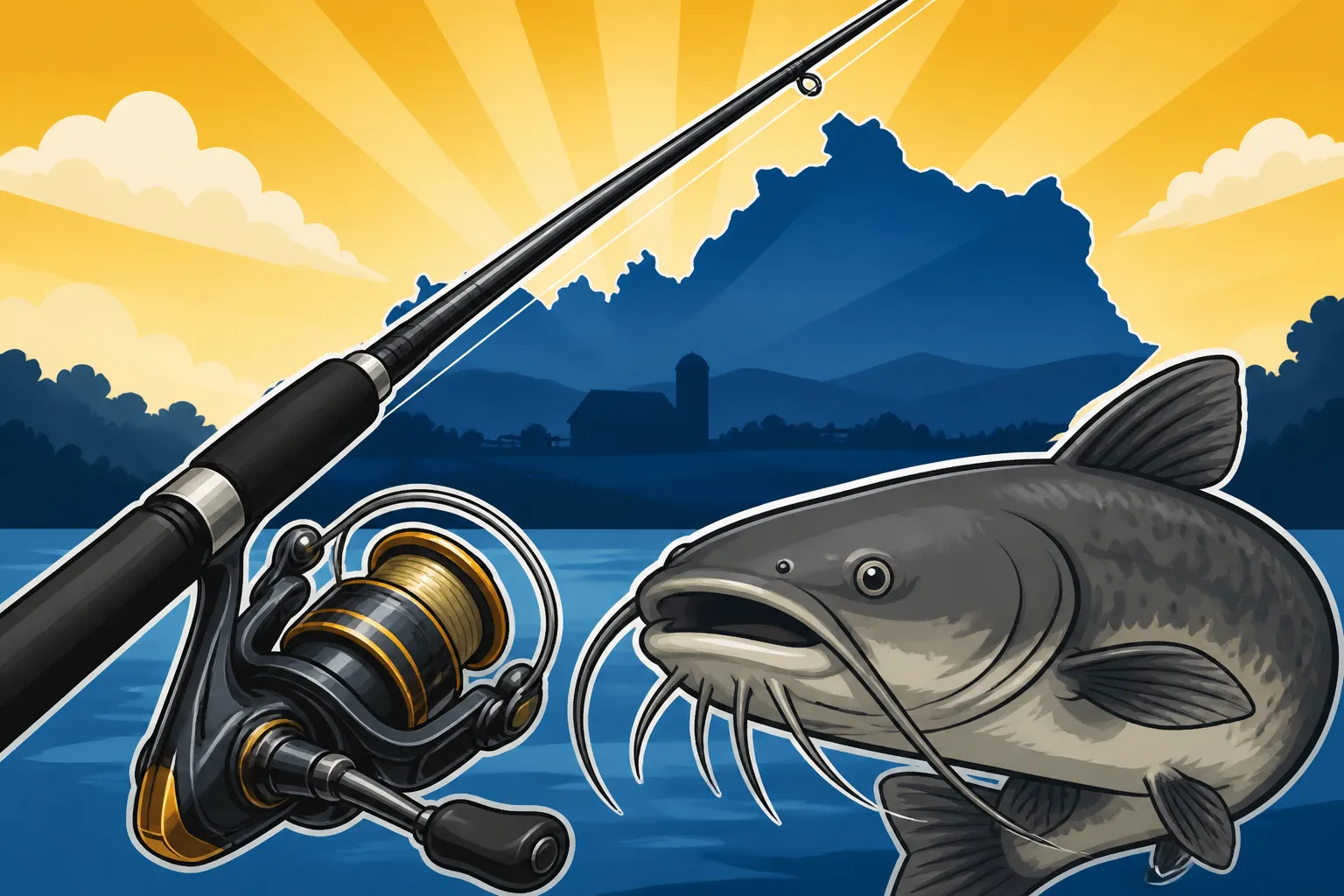
Best Rod and Reel Combo for Catfish Fishing
Finding the perfect rod and reel combo for catfish fishing can feel like a daunting task, especially when you're dreaming of wrestling those big blue cats out of the Ohio River or battling a feisty channel cat on Kentucky Lake. It's easy to get lost in a sea of options, wondering if you're getting the right balance of power, sensitivity, and durability without breaking the bank. This guide is here to cut through the confusion, helping you understand exactly what to look for so you can confidently choose a rod and reel setup that's ready to handle whatever the waters of Kentucky throw your way.
Understanding the Demands of Catfish Fishing Gear
Catfishing isn't your average panfish pursuit; it demands a different kind of tackle. These fish are powerful, often found in strong currents or heavy cover, and some species, particularly the blue and flathead catfish, can grow to truly enormous sizes. Your gear needs to be up to the challenge, not just for landing the fish, but for casting heavy baits and maintaining control once you've got a bite. Skimping on the right equipment can lead to frustration, lost fish, and even broken gear.
Imagine you're out on the mighty Ohio, your line weighted down with a big piece of cut bait, when suddenly your rod nearly gets ripped from your hands. That's a trophy cat taking hold! If your rod is too light or your reel's drag system can't handle the strain, that fish is going to take all your line, break off, or simply pull you into snags. It's a heartbreaking experience many anglers have faced, and it’s why understanding the specific demands of catfishing is crucial. We're talking about heavy-duty setups designed for serious pulling power and exceptional durability.
Beyond the sheer power of the fish, consider the environments you'll be fishing in. On lakes like Kentucky Lake or Lake Barkley, you might be casting long distances from shore or boat, requiring a different rod length. In rivers with strong currents, you'll be using heavier sinkers, which demands a rod with a robust backbone for casting without snapping. And when you're trying to pull a big flathead out of a submerged log pile, you need gear that won't buckle under pressure. It's a balance of strength, sensitivity to detect those subtle bites, and the ergonomic comfort to fish for hours on end.
Choosing the Right Catfish Rod: Power, Action, and Length
Your fishing rod is your direct connection to the fish, and for catfishing, its characteristics—power, action, and length—are paramount. These aren't just fancy terms; they dictate how well your rod casts, detects bites, and ultimately, fights a fish.
Rod Power: The Backbone of Your Catfish Setup
Rod power refers to the amount of force it takes to bend the rod. For catfishing, you'll generally want a medium-heavy (MH), heavy (H), or even extra-heavy (XH) power rod.
- Medium-Heavy Power: This is a fantastic all-around choice for channel catfish, smaller blues, and flatheads up to a decent size. It offers a good balance of sensitivity and pulling power, allowing you to feel smaller bites while still having the muscle to handle a twenty-pounder. If you're targeting catfish in ponds or smaller rivers, or if you prefer a bit more fight from the fish, an MH might be perfect.
- Heavy Power: When you start getting into the bigger blue and flathead catfish on the Ohio River, or larger Kentucky Lake specimens, a heavy power rod becomes essential. It provides the necessary backbone to cast heavy weights (like 4-6 ounce sinkers) and to truly put the hurt on a big fish, turning its head away from snags and bringing it to the boat or bank. This is often the sweet spot for serious trophy cat anglers.
- Extra-Heavy Power: Reserved for truly massive catfish, often fifty pounds and up, or when fishing in extremely heavy current or thick cover where you need maximum leverage. These rods are beasts, designed for brute force. While they might lack some sensitivity, they make up for it in sheer stopping power. If you're after Kentucky's Record Blue Catfish Weighed 106 Pounds 14 Ounces, you'll want an XH.
Rod Action: Detecting Bites and Setting Hooks
Rod action describes where the rod bends when pressure is applied.
- Fast Action: The rod bends mostly in the top third or less. This provides excellent sensitivity for detecting subtle bites, and a quick, powerful hook set. Many experienced catfishermen prefer fast action rods for their responsiveness.
- Moderate-Fast Action: The rod bends in the top half. This offers a good compromise between sensitivity and a more parabolic bend, which can be forgiving when fighting powerful fish that make sudden runs, helping to prevent hooks from pulling out.
- Moderate Action: The rod bends through the middle and into the butt section. While less common for dedicated catfishing, some anglers prefer the deep, shock-absorbing bend of a moderate action rod for larger, slower retrieves or when using circle hooks, which set themselves.
For most catfishing scenarios in Kentucky, a fast or moderate-fast action rod will serve you best. It gives you the feel for those tentative nibbles and the power to drive a hook home, especially when using larger hooks for larger fish.
Rod Length: Casting Distance and Leverage
Rod length impacts casting distance, leverage, and how easily you can maneuver your gear.
- 7 to 8 Feet: This is a popular range for versatile catfishing. A 7-foot rod is a good choice for general boat fishing or when space is limited on the bank. An 8-foot rod offers better casting distance, which is great for getting your bait out to those distant channels or humps from shore.
- 9 to 10+ Feet: For serious bank anglers on big waters like the Ohio River or the massive Kentucky Lake, longer rods (9-10 feet or even more) are a huge advantage. They allow for exceptionally long casts, crucial for reaching deeper holes or strong current breaks far from shore. They also provide more leverage to steer big fish away from snags once hooked.
When considering rod length, think about where you’ll primarily be fishing. If you're on a boat, a 7-8 foot rod is often perfectly adequate. If you're fishing from the bank of a large river, stretching for distance, a longer rod will make a significant difference.
Pairing Your Catfish Reel: Size, Drag, and Line Capacity
The reel is where the power meets the line, responsible for retrieving your bait, storing your line, and most importantly, fighting the fish through its drag system. For catfishing, you generally have two main types: spinning reels and baitcasting reels. Each has its pros and cons, and your choice will often come down to personal preference and the specific techniques you employ.
Spinning Reels vs. Baitcasting Reels for Catfish
Both types of reels can be effective for catfishing, but they cater to different fishing styles and preferences.
- Spinning Reels:
- Pros: Easier to cast, especially for beginners, and excellent for lighter presentations or live bait where a delicate cast is needed. They are often more versatile for different species.
- Cons: Generally have less brute cranking power than baitcasters of comparable size and can suffer from line twist with heavy line or repeated heavy pulls. Large catfish can put a lot of strain on spinning reels, potentially shortening their lifespan if not adequately sized.
- Ideal Use: Smaller channel cats, general multi-species angling, or for anglers who prefer ease of use. You'll want a large, robust spinning reel for catfishing, often in the 6000-8000 series or higher.
- Baitcasting Reels (Conventional Reels):
- Pros: Unmatched cranking power, superior drag systems, excellent line capacity for heavy monofilament or braid, and less line twist. They offer greater control during the fight and are built for heavy-duty work.
- Cons: Can be more challenging to learn to cast without backlashing (a "bird's nest" of tangled line). They are typically heavier.
- Ideal Use: Targeting trophy blue and flathead catfish, heavy river fishing, trotlining, or jug fishing. For dedicated catfishing, many anglers gravitate towards robust baitcasting reels. Brands like Abu Garcia and Penn make excellent conventional reels for this purpose. If you're wondering Best Reels for Catfish Fishing, baitcasters are often the top choice for serious anglers.
Key Reel Features: Drag, Line Capacity, and Gear Ratio
Regardless of whether you choose spinning or baitcasting, these features are non-negotiable for a good catfish reel.
- Drag System: This is arguably the most critical component of a catfish reel. It allows line to be pulled out under tension, preventing your line from breaking while tiring out the fish. Look for a reel with a smooth, consistent, and powerful drag system. Many modern reels use carbon fiber or sealed drag washers for maximum performance. A minimum of 15-20 pounds of drag is a good starting point for serious catfishing, with higher numbers preferred for trophy hunting. You don't want a sticky or jerky drag that could snap your line on a sudden run.
- Line Capacity: Catfish can make long, powerful runs. Your reel needs to hold enough heavy line to handle this. For most catfishing, you'll be using monofilament in the 20-30 pound test range, or braided line from 50-80 pound test. Ensure your reel can comfortably spool at least 150-200 yards of your preferred line. For larger river cats, more capacity is always better.
- Gear Ratio: This indicates how many times the spool turns with one full rotation of the handle.
- Lower Gear Ratios (e.g., 4.1:1 – 5.3:1): These provide more torque and winching power, making it easier to pull in heavy fish or baits against strong currents. They are ideal for trophy catfishing where power is paramount.
- Higher Gear Ratios (e.g., 6.0:1 and up): These retrieve line faster, which can be useful for quickly checking baits or fighting smaller fish. However, they sacrifice some cranking power. For the typical demands of catfishing, a lower to medium gear ratio is usually preferred.
When you're out looking at reels, pick them up, feel the handle, and test the drag if possible. You'll often find a good selection at stores like Bass Pro Shops, where you can get a feel for the different sizes and weights.
Building Your Ideal Catfish Combo and Buying Tips
Now that you understand the individual components, let's talk about putting it all together into a cohesive, effective catfish combo. This is where your specific fishing style and target species come into play.
Recommended Combos for Different Catfishing Styles
Catfishing isn't a one-size-fits-all endeavor, so neither should your gear be.
- The All-Around Catfish Combo (for Channel Cats, Smaller Blues/Flatheads):
- Rod: 7 to 7'6" medium-heavy power, moderate-fast to fast action rod. This offers enough sensitivity for channel cats but has the backbone for an unexpected 20-pound blue.
- Reel: A heavy-duty spinning reel (6000-8000 series) or a medium-sized baitcasting reel (like an Abu Garcia 6500 series). Spool with 20-25 lb monofilament or 50 lb braided line.
- Why it Works: This setup is incredibly versatile for various Kentucky waters. It handles common channel catfish in smaller lakes or creeks, but won't be completely overwhelmed by a larger fish in, say, Barren River Lake. It's a great starting point if you're exploring different catfishing techniques.
- The Heavy-Duty River Monster Combo (for Trophy Blue and Flathead Catfish):
- Rod: 8 to 10'+ heavy to extra-heavy power, fast action rod. The added length and power are crucial for long casts and controlling massive fish in current.
- Reel: A robust baitcasting reel (7000 series or larger) with a strong, smooth drag and high line capacity. Look for models specifically designed for heavy-duty applications. Spool with 30-40 lb monofilament or 65-80 lb braided line.
- Why it Works: This is the setup for serious trophy hunters on the Ohio River, or the deepest channels of Kentucky Lake: The State's Top Bass Fishing Destination and Lake Barkley Fishing Guide for Kentucky Anglers. It provides the leverage, line capacity, and sheer power needed to land those once-in-a-lifetime fish. Remember that Kentucky Catfish Daily Limit and Trophy Fish Rule means you can only keep one fish over 25 inches, so this combo is built for handling big fish carefully for release too.
- The Bank Fishing Distance Combo:
- Rod: 9 to 12-foot heavy power, moderate-fast to fast action rod. The longer rod is paramount for casting heavy baits from shore.
- Reel: A large spinning reel (8000-10000 series) or a large baitcasting reel (7000 series or larger) with excellent line capacity. Spool with 25-30 lb mono or 65 lb braid.
- Why it Works: When you're stuck on the bank and need to reach distant structure or deeper water, length is your friend. This combo ensures you can get your bait where the fish are, and still have the power to fight them without losing too much line.
Important Buying Considerations and Brands
When you're ready to make a purchase, keep these tips in mind.
- Feel it in Your Hands: Seriously, don't just buy online without holding the combo. Go to a store like Bass Pro Shops if you can, or a local tackle shop. Feel the balance, the weight, and how it sits in your hands. What feels good to one angler might feel awkward to another.
- Match the Components: Ensure the rod and reel are balanced. A heavy reel on a light rod will feel tip-heavy and uncomfortable. A light reel on a heavy rod might not hold enough line or have adequate drag. Most manufacturers design rods with a suggested line and lure weight range, which can guide your reel choice.
- Quality Over Quantity: While it's tempting to buy the cheapest option, investing a bit more in a quality catfish combo will pay off in durability and performance. Cheaper reels often have weaker drag systems and lower quality components that won't stand up to the abuse of catfishing. You don't need the most expensive setup, but aim for reliability. Many anglers have found good quality, affordable options browsing online marketplaces like Amazon, but always check reviews.
- Consider a Combo Package: Sometimes, manufacturers offer pre-matched rod and reel combos specifically for catfishing. These can be a convenient and cost-effective way to get a balanced setup, especially if you're a beginner or looking for a backup. However, make sure the specs meet your needs.
- Line Choice: Don't forget your fishing line! For catfishing, Best Bait for Blue Catfish Fishing often involves heavy-duty line. Many anglers prefer braided line for its strength, lack of stretch (for better bite detection), and smaller diameter, allowing for more line on the spool. However, monofilament is more abrasion-resistant and forgiving. A good compromise is often braid as your main line with a monofilament or fluorocarbon leader.
| Rod Power & Action | Target Species/Size | Ideal Location | Recommended Reel Type | Line Test (Mono/Braid) |
|---|---|---|---|---|
| Medium-Heavy, Moderate-Fast | Channel Catfish, Smaller Blue/Flathead | Ponds, Smaller Rivers, Versatile Lakes | Large Spinning (6000-8000), Medium Baitcaster (6500) | 15-20 lb / 40-50 lb |
| Heavy, Fast | Medium to Large Blue/Flathead | Large Lakes (Kentucky Lake), Medium Rivers | Large Baitcaster (7000+), X-Heavy Spinning (8000-10000) | 20-30 lb / 50-65 lb |
| Extra-Heavy, Fast | Trophy Blue/Flathead | Ohio River, Deep Lake Channels, Heavy Current | Extra-Large Baitcaster (8000+), Heavy-Duty Conventional | 30-40+ lb / 65-80+ lb |
| Heavy/XH, Long (9-12 ft) | All Sizes (Bank Fishing) | Large River Banks, Long Casting Lakes | Large Spinning (8000-10000), Large Baitcaster (7000+) | 20-30 lb / 50-65 lb |
Remember, the goal is to build confidence in your gear. When you know your rod and reel can handle a monster cat, you can focus on the thrill of the catch. With a solid rod and reel combo, you’ll be ready for any of the Kentucky Fish Species Guide: 265 Types You Can Catch that decide to test your mettle. Happy catfishing!
Disclaimer
This article is for general informational purposes only and does not constitute professional advice. Laws, prices and regulations vary by location and change over time. Consult a qualified professional for guidance on your specific situation.