Best Waders for Kentucky Stream Fishing
There’s nothing quite like the feeling of wading into a clear, cold Kentucky stream, fly rod in hand, searching for that elusive brook trout or smallmouth bass. But let's be honest, that magic quickly fades when your feet are soaking wet and your legs are shivering. We’ve all been there, pushing the limits of our "waterproof" boots only to feel that dreaded chill creep in. This guide is all about banishing those soggy days by helping you pick the best waders, ensuring you stay dry, comfortable, and ready to fish for hours on end, no matter what Kentucky's beautiful, unpredictable waters throw at you.
The Undeniable Advantage of Waders for Kentucky Stream Fishing
For many of us who grew up fishing the creeks and rivers of the Bluegrass State, "wading" often meant wearing old sneakers or rubber boots and hoping for the best. We’d tip-toe around deep spots, constantly checking for leaks, and usually end up with cold, prune-like toes. But dedicated waders? They're a complete game-changer, transforming your entire stream fishing experience from a soggy chore into a comfortable, immersive adventure. They're not just a piece of gear; they're an investment in your comfort and your fishing success.
Staying Dry and Comfortable: More Than Just a Luxury
Think about it: when you're cold and wet, your focus shifts from the fishing to your discomfort. Every cast feels rushed, every rock crossing feels perilous, and your mind is already drifting to the warmth of the truck. High-quality waders eliminate this distraction entirely. They create a dry, insulated barrier between you and the frigid water, allowing you to concentrate on reading the currents, spotting fish, and perfecting your presentation. This isn't just about feeling nice; it's about extending your time on the water and making that time far more productive and enjoyable. It means you can spend an extra hour working that promising riffle without dreading the chill.
Beyond just keeping water out, modern waders are designed with breathability in mind, especially those made from advanced fabrics like Gore-Tex or proprietary materials from brands like Redington or Simms. This is crucial for Kentucky's often humid climate, even in cooler seasons. Without breathability, you’d quickly become soaked from the inside out with your own sweat, defeating the purpose. Good waders manage moisture both ways, keeping river water out and letting body vapor escape, which is key to true comfort whether you're hiking a mile to a remote spot or standing in the middle of a swift current all afternoon.
Expanding Your Access to Prime Fishing Spots
Kentucky’s streams and rivers, from the smaller mountain trickles in the east to the larger tributaries feeding the Ohio River, are often lined with thick vegetation, steep banks, or require crossing deeper channels to reach the best fishing lies. Without waders, many of these prime spots remain frustratingly out of reach. You're stuck casting from the bank, trying to make impossible long casts, or simply giving up on areas that hold trophy fish. Waders literally open up a whole new world of access.
With a reliable pair of waders, you can confidently cross deeper sections of the stream, bypass tricky bankside obstacles, and position yourself exactly where you need to be for the optimal cast. Imagine being able to walk right out to the middle of the Cumberland River's shoals or wade up through a secluded hollow for Where to Catch Brook Trout in Cold-Water Streams. This expanded mobility isn't just about convenience; it often directly correlates to better fishing. Fish, especially those wily trout and smallmouth, frequently hold in spots that are difficult to reach from shore, and being able to wade to them gives you an undeniable edge.
Safety First: Navigating Slippery and Uneven Terrain
Stream fishing, while incredibly rewarding, isn't without its hazards. Submerged rocks, slick algae, swift currents, and uneven bottom terrain can all lead to a nasty fall. Good waders, particularly the stockingfoot variety paired with proper wading boots, offer superior traction and ankle support compared to ordinary shoes. The heavy-duty soles of wading boots, often studded with cleats or felt, are specifically designed to grip wet, slippery surfaces, reducing your risk of slips and falls dramatically.
Furthermore, the robust construction of waders provides a layer of protection for your legs against scrapes, thorns, and minor impacts with underwater obstacles. When you’re focused on the fish, it’s easy to overlook a sharp rock or a hidden log. While no gear can prevent all accidents, quality waders and wading boots significantly enhance your stability and offer a crucial buffer against the elements and hazards of the stream. This allows you to wade with greater confidence and less apprehension, which in turn makes for a more relaxed and effective fishing trip. Safety should always be a top priority, especially when fishing solo or in remote areas.
Deciphering Wader Types: Materials and Styles for Kentucky Anglers
Stepping into the world of fishing waders can feel a bit overwhelming with all the choices out there. It’s not a one-size-fits-all situation, especially when you consider the diverse fishing environments across Kentucky, from the ice-cold tailwaters of Lake Cumberland to the warmer, slower stretches of the Green River. Understanding the different materials and styles will help you narrow down the best option for your specific needs and fishing habits.
Material Matters: Breathable vs. Neoprene for Kentucky's Climate
The primary choice you'll face is between breathable waders and neoprene waders. Both have their strong suits, and the "best" choice really depends on when and where you plan to fish most often.
-
Breathable Waders: These are typically made from multi-layered synthetic fabrics like Gore-Tex, Toray, or other proprietary micro-porous materials. Their magic lies in their ability to allow water vapor (sweat) to escape from the inside while preventing external liquid water from entering.
- Pros: They are incredibly versatile. You can layer up or down underneath them to adapt to a wide range of temperatures. They're lighter, pack down smaller, and are generally more comfortable for active fishing, such as hiking to remote spots or fishing during warmer spring and fall days in Kentucky. If you're going to be walking a lot, or fishing when the air temperature is mild to warm but the water is still chilly, these are your best bet. Brands like Simms, Orvis, and even Bass Pro Shops' own RedHead line offer excellent breathable options.
- Cons: They offer minimal inherent insulation, meaning you'll need to layer appropriately in colder water. They can also be more expensive upfront than neoprene waders.
- Best For: Most year-round fishing in Kentucky, especially spring, summer (if the water is cool enough to warrant waders), and fall. Ideal for anglers who hike to their spots or those who fish aggressively throughout the day.
-
Neoprene Waders: These are essentially wetsuits for your legs. Neoprene is a fantastic insulator, trapping a layer of water against your body which then warms up, keeping you cozy in cold conditions.
- Pros: Excellent insulation. If you're standing in frigid water during late fall, winter, or early spring in Kentucky, neoprene will keep you much warmer than breathable waders. They're also generally more puncture-resistant than thin breathable fabrics, making them a good choice if you're bushwhacking through dense cover. They are often more affordable as well.
- Cons: They are hot. Really hot. Wear them on a mild day, and you'll be swimming in sweat. They are also bulkier, heavier, and less flexible, which can make long hikes uncomfortable. They don't breathe at all, so any sweat stays inside.
- Best For: Cold-weather stream fishing, ice-cold tailwaters, or anglers who spend extended periods standing in freezing water, particularly when pursuing trout in winter.
Bootfoot vs. Stockingfoot: Which Style Suits Your Stream Adventures?
This is another significant decision that impacts comfort, support, and versatility.
-
Bootfoot Waders: As the name suggests, these waders have boots permanently attached to them. They are a single, integrated unit.
- Pros: Convenient and quick to put on and take off. No need to buy separate wading boots. They're great for casual fishing trips, especially if you're not doing a lot of hiking. Many neoprene waders are bootfoot.
- Cons: The fixed boot size can make for a less precise fit, which can lead to rubbing or less ankle support. The boots themselves are often less robust and offer less traction than dedicated wading boots. If one part (boot or wader) gets damaged beyond repair, you have to replace the whole unit. They are also bulkier for travel and storage.
- Best For: Anglers prioritizing convenience, colder weather (often paired with neoprene), or those who fish mostly from a boat or at easily accessible bank fishing spots.
-
Stockingfoot Waders: These waders have neoprene "socks" at the end instead of boots. You wear separate wading boots over these neoprene socks.
- Pros: Superior comfort, fit, and ankle support because you can choose wading boots precisely sized to your feet and suited for your wading conditions (felt soles for slick rocks, rubber soles for muddy banks, studded for extra grip). If your waders spring a leak, you might be able to patch them, but if your boots wear out, you can replace just the boots. This system offers much better traction and stability on slippery stream bottoms, which is invaluable on Kentucky's diverse waters. You can find many excellent stockingfoot options on Amazon or at Bass Pro Shops.
- Cons: You have to buy wading boots separately, which adds to the initial cost. It takes a little longer to gear up.
- Best For: Serious stream anglers, fly fishers, those who hike to fishing spots, and anyone who prioritizes safety, comfort, and maximum traction on varying stream bottoms. If you're targeting trout with a Kentucky Trout Permit Guide, stockingfoot waders with good wading boots are almost a necessity.
Wader Design: Chest, Waist, and Hip Options
While chest waders are by far the most common for stream fishing, other styles offer specific advantages:
-
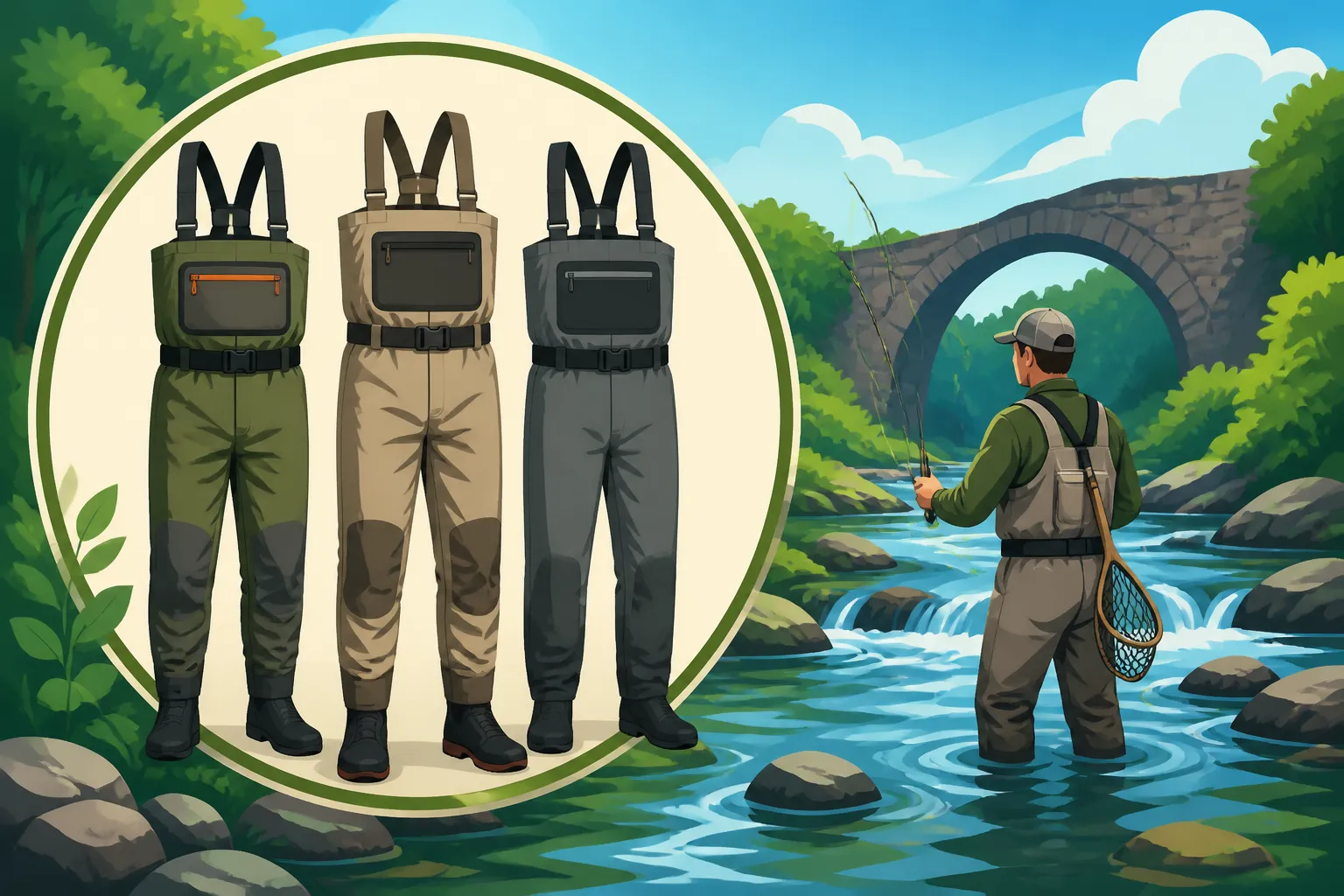
Chest Waders: These come up to your chest, held up by suspenders, offering the most comprehensive protection from water.
- Pros: Maximum coverage. You can confidently wade through deeper sections of a stream without worrying about water coming over the top. This is the most versatile option for Kentucky stream fishing.
- Cons: Can feel a bit bulky in warmer weather.
- Best For: Almost all stream fishing scenarios in Kentucky where you might encounter varying depths.
-
Waist Waders: These come up to your waist, like waterproof pants, and are often held up by a belt.
- Pros: Lighter and less restrictive than chest waders, great for warmer weather or shallower streams.
- Cons: Limited depth. If you step into a hole or a deeper current, you're going to get wet.
- Best For: Very shallow creeks, pond fishing, or times when you know you won't be wading deeply at all.
-
Hip Waders: These are essentially waterproof pants that come up to your upper thigh, sometimes with straps to secure them to your belt.
- Pros: Extremely lightweight and compact. Ideal for situations where you only need to keep your lower legs dry, like crossing very small streams or working the very edges of a river.
- Cons: Very limited protection. You’ll get wet if you wade even moderately deep.
- Best For: Very light-duty wading, crossing small rivulets, or in combination with Bank Fishing Techniques for Beginners where you only need a little extra reach.
Wader Type Comparison Table
| Feature | Breathable Waders | Neoprene Waders | Bootfoot Waders | Stockingfoot Waders |
|---|---|---|---|---|
| Primary Use | Multi-season, active fishing, hiking | Cold weather, stationary fishing | Convenience, cold weather | Versatility, comfort, traction, support |
| Insulation | Minimal (requires layering) | Excellent (inherent insulation) | Varies (often neoprene for cold) | Minimal (requires layering and good boots) |
| Breathability | High | None | Varies with wader material | High (with breathable waders) |
| Comfort (Temp) | Good for mild to warm air, adapts to layers | Great for cold air/water, hot in mild temps | Good for specific conditions | Excellent for active use |
| Traction/Support | Depends on separate boots (stockingfoot) | Boots often less robust | Boots often less robust | Superior (with high-quality wading boots) |
| Cost | Mid to High (plus boots) | Low to Mid | Low to Mid | Mid to High (plus boots) |
| Weight/Bulk | Light, packable | Heavy, bulky | Moderate to heavy | Light (waders only), moderate with boots |
| Repairability | Good for small punctures | Fair, often patched with cement | Varies (can be challenging if boot is damaged) | Good for small punctures |
Essential Features to Prioritize in Stream Fishing Waders
Choosing the right type of waders is a great start, but the devil is in the details! Once you've decided on breathable or neoprene, and stockingfoot or bootfoot, you'll want to look at the specific features that make a pair of waders truly great for Kentucky stream fishing. These features enhance durability, convenience, and overall fishing enjoyment, ensuring your investment pays off for many seasons to come.
Durability and Reinforcement: Standing Up to Kentucky's Rugged Streams
Kentucky's streams aren't always manicured walking paths. They often involve scrambling over fallen logs, pushing through thorny bushes, or navigating sharp, jagged rocks. Your waders need to be tough enough to handle this abuse.
- Fabric Denier/Layers: For breathable waders, look for higher denier fabrics (a measure of fiber thickness) or models that explicitly state multi-layer construction (e.g., 3-layer, 4-layer, 5-layer). The more layers, especially in high-wear areas, the more durable the wader. Some brands use different layer counts in different areas – thicker in the legs and seat, lighter in the upper body for breathability.
- Reinforced Knees and Seat: This is paramount. The knees and seat are the first areas to wear out from kneeling on rocks, sitting on logs, or sliding down banks. Many quality waders feature extra layers of fabric, thicker material, or even reinforced patches made from tougher, abrasion-resistant material in these critical zones. Don't skimp here; a small tear in the knee can quickly ruin your day.
- Seam Construction: The seams are often the weakest point where leaks first develop. Look for waders with reputable seam technologies, such as double-taped, sealed, or welded seams. Reputable brands invest heavily in their seam integrity, and it makes a huge difference in the longevity of the product. Poorly constructed seams will inevitably leak, turning your stream adventure into a cold, wet nightmare.
Storage and Convenience: Pockets, Zippers, and Accessory Attachments
When you're out on the stream, every piece of gear needs its place and should be easily accessible. Good waders aren't just waterproof pants; they're a wearable tackle system.
- Chest Pockets: A large, waterproof chest pocket is a godsend for holding fly boxes, leaders, tippet, or a small camera. Look for a pocket with a waterproof zipper or a fold-over storm flap to keep contents dry. Some waders even have fleece-lined "hand warmer" pockets behind the main storage, which are incredibly welcome on a chilly morning or when you're Winter Trout Fishing at Kentucky's Lake Cumberland.
- Accessory Attachments: D-rings, tool docks, and hypalon tabs on the suspenders or chest area are super useful. These allow you to attach nippers, forceps, zingers, or even a small net, keeping your essential tools close at hand without having to dig through a pack. Many anglers also appreciate an internal zippered pocket for a car key or wallet, keeping critical items safe and dry.
- Wading Belt: Almost all chest waders come with a wading belt. Always wear it! Not only does it help keep your waders snug and prevent water from rushing down your legs if you stumble, but it's a critical safety feature. If you fall in deep water, the belt helps prevent your waders from filling completely, which could make it dangerously difficult to get back upright or out of the water.
Fit, Mobility, and Adjustability for Long Days on the Water
Waders should fit comfortably, allow for a full range of motion, and be adjustable to accommodate different layering needs throughout the fishing season. A poor fit can lead to discomfort, chafing, and even reduced durability due to strain on seams.
- Size Charts and Measurements: Don't just guess your size. Every brand has its own size chart, and they can vary wildly. Measure your inseam, chest, and boot size (for stockingfoot waders, your sock-foot size) and consult the specific brand's chart carefully. Remember to account for layers you'll be wearing underneath. You might find a good selection of sizes from retailers like Bass Pro Shops or on Amazon, but always double-check the individual brand's sizing guide.
- Articulated Knees: Many higher-end waders feature articulated knees, meaning the fabric is pre-shaped or seamed to follow the natural bend of your knee. This vastly improves mobility, reduces strain on the fabric, and makes walking, climbing, and kneeling much more comfortable.
- Adjustable Suspenders and Belt: Suspenders that are easily adjustable allow you to dial in the fit over your shoulders, preventing them from slipping or digging in. A good wading belt should be easy to adjust and securely fasten. Some waders also feature a chest cinch or drawstring for an even snugger fit at the top, preventing spray from getting in. Consider how your waders fit over different layers, from light base layers in summer to bulky fleeces in winter.
Maximizing Your Waders' Lifespan: Care and Maintenance Tips
So, you've invested in a fantastic pair of waders, ready to tackle Kentucky's streams like the Red River or Elkhorn Creek. But buying them is only half the battle. To ensure they last for years of wading adventures, proper care and maintenance are absolutely crucial. Think of your waders like a good fishing reel or your favorite rod; neglect them, and they won't perform when you need them most.
Proper Cleaning and Drying Techniques to Prevent Mildew and Damage
This is probably the most overlooked aspect of wader care, and it's the leading cause of premature failure. Don't just toss them in the garage soaking wet!
- Rinse After Every Use: As soon as you get home, take your waders off and give them a good rinse, inside and out, with fresh water. This removes mud, sand, algae, and any other stream debris that can degrade the fabric or clog the breathable membrane over time. Pay special attention to the bootfoot area or the neoprene socks of stockingfoot waders, as grit trapped here can cause significant wear.
- Thorough Drying is Key: This is where most people go wrong. First, hang your waders inside out for at least 24 hours, allowing the interior to dry completely. A damp interior is a breeding ground for mildew, which not only smells terrible but also breaks down fabric integrity. Then, turn them right side out and hang them to dry for another 24 hours. Hang them in a well-ventilated area, out of direct sunlight, which can degrade materials over time. Avoid using direct heat sources like hair dryers or radiators, as extreme heat can damage seam tape and fabric coatings.
- Occasional Deep Cleaning: If your waders are particularly muddy or start to smell, they might need a deeper clean. Most breathable waders can be gently hand-washed in a tub with a mild, non-detergent soap (like Nikwax Tech Wash or a similar product designed for technical outerwear). Avoid harsh detergents, bleach, or fabric softeners, as these can strip the waterproof coatings and clog the pores of breathable fabrics. Always follow the manufacturer's specific washing instructions.
Storage Solutions to Maintain Integrity and Prevent Critter Damage
How you store your waders when not in use is just as important as how you clean them. Proper storage prevents creases, protects against pests, and helps maintain their shape and integrity.
- Hang, Don't Fold or Crumple: The best way to store waders is to hang them upside down from the bootfoot or from a dedicated wader hanger that clips to the suspenders. This allows any residual moisture to drain out and prevents hard creases from forming. Folding waders repeatedly in the same spot can weaken the fabric and seam tape, leading to leaks. Avoid storing them in a crumpled pile in the corner of your garage.
- Location Matters: Store your waders in a cool, dry, well-ventilated area, away from direct sunlight, extreme temperatures, and petroleum products (like gasoline or oils) which can damage synthetic materials. A closet, gear room, or garage shelf out of the way is ideal.
- Pest Protection: Unfortunately, mice and other critters love to chew on neoprene and breathable fabrics. If you store your waders in a shed or garage, consider placing them in a sealed tote or a heavy-duty storage bag, especially during the off-season, to protect them from unwanted visitors. There's nothing worse than pulling out your waders for the Kentucky Fishing Seasons: What to Catch Each Month only to find a hole chewed through the leg!
Patching and Repairing Waders: A Must-Have Skill
Even with the best care, waders will eventually spring a leak. It’s an inevitable part of stream fishing, whether it's from a thorny bush or a sharp rock. Knowing how to quickly and effectively repair small punctures can save a fishing trip and extend the life of your waders.
- Locating Leaks: Finding a tiny pinhole leak can be frustrating. The easiest method is to turn your waders inside out, spray them with rubbing alcohol (it evaporates quickly), and then run water over the outside. The alcohol will darken where the water seeps through. Another method is to turn them inside out, seal the leg openings with clamps, and then inflate them slightly with air or fill them with a small amount of water to see where it drips.
- Repair Kits: Always keep a wader repair kit handy, both at home and in your fishing pack. These kits typically include Aquaseal or similar urethane-based adhesive, small patches of wader fabric, and applicators. Some modern breathable waders even come with small iron-on patches that are easy to apply. You can often find these kits at Bass Pro Shops or on Amazon.
- The Repair Process: For small punctures, a dab of Aquaseal applied to the clean, dry spot, allowed to cure overnight, is often all you need. For larger tears, you'll want to use a patch from your kit, applying adhesive to both the wader and the patch before pressing them together firmly. Make sure the area is completely clean and dry before attempting any repair. A properly patched wader can perform just as well as a new one, getting you back on the water quickly and allowing you to focus on How to Fish a Trout Stream in Spring rather than worrying about wet socks.
Disclaimer
This article is for general informational purposes only and does not constitute professional advice. Laws, prices and regulations vary by location and change over time. Consult a qualified professional for guidance on your specific situation.