Where to Catch Brook Trout in Cold-Water Streams
For many anglers in Kentucky, the idea of chasing native brook trout evokes a sense of wild adventure and pure fishing bliss. However, if you’ve ever tried to locate these vibrant, elusive fish in our beautiful Commonwealth, you know it can be a real head-scratcher. They don’t just hang out in every stream, and finding their secret spots requires a bit of insider knowledge and a willingness to explore. This guide is here to unravel the mystery, showing you precisely what kind of places brook trout call home in Kentucky and how you can successfully connect with them, even when other species seem to dominate the conversation.
The Elusive Brook Trout: Why Finding Them in Kentucky is a Challenge
Let's be honest, Kentucky isn't exactly renowned as a "trout state" in the same way places like Montana or Arkansas are. Most of our trout fishing opportunities come from the fantastic stocking programs that introduce rainbow and brown trout into various lakes and streams, particularly in tailwaters like the Cumberland River below Lake Cumberland. These are great fisheries, no doubt, providing countless hours of fun. But brook trout? They're a different beast entirely.
Brook trout, or "brookies" as many affectionately call them, are actually a char, not a true trout, but that's a technicality most of us overlook when admiring their stunning coloration. What truly sets them apart, especially in Kentucky, is their incredibly specific habitat requirements. They are cold-water specialists, demanding water temperatures that rarely exceed 68 degrees Fahrenheit, even in the heat of summer. This means they need streams that are heavily shaded by dense canopy, often with a constant influx of cold spring water, and a substrate of clean gravel or rock for spawning. They also thrive in highly oxygenated water, which usually means faster-flowing sections, riffles, and runs.
Kentucky's geology and climate present a challenge to these finicky fish. Much of our state experiences warm summers, and many streams simply get too warm for brook trout to survive year-round. They are largely confined to the highest elevations and steepest ravines in Eastern Kentucky, primarily within the ancient Appalachian foothills. These are often small, spring-fed headwater streams, tucked away in pristine, undeveloped watersheds. Because they are native and not widely stocked, their populations are typically smaller and more fragile than their stocked cousins.
Finding these unique micro-habitats often means venturing off the beaten path, away from easily accessible fishing holes. It requires a willingness to hike, explore, and sometimes bushwhack to discover those hidden gems. You might even feel like you're on a treasure hunt, and in a way, you are! Before you even head out, remember that a Kentucky Trout Permit Guide is absolutely non-negotiable if you plan to target any trout species in Kentucky's public waters. Ignoring this crucial detail can lead to fines and a ruined fishing day.
Prime Brook Trout Country: Specific Regions and Streams in Kentucky
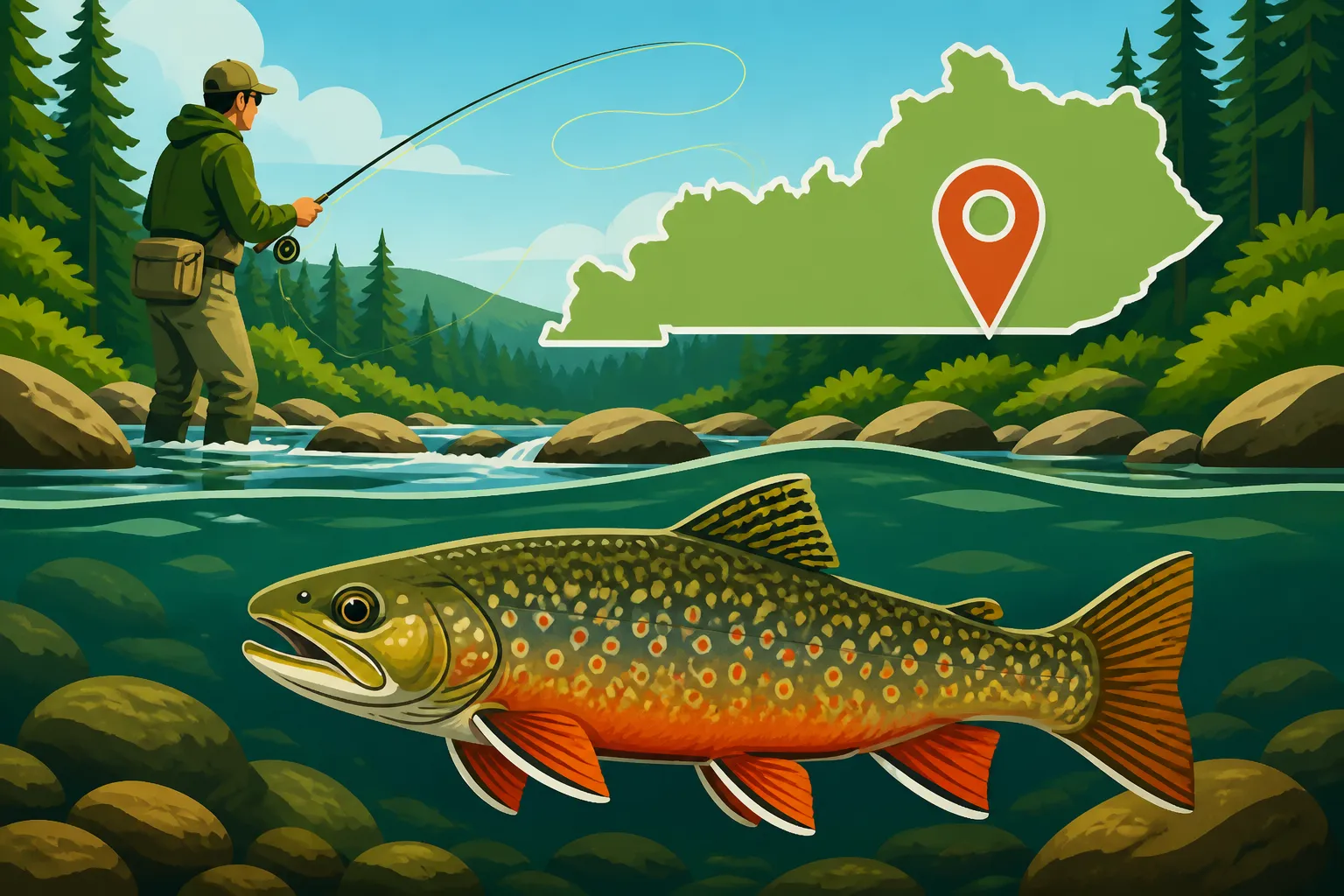
When we talk about finding brook trout in Kentucky, our focus narrows almost exclusively to the easternmost part of the state. This is where the landscape shifts dramatically, giving way to the rugged beauty of the Appalachian Mountains and the vast expanses of the Daniel Boone National Forest. These are the areas where the elevations are higher, the valleys are deeper, and the streams run colder thanks to abundant springs and heavy forest cover.
Within this region, you'll want to concentrate your efforts on the headwater streams and smaller tributaries, especially those within protected forest lands. These are not the big, wide rivers or expansive lakes; think tiny trickles, narrow creeks, and feeder streams that might barely seem wide enough to hold a fish. They are often characterized by steep gradients, which keep the water moving and oxygenated, and a substrate of bedrock, cobble, and gravel, which is perfect for brook trout to lay their eggs.
Specific areas that have historically been known to harbor native brook trout populations include certain tributaries flowing into larger systems within the Daniel Boone National Forest. For instance, some of the smaller, colder streams in the Red River Gorge Geological Area, or those further south in the Cumberland Plateau, are prime candidates. These streams typically have incredibly clear water, making stealth an absolute necessity. You'll often find them meandering through dense rhododendron thickets and towering hemlocks, which provide that vital shade.
It's important to note that the Kentucky Department of Fish and Wildlife Resources (KDFWR) is actively involved in conserving and restoring native brook trout populations. They have identified specific priority watersheds for brook trout recovery, and while they don't always publish exact stream names to protect these fragile populations, general areas within national forest lands are your best bet. A great strategy is to seek out detailed topographic maps of these regions, available online or even from an Amazon search, and look for perennial streams at higher elevations with good tree cover. Local bait shops near areas like Morehead, Slade, or even Somerset can sometimes offer general advice, but remember that the exact locations of these tiny, wild fisheries are often closely guarded secrets by those who cherish them.
To give you a clearer idea of the types of streams to look for, rather than specific named locations, here's a general guide:
| Stream Characteristic | Why It's Good for Brook Trout |
|---|---|
| High Elevation | Cooler ambient temperatures, more likely to have cold springs. |
| Dense Tree Canopy | Provides crucial shade, keeping water temperatures low. |
| Steep Gradient | Creates riffles and runs, increasing oxygenation. |
| Rocky/Gravel Bottom | Ideal for spawning and provides cover from predators. |
| Spring-Fed | Constant source of cold, clean water, even in summer. |
| Remote/Less Accessible | Less human disturbance, often healthier ecosystems. |
| Crystal Clear Water | Indicates good water quality, but demands stealth from anglers. |
Remember that exploring these areas can be challenging. Always respect private property boundaries and ensure you have the necessary permits, including your trout permit. You can find out more about the cost and requirements by looking into Kentucky Trout Permit Cost and Requirements.
Essential Gear and Stealthy Techniques for Kentucky Brook Trout
Okay, so you've identified a promising cold-water stream in Eastern Kentucky. Now, what do you need to bring, and how do you approach these wary little fish? When it comes to brook trout in these small, clear streams, subtlety and minimalism are key.
Ultralight Spinning Gear
For spin fishing, an ultralight setup is your best friend. We're talking about rods in the 4.5 to 6-foot range, with a fast action, paired with a small spinning reel spooled with 2 to 4-pound test monofilament or fluorocarbon line. Anything heavier will be overkill, make casting difficult in tight quarters, and will likely spook these sensitive fish. You can find excellent ultralight combos on Amazon that are perfect for this type of fishing.
Your lure selection should also be on the smaller side. Think micro-spinners (like Rooster Tails or Mepps, size 00 or 0), tiny spoons (Little Cleos or Kastmasters, 1/16 to 1/8 ounce), or small inline jigs. Bright colors can sometimes work, but natural patterns that mimic aquatic insects are often more effective. A small split shot a foot or so above a tiny hook tipped with a piece of worm, a cricket, or a grub can also be incredibly potent. When considering Best Bait for Trout on Cold-Water Mountain Streams, live bait often reigns supreme for brookies.
Fly Fishing Essentials
If fly fishing is your passion, these small streams offer a unique challenge and immense satisfaction. A lightweight fly rod, typically 1 to 3-weight, in a short length (6 to 7.5 feet) is ideal for navigating tight casting spaces under dense tree canopies. Pair it with a matching reel and a weight-forward floating line.
For flies, think small and simple. Dry flies that mimic common stream insects like small caddis, mayflies, or even ants (size 14-20) can be deadly. Don't underestimate tiny terrestrial patterns. Nymphs, such as the Pheasant Tail, Hare's Ear, or Prince Nymph (size 16-20), fished with a small indicator, can also be very effective, especially in deeper pockets. You can spend hours tying these yourself, and Amazon is a great resource for fly-tying materials. Streamers generally aren't as productive for these smaller brookies, but a tiny Woolly Bugger in olive or black could entice a more aggressive fish. For more on the art of fly fishing, check out How to Fly Fish for Stocked Trout, as many techniques apply.
The Art of Stealthy Approach
Brook trout in these pristine waters are incredibly spooky. Their survival depends on it. Your approach needs to be as subtle as possible.
- Move Slow and Low: Avoid sudden movements. Wading carefully, often on your knees or crouched, can prevent you from being spotted.
- Fish Upstream: Always try to fish upstream. This allows you to approach the fish from behind, as they naturally face into the current. Your scent and any disturbed sediment will also flow away from them.
- Observe and Cast: Don't just cast blindly. Take a moment to read the water. Look for deeper pools, undercut banks, fallen logs, or large rocks that create eddies – these are prime holding spots. Cast accurately, minimizing splashdowns.
- Wading Gear: Good wading boots with felt or sticky rubber soles are crucial for navigating slippery rocks. Chest waders will keep you dry and comfortable, especially in cold water. Again, if you're looking for durable options, a quick search on Amazon will reveal many suitable choices.
Before you go, ensure you understand the Kentucky Fishing Regulations Explained, as even for brook trout, there are often specific rules regarding size and creel limits, even if you plan to practice catch and release. Also, understanding Why a Trout Permit Costs Extra on Top of Your Fishing License will help you budget for your trip.
Responsible Angling: Conservation and Best Practices for Brook Trout
Catching a native Kentucky brook trout is a special experience, and it comes with a responsibility to protect these fragile populations. These fish are a precious resource, and their survival depends on respectful angling practices.
Catch and Release: The Golden Rule
For native brook trout in these small, wild streams, catch and release should almost always be your guiding principle. These fish grow slowly, and their populations can be easily depleted. If you do choose to keep a legal fish, know your Kentucky Fishing License Requirements for Kids if you're bringing youngsters, as regulations can vary.
When practicing catch and release:
- Minimize Handling: Try to keep the fish in the water as much as possible. If you must handle it, do so with wet hands to protect its delicate slime coat.
- Use Barbless Hooks: Crushing the barb on your hook makes release much easier and less damaging to the fish.
- Quick Release: Get the hook out gently and quickly. If the hook is deeply swallowed, cut the line as close to the hook as possible rather than trying to rip it out.
- Revive Gently: If the fish seems stunned, hold it gently in the current, facing upstream, until it swims away on its own.
Leave No Trace Principles
The remote beauty of brook trout streams means they are often pristine. It's our duty to keep them that way.
- Pack It In, Pack It Out: Anything you bring with you, take back out. This includes fishing line, lure packaging, and any trash.
- Stay on Trails: Where trails exist, use them. Otherwise, tread lightly to minimize impact on stream banks and vegetation.
- Respect the Environment: Avoid disturbing wildlife or damaging plant life.
- Practice Good Stewardship: Educate others about responsible angling and the importance of conserving these unique habitats.
Understanding species identification is also crucial. While brown trout and rainbow trout are stocked, knowing the difference between Brown Trout and Brook Trout in Kentucky's Cold-Water Streams is important for conservation, especially if you encounter a brook trout. The KDFWR website offers excellent resources for identification. Remember, too, to check the current license year dates, such as the Kentucky Fishing License Year 2026-27 Explained, to ensure you're always fishing legally and responsibly.
By adopting these practices, you're not just enjoying a day of fishing; you're becoming a steward of Kentucky's precious natural heritage, ensuring that future generations can also experience the thrill of catching a wild brook trout in our state's hidden, cold-water gems.
Disclaimer
This article is for general informational purposes only and does not constitute professional advice. Laws, prices and regulations vary by location and change over time. Consult a qualified professional for guidance on your specific situation.