Best Spots to Snag Paddlefish Near the Kentucky-Illinois Ohio River Border
The thrill of snagging a massive paddlefish from the powerful currents of the Ohio River is an experience many anglers chase, but figuring out exactly where and when to target these unique prehistoric fish, especially near the bustling Kentucky-Illinois border, can be incredibly daunting. This comprehensive guide will equip you with the precise knowledge of prime snagging locations, essential gear, effective techniques, and crucial regulatory details needed to confidently pursue and successfully land paddlefish in these dynamic border waters.
Understanding Paddlefish Behavior on the Ohio River Border
Before you even think about dropping a line – or rather, a snagging hook – into the water, it’s vital to grasp how paddlefish behave. These aren't your typical sport fish that chase lures; they're filter feeders, constantly swimming with their mouths open, sifting plankton from the water. Because of this unique feeding method, traditional rod-and-reel angling with bait doesn't work, which is why "snagging" is the accepted and regulated method for harvesting them.
Seasonal Migrations and Spawning Habits
Paddlefish undertake significant seasonal movements that are absolutely critical for anglers to understand. Their most predictable and concentrated movements occur during the spring, typically from March through May. This is their spawning season, when they migrate upstream from deeper, more stable river pools into flowing, shallower waters. They seek out specific spawning grounds, often gravel bars or flooded areas in major tributaries, or just below large dams on the main river channel.
During these spring migrations, factors like rising water temperatures and increased river flow – often triggered by heavy rains and snowmelt – act as key signals. These conditions encourage large schools of paddlefish to gather in predictable areas, making them far more accessible to anglers. Knowing when these conditions align is half the battle won, transforming a random search into a targeted mission. You'll find these large aggregations in the main river channel as they push against current, trying to find suitable areas.
Preferred Habitat: Deep Pools and Current Breaks
When paddlefish aren't busy with their spring spawning run, they generally prefer to reside in the deeper, slower-moving sections of large river systems and reservoirs. Think about those extensive navigation pools created by the series of locks and dams along the Ohio River. These deep-water environments provide the stable conditions and abundant plankton necessary for their filter-feeding lifestyle.
They have a particular fondness for congregating in areas where current is stable but not overwhelming, such as scour holes directly below dams, in the mouths of major tributaries, or along deep river bends. These spots act as natural food funnels, concentrating the plankton they feed on. To truly increase your odds, it's incredibly helpful to study nautical charts or use sonar to identify these deep channels, underwater ledges, and current breaks, as these are the paddlefish's everyday haunts.
Prime Paddlefish Snagging Zones Near the Kentucky-Illinois Line
Now, let's get down to the nitty-gritty: where exactly should you focus your efforts to snag a paddlefish when you're fishing the Ohio River where Kentucky and Illinois share a border? The sheer size of the river can be overwhelming, but certain geological features and human-made structures act as natural attractors for these fish.
Key Dams and Navigation Pools
When it comes to paddlefish, dams are absolute magnets, especially during those crucial spring migrations. The fish congregate below these structures as they attempt to move upstream to spawn, or they simply hold in the deeper pools formed by the dam's operation, waiting for optimal conditions.
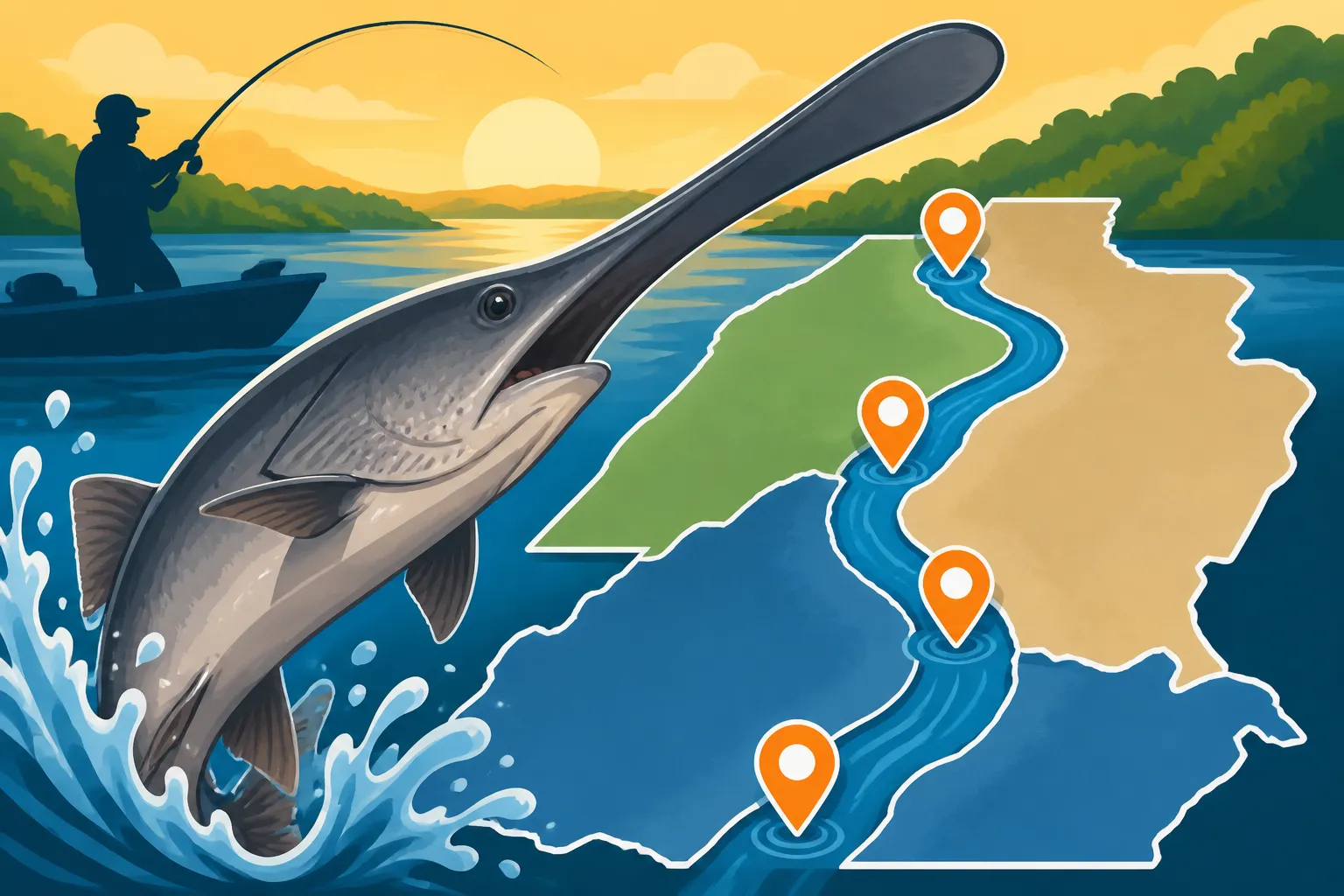
Near the Kentucky-Illinois border, the Smithland Locks and Dam is arguably the most significant hotspot. This massive structure, located near Paducah, Kentucky, with the Illinois shore directly opposite, creates an ideal environment. The deep scour hole immediately downstream from the dam, coupled with the concentrated current, draws in paddlefish. Anglers frequently have success targeting the main current seam and deeper pockets directly below the dam's spillways or lock chambers. It’s a busy area, so paying attention to other boaters and commercial traffic is essential. Further downstream, closer to the confluence with the Mississippi River, the areas around Mound City, Illinois, also offer deep water and good current, often holding scattered paddlefish, especially during peak season. Remember, river conditions change daily, so always check the current flow and dam discharge rates before you head out.
Confluences and Tributary Mouths
While dams are undoubtedly prime real estate for paddlefish, don't overlook the mouths of major tributaries that feed into the Ohio River. These confluences often introduce new sources of water, nutrients, and can create unique current dynamics and deeper channels that paddlefish find appealing. The meeting of different water bodies can concentrate plankton, drawing in these filter feeders.
Areas where the Ohio River merges with other significant waterways, even if they're not directly on the KY-IL border but close by, can also be productive. For instance, the confluence of the Ohio and Tennessee Rivers near Paducah, or the Cache River on the Illinois side, can be worth exploring. These tributary mouths often create slack water areas or distinct current lines where paddlefish might gather before or after their upstream migrations. If you're looking to explore these less-frequented spots and want the inside scoop on the best times and exact locations, connecting with local experts is invaluable. You might consider using platforms like FishingBooker to find experienced local guides who specialize in Ohio River paddlefish and can lead you directly to these honey holes, ensuring you're hitting the water with maximum knowledge and minimal guesswork.
Essential Gear and Techniques for Successful Paddlefish Snagging
Successfully snagging a paddlefish isn't just about finding the right spot; it's also about having the right tools and knowing how to use them. These fish can be surprisingly powerful once hooked, so your gear needs to be up to the challenge.
Robust Rods, Reels, and Line Choices
Forget your lightweight bass setups or crappie poles; paddlefish snagging demands heavy-duty equipment built for abuse. Your rod should be a stiff, heavy-action model, typically 7 to 9 feet in length. Think along the lines of a muskie rod or even a saltwater surf rod – something with a strong backbone that can handle heavy weights and the sheer power of a large, thrashing fish. The stiffer action provides the leverage needed to set those large treble hooks firmly and to pull a heavy fish through strong current.
Paired with this rod, you'll need a large, robust baitcasting or spinning reel. The key here is a smooth, powerful drag system and significant line capacity. You don't want to be spooled by a monster paddlefish. For line, braided line is the only way to go. Its minimal stretch means you'll feel every bump and be able to set the hook much more effectively. Opt for a heavy braided line, usually in the 80 to 120-pound test range. This strength is crucial for resisting abrasion from river debris, rocks, and the sheer force of the fish, significantly reducing frustrating break-offs.
Snagging Rigs and Hook Selection
The standard paddlefish snagging rig is deceptively simple but incredibly effective. It typically consists of a very heavy weight, usually between 8 and 16 ounces, though some anglers might go even heavier in exceptionally strong currents. This weight is tied directly to the end of your main line. Above the weight, you'll attach one or more large, heavy-duty treble hooks. These hooks are often sized from 10/0 to 14/0, and they need to be incredibly strong to prevent bending out or breaking under pressure.
The hooks are usually tied to short leaders (12 to 24 inches long) using heavy monofilament or fluorocarbon line, often 100 to 200-pound test, to prevent the main braid from getting frayed on the fish. The actual "snagging" technique involves casting your rig out, letting it sink to the bottom (or near it, depending on the fish's depth), and then executing a strong, sweeping upward motion with your rod. This action is repeated rhythmically as you slowly retrieve, essentially dragging the hooks through the water column where paddlefish are concentrated, hoping to "snag" one by its body. This method is surprisingly labor-intensive and requires constant focus. For a deeper dive into the specifics of setting up your gear, be sure to check out our comprehensive guide on Best Paddlefish Snagging Gear for the Ohio River.
Boat Positioning and Drift Techniques
Effective boat control is absolutely paramount when snagging paddlefish on a large river like the Ohio. You're not just casting from a stationary position; you're often actively working specific stretches of water. Many successful anglers use a controlled drift, positioning their boat upstream from a known paddlefish holding area and slowly drifting downstream. As they drift, they repeatedly cast out their snagging rigs and work them through the water column.
A powerful trolling motor is an invaluable tool for maintaining precise control over your drift speed and direction, allowing you to thoroughly cover productive zones. Alternatively, some anglers prefer to anchor their boat above a deep hole, current break, or prominent underwater structure. From this anchored position, they can then fan-cast their snagging rigs, systematically covering the target area. Regardless of your chosen technique, always remember the Ohio River is a working river. Constant vigilance for barge traffic, towboats, and other pleasure craft is essential, as is maintaining a safe distance from dams and locks.
Navigating Regulations and Safety for Border Water Paddlefish Fishing
Fishing border waters like the Ohio River between Kentucky and Illinois adds a layer of complexity, as you need to be mindful of the regulations for both states. Beyond the rules, safety on such a large and powerful river should always be your top priority.
Kentucky and Illinois Regulations
This is where things can get a little tricky, and it's absolutely crucial to get it right. If you're fishing the Ohio River, you need to understand the nuances of both Kentucky and Illinois fishing regulations, as you might inadvertently drift into the waters of the neighboring state. Generally, if you are casting from or are physically in the waters of Kentucky, you need a Kentucky fishing license. Similarly, if you're in Illinois waters, an Illinois license is required. While there might be some reciprocity agreements on specific border waters for general fishing, it's always safest to consult the most current regulations for both states or simply purchase a non-resident license for the state you anticipate spending the most time in. A detailed overview of general rules can be found in our Kentucky Fishing Regulations Explained guide.
Paddlefish specifically have very particular rules. Both Kentucky and Illinois typically have designated snagging seasons, which often fall in the spring. For example, Kentucky usually allows paddlefish snagging from March 15 to May 31 on the Ohio River. Illinois has a similar season, generally from March 15 to May 15. Both states typically impose daily creel limits (often two fish) and may or may not have size limits for paddlefish in the Ohio River. It's imperative to check the most up-to-date regulations directly from the Kentucky Department of Fish and Wildlife Resources (KDFWR) and the Illinois Department of Natural Resources (IDNR) before your trip. Additionally, some states or specific bodies of water might require a special permit for paddlefish, especially when snagging. Don't risk a hefty fine or confiscation of your catch by being unprepared; verify all requirements, including whether you need a Do You Need a Special Permit to Snag Paddlefish in Kentucky? before you head out.
Here's a quick comparison of the general paddlefish snagging regulations for the Ohio River, but always double-check official state resources for the most current information:
| Regulation Aspect | Kentucky (Ohio River) | Illinois (Ohio River) |
|---|---|---|
| Snagging Season | March 15 – May 31 | March 15 – May 15 |
| Daily Creel Limit | 2 Paddlefish | 2 Paddlefish |
| Size Limit | None (statewide for paddlefish) | None |
| License Required | Kentucky Fishing License | Illinois Fishing License |
| Special Permit | Not generally required for general snagging, but always verify current rules. | Not generally required for general snagging, but always verify current rules. |
Safety Considerations on the Ohio River
The Ohio River is a grand and wild waterway, and while it offers incredible fishing opportunities, it demands respect. Safety should never be an afterthought, especially when you're engaging in a physically demanding technique like snagging, often in areas with strong currents and heavy boat traffic.
First and foremost, the Ohio River is a major commercial shipping lane. Barges and towboats are massive, cannot stop quickly, and create enormous wakes. Always give them a wide berth and be prepared for turbulent water. Keeping a constant lookout, especially when drifting, is critical. Secondly, wearing a Coast Guard-approved life jacket is non-negotiable, particularly when the water is cold or if you're fishing alone. Snagging involves powerful, sweeping motions and can be quite strenuous; an unexpected fall overboard in strong current could be disastrous. Ensure everyone on board, especially children, complies with Life Jacket Rules for Boats in Kentucky.
Beyond commercial traffic, be acutely aware of weather conditions. Storms can develop rapidly on large river systems, bringing high winds and dangerous waves. Have a reliable weather app, and don't hesitate to cut your trip short if conditions deteriorate. Inform someone of your float plan – where you're going, when you expect to return, and who is with you. Cell service can be spotty in some remote sections. If you're new to navigating the Ohio River or feel more comfortable with an expert at the helm, remember that experienced charter captains found on platforms like FishingBooker are not only masters of finding fish but are also highly trained in river safety and all local regulations, providing an added layer of security and expertise to your adventure.
Disclaimer
The information provided in this guide is for general informational purposes only and is not intended as legal advice. Fishing regulations, seasons, and licensing requirements can change frequently. Always consult the official websites of the Kentucky Department of Fish and Wildlife Resources (KDFWR) and the Illinois Department of Natural Resources (IDNR) or contact their offices directly for the most current and accurate information before planning your fishing trip.