Best Paddlefish Snagging Gear for the Ohio River
Anyone who's tried to tackle the mighty Ohio River for paddlefish knows it's not like your average fishing trip. You're not just casting a worm and waiting for a bite; you're going after prehistoric giants that demand a completely different approach and, most importantly, some seriously robust gear. This guide will walk you through everything you need to know about selecting the best paddlefish snagging gear, ensuring you're ready to contend with the powerful currents and massive fish that call the Ohio home.
Understanding Paddlefish Snagging on the Ohio River
Before we dive into the nitty-gritty of rods and reels, let's talk a little about what makes paddlefish snagging so unique, especially on a river as grand and challenging as the Ohio. It's not just a technique; it's an experience that requires preparation and respect for both the fish and the water.
The Unique Challenge of Paddlefish
Paddlefish are truly incredible creatures, often called "spoonbill" due to their distinctive, elongated snout. What makes them challenging for anglers, and why snagging is the primary method, is their diet. These fish are filter feeders, swimming with their mouths open, sifting plankton from the water. This means they're not interested in your traditional bait, lures, or even live baitfish. Trying to catch a paddlefish with a typical hook and line setup would be an exercise in futility and frustration.
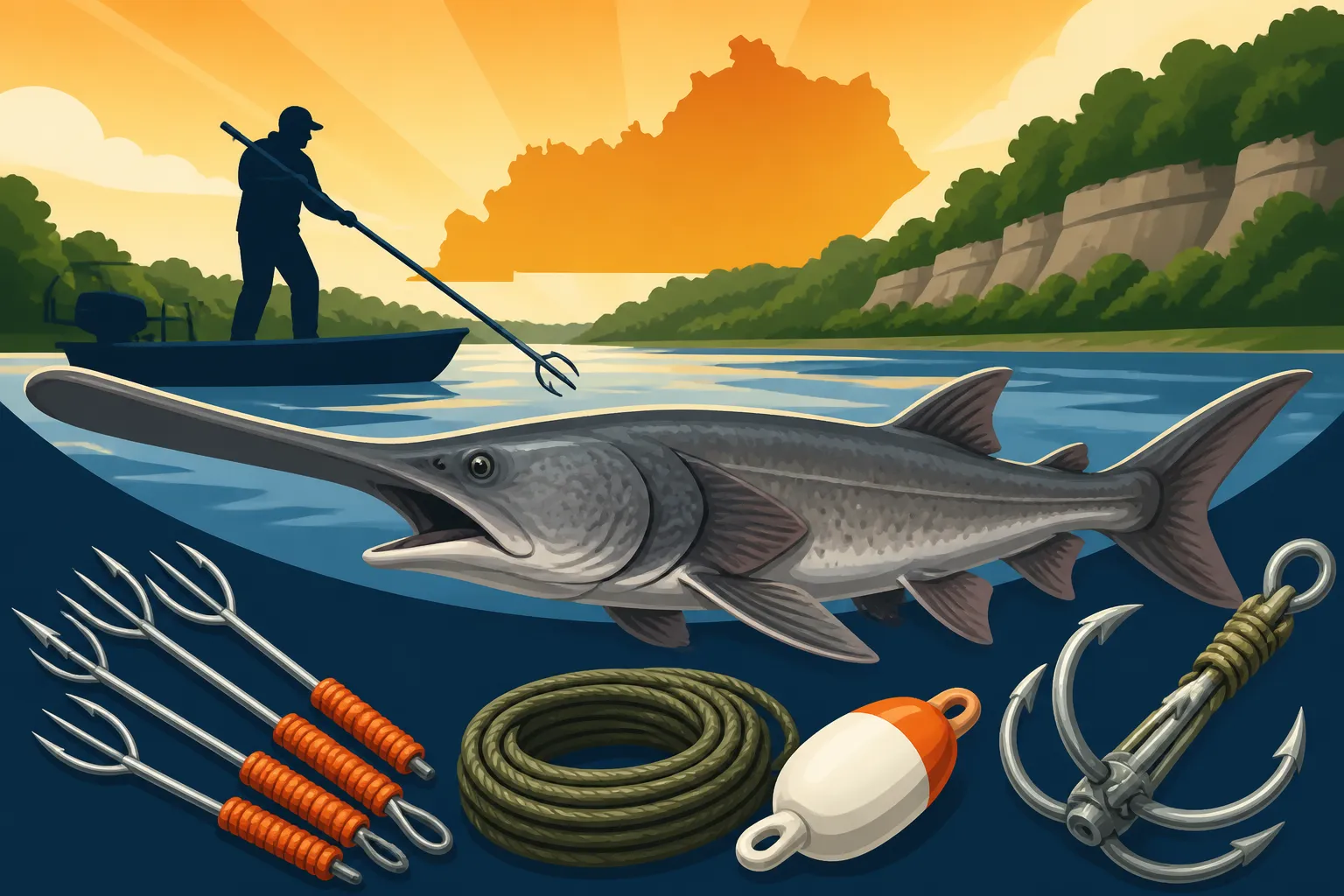
Because they don't strike bait, anglers use snagging as a legal and effective method to target them. This involves using large, heavy hooks and weights to "snag" the fish as they swim by. The Ohio River, with its abundant paddlefish population and strong currents, presents a perfect, albeit demanding, environment for this type of fishing. You're essentially feeling for a bump or resistance as your weighted hook drifts through schools of fish, then setting that hook with all your might. Landing one of these giants, which can easily top 50 pounds, is a true test of strength and endurance, and your gear needs to be up to the task. If you're looking for more general information, check out our Paddlefish Fishing on the Ohio River: A Complete Guide.
Key Considerations for Ohio River Conditions
Fishing the Ohio River is a whole different ballgame compared to calmer lakes or smaller rivers. The sheer size and power of the river are significant factors that dictate the type of gear you'll need.
First, the current can be incredibly strong, especially after heavy rains or near dam discharges. This means your weights need to be heavy enough to get your hooks down to where the fish are, and your line needs to be strong enough to withstand that constant pull without snapping. Second, the Ohio River is full of snags. Submerged trees, rocks, and debris are common, and losing tackle is almost inevitable. Your gear must be robust enough to handle these encounters, or at least minimize losses. Third, depth varies significantly. You might be snagging in 20 feet of water in one spot and 50 feet in another. Your rod, reel, and line need to be versatile enough to cover these ranges. Finally, boat traffic can be heavy, from barges to pleasure craft, so safety and maneuverability are paramount. All these factors combine to demand a heavy-duty, reliable setup that can take a beating and still perform when that trophy paddlefish hits.
Essential Rod and Reel Setups for Paddlefish Snagging
When it comes to paddlefish snagging on the Ohio River, your rod and reel are the foundation of your entire setup. Skimping here will lead to broken rods, stripped gears, and most likely, lost fish and a lot of disappointment. Think of it as gearing up for a wrestling match, not a gentle dance.
Rod Selection: Power, Length, and Action
Choosing the right rod for paddlefish snagging is critical. You're not looking for finesse; you're looking for brute strength and leverage.
- Power: This is arguably the most important factor. You need a heavy (H) or even extra-heavy (XH) power rod. Anything less simply won't have the backbone to effectively set large treble hooks into a thick-skinned paddlefish, nor will it handle the strain of fighting a powerful fish in strong current. A medium-heavy might work for smaller fish in calmer waters, but on the Ohio, you'll feel completely outmatched.
- Length: Longer rods, typically 8 to 10 feet or even longer, are highly recommended. A longer rod provides several advantages:
- Casting Distance: You can cast heavier weights further, covering more water.
- Leverage: When you're trying to pull a heavy fish against the current, a longer rod helps distribute the strain and gives you more leverage to turn the fish.
- Line Control: It helps keep your line out of snags and allows you to guide the fish more effectively once hooked.
- Think about a sturdy surf rod or a heavy-duty catfishing rod—these are the types of lengths and powers you're aiming for.
- Action: A fast action rod is generally preferred. This means the rod bends mostly in the tip section, offering the sensitivity to feel the subtle "thump" of a paddlefish and the quick power transfer needed for a strong hookset. With snagging, a swift, powerful sweep of the rod is necessary to ensure the hook penetrates properly. Too slow an action and you might miss that crucial connection.
When you're shopping, whether you're at a Bass Pro Shops or browsing online through Amazon, look for rods specifically rated for heavy offshore use, deep-sea jigging, or the heaviest catfish applications. Materials like E-Glass or composite blanks are often favored for their durability and ability to absorb shock, which is important when you're violently setting a hook or battling a massive fish. The strain on the angler is real, too; these powerful rods can wear you out, so finding a comfortable grip and a rod that balances well with your reel is a plus.
Reel Selection: Durability and Line Capacity
Your reel needs to complement your heavy-duty rod, providing the muscle to crank in large fish and handle the immense stress placed on it.
- Type: You'll typically find two main types of reels used:
- Conventional (Baitcasting) Reels: These are often the top choice for serious paddlefish snagging. They're built for brute strength, have excellent drag systems, and typically offer superior line capacity for heavier lines. Look for models with metal frames and robust gearing.
- Heavy-Duty Spinning Reels: While less traditional for this application, some of the larger, more powerful saltwater spinning reels can certainly handle paddlefish. They offer ease of casting and are often preferred by anglers who aren't comfortable with conventional reels. Again, prioritize metal construction, a sealed drag system, and significant line capacity.
- Durability: The internal components of your reel will take a pounding. Look for reels with strong, corrosion-resistant gears and multiple bearings for smooth operation under heavy load. A high-quality drag system is non-negotiable; it needs to be smooth and powerful enough to let a big paddlefish run without locking up or stuttering. A sticky drag can mean a broken line and a lost fish.
- Line Capacity: You'll be using very heavy line (more on that in the next section), so your reel needs to hold a substantial amount of it. This isn't just for fighting big fish; it's also practical for making long casts and having enough reserve if you get a momentary snag. A reel that can comfortably hold 200-300 yards of 80-100 pound braided line is a good starting point.
- Gear Ratio: While not as critical as power or capacity, a medium to high gear ratio (e.g., 4.5:1 to 6.0:1) can be beneficial for quickly reeling in slack line and getting a strong hookset. However, some anglers prefer lower gear ratios for their raw winching power when fighting truly enormous fish.
When you pair your rod and reel, make sure they feel balanced in your hands. A mismatched setup will quickly lead to fatigue and make the demanding task of snagging even harder. Many manufacturers design their heavy-duty rods and reels to work together, so keep that in mind as you browse.
Line and Terminal Tackle: The Unsung Heroes
While your rod and reel provide the power, your line and terminal tackle are the direct connection to the fish and the riverbed. These components are often overlooked but are absolutely critical for success and avoiding frustrating break-offs. On the Ohio River, this gear needs to be tough enough to handle everything from submerged timber to powerful, thrashing paddlefish.
Heavy-Duty Fishing Line
Forget your usual monofilament for this adventure. Paddlefish snagging demands a line that's exceptionally strong, has minimal stretch, and can withstand abrasive conditions.
- Braided Line: This is the undisputed champion for paddlefish snagging, and for good reason.
- Strength: Braided line offers incredible breaking strength for its diameter, allowing you to use lighter (but still heavy) line that casts better while retaining the power needed.
- No Stretch: Unlike monofilament, braided line has virtually no stretch. This is paramount for feeling the subtle "thump" of a paddlefish when snagging and for delivering an immediate, powerful hookset. Any stretch in your line will absorb some of that hookset force, making it less effective.
- Sensitivity: The lack of stretch also means superior sensitivity. You'll feel every bump, every rock, and most importantly, every brush against a paddlefish.
- Abrasion Resistance: While not inherently as abrasion-resistant as some fluorocarbons, high-quality braids are surprisingly durable, especially when paired with a good leader.
- Pound Test Recommendations: For Ohio River paddlefish, you'll want to be in the 80 to 150-pound test range. This might sound excessive, but remember, you're not just fighting a fish; you're often pulling against strong currents and occasionally getting momentarily hung up on snags. Having too light a line will lead to constant break-offs and lost tackle, which quickly adds up. I've personally seen anglers lose an entire setup because they underestimated the power of the river and the fish.
While monofilament can offer some shock absorption, its stretch makes it far less effective for snagging. It's generally reserved for leaders if used at all in this specific application.
Snagging Hooks and Weights
This is where the "snagging" part truly comes into play. Your hooks and weights are specifically designed to be efficient at connecting with these filter feeders.
- Snagging Hooks:
- Size: You'll need large, stout treble hooks. Common sizes range from 8/0 to 12/0. These aren't small bass hooks; they're substantial pieces of metal designed for large fish.
- Quality: Don't skimp on hook quality. Cheap hooks will bend, break, or dull quickly. Look for hooks made from heavy-gauge wire, chemically sharpened, and with a black nickel or similar finish for corrosion resistance. A dull hook simply won't penetrate the tough hide of a paddlefish effectively.
- Configuration: Typically, you'll rig one or two treble hooks a foot or two above your sinker. Some anglers use a single large treble, while others prefer two in tandem for increased chances of a snag.
- Heavy Sinkers:
- Weight: To get your hooks down to the paddlefish in strong Ohio River currents, you'll need heavy sinkers, typically ranging from 4 to 12 ounces or even more. The exact weight will depend heavily on the current speed and depth of the water you're fishing. It's wise to have a selection of different weights on hand.
- Types:
- Pyramid Sinkers: Their shape helps them dig into the bottom, making them good for holding position in current.
- Bank Sinkers: A more rounded, pear shape, also effective.
- Flat / Bell Sinkers: Less prone to rolling in some currents.
- The goal is to get your hooks near the bottom where paddlefish often cruise, and keep them there while you retrieve your line with short, sharp pulls, feeling for a fish.
Swivels and Leaders
These small but mighty components help tie your entire rig together and protect your main line.
- Swivels:
- Heavy-Duty: Use heavy-duty barrel swivels or ball-bearing swivels that match or exceed the breaking strength of your main line. The constant casting and retrieving of heavy weights can cause line twist, and a good swivel helps mitigate this, preventing frustrating tangles and weakened lines.
- Snap Swivels: Some anglers prefer snap swivels for quick changes of weights, which can be very handy when adjusting to different current speeds or depths.
- Leaders:
- Abrasion Resistance: While your braided main line is strong, it can be vulnerable to abrasion against rocks, mussels, or the rough skin of a paddlefish during a prolonged fight. A leader made of heavy monofilament or fluorocarbon (80-150lb test), a few feet long, tied directly to your hooks and swivel, provides an sacrificial layer of protection.
- Shock Absorption (Minimal): A short leader also offers a tiny bit of stretch, which can act as a shock absorber during a violent hookset or a sudden surge from a fish.
- Ensure your knots are strong and properly tied when connecting your braid to your leader, and your leader to your hooks and swivels. Learning a good knot like the Palomar or the FG knot for braid-to-fluoro connections is invaluable. For more about Ohio River fish, consider reading up on Best Catfish Fishing Spots on Kentucky's Ohio River as many of the same principles for heavy tackle apply.
| Gear Component | Key Feature for Paddlefish Snagging | Recommended Specifications |
|---|---|---|
| Rod | Power, Length, Action | Heavy to Extra-Heavy Power, 8-10 ft+, Fast Action |
| Reel | Durability, Line Capacity, Drag System | Conventional or Heavy-Duty Spinning, >250 yds 80lb braid, Smooth & Strong Drag |
| Main Line | Strength, No Stretch, Sensitivity | 80-150 lb Braided Line |
| Snagging Hooks | Size, Stoutness, Sharpness | 8/0 to 12/0 Heavy-Gauge Treble Hooks |
| Sinkers | Weight, Holding Power in Current | 4-12+ oz Pyramid, Bank, or Flat Sinkers |
| Leader | Abrasion Resistance, Strength | 80-150 lb Monofilament or Fluorocarbon |
| Swivels | Strength, Anti-Twist | Heavy-Duty Barrel or Ball-Bearing Swivels |
Additional Gear for a Successful and Safe Trip
Beyond your primary rod, reel, line, and terminal tackle, there's a host of other gear that will make your paddlefish snagging trip on the Ohio River more enjoyable, safer, and ultimately more successful. Remember, preparedness is key, especially on a large, unpredictable waterway.
Boating Essentials and Safety
Since you'll almost certainly be boat fishing for paddlefish on the Ohio, a reliable vessel and adherence to safety regulations are non-negotiable.
- Sturdy Boat: The Ohio River can get rough, with barge traffic and unpredictable winds creating choppy conditions. A stable, well-maintained boat with adequate horsepower is essential. You need a vessel that can handle the waves and currents safely. For guidance on appropriate boats, you might find our Best Boats for Ohio River Catfishing in Kentucky article helpful, as many requirements overlap.
- Trolling Motor: A good bow-mounted electric trolling motor with plenty of thrust is invaluable. It allows you to precisely maneuver your boat to stay over schools of paddlefish, maintain your position in the current, and move away from snags without constantly starting your main engine. This control is vital for effective snagging.
- Life Jackets (PFDs): This isn't optional; it's the law and common sense. Ensure you have a Coast Guard-approved life jacket for every person on board, and that kids are wearing them if required by state law. Review Kentucky Life Jacket Rules for Boats in Kentucky to ensure you're compliant.
- Landing Net or Gaff: Once you've hooked a monster paddlefish, getting it into the boat is the next challenge. A very large, sturdy landing net designed for muskie or large catfish, or a heavy-duty gaff, is essential. Trying to hand-line a 50+ pound fish with a large treble hook flailing around is a recipe for injury or a lost fish.
- Anchor System: A reliable anchor system is crucial for holding your position in strong currents, especially if you find a productive spot. Make sure your anchor rope is long enough for the depths you'll be fishing and that your anchor is heavy enough to dig in.
- Navigation and Communication: While not strictly "fishing gear," a reliable GPS unit or chartplotter can help you mark productive spots and navigate safely. A marine radio or fully charged cell phone (in a waterproof case) is also critical for emergencies.
- First Aid Kit: Accidents happen, especially when dealing with large hooks and powerful fish. A well-stocked first aid kit is a must-have for any boating trip.
Comfort and Convenience Gear
Even though snagging is an active form of fishing, comfort gear can make a long day on the water much more enjoyable.
- Gloves: Heavy-duty fishing gloves are highly recommended. They protect your hands from line cuts when setting hooks, reduce fatigue from constantly gripping the rod, and offer a better grip when handling a large, slippery paddlefish.
- Rod Holders: When you're drifting or waiting for fish to school up, sturdy, boat-mounted rod holders designed for heavy-duty rods can save your arms and prevent your rod from going overboard. Just make sure they're strong enough to withstand a powerful hit.
- Cooler: Bring a large cooler with plenty of ice for drinks and snacks. If you plan on keeping any paddlefish (always check local regulations, including specific rules for Do You Need a Special Permit to Snag Paddlefish in Kentucky?), you'll need an even larger cooler to accommodate their size, as they can be quite long.
- Sun Protection: The Ohio River offers little shade. Sunscreen, a wide-brimmed hat, and polarized sunglasses are essential to protect yourself from the sun's harsh rays throughout the day.
- Weather-Appropriate Clothing: Dress in layers, as river weather can change quickly. Waterproof outer layers are almost always a good idea, especially if you expect rain or spray from the waves.
When gathering your gear, remember that retailers like Bass Pro Shops and online marketplaces such as Amazon offer a wide range of products suitable for these demanding conditions. Always prioritize quality and durability over saving a few dollars, especially for critical components. Ensuring you have all this additional gear ready will not only improve your chances of a successful paddlefish snagging trip but also keep you and your fellow anglers safe on the vast waters of the Ohio River. Always be sure to consult the Kentucky Fishing Regulations Explained before heading out.
Disclaimer
This article is for general informational purposes only and does not constitute professional advice. Laws, prices and regulations vary by location and change over time. Consult a qualified professional for guidance on your specific situation.