Kentucky Crappie Spawn Timing by Water Temperature
One of the biggest frustrations for crappie anglers in Kentucky is hitting the water when the fish just aren't cooperating. You've heard the whispers, seen the reports, but nailing that perfect timing for the crappie spawn can feel like trying to catch smoke. This comprehensive guide is here to demystify the crappie spawn, diving deep into how water temperature dictates their movements, helping you predict when those slabs will move shallow, and equipping you with the knowledge to make your next trip a smashing success.
Understanding the Crappie Spawn Cycle in Kentucky
The crappie spawn is arguably the most anticipated time of year for many anglers across Kentucky. It's when these beloved panfish move into shallower waters, becoming more accessible and often more aggressive, making for some truly memorable days on the lake. But it’s not just a switch that flips; it’s a gradual process, heavily influenced by a single, critical factor: water temperature. Understanding this cycle, from the earliest stirrings to the post-spawn retreat, is key to consistent success.
Why Water Temperature is the Ultimate Indicator
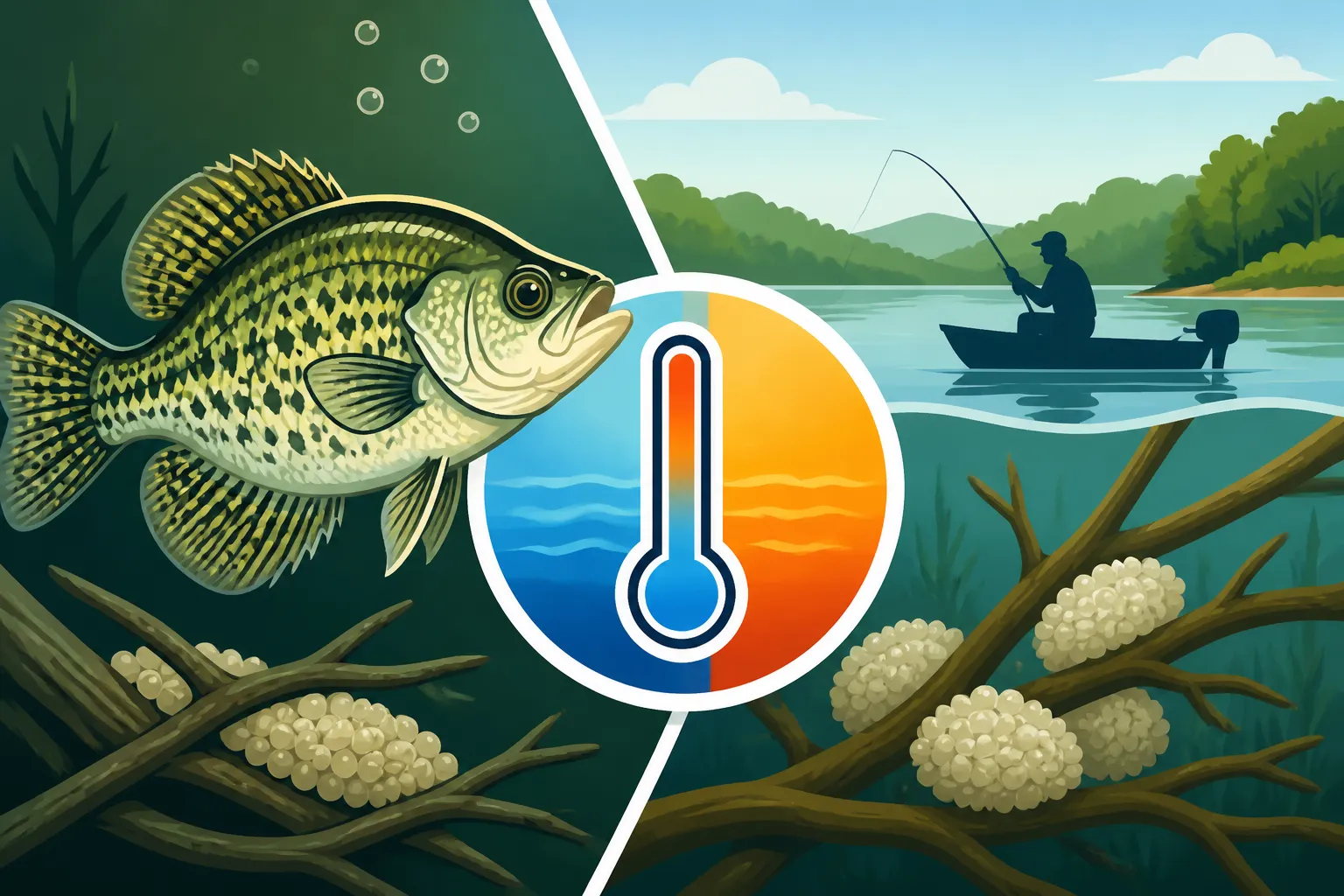
Think of water temperature as the crappie's biological clock. It dictates everything from their metabolism to their migratory patterns and, most importantly, their reproductive urges. As the waters of Kentucky's lakes and rivers begin to warm in the spring, it sends a clear signal to crappie that it's time to start preparing for the spawn. Unlike air temperature, which can fluctuate wildly day to day, water temperature changes more slowly and consistently, offering a much more reliable gauge for when crappie activity will pick up.
You might be out there on a sunny 70-degree day in March, but if the water is still in the low 50s, those crappie aren't going to be on their beds yet. They'll be staging, holding in deeper water, waiting for those precise temperature cues to tell them it's safe and optimal to move. This is why having a reliable thermometer on your boat or even a cheap handheld one for bank fishing is invaluable. It’s not just about guessing; it’s about knowing.
The Importance of the Pre-Spawn Period
Before the full-on spawning frenzy begins, there's a crucial pre-spawn phase that many anglers overlook. This is when crappie, especially the bigger females, start to gorge themselves, building up energy reserves for the strenuous act of spawning. They're typically found in staging areas, often adjacent to prime spawning flats or shallow cover, waiting for the water to reach that magic temperature window.
During this period, crappie are often schooled up and incredibly hungry, making them an excellent target for anglers. They might not be on the beds yet, but they're actively feeding and can be found in predictable locations. Understanding this phase allows you to extend your productive fishing window, catching fish even before the main event kicks off. It's like the calm before the storm, but with plenty of fish to be caught.
Post-Spawn Dispersion and Recovery
Once the crappie have completed their spawning rituals, they don't just disappear. They enter a post-spawn phase where they’re often exhausted and might move off the shallow beds to recover. This period can be tricky because the fish disperse, and their feeding patterns become less predictable than during the pre-spawn or peak spawn. Many anglers get frustrated during this time, wondering where all the crappie went.
However, these fish are still catchable! They'll often move to slightly deeper cover nearby, seeking refuge and an easy meal to regain their strength. Understanding that they're not gone, just resting and recovering, allows you to adjust your tactics and continue to find success. It's a natural part of their annual cycle, and knowing what to expect can save you a lot of head-scratching.
The Pre-Spawn Buildup: When Crappie Start to Stir
As winter's chill fades and Kentucky experiences those first hints of spring, a subtle shift begins beneath the surface of our lakes and rivers. This isn't the chaotic rush of the full spawn, but a slow, deliberate movement as crappie prepare for the big event. Catching crappie during this pre-spawn period can be incredibly rewarding, often yielding some of the biggest fish of the season as they bulk up.
Early Warming Trends (45-55°F)
When Kentucky waters first start creeping into the 45-55°F range, typically around late February or early March, crappie begin to shake off their winter lethargy. They're still somewhat sluggish, but their metabolism is picking up, and they'll start making their way from deep wintering holes towards shallower staging areas. Think of it as them slowly waking up and stretching their fins.
You'll often find them suspended over deeper channels, creek bends, or brush piles adjacent to the flats they'll eventually spawn on. On a large reservoir like Kentucky Lake, this might mean finding them in the deeper sections of bays and coves, slowly migrating towards the warmer, shallower water as the days get longer. These fish aren't in a hurry, but they are definitely on the move, and hungry enough to bite.
Locating Crappie in Transition Zones
During the pre-spawn, crappie are masters of the "transition zone." These are areas where deeper water meets shallower water, often characterized by subtle depth changes, creek channels, or isolated cover like submerged timber or brush piles. They're looking for a comfortable holding depth where they can ambush baitfish without expending too much energy, all while keeping an eye on those warming flats.
A good fish finder can be your best friend during this time, helping you pinpoint these staging areas. You're looking for schools of fish suspended at various depths, often relating to structure. For instance, on Lake Barkley, I've had great luck targeting crappie suspended around the old river channel bends in 15-20 feet of water, especially where there's a good brush pile nearby. They're not on the bottom, nor are they on the surface; they're in that thermal sweet spot.
Preparing Your Gear for the Upcoming Action
Don't wait until the crappie are on the beds to get your gear in order! The pre-spawn period is perfect for getting everything ready. You'll want to make sure your ultralight or light action rods are rigged up with fresh line, typically 4-6 lb test monofilament or fluorocarbon. Small jigs, like 1/16 or 1/32 ounce, tipped with minnows or soft plastics, are often highly effective.
It's also a good idea to stock up on a variety of jig colors. Sometimes they prefer chartreuse, other days it's black and chartreuse, or even a subtle grey. I often browse on Amazon for new jig head designs and soft plastic bodies to keep my options fresh. This proactive approach ensures you're not fumbling with old line or dull hooks when the fish are finally biting. For more on getting your setup right, check out our guide on how to rig a jig for crappie fishing.
The Peak Crappie Spawn: Kentucky's Golden Window
This is what every crappie angler dreams of – that magical time when the fish are shallow, aggressive, and seemingly everywhere. The peak crappie spawn in Kentucky is an exciting, albeit sometimes short-lived, event that offers some of the fastest action of the year. It's all about catching the water temperature just right.
Ideal Spawning Temperatures (58-68°F)
The sweet spot for the crappie spawn in Kentucky typically falls when water temperatures consistently hold between 58 and 68°F. This usually happens in April and sometimes extends into early May, depending on the specific lake and spring weather patterns. When the water hits this range, crappie move en masse to their chosen spawning grounds – often shallow, protected areas with plenty of cover.
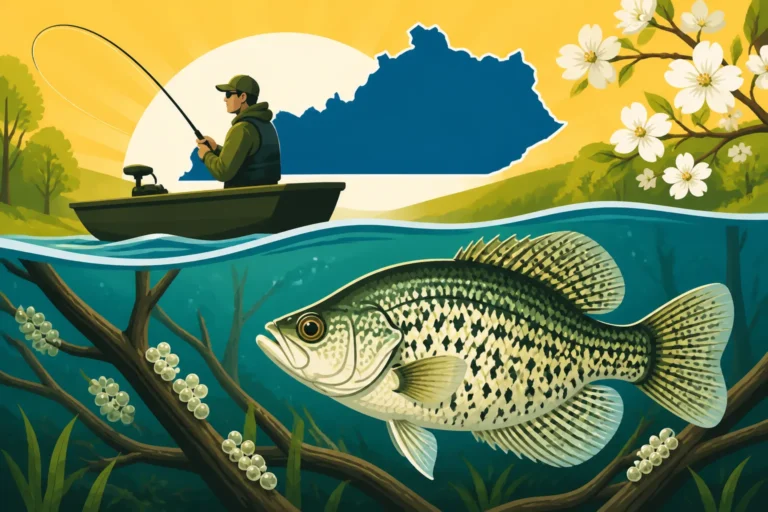
During this time, the males arrive first to fan out nests in soft bottom areas, often near submerged logs, stumps, cattails, or button bushes. They're aggressively guarding these nests, making them incredibly vulnerable to anglers. The females then move in to lay their eggs, and once they're done, they typically retreat to slightly deeper water, leaving the males to continue guarding the nests. Knowing that water temperature triggers the crappie spawn in Kentucky is crucial.
Visual Cues and Shallow Water Indicators
One of the most exciting aspects of the crappie spawn is the visual confirmation. You'll often see boats lined up along shallow banks, or anglers walking the shorelines, looking for "spider webbing" in the water, which indicates crappie fanning their nests. Look for dark spots on the bottom in clear, shallow water – those are often crappie beds.
Areas with submerged brush, laydowns, or weed beds in 2-5 feet of water are prime real estate. Think about those protected coves on Taylorsville Lake or the flooded timber on Green River Lake. When the sun is high, and the water is calm, you might even see the crappie themselves, especially the darker-colored males, guarding their territories. It’s an unmistakable sign that the action is on!
Targeting Actively Spawning Crappie Nests
Once you've located these spawning areas, the key is a stealthy approach and precise bait presentation. Vertical jigging or pitching small jigs (1/32 to 1/8 ounce) or live minnows under a slip bobber are highly effective. The goal is to drop your bait right into or just above a crappie nest. The male crappie will often strike aggressively to remove the perceived threat.
I've had days on Lake Cumberland where every cast into a specific brush pile resulted in a strike. Remember that crappie have a daily limit of 20 fish statewide in Kentucky, so always be mindful of your take and keep an eye on those numbers. For more details on specific regulations, check out the Kentucky Crappie Daily Limit Rules. Using lighter lines and a sensitive rod can help you detect those subtle bites, especially from the bigger females that might be a bit shyer.
| Spawn Phase | Typical Water Temperature Range | Crappie Behavior | Preferred Depth | Key Fishing Techniques |
|---|---|---|---|---|
| Pre-Spawn | 45-55°F (7-13°C) | Moving from deep to shallow staging areas, actively feeding, schooling | 10-20 feet (3-6m) | Vertical jigging, slow trolling, minnows |
| Peak Spawn | 58-68°F (14-20°C) | Moving shallow to fan nests (males), laying eggs (females), aggressive | 2-5 feet (0.6-1.5m) | Pitching jigs, slip bobbers, sight fishing |
| Post-Spawn | 68°F+ (20°C+) | Dispersing, recovering, moving to deeper cover, less aggressive feeding | 5-15 feet (1.5-4.5m) | Deeper jigging, tightlining, trolling cranks |
Post-Spawn Realities: Where Did All the Fish Go?
Ah, the post-spawn slump. It’s a familiar story for many Kentucky anglers. You were slaying crappie just last week, and now it feels like the lake is empty. Don't worry, the fish haven't vanished into thin air; they've simply transitioned to a different phase of their annual cycle. Understanding this shift is key to maintaining success through the late spring and into early summer.
The Retreat to Deeper, Cooler Waters
Once the arduous task of spawning is complete, crappie, especially the larger females, are exhausted. They need to recover and replenish their energy stores. This often means a move away from the super-shallow spawning flats to slightly deeper, cooler, and more stable water. They're not going to their deep wintering holes just yet, but they're seeking comfort and security.
You'll find them congregating around deeper brush piles, submerged creek channels, bridge pilings, or the edges of main lake points. These areas offer a buffet of baitfish and a reprieve from the intense sun and fluctuating temperatures of the very shallow water. On a lake like Barren River Lake, you might find them moving from the back of shallow coves to the first few significant drops or points leading into deeper water.
Summer Patterns and Locating Recovering Crappie
As the water continues to warm well past the 68°F mark, crappie settle into their summer patterns. They'll often be found suspended in open water over baitfish schools, or tight to deeper structure. This is when electronic fish finders truly shine. You're no longer looking for fish on the bottom in 3 feet of water; you're often looking for schools of fish suspended at 10-20 feet over much deeper water, or tucked into the shaded side of deep brush.
The feeding can still be excellent, but it requires a different approach. They might not be as aggressively attacking baits as they were during the spawn. On large bodies of water like Kentucky Lake, crappie will often relate to the main lake channel or deeper river bends, especially where there are significant changes in depth or submerged timber. Keep an eye out for concentrations of baitfish, as the crappie will never be far behind.
Adjusting Techniques for Post-Spawn Success
Since crappie are deeper and often more dispersed during the post-spawn, your techniques need to adapt. Gone are the days of sight-fishing shallow beds. This is prime time for spider rigging, slow trolling with multiple rods, or vertical jigging over deeper cover. Small crankbaits or larger jigs can also become effective as crappie regain their energy and chase down more substantial meals.
When fishing deeper structure, consider using heavier jigs (1/8 to 1/4 ounce) to get down to the strike zone quickly. If you’re trolling, experiment with different depths using planer boards or different weight jigs to cover more of the water column. Don't be afraid to try different jig colors or even live minnows, which are often irresistible to recovering crappie. You can find a good selection of specialized crappie rods and reels for this at many online retailers, like Amazon.
Regional Nuances and Lake-Specific Factors
While water temperature provides the general framework for the crappie spawn, Kentucky is a diverse state with many different types of fishing waters. Each lake, river, and even specific sections within a large reservoir can have its own subtle nuances that impact when and how the crappie spawn occurs. Ignoring these local details can lead to missed opportunities.
How Lake Size and Depth Influence the Spawn
Larger, deeper lakes like Lake Cumberland will generally see the crappie spawn begin and end a bit later than smaller, shallower lakes. This is because larger bodies of water take longer to warm up in the spring and hold their temperature more consistently. A vast reservoir has a huge thermal mass that resists rapid changes.
Conversely, a smaller, shallower lake or a farm pond will warm up much faster. You might find crappie spawning in a shallow central Kentucky pond weeks before they even start thinking about it in the deeper arms of a major reservoir in the western part of the state. River systems, like the lower portions of the Ohio River tributaries, can also have earlier spawns due to faster warming water and often shallower conditions. Always consider the specific body of water you're fishing.
Noteworthy Kentucky Lakes and Their Crappie Patterns
Kentucky is blessed with numerous excellent crappie fisheries, each with its own character.
- Kentucky Lake & Lake Barkley: These twin lakes in Western Kentucky are legendary for crappie. The sheer size means the spawn can be drawn out, with crappie spawning in waves. Look for them in shallow bays and coves with abundant flooded timber or brush. Anglers often refer to specific areas, like Big Sandy or Blood River, as prime crappie zones. The Kentucky Lake Crappie Fishing: Best Time of Year often aligns perfectly with those prime spawn temperatures.
- Barren River Lake: Known for its clearer water and excellent crappie population, Barren River Lake might see crappie moving to shallower points and creek arms. However, remember that Barren River Lake Crappie Size Limit in Kentucky is a bit unique with its 10-inch minimum size limit, so always check local regulations.
- Taylorsville Lake: Closer to Louisville and Lexington, Taylorsville Lake offers consistent crappie fishing. Its many coves and standing timber make for ideal spawning habitat when temperatures are right.
- Lake Cumberland: While renowned for trout and bass, Lake Cumberland also has a strong crappie population. Due to its depth and cooler overall water temperatures, the crappie spawn here can often be a bit later and more concentrated in the warmer, shallower embayments.
The Impact of Weather Fronts and Water Clarity
Crappie, like most fish, are sensitive to sudden changes. A strong cold front that brings plummeting air temperatures and prolonged cloudy weather can cause spawning crappie to pull back from the shallowest water. They might not completely abandon their beds, but they'll often drop into slightly deeper adjacent cover until conditions stabilize and the water warms back up. This can make for some frustrating days if you hit it wrong.
Water clarity also plays a significant role. In clearer waters, crappie can be more skittish, and you might need a more subtle approach with lighter lines and smaller baits. In stained or murky water, they might feel more secure and be less wary, allowing for slightly more aggressive tactics and brighter jig colors. After a heavy rain, runoff can cool and muddy the water, pushing crappie off their beds temporarily. Waiting a day or two for the water to settle and warm slightly can often make a huge difference.
Essential Gear and Techniques for Spawning Crappie
When crappie are actively spawning, they’re often more concentrated and aggressive, but that doesn't mean you can just throw anything at them and expect success. Having the right gear and employing the correct techniques will significantly increase your catch rate during this prime time.
Best Baits and Lures for Spawning Crappie
For spawning crappie, simplicity often reigns supreme. Live minnows are a classic for a reason – they're irresistible to hungry crappie, especially those guarding nests. Hook them lightly through the back or lips and present them under a small slip bobber or tightline them to a piece of cover.
When it comes to artificials, small jigs are king. Think 1/32 to 1/8 ounce jig heads paired with soft plastic bodies like tubes, curly-tail grubs, or small paddle-tail baits. Color can be crucial; popular choices include chartreuse, white, black and chartreuse, pink, and various shad imitations. Often, a tiny bit of flash or glow can make a difference. You can find a huge variety of these on Amazon, allowing you to experiment with what works best on your particular lake. For some excellent options, check out the Best Crappie Jigs for Kentucky Waters.
Shallow Water Jigging and Live Bait Strategies
When crappie are on their beds in shallow water, vertical jigging or precise casting is often the most effective method. If you're fishing from a boat, approach slowly and quietly, using your trolling motor to position yourself. Drop a small jig or minnow directly into detected beds or brush piles. Allow the bait to sink slowly, watching your line for any twitch or pause that indicates a bite.
For bank anglers, a long crappie pole (10-14 feet) can be incredibly effective for reaching out to cover without spooking the fish. Gently drop a jig or a minnow under a small bobber near submerged logs, lily pads, or cattails. Keep your rod tip high and be ready for an immediate strike. For more detailed instructions, our guide on How to Jig for Crappie in Shallow Water can provide excellent tips.
Reading the Water and Interpreting Crappie Behavior
Beyond water temperature, learning to "read the water" is a skill that comes with experience but is invaluable during the spawn. Look for subtle signs: flickers of movement near cover, darker patches on the bottom indicating fanned nests, or even changes in water depth and clarity near promising areas. Pay attention to what the fish are telling you. Are they hitting aggressively, or are the bites subtle? Are they suspending at a certain depth?
If you're not getting bites, don't be afraid to change your retrieve, jig color, or even the depth you're fishing. Sometimes moving just 10 feet to the left or right, or changing your presentation slightly, can turn a slow day into a spectacular one. Remember, crappie can be finicky, and cracking their code often requires persistence and observation. The more you watch, the more you learn, and the more successful you'll become at nailing that perfect crappie spawn window.
Disclaimer
Fishing regulations, including license requirements, bag limits, and size restrictions, can change. Always consult the latest Kentucky Department of Fish and Wildlife Resources (KDFWR) regulations before heading out on the water. This guide provides general information and should not be considered a substitute for official KDFWR publications.