Best Anchors for Fishing on Kentucky Lake
There’s nothing quite as frustrating as finding that perfect fishing spot on Kentucky Lake, getting your line in the water, and then realizing your boat is slowly but surely drifting away from the honey hole. You try to reposition, drop your anchor again, and the whole dance repeats, costing you precious fishing time and probably some sanity. Kentucky Lake is a magnificent body of water, but its size, diverse bottom, and sometimes relentless currents and wind can make proper anchoring a real headache. This guide is here to walk you through choosing the best anchors and anchoring practices to keep you firmly in place, whether you’re chasing bass, crappie, or catfish.
The Unique Challenges of Anchoring on Kentucky Lake
Kentucky Lake isn't just a big pond; it's a massive reservoir with a complex personality that changes with the season, weather, and even the time of day. What works perfectly on a calm, small lake back home might utterly fail here, leading to endless frustration and lost fishing opportunities. Understanding these challenges is the first step toward conquering them.
Dealing with Strong Currents and Wind
One of the biggest culprits behind anchor drift on Kentucky Lake is the combination of strong currents and unpredictable winds. The lake is part of the Tennessee River system, meaning there's often a flow, especially near the dam or in narrower channels. When the Tennessee Valley Authority (TVA) is generating power, currents can pick up significantly, even in seemingly calm areas. Add a gusty crosswind, and your boat can become a kite, dragging your anchor across the bottom like a sled. This isn't just annoying; it can be dangerous if you drift into navigation channels or shallow hazards. You need an anchor that truly digs in and holds, resisting the relentless pull of moving water and air.
Navigating Different Bottom Compositions
Another tricky aspect of Kentucky Lake is its varied bottom. You're not always dealing with soft mud. In some areas, you might encounter gravel beds, sandy flats, rocky points, or even old stumps and debris from when the lake was first impounded. A single anchor type isn't going to perform optimally in all these conditions. A fluke anchor might bury itself perfectly in soft mud but skip and slide over a rocky bottom. Conversely, an anchor designed for rocks could get hopelessly snagged in submerged timber. Having a versatile anchor or even different anchor types on board can make a huge difference in your success and prevent the headache of a lost anchor.
Importance of Secure Positioning for Fishing
For serious anglers, being able to hold a precise position is paramount. Whether you're drop-shotting a submerged brush pile for crappie, jigging a ledge for bass, or soaking cut bait for a trophy catfish, being directly over your target is key. Drifting even a few feet can take your bait out of the strike zone, turning a hot bite into a cold shoulder. A reliable anchor allows you to set up confidently, deploy multiple lines, and focus on fishing instead of constantly correcting your boat's position. This peace of mind is invaluable, especially when you've done your homework, found the fish, and just need to stay put. It's about maximizing your time on the water effectively.
Popular Anchor Types for Large Reservoirs
When it comes to anchoring on a sprawling body of water like Kentucky Lake, not all anchors are created equal. Different designs excel in different conditions, and understanding their strengths and weaknesses can save you a lot of grief. Let's dive into the most common types you'll encounter and why they might be a good fit for your Kentucky fishing adventures.
Fluke or Danforth Anchors
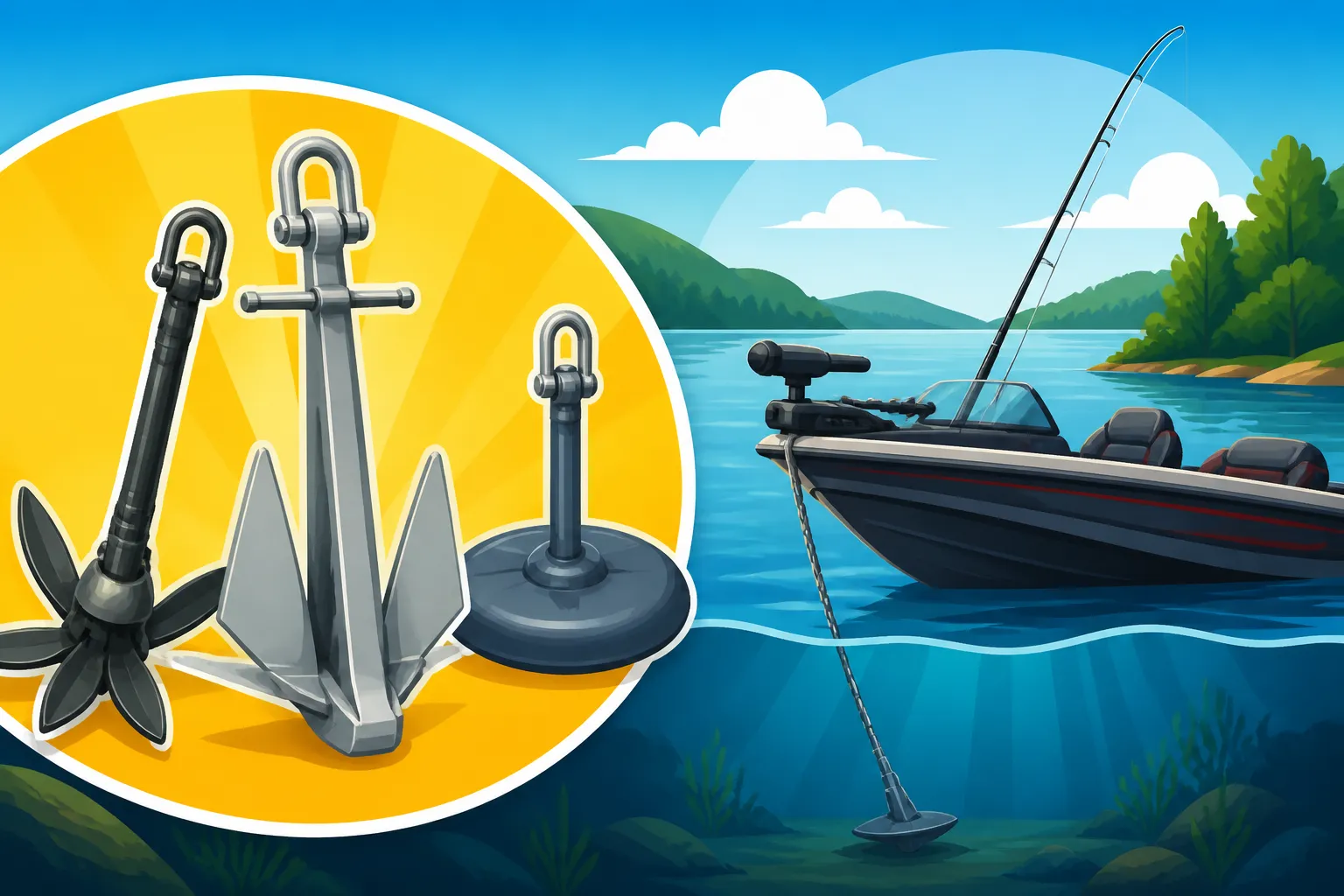
The fluke anchor, often generically called a Danforth, is a staple for many freshwater anglers, and for good reason. Its design features two large, flat flukes that pivot and dig deep into soft bottoms like mud and sand. When pulled horizontally, these flukes create significant resistance, allowing the anchor to set quickly and hold firmly. For the vast expansions of Kentucky Lake where you might be fishing over silty or sandy flats, especially in coves or slower-moving backwaters, a fluke anchor can be incredibly effective.
The downside? If you encounter a hard, rocky, or gravely bottom, those flukes might just skim over the surface without finding anything to dig into. This can lead to endless re-setting attempts. They also don't hold as well in extremely heavy currents compared to some other designs. However, for sheer holding power in soft stuff, they're hard to beat. You'll often find a wide selection of these, from budget-friendly options to more robust, galvanized versions, at any good marine supply store or online retailer like Amazon. Many anglers keep a fluke anchor as their primary choice for versatility.
Claw Bruce Anchors
Claw anchors, often referred to as Bruce anchors, get their name from their distinctive claw-like shape. Originally designed for offshore oil rigs, they are incredibly popular in both saltwater and freshwater for their consistent performance across a variety of bottom types. The three-pronged design allows them to dig in and hold well in mud, sand, and even some rock and gravel. They are known for their ability to re-set quickly if the boat shifts and the anchor breaks free momentarily.
What makes the claw anchor a strong contender for Kentucky Lake is its ability to adapt. While it might not dig as deep as a fluke in pure mud, it will often find a purchase where a fluke might just slide. This makes it a great "all-around" anchor for a lake with such diverse bottom conditions. They're robust and less prone to getting fouled with debris than some other types. If you're looking for a reliable, no-nonsense anchor that performs consistently, a claw anchor is definitely worth considering. You can usually find a good range of sizes at places like Bass Pro Shops, ensuring you get one appropriate for your boat's size and weight.
River Anchors Grapnel and Mushroom
While the term "river anchor" might seem self-explanatory, it actually encompasses a few different designs that are tailored for flowing water or specific bottom types.
- Grapnel Anchors: These anchors feature four or more long, thin tines that resemble a grappling hook. They are fantastic for snagging onto rocks, submerged timber, or even thick aquatic vegetation. If you're fishing near rocky banks, old stump fields, or dense weed beds on Kentucky Lake, a grapnel can be very effective. However, their aggressive design means they can get snagged easily, sometimes permanently, which is why many grapnels are designed with foldable tines that can be bent straight under enough pressure for retrieval, or even feature a slip ring at the crown to pull them free from the opposite end.
- Mushroom Anchors: These are typically smaller, dome-shaped anchors designed for very soft, silty, or muddy bottoms, where they rely on suction and their broad surface area to hold. While they can work well in calm conditions or for lighter craft like kayaks or canoes in slow-moving water, they generally lack the brute holding power required for a larger fishing boat on a dynamic lake like Kentucky Lake, especially when dealing with significant wind or current. They're usually reserved for mooring buoys or very specific, light-duty applications rather than actively holding a fishing boat in place.
Here’s a quick comparison of these popular anchor types:
| Anchor Type | Best Bottoms | Holding Power (Relative) | Pros | Cons |
|---|---|---|---|---|
| Fluke (Danforth) | Mud, Sand | High | Sets quickly, digs deep in soft bottoms | Poor on rock/gravel, can drag in heavy current |
| Claw (Bruce) | Mud, Sand, Gravel, Some Rock | Medium-High | Consistent across diverse bottoms, re-sets well | Less aggressive bite in pure mud than fluke |
| Grapnel | Rock, Weeds, Submerged Timber | Variable | Excellent for snagging irregular features | Prone to getting permanently snagged, can struggle in open mud/sand |
| Mushroom | Very Soft Mud (Light Duty Only) | Low | Simple, good for light boats/mooring | Very poor holding for fishing boats, limited use |
Matching Your Anchor to Your Fishing Needs
Choosing the right anchor isn't just about picking a type; it's about making sure that anchor is the right size and paired with the correct accessories for your specific boat and fishing style on Kentucky Lake. Overlooking these details can turn a good anchor into a frustrating one.
Considering Your Boat Size and Weight
This is perhaps the most critical factor. A small jon boat fishing a calm cove needs a very different anchoring setup than a 20-foot bass boat trying to hold position on a windy main lake point. Every anchor manufacturer will provide a weight recommendation based on boat length and displacement (weight). Always err on the side of caution and go slightly heavier if you're frequently fishing in strong currents or heavy winds, which are common on Kentucky Lake. A general rule of thumb is that a heavier, larger anchor will provide more reliable holding power than a smaller, lighter one of the same design. Don't skimp here; a cheap, undersized anchor is a recipe for disaster and constant re-setting. For example, a 10-pound fluke anchor might be fine for a 16-foot aluminum boat, but a 25-foot fiberglass cuddy cabin will need something much more substantial, possibly in the 20-30 pound range or more, depending on its specific design. Checking the manufacturer's recommendations for your specific boat size is paramount.
Fishing Techniques and Required Stability
Your preferred fishing techniques also play a huge role in anchor selection. Are you typically drift fishing and only need a temporary hold now and then, or do you need to sit absolutely still over a very specific structure?
- Trolling/Drifting: If you mostly move with the current or use a trolling motor for propulsion, you might only need a lighter anchor for occasional stops, or a smaller, more easily deployed anchor (perhaps even a specialized drift sock or shallow water anchor like a Power-Pole or Talon, though these are different from traditional anchors).
- Spot Fishing/Bottom Fishing: If you're targeting specific humps, ledges, or brush piles, you need an anchor that can bury quickly and hold immovably. This is where a well-chosen fluke or claw anchor, properly set, becomes invaluable. The ability to stay exactly where the fish are can be the difference between a great day and a frustrating one. Best Livewell Setup for Bass Boats might be something to consider if you're holding position to catch and keep your limit.
- Bank Fishing: While this article focuses on boat anchors, it's worth noting that if you're exclusively bank fishing, your anchoring needs are obviously non-existent! However, for anglers bridging the gap, understanding boat positioning is still key. If you're interested in alternative methods for fixed positions, exploring options in Best Tackle and Gear for Bank Fishing could be useful.
The Role of Anchor Rode and Chain
An anchor is only as good as the "rode" (the line connecting the anchor to the boat) and chain that accompanies it. Many beginners make the mistake of just tying a rope directly to the anchor, which severely reduces its effectiveness.
- Anchor Chain: A length of heavy chain (typically 6-10 feet, but can be more for larger boats or deeper water) is crucial. The chain serves two primary purposes:
- Angle of Pull: It creates a lower, more horizontal angle of pull on the anchor, allowing the flukes or claws to dig in more effectively. Without chain, the anchor rode pulls upwards, trying to lift the anchor rather than letting it bury.
- Weight: The weight of the chain itself acts as a shock absorber, helping to prevent the anchor from breaking free in choppy conditions or strong gusts of wind. It also helps the anchor sink quickly and stay on the bottom.
- Anchor Rode (Rope): The length of your anchor rope is critical. The general rule for effective anchoring is to deploy an anchor rode-to-depth ratio of at least 7:1 in calm conditions (7 feet of rope for every 1 foot of depth). In rougher water, strong currents, or heavy winds, you might need a ratio of 10:1 or even more. On a deep lake like Kentucky Lake, this means you need a lot of rope. If you're fishing in 30 feet of water, you'll need at least 210 feet of rope, plus your chain. Having enough rope ensures your anchor lies flat on the bottom and has enough scope to hold. A good quality, braided nylon rope is ideal as it has some stretch, which further helps to absorb shock loads. When selecting your anchor setup, consider a visit to Bass Pro Shops or another marine outfitter for expert advice and proper supplies.
Essential Anchor Systems and Safety Tips
Having the right anchor and rode is a fantastic start, but a truly effective and safe anchoring setup involves a bit more. From choosing the right accessories to understanding basic safety protocols, a well-thought-out anchor system will make your time on Kentucky Lake much more enjoyable and worry-free.
Anchor Ropes, Chains, and Shackles
We touched on rode and chain, but let's expand a little. Beyond just length, the quality and maintenance of these components are paramount. Your anchor rope should be robust, typically made of nylon for its strength and elasticity, and rated for your boat's size. Inspect it regularly for fraying, cuts, or weak spots. A worn rope can fail unexpectedly, leaving you adrift or losing your anchor.
The chain should be marine-grade galvanized or stainless steel to resist corrosion. It connects to the anchor with a shackle, and to the rope with a thimble and another shackle, or a secure splice. Ensure all shackles are properly tightened and secured, often with a zip tie or wire through the pin to prevent it from vibrating loose. A swivel can be helpful between the anchor and chain to prevent line twisting, especially if you're swinging around a lot due to current or wind. Remember, every connection point is a potential weak link, so invest in quality hardware and check it routinely.
Utilizing Anchor Pulleys and Retrieval Aids
Hauling up a heavy anchor and hundreds of feet of chain and rope, especially from deep water, can be back-breaking work. This is where anchor pulleys and other retrieval aids become your best friend.
- Bow Pulley/Roller: A roller on the bow allows the anchor to be smoothly deployed and retrieved, reducing chafe on your boat's hull and making the whole process easier.
- Anchor Winches: For larger boats or those who want maximum convenience, an electric anchor winch (windlass) can be a game-changer. These devices handle all the heavy lifting at the push of a button. While a significant investment, they make anchoring effortless and are highly recommended for frequent use on big water.
- Anchor Retrieval Rings/Balls: These simple but ingenious devices use the boat's forward motion to help retrieve a stuck anchor. You clip a ring or ball onto your anchor line, motor past the anchor, and the buoyancy of the ball or the ring's design helps pull the anchor free from the bottom. This can be a lifesaver if your anchor gets snagged on a stump or rock pile, which is not uncommon on Kentucky Lake.
- Trolling Motors with Spot Lock: While not strictly an "anchor" in the traditional sense, modern electric trolling motors with GPS-enabled "Spot Lock" or "Anchor Mode" technology are revolutionizing boat positioning. Brands like Minn Kota's Ultrex or MotorGuide's Xi5 can hold your boat precisely in place using GPS coordinates, even in wind and current, without dropping a physical anchor. This is an incredible tool for bass and crappie anglers who need to work specific spots. Paired with a traditional anchor for more permanent holds or in extreme conditions, it offers the ultimate in boat control. Consider pairing your anchor setup with a reliable trolling motor system, like those discussed in Best Trolling Motors for Kentucky Lake Bass Fishing.
Safety Practices and Emergency Procedures
Anchoring isn't just about holding position; it's also about safety.
- Proper Deployment: Always deploy your anchor slowly from the bow (front) of your boat, never the stern (back). Anchoring from the stern can cause your boat to swamp in rough water. Once deployed, slowly motor backward to ensure the anchor sets firmly, and then ease off, letting out the appropriate amount of rode.
- Cleat Selection: Secure your anchor line to a strong, properly mounted bow cleat. Never tie it to a flimsy rail or anything that could break or pull free.
- Anchor Tripping Line: For grapnel anchors or when fishing notoriously snaggy areas, consider attaching a separate, lighter "tripping line" to the crown (top) of the anchor. If the main line gets stuck, you can pull the tripping line to retrieve the anchor from the opposite end, often freeing it.
- Emergency Anchor: It's always a good idea to have a secondary, smaller anchor on board for emergencies or as a stern anchor to prevent swinging if you need to hold a very precise heading in a current.
- Know Your Regulations: Always be aware of any local regulations regarding anchoring, especially in navigation channels or designated no-anchoring zones. Kentucky Fishing Regulations Explained can provide valuable insights into these rules. Also, make sure your boat is properly registered, as outlined in Kentucky Boat Registration Requirements Explained, and that everyone on board is aware of Life Jacket Rules for Boats in Kentucky.
By investing in the right anchor, pairing it with quality rode and chain, and understanding proper deployment and retrieval techniques, you can turn the challenge of anchoring on Kentucky Lake into a reliable and confident part of your fishing strategy. This gives you more time to enjoy the fishing and less time worrying about where your boat is going.
Disclaimer
This article is for general informational purposes only and does not constitute professional advice. Laws, prices and regulations vary by location and change over time. Consult a qualified professional for guidance on your specific situation.