Kentucky’s Best Lakes for Muskie Fishing
For any angler chasing the true thrill of the catch, the muskie is a fish that captures the imagination like no other. But let's be real, tracking down these elusive beasts in Kentucky can feel like searching for a needle in a haystack if you don't know where to start. This guide is dedicated to cutting through the confusion, revealing Kentucky's top lakes for muskie fishing, and giving you the insights you need to make your next muskie adventure a success.
What Makes Muskie Fishing in Kentucky Unique?
Kentucky, believe it or not, has a surprisingly robust and dedicated muskie fishery, offering some incredible opportunities for those willing to put in the time. It’s not just about the size of the fish; it’s the whole experience, the challenge, and the payoff when that toothy torpedo finally hits your lure. It’s a completely different ballgame than chasing bass or crappie, requiring a specific mindset and a whole lot of patience.
The Elusive "Fish of 10,000 Casts"
You've probably heard the old adage about the "fish of 10,000 casts," and while it might not always take that many, it certainly speaks to the muskie's reputation. These are apex predators, incredibly smart, and often solitary. They don't just jump on any old bait; they stalk, they follow, and they can turn away at the last second, leaving you with nothing but a pounding heart. This elusiveness is precisely what draws so many dedicated anglers to the pursuit. It's a mental game as much as a physical one, demanding persistence and a deep understanding of their habits. When you finally connect, it feels like you've earned it, every single cast leading to that one explosive moment.
Kentucky's muskie waters, while not as widely known as some northern states, hold their own secrets. Here, you're often fishing clearer, warmer waters than their Canadian cousins, which presents its own set of challenges and strategies. The habitat varies, from standing timber to rocky points, giving you a diverse range of structures to explore. It's a journey of discovery with every outing.
Kentucky's Stocking Program and Habitat
The thriving muskie population in Kentucky isn't just a happy accident; it's the result of strategic and consistent efforts by the Kentucky Department of Fish and Wildlife Resources (KDFWR). They run an impressive stocking program, ensuring that designated lakes receive regular infusions of muskie fingerlings, growing them to a size where they can become formidable predators. This commitment to maintaining healthy muskie fisheries is what makes Kentucky a legitimate destination for muskie enthusiasts.
These fish are introduced into specific lakes where the habitat is just right—deep, clear waters with ample forage fish, plenty of cover like standing timber, weed lines, and rock structures for ambushing prey. The KDFWR also manages these fisheries with specific regulations, often including length limits and catch-and-release practices, to protect these valuable sportfish and allow them to grow to trophy sizes. Understanding these efforts helps you appreciate the resource and encourages responsible angling practices. You can learn more about the diverse fish species in the state by checking out our Kentucky Fish Species Guide: 265 Types You Can Catch.
The Thrill of the Fight
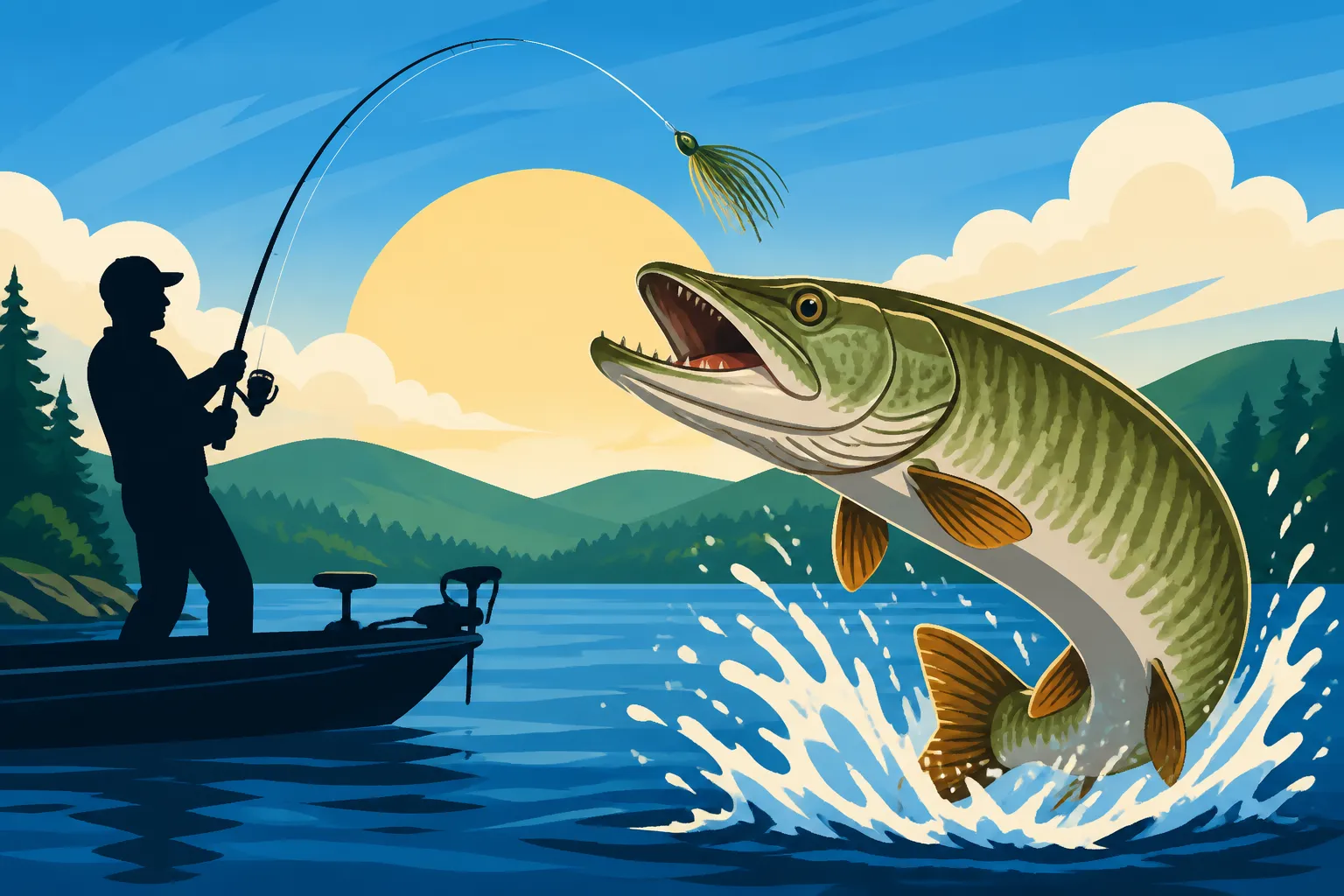
There’s simply nothing quite like a muskie strike. It’s often sudden, violent, and utterly exhilarating. One moment you're methodically retrieving your oversized lure, the next your rod is nearly ripped from your hands as a powerful fish explodes on the surface or hammers your bait in the depths. Muskie are notorious for their strong runs, head shakes, and aerial acrobatics, testing your tackle and your nerves to their limits.
These aren't fish you finesse; these are fish you battle. The sheer power they possess, combined with their sharp teeth and muscular bodies, makes every encounter memorable. Landing one is a true accomplishment, a testament to skill, patience, and a bit of good fortune. It’s a dance that leaves you breathless, recounting every detail of the fight for years to come. For anyone who loves a challenge, the thrill of a Kentucky muskie fight is something you have to experience.
Cave Run Lake: The Muskie Capital of Kentucky
When anglers talk about muskie fishing in Kentucky, one name inevitably rises to the top: Cave Run Lake. Nestled in the Daniel Boone National Forest, this lake isn't just a pretty face; it's a bonafide muskie factory, often hailed as the best muskie fishery south of the Great Lakes. It’s the place where serious muskie hunters from all over the region converge, hoping to land the fish of a lifetime.
Why Cave Run Stands Out for Muskie
Cave Run Lake earned its reputation for a reason. Its unique blend of clear water, diverse structure, and a meticulously managed stocking program creates an ideal environment for muskie to thrive. The lake spans over 8,000 acres, offering a vast array of fishing opportunities, from shallow bays and coves filled with timber to deep river channels and rocky points. This variety ensures that muskie can find suitable habitat year-round, moving with the seasons to different depths and structures.
The KDFWR has put immense effort into making Cave Run a premier muskie destination, consistently stocking healthy fish and implementing regulations that promote trophy growth. Anglers frequently report seeing and catching muskie over 40 inches, with true giants pushing into the upper 40s and even 50-inch range. The sheer number of active muskie in the lake, combined with the potential for truly massive fish, is what truly sets Cave Run apart as Kentucky’s undisputed muskie capital. Many avid anglers plan their trips around Cave Run Lake Fishing Guide and Best Spots.
Key Fishing Areas and Hotspots
Cave Run Lake offers a wide variety of terrain, and knowing where to focus your efforts can make all the difference. The upper reaches of the lake, particularly the areas fed by the Licking River, tend to be shallower and feature more standing timber and weed lines. These areas are fantastic during the spring and fall when muskie are more active in cooler, oxygenated water and are hunting baitfish in the cover. Places like the headwaters near Bangor and the Timberline area are classic spring hotspots.
As the water warms in summer, muskie often retreat to deeper, cooler water. This is when the main lake basin, with its deeper channels, rocky points, and submerged humps, becomes prime territory. Look for areas where old creek beds intersect with main lake points or where significant depth changes occur. Many anglers also find success trolling deeper crankbaits along the river channel. In the fall, muskie become incredibly active, feeding aggressively before winter, and can be found transitioning between these deeper structures and shallower feeding flats. Exploring Cave Run Lake's Best Muskie Fishing Spots can offer even more specific guidance.
Best Seasons and Conditions
While muskie can be caught year-round at Cave Run Lake, certain seasons definitely offer better odds for success. Spring, particularly April and May, is a prime time as muskie move shallower to spawn and then feed heavily. Look for warming water temperatures, around 50-65 degrees Fahrenheit, in protected bays and around newly growing vegetation. Big jerkbaits and glide baits can be incredibly effective during this period.
Summer fishing often means early morning or late evening action, or fishing deeper during the heat of the day. Muskie will relate to thermoclines and deep cover. Trolling or using large, deep-diving crankbaits can be productive. Fall, from September through November, is arguably the most consistent time for trophy muskie. The fish are bulking up for winter, feeding aggressively, and often willing to chase big baits. Cooler water temperatures (50-60 degrees) bring them shallower, and they will follow baits with incredible intensity. Overcast days, especially with a bit of chop on the water, are often ideal conditions, as muskie tend to be more active in lower light and when the surface is disturbed.
Green River Lake: A Thriving Muskie Fishery
While Cave Run Lake often gets the spotlight, Green River Lake is a fantastic muskie fishery in its own right, offering a slightly different experience and excellent opportunities for anglers. Located in central Kentucky, this sprawling 8,200-acre lake is known for its clear waters, impressive depths, and healthy population of elusive "green fish." It’s a destination that muskie anglers should definitely have on their radar.
Understanding Green River's Muskie Population
Green River Lake has quietly developed into a premier muskie destination, largely due to ongoing stocking efforts by the KDFWR and the lake's rich, diverse ecosystem. The muskie here are known for their strong fighting spirit and excellent health, often growing to impressive sizes. What makes Green River unique is its blend of open water, extensive standing timber, and a winding river channel, providing ample ambush points and forage opportunities for these top predators.
The muskie population is well-established, with good numbers of fish in various size classes, meaning you have a decent shot at both respectable keepers and genuine trophy fish. While perhaps not as densely populated with muskie as Cave Run, the fish in Green River can often be less pressured, making them potentially more aggressive if you find them. The challenge here is often navigating the vast amount of standing timber, which provides incredible cover but can be a tackle eater. For those looking to explore this body of water, our Green River Lake Fishing Guide and Best Spots offers a deeper look into its offerings.
Navigating the Lake for Muskie
Fishing Green River Lake for muskie requires a keen eye for structure and an understanding of how muskie relate to different types of cover. The lake is famous for its abundant standing timber, especially in the upper and middle sections. This timber provides incredible habitat for muskie and their prey, but it can be tricky to fish. Using your electronics to identify breaks in the timber, submerged points, or channel edges near the timber is crucial.
Beyond the timber, look for rocky points, main lake humps, and areas where creeks feed into the lake. These transition zones often hold baitfish, which in turn attract muskie. The main lake basin, with its deeper water, becomes important during the hotter summer months when muskie seek cooler temperatures. Trolling can be very effective in the more open areas, allowing you to cover vast stretches of water, while casting around timbered coves and points is best when actively hunting visible structure. Always exercise caution when navigating timber, and consider investing in a good mapping system to help you understand the underwater landscape.
Seasonal Patterns for Success
Just like Cave Run, Green River Lake's muskie respond to seasonal changes, and adapting your approach accordingly will boost your success. In spring, as water temperatures rise into the 50s and 60s, muskie become active in shallower areas. Focus on the timbered coves and bays where baitfish are abundant, and where the sun warms the water first. Jerkbaits, glide baits, and larger spinnerbaits are excellent choices during this period.
Summer fishing on Green River Lake can be tough due to the heat, but muskie are still catchable. They'll often move to deeper water, seeking the cooler thermocline, or hold tight to the densest parts of the standing timber. Early mornings and late evenings can provide some surface action, but during the day, focus on deeper breaks, river channels, and main lake points using deep-diving crankbaits or even vertical jigging. Fall is another peak season, with muskie feeding heavily in preparation for winter. They can be found cruising deeper weed lines, rocky points, and around the edges of the standing timber, readily chasing large crankbaits, bucktails, and soft plastic swimbaits. The aggression of fall muskie on Green River is something special.
Buckhorn Lake: Eastern Kentucky's Muskie Gem
Tucked away in the mountains of Eastern Kentucky, Buckhorn Lake might be smaller than its more famous counterparts, Cave Run and Green River, but it offers a unique and intimate muskie fishing experience. This 1,200-acre reservoir, known for its scenic beauty and rugged shoreline, supports a respectable muskie population that often gets overlooked, making it a hidden gem for those seeking these elusive fish away from larger crowds.
Buckhorn's Muskie Potential
Buckhorn Lake's muskie fishery is maintained through regular stocking by the KDFWR, ensuring a healthy population despite its smaller size. The lake's clear, deep waters and abundant natural structure, including rock bluffs, submerged timber, and creek channels, create excellent habitat for muskie. While you might not find the sheer numbers reported in Cave Run, Buckhorn offers the potential for some truly large fish, and the less pressured environment can sometimes lead to more willing strikes.
The lake is relatively narrow, following the old Middle Fork of the Kentucky River channel, which means muskie are often concentrated along these main lake features. This can make them easier to locate for anglers who understand the lake's contours. Buckhorn provides a fantastic opportunity for both boat and kayak anglers to target muskie, with plenty of coves and pockets to explore. The sense of solitude and natural beauty while fishing for muskie here adds an extra layer to the experience.
Tactics for Buckhorn Lake
Given Buckhorn Lake's unique characteristics, specific tactics can improve your chances of success. Focusing on the main lake channel and its adjacent drop-offs is often key, as muskie will relate to these deeper contours, especially during warmer months. Look for irregularities along the channel, such as points, humps, or any remaining standing timber from when the lake was impounded.
Casting large bucktails, crankbaits, and glide baits along these structures is a common approach. In the spring and fall, muskie might move into the shallower, rockier coves and flats, so don't be afraid to probe these areas with jerkbaits or topwater lures, especially during low-light conditions. Trolling can also be effective in the main lake, allowing you to cover water efficiently and present baits at specific depths. Since the lake is smaller, you can often work sections more thoroughly than on larger bodies of water. Always keep an eye on your fish finder to mark baitfish schools, as muskie will never be far from their food source.
Access and Facilities
Buckhorn Lake State Resort Park provides excellent access to the lake, making it convenient for anglers. There are well-maintained boat ramps available, allowing for easy launching of various vessel sizes. The park also offers lodging, camping, and dining options, which can be a huge bonus for those planning a multi-day fishing trip. This makes Buckhorn a comfortable and family-friendly destination, even for a serious muskie pursuit.
Additionally, there are other public access points and ramps located around the lake. Before heading out, it's always a good idea to check the specific amenities and conditions of the ramps, especially if you're bringing a larger boat. Remember that muskie fishing often requires significant gear, so easy access to the water is always appreciated. Having a place to stay right near the lake, where you can easily get your boat in and out, certainly adds to the overall appeal of Buckhorn for muskie hunters.
Muskie Fishing Techniques and Gear for Kentucky Lakes
Muskie fishing isn't just about showing up with a rod and reel; it's a specialized discipline that demands specific techniques and heavy-duty gear. These fish are big, powerful, and have mouths full of razor-sharp teeth, so being properly equipped is not just about catching them, but also about handling them safely for both the angler and the fish.
Essential Muskie Lures and Baits
Muskie lures are a world unto themselves – often large, heavy, and designed to grab the attention of a predatory fish. You'll want a diverse selection to cover different depths, conditions, and muskie moods.
- Bucktails: These are arguably the most iconic muskie lures. Designed to mimic fleeing baitfish, they have large blades that spin, creating flash and vibration, along with a skirt of hair or synthetic material. Sizes can range from small to massive. They are excellent for covering water quickly and enticing strikes from aggressive fish. Brands like Mepps and Buchertail offer a wide array.
- Crankbaits: Deep-diving crankbaits are essential for targeting muskie holding in deeper water, especially in summer or when fish are relating to offshore structures. Large lipped models can dive 15-30 feet or more. Shallow-diving and jointed crankbaits are also effective for shallower presentations.
- Jerkbaits & Glide Baits: These lures are worked with a series of rod jerks and pauses, creating an erratic, wounded-fish action. They can be incredibly effective when muskie are finicky or when you want to keep a lure in the strike zone longer. Suicks, Shallow Raiders, and Salmo Gliders are popular choices.
- Topwater Lures: Nothing beats the excitement of a muskie exploding on a topwater lure. These include prop baits, walk-the-dog style lures, and soft plastic topwater frogs. They're best for low-light conditions, calm water, and when muskie are active in shallower areas.
- Soft Plastics: Large swimbaits, grubs, and soft plastic jerkbaits rigged on heavy jig heads can be very effective, especially for wary fish. The more natural presentation can sometimes tempt a muskie that ignores flashier baits.
When building your muskie tackle box, remember these lures are often quite expensive. Investing in quality brands is wise, and you can often find a good selection and competitive pricing for muskie-specific gear on platforms like Amazon.
Rods, Reels, and Line for Serious Muskie Anglers
This isn't the time for your lightweight bass setup. Muskie fishing demands robust gear that can handle the stress of casting heavy lures, battling powerful fish, and setting hooks into bony mouths.
- Rods: Look for heavy to extra-heavy power baitcasting rods, typically 7'6" to 9' in length. Longer rods aid in casting heavy lures, provide better leverage during a fight, and are crucial for the "figure-eight" maneuver at the boat. Graphite or composite blanks are common, offering a good balance of sensitivity and power.
- Reels: High-quality baitcasting reels with a strong drag system and ample line capacity are critical. You'll want a low gear ratio (around 4.x:1 or 5.x:1) for working large bucktails and gaining power on the retrieve, or a higher gear ratio (6.x:1 or 7.x:1) for faster retrieves with crankbaits or taking up slack. Reels specifically designed for muskie or saltwater use are often preferred.
- Line: Braided line is the standard for muskie fishing due to its incredible strength, low stretch, and abrasion resistance. Opt for 65-100 pound test, depending on the lure size and cover you're fishing. A heavy fluorocarbon or wire leader (100-150 lb test) is absolutely essential to prevent bite-offs from those sharp teeth. Never skimp on your leader!
- Other Essential Gear: Don't forget a large, long-handled net specifically designed for muskie (with rubberized mesh to protect the fish), long-nosed pliers or jaw spreaders for hook removal, bolt cutters (for cutting hooks if necessary), and a measuring tape.
Getting your hands on the right equipment is paramount for success and safety. You can find a good range of options for Best Rod and Reel Combo for Catfish Fishing, which can sometimes overlap with entry-level muskie gear if you're just starting, but for dedicated muskie fishing, step up to specialized equipment.
Handling and Releasing Muskie Safely
Catching a muskie is just half the battle; the other half is ensuring its safe release. These fish are a valuable resource, and responsible catch-and-release practices are vital for sustaining Kentucky's muskie fisheries.
- Minimize Time Out of Water: The golden rule. Muskie are delicate out of water. Keep their time in the air to an absolute minimum. Have your camera ready, but prioritize getting the fish back into the water quickly.
- Use Proper Tools: A large, knotless, rubberized net is crucial for bringing the fish boatside safely without damaging its fins or slime coat. Once in the net, keep the fish submerged as much as possible while you prepare for hook removal.
- Secure the Fish: Before attempting hook removal or measuring, immobilize the fish's head and body. Some anglers use a cradle or a specialized handling glove. Be extremely careful of their sharp teeth and gill rakers.
- Remove Hooks Carefully: Use long-nosed pliers or jaw spreaders to remove hooks. If a hook is deeply embedded or difficult to remove, cut the hook with bolt cutters rather than tearing tissue.
- Measure and Photograph Quickly: If you want a photo or measurement, do it quickly with the fish mostly submerged or held horizontally, supporting its entire body. Avoid holding a muskie vertically by the jaw or gills, as this can cause internal damage.
- Revive the Fish: Once hooks are removed, place the fish gently back in the water, holding it upright by the tail and jaw. Move it back and forth gently to force water over its gills until it's strong enough to swim away on its own. It might take a few minutes, especially in warmer water.
Learning these practices is not just about being a good sport; it's about being a responsible steward of Kentucky's incredible muskie fishing opportunities.
Conservation and Future of Muskie Fishing in Kentucky
Muskie fishing in Kentucky, as in many places, is intrinsically linked to diligent conservation efforts. The unique challenge and allure of these powerful fish mean that protecting their populations and habitats is paramount for current and future generations of anglers. It’s a collective responsibility that every muskie angler shares.
Catch and Release Ethic
The "fish of 10,000 casts" demands respect, and a strong catch and release ethic is the cornerstone of muskie conservation in Kentucky. Most muskie anglers voluntarily practice catch and release for all but exceptional trophy fish. This isn't just a suggestion; it's a critical strategy to ensure the sustainability of the muskie population. By releasing muskie, especially the larger, mature females, anglers allow these fish to reproduce, contribute to genetic diversity, and grow to even larger sizes, thus enhancing the trophy potential of the fishery.
Educating oneself on proper handling techniques, as discussed earlier, is a key component of this ethic. Minimizing stress on the fish, quick and careful hook removal, and ensuring a full revival before release all contribute to a higher survival rate. This mindset ensures that the thrill of chasing muskie can be experienced by many, far into the future. Muskie, Pike and Pickerel Fishing in Kentucky often highlights the importance of these practices for all toothy predators.
Role of KDFWR Stocking Efforts
The Kentucky Department of Fish and Wildlife Resources (KDFWR) plays an indispensable role in maintaining and enhancing muskie populations throughout the state. Their strategic stocking programs are the lifeblood of many of Kentucky's muskie fisheries, particularly in impoundments like Cave Run, Green River, and Buckhorn Lakes. Without these efforts, the natural reproduction in many of these lakes would likely be insufficient to support a robust sport fishery.
The KDFWR raises muskie fingerlings in hatcheries, carefully growing them to a size where they have a better chance of survival once introduced into the wild. They also conduct regular surveys to monitor population health, growth rates, and angler success, using this data to make informed decisions about stocking numbers and frequency, as well as refining fishing regulations. This scientific approach ensures that the state’s resources are effectively managed to provide exciting and sustainable muskie fishing opportunities.
Protecting Muskie Habitat
Beyond stocking, protecting and enhancing muskie habitat is crucial for the long-term health of the fishery. Muskie require specific conditions to thrive: clear, clean water, ample forage, and diverse cover for ambushing prey and seeking refuge. This includes submerged timber, rocky points, weed beds, and deep-water structure. Factors like water quality, shoreline development, and siltation can all impact muskie habitat negatively.
Conservation efforts often involve protecting watersheds from pollution, managing shorelines to maintain natural vegetation, and even creating artificial habitat structures when necessary. Anglers also play a part by being mindful of their impact on the environment, avoiding littering, and reporting any habitat concerns. Supporting organizations and initiatives focused on aquatic conservation further contributes to preserving these vital ecosystems, ensuring that Kentucky's magnificent muskie have healthy homes for generations to come. Understanding Kentucky Fishing Seasons: What to Catch Each Month also ties into knowing when fish are most vulnerable due to environmental changes.
Comparing Kentucky's Top Muskie Lakes
Here's a quick overview of the key characteristics of Kentucky's premier muskie fishing destinations.
| Lake Name | Primary Appeal | Size (Acres) | Key Habitat Features | Best Seasons | Typical Muskie Size Potential |
|---|---|---|---|---|---|
| Cave Run Lake | Highest density, trophy potential, consistent | 8,270 | Extensive standing timber, main lake channels | Spring, Fall | 30-50+ inches |
| Green River Lake | Clear water, large standing timber, strong fighters | 8,210 | Massive standing timber, deep river channel | Spring, Fall, Summer | 30-45+ inches |
| Buckhorn Lake | Secluded, scenic, less pressured, quality fish | 1,230 | Rock bluffs, main lake channel, submerged timber | Spring, Fall | 25-45+ inches |
Disclaimer
This article is for general informational purposes only and does not constitute professional advice. Laws, prices and regulations vary by location and change over time. Consult a qualified professional for guidance on your specific situation.