Where to Find Black Crappie on Lake Barkley
Oh, Lake Barkley! There's nothing quite like it, is there? That sprawling, beautiful body of water holds so many angling adventures, but if you're like me, sometimes figuring out exactly where the fish are hiding can feel like solving a secret code. Black crappie, in particular, can be a bit elusive compared to their white crappie cousins, favoring slightly different hideouts and demanding a keen eye. This guide is all about cracking that code for Lake Barkley, helping you pinpoint those sweet spots where black crappie love to hang out, no matter the season.
Understanding Black Crappie Behavior on Lake Barkley
Before we even cast a line, it's really helpful to get inside the head of a black crappie, or at least understand their general preferences. They're not just random wanderers; they have habits, favorite foods, and ideal comfort zones that we can learn to predict. Lake Barkley offers a fantastic environment for them, but knowing what makes them tick is your first step to a full livewell.
Black Crappie Versus White Crappie Preferences
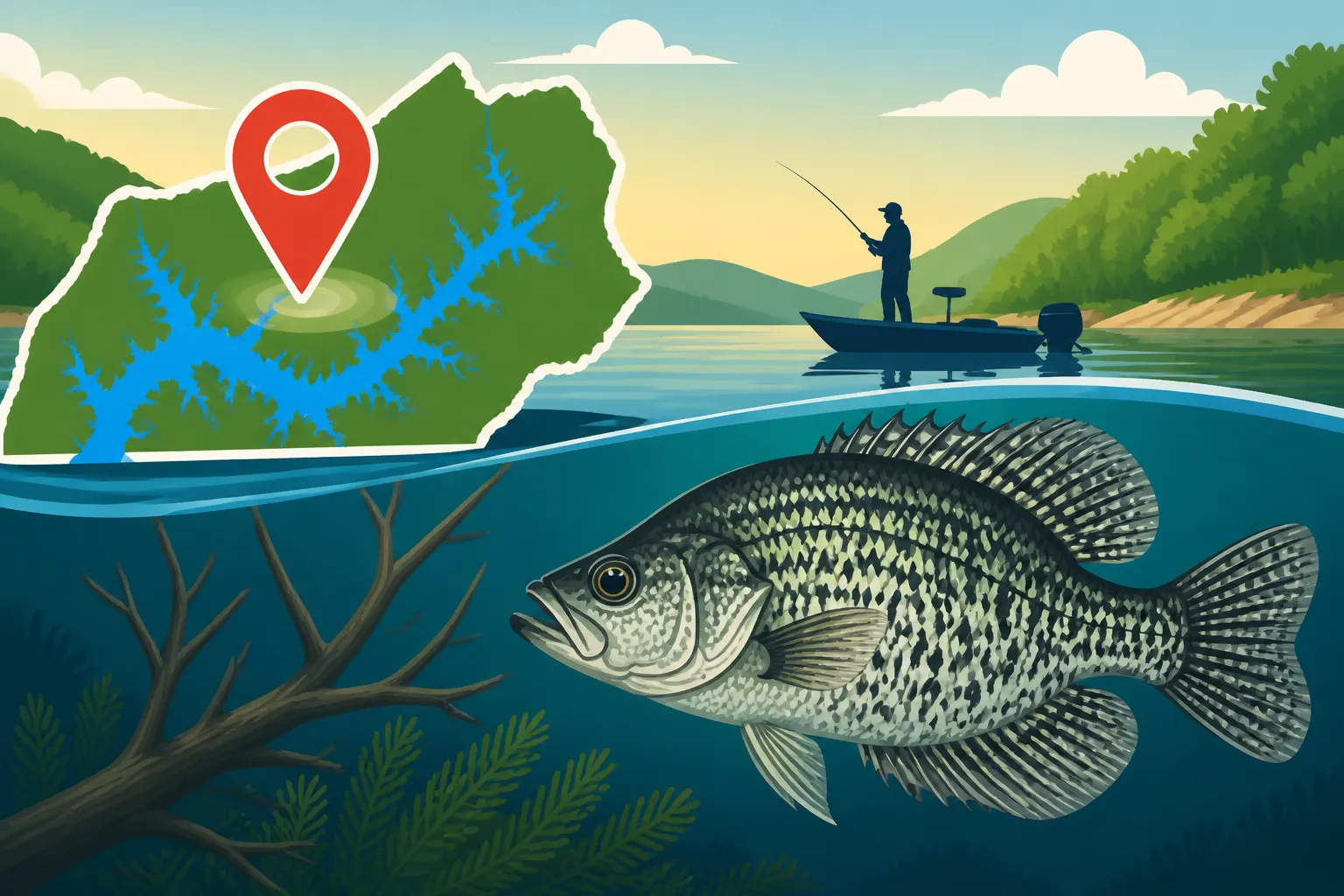
Now, most folks know there are two main types of crappie in Kentucky: black and white. While they look similar and often school together, black crappie tend to have a few distinct preferences that can help you target them specifically on a lake like Barkley. Generally, black crappie are a bit more particular about water clarity. They often prefer slightly clearer water than white crappie, which can tolerate more turbid or stained conditions. This isn't a hard and fast rule, of course, as Mother Nature always throws curveballs, but it's a good general guideline.
Think about it this way: if you're fishing a muddy, churned-up area after a big rain, you might encounter more white crappie. But if you venture into a clearer, more protected cove, especially one with lots of woody debris, you're leaning more into black crappie territory. They really love their cover. We're talking submerged timber, brush piles, fallen trees, and even thick aquatic vegetation if it's present. They use this cover for ambush points, to escape predators, and for thermal comfort. Understanding these subtle differences, which are explored further in Black Crappie Vs White Crappie: Key Differences, is crucial for successful crappie fishing on Lake Barkley.
Forage and Feeding Habits
What's on the menu for a black crappie? Primarily, they're minnow and shad eaters. They're opportunistic predators, meaning they'll snatch up whatever small prey swims by their ambush points. Beyond baitfish, they'll also feast on insect larvae, small crustaceans, and other invertebrates. This diet heavily influences where you'll find them. If you can locate schools of baitfish, especially shad, you're usually in the right neighborhood for crappie.
Crappie are masters of the ambush. They'll position themselves just inside a brush pile or along a submerged tree limb, waiting for an unsuspecting minnow to swim past. This means your presentation needs to be slow and subtle, allowing your bait or lure to linger in their strike zone. Knowing this, you'll want to pay close attention to your electronics for bait balls, which often appear as large, dense clouds on your sonar. Find the bait, and chances are the crappie won't be far behind, especially when they're actively feeding.
Key Habitat Areas for Black Crappie on Lake Barkley
Lake Barkley is a treasure trove of crappie habitat. Its vast size, numerous coves, and varying depths provide a diverse environment. However, black crappie tend to gravitate towards specific types of cover and structure. If you're new to the lake or just trying to dial in your black crappie game, focusing on these areas will significantly boost your chances.
Wood Structure and Brush Piles
When you talk about black crappie, you absolutely have to talk about wood. Submerged timber, fallen trees, old stumps, and especially man-made brush piles are magnets for these fish. Lake Barkley has an abundance of all these things, both naturally occurring and placed by diligent anglers and fisheries departments. These structures provide the perfect ambush points and shelter for crappie.
You'll often find black crappie suspended within these brush piles, not just around them. This means you need to be precise with your presentations, sometimes dropping your bait right into the thickest part of the cover. It can be a little frustrating with snags, but that's often where the biggest crappie are hiding. Using your electronics to locate these brush piles is key. Look for distinct "trees" or dense "clouds" on your sonar. Many local anglers even mark their favorite brush piles with discreet buoys or GPS waypoints. When you find one, stick with it, because these spots can hold multiple fish. Exploring Lake Barkley Fishing Guide for Kentucky Anglers will give you a broader overview of the lake, but for crappie, always prioritize the wood.
Docks and Piers with Shade
Don't overlook the man-made structures along Lake Barkley's shorelines, especially the hundreds of docks and piers. These offer fantastic habitat, particularly for black crappie. Why? Shade and submerged structure. The shade cast by docks provides a comfortable, cooler refuge during sunny days, and often, anglers have placed brush piles or old tires underneath them, creating prime crappie condos.
Fishing these areas effectively means getting your bait under the dock and around the pilings. A slip bobber can be incredibly effective here, allowing you to set your depth precisely and float your bait into tight spaces. Pay attention to docks that are near deeper water or creek channels, as these often hold more active fish. Docks in quiet coves can be especially productive, as they offer calmer waters and less disturbance. Remember, crappie are often just hanging out, waiting for prey, so a slow presentation is often best.
Creek Channels and River Bends
Lake Barkley is essentially a dammed section of the Cumberland River, and as such, it's riddled with old creek and river channels. These channels, especially where they bend or intersect with shallower flats, are crucial highways and holding areas for crappie, particularly during seasonal transitions. Black crappie will use the deeper water of these channels for security and access to different depths as water temperatures change.
Look for areas where the channel runs close to a bank that has good wood cover, or where there's a significant depth change (a "drop-off"). Crappie will often stage along these ledges, moving up to feed on the flats during low light or cooler periods, then retreating to the safety of the channel during bright, hot conditions. Your fish finder is indispensable here for identifying the channel edges and any associated structure. Focus on the bends in the channels, as these areas often have current breaks or scour holes that concentrate bait and crappie alike.
Seasonal Strategies for Black Crappie
Just like us, black crappie's behavior changes dramatically with the seasons. What works in spring won't necessarily work in summer, and vice-versa. Adapting your approach to the time of year is critical for consistent success on Lake Barkley.
Spring Pre-Spawn and Spawn
Ah, spring! This is arguably the most exciting time for crappie anglers on Lake Barkley. As water temperatures begin to rise, black crappie, driven by the urge to reproduce, start moving from their deeper wintering grounds into shallower coves and creek arms. This "pre-spawn" movement is all about staging and feeding heavily to build energy for the spawn. When water temperatures consistently reach the mid-50s to low-60s (Fahrenheit), the spawn kicks into high gear. This usually aligns with the information found in When Does Crappie Spawning Start in Kentucky and is a prime time for fishing, as highlighted in Kentucky Crappie Fishing: Spring Spawn Run Guide.
During this period, focus your efforts on shallow, protected coves and bays that have lots of submerged brush, stumps, and docks. They'll be looking for firm bottoms, often gravel or sand, to build their nests. Depths can range anywhere from 3 to 10 feet, sometimes even shallower if there's good cover and warm water. Casting small jigs or live minnows under a slip bobber is incredibly effective. Look for visual cues like males guarding nests or even ripples on the surface indicating active fish. This is when the crappie are most accessible to bank anglers and boaters alike, and a lot of fun to catch.
| Season | Primary Location | Typical Depth | Key Structure | Recommended Bait/Lure |
|---|---|---|---|---|
| Spring (Pre-Spawn/Spawn) | Shallow coves, creek arms | 3-10 feet | Submerged brush, docks, stumps | Live minnows, small jigs (chartreuse, white) |
| Summer (Post-Spawn) | Deep brush piles, channel ledges | 15-30 feet (or suspended) | Deep brush, timber, main lake points | Jigs, live minnows (trolled or jigged) |
| Fall (Feeding Frenzy) | Creek arms, main lake flats | 5-20 feet | Baitfish schools, submerged timber | Jigs, small crankbaits, live minnows |
| Winter (Deep Staging) | Deep creek channels, river bends | 20-40+ feet | Vertical timber, deep brush piles | Slow jigging spoons, vertical jigging small jigs |
Summer Post-Spawn and Deep Water
Once the spawn is over, black crappie tend to disperse and seek deeper, more comfortable waters as Lake Barkley heats up. This post-spawn period can be a bit trickier because the fish aren't concentrated in shallow areas anymore. They'll move to deeper brush piles, main lake points that drop off quickly, and along creek channel ledges. They might also suspend over deeper water, following schools of baitfish.
Your electronics become absolutely critical in summer. You're looking for those deep brush piles, sometimes 15-30 feet down or even deeper, and suspended fish. Vertical jigging or slow trolling with jigs or live minnows are effective tactics. Night fishing can also be incredibly productive in summer, as the cooler temperatures and reduced light bring crappie shallower to feed. Consider fishing around submerged lights or using submersible crappie lights to attract baitfish, which in turn attract crappie. Patience is a virtue here, as you might need to try several deep spots before you hit a school.
Fall Feeding Frenzy
As the oppressive heat of summer gives way to cooler autumn days, Lake Barkley's black crappie experience a resurgence of activity. The water temperatures begin to drop, signaling to the crappie that it's time to put on the feed bag before winter sets in. This period can offer some fantastic fishing, often rivaling the spring spawn in terms of action.
Crappie will typically move shallower again, similar to their spring patterns, but with a different motivation. They're actively pursuing baitfish that are also moving into the creek arms and main lake flats. Look for schooling baitfish on your sonar, especially near submerged timber or brush piles in 5-20 feet of water. Jigs, small crankbaits, and live minnows are all excellent choices. The bite can be quite aggressive, so don't be afraid to experiment with slightly faster retrieves or more active jigging motions. This is a great time to explore new spots or revisit successful spring locations, especially in areas like Best Crappie Coves on Lake Barkley, Kentucky.
Winter Deep and Staging
When Lake Barkley cools down significantly, black crappie tend to become more concentrated and less active, but they are still catchable, and often, you can find some of the biggest fish of the year. During winter, crappie will typically retreat to the deepest parts of the lake, often congregating in large schools in deep creek channels, main river bends, and around very tall, vertical timber or deep brush piles.
You'll usually find them in 20-40+ feet of water, often tightly schooled. Your approach needs to be slow and precise. Vertical jigging with tiny jigs, spoon jigs, or live minnows is the go-to method. Sometimes, a "dead stick" approach, where you hold your bait perfectly still, is what it takes to get a bite. Focus on using your fish finder to locate these deep schools and then slowly work your bait through them. While the bite might be subtle, when you find a winter crappie school, you can often catch a good number of fish from one spot. Remember to bundle up, as those winter days on Lake Barkley can be chilly!
Gear and Techniques for Lake Barkley Black Crappie
Having the right tools and knowing how to use them can make all the difference in your black crappie pursuits on Lake Barkley. From the rod in your hand to the electronics on your console, every piece of gear plays a role.
Essential Rods, Reels, and Line
For black crappie on Lake Barkley, you'll want to lean towards lighter tackle. An ultralight or light action spinning rod, typically 5 to 7 feet in length, is ideal. These rods have the sensitivity to detect crappie's notoriously light bites and enough backbone to handle a good-sized slab. Paired with a small spinning reel, loaded with 4 to 6-pound test monofilament or braided line, you've got a fantastic setup.
Monofilament is forgiving and easy to tie, while braid offers incredible sensitivity and strength, though I often recommend a fluorocarbon leader with braid, especially in clearer water, for its invisibility. Many great options for Best Reels for Crappie Fishing on Big Lakes are available, and you can find a wide selection of quality rods, reels, and lines on platforms like Amazon. Don't cheap out on your line; a good quality, fresh line will save you a lot of heartache from break-offs, especially when fishing around all that tempting woody cover.
Top Baits and Lures
When it comes to baits and lures for black crappie, live minnows are, without a doubt, the king. They are natural, irresistible, and often the difference-maker on tough days. You can fish them under a bobber, tight-lined, or even slow trolled. However, artificial lures are incredibly effective too, especially small jigs.
My tackle box for Lake Barkley crappie always includes an assortment of 1/16 to 1/8 ounce jigs. Pairing these with soft plastic bodies like tube baits, grubs, or tiny minnow imitations in various colors (chartreuse, white, natural shad, and dark colors for stained water) is a winning strategy. You can find a huge variety of these options, including specific Best Crappie Jigs for Kentucky Waters, readily available online, including from Amazon. Depending on the technique, you might also use small crankbaits or even jigging spoons in deeper water. Experimentation is key! Different days and different water conditions call for different colors and presentations.
Electronics and Navigation
In today's crappie fishing world, especially on a large lake like Barkley, electronics are no longer a luxury—they're essential. A quality fish finder, whether it's a traditional sonar, down imaging, or side imaging unit, is your best friend for locating those hidden brush piles, submerged timber, and schools of crappie and baitfish. Modern units, many of which can be found on Amazon, can paint a clear picture of the underwater world, showing you exactly where the fish are hiding.
GPS capabilities, often integrated into fish finders, allow you to mark productive spots, navigate back to them with precision, and explore new areas efficiently. Knowing the contours of the old river and creek channels, identifying bait balls, and marking individual crappie within cover will dramatically increase your catch rate. Don't be intimidated by the technology; take some time to learn your unit, and it will pay dividends. For broader electronics advice, check out Fish Finders and Electronics for Kentucky Lake Fishing, as many principles apply to Lake Barkley.
Patience and Presentation
More than any other factor, patience and a subtle, precise presentation are the hallmarks of successful black crappie fishing. These fish are not typically aggressive chargers (though they can be during feeding frenzies). Their bites are often light, sometimes feeling like nothing more than extra weight on your line, or a slight tap.
When you've located a promising spot, whether it's a brush pile, a dock, or a channel ledge, work it thoroughly. Don't just make one cast and move on. Position your boat strategically to make multiple casts or drops into the target area from different angles. If using jigs, a slow, subtle twitching motion or even a "dead stick" approach where you let the jig hang perfectly still can be incredibly effective. For live minnows, let them do their thing. Boat control is also vital, especially when spider rigging or slow trolling. Keeping your boat moving at the right speed and on the correct line is crucial for keeping your baits in the strike zone. Sometimes, it's that little bit of extra time and finesse that separates a good day from a great one.
Disclaimer
This article is for general informational purposes only and does not constitute professional advice. Laws, prices and regulations vary by location and change over time. Consult a qualified professional for guidance on your specific situation.