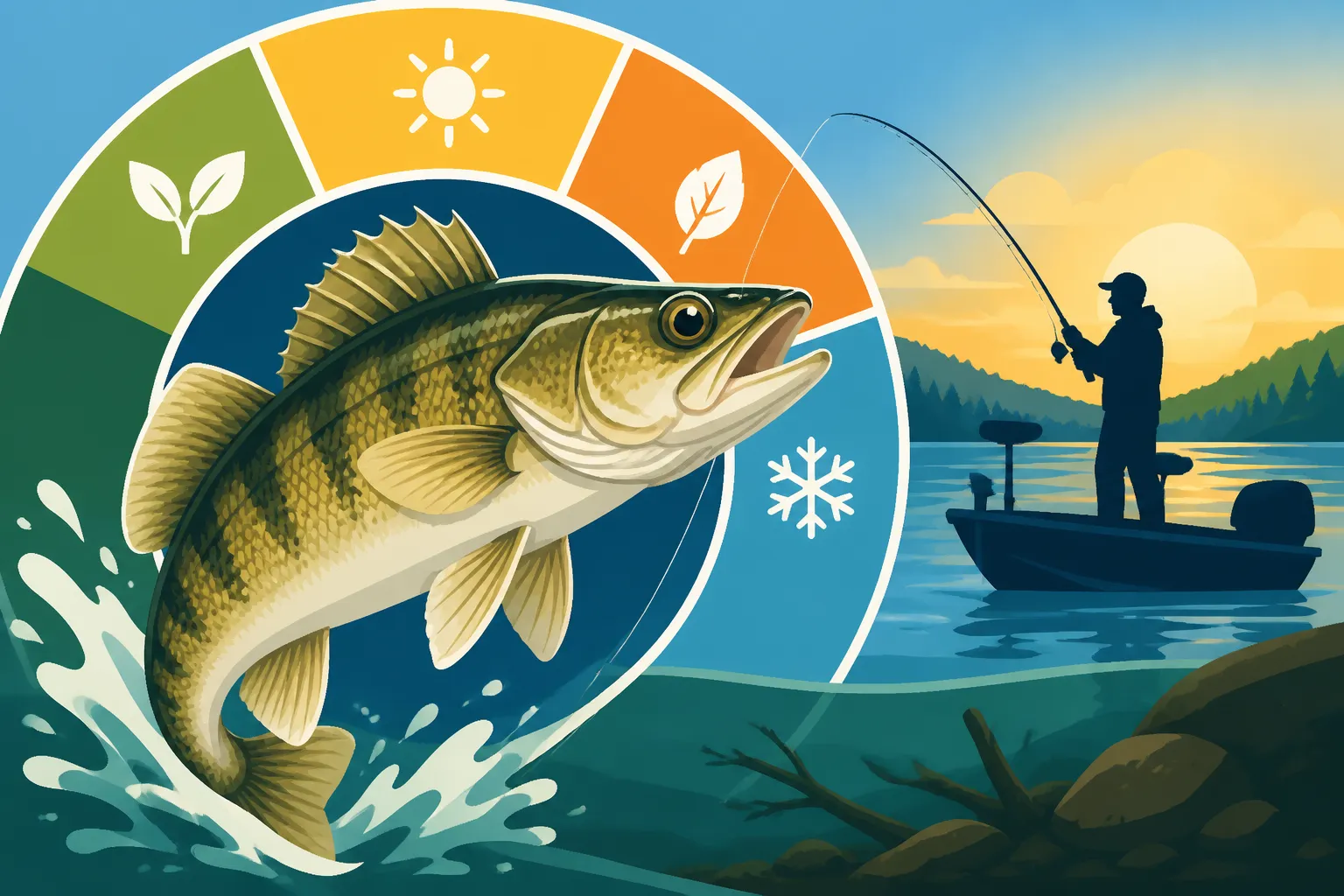
Lake Barkley’s Sauger Fishing Season Explained
If you've ever found yourself bundled up on Lake Barkley, watching your breath fog in the crisp air, and wondering when exactly those elusive sauger are going to start biting, you're not alone. It can feel like a mystery sometimes, trying to pinpoint the best times to target these incredible fish. But don't worry, this guide is here to unravel the secrets of Lake Barkley's sauger fishing season, helping you understand their patterns so you can plan your next trip for maximum success.
Understanding Sauger on Lake Barkley
Sauger are truly special fish, often mistaken for their larger walleye cousins, but possessing their own unique characteristics and preferred habitats. On Lake Barkley, these fish thrive, offering a fantastic cold-weather fishery that many anglers eagerly anticipate each year. They're known for their delicious white meat and their sometimes subtle, yet rewarding, bite. Unlike many other species that become sluggish in colder temperatures, sauger often become more active, making them a prime target when other fish are hunkering down.
Why Lake Barkley is a Sauger Hotspot
Lake Barkley, with its deep channels, abundant forage, and consistent current influenced by the Kentucky Lock and Dam, provides an ideal environment for sauger. The Cumberland River arm of the lake, in particular, offers the perfect blend of conditions that sauger seek out, especially during their most active feeding periods. These fish often congregate in specific areas, making them predictable if you know what to look for. The deep river bends, ledges, and breaks are like sauger magnets, especially when the water is cold and currents are favorable. Understanding these environmental factors is key to unlocking the lake's sauger potential.
Identifying Sauger vs. Walleye or Saugeye
It's pretty common for anglers, especially those new to sauger fishing, to mix them up with walleye or even saugeye (a hybrid of the two). While they all belong to the perch family and share a similar elongated body shape, there are distinct features that can help you tell them apart. Sauger typically have distinct dark spots on their dorsal fin membranes, which are usually absent or very faint on walleye. Their bodies also tend to have more pronounced blotchy markings, almost like camouflage. Walleye, on the other hand, often have a white tip on the lower lobe of their tail fin, which sauger lack. Saugeye can be a bit trickier, as they often exhibit a blend of characteristics, but generally lean more towards the walleye's lack of strong dorsal spots. Knowing the difference isn't just for bragging rights; it can sometimes be important for regulations, as limits can vary slightly.
Prime Time: When Sauger Are Biting on Lake Barkley
The "season" for sauger fishing on Lake Barkley isn't a single, monolithic block of time, but rather a progression through the colder months, with distinct peak periods driven by water temperature and their natural biological urges. Generally, the sauger bite really heats up as fall turns to winter and continues strong into early spring.
Late Fall: The Pre-Winter Feast
As the leaves begin to turn vibrant colors and the first truly cold snaps arrive, usually from late October through November, Lake Barkley's sauger start their pre-winter feast. The water temperatures begin to drop from the 60s into the 50s Fahrenheit, signaling to sauger that it's time to put on some serious weight before the deepest cold sets in. During this period, they often become incredibly aggressive, making them a fantastic target. You'll find them congregating along deeper river channels, especially near structure like old creek beds, submerged timber, and deep points. This is an excellent time to cover water with fast-moving baits as they actively chase down forage. It’s a rewarding time to be on the water, even if you need to layer up!
Winter: The Ice-Cold Peak
For many seasoned Lake Barkley anglers, winter is the time for sauger. From December through February, when water temperatures dip into the 40s and even high 30s, the sauger fishing can be absolutely phenomenal. This is when the fish really stack up in their wintering holes, often forming massive schools in the deep river channels. The current below the Kentucky Lock and Dam plays a huge role here, as sauger will migrate upriver against the flow, seeking out areas with consistent oxygen and easy access to stunned baitfish. These deeper sections, sometimes 20 to 40 feet or more, become veritable sauger highways. While the bites can be subtle in the cold water, the sheer numbers of fish present often lead to incredible days on the water. This is a time when the right electronics, like a good fish finder, can make all the difference, helping you pinpoint those stacked schools.
Early Spring: Post-Spawn Recovery
As winter loosens its grip and early spring arrives, typically in March and sometimes into early April, sauger on Lake Barkley will begin their spawning rituals. While they might be a bit less aggressive during the peak of the spawn, the pre-spawn and post-spawn periods can still offer excellent fishing. After the rigors of spawning, sauger need to replenish their energy, and they often move back to shallower flats adjacent to their deep wintering haunts, or along current breaks, looking for an easy meal. Water temperatures climbing back into the 40s and low 50s will trigger this transition. This can be a great time to target them with slightly different techniques, as they might be less concentrated than in winter but more willing to chase. The key is to look for areas where they can easily move between deeper recovery spots and shallower feeding grounds.
Here's a quick overview of the general sauger season on Lake Barkley:
| Season | Months | Water Temperature (Fahrenheit) | Sauger Behavior | Typical Location |
|---|---|---|---|---|
| Late Fall | Late October – November | 50s – 60s | Active feeding, pre-winter fattening | Deep channels, points, submerged structure |
| Winter | December – February | 30s – 40s | Highly concentrated, often stacked in deep holes | Deep river channels, below dam, current breaks |
| Early Spring | March – Early April | 40s – Low 50s | Spawning, post-spawn recovery and feeding | Channels, adjacent flats, current seams |
| Late Spring/Summer | Late April – September | 60s+ | Less concentrated, harder to target, deeper haunts | Scattered in deeper, cooler water, less active bite |
Factors Influencing Sauger Season Success
It's not just about the calendar date when it comes to sauger fishing; a number of environmental factors play a huge role in how successful your trip will be on Lake Barkley. Ignoring these elements can lead to frustrating days, even during peak season.
Water Temperature and Current Flow
These two factors are arguably the most critical for sauger fishing success. Sauger are cold-water fish, and they generally become more active as the water cools down. Their optimal temperature range is often cited in the 38-55°F range, with the sweet spot frequently being in the low 40s. Beyond just the temperature, the current flow, especially below the Kentucky Lock and Dam, is incredibly important. Sauger use current to their advantage, positioning themselves in eddies and current breaks to ambush baitfish that are swept downstream. A good flow can concentrate fish and trigger a feeding frenzy, while stagnant water can make them more lethargic and spread out. Checking discharge rates from the dam before you head out can provide invaluable insight. You can learn more about how discharge rates affect fishing in Kentucky Fishing Rules by Lake and Water.
Weather Conditions and Barometric Pressure
While sauger are cold-water lovers, extreme cold or sudden changes in weather can still impact their bite. A prolonged period of stable cold weather often leads to excellent fishing, as fish settle into predictable patterns. However, a sudden cold front that drops temperatures drastically can sometimes put fish into a temporary funk. Similarly, changes in barometric pressure, which often accompany weather fronts, can affect fish behavior. A falling barometer might signal an approaching storm and often triggers an active bite, while a rapidly rising barometer after a front can shut them down for a bit. Don't let a little inclement weather deter you, though; some of the best sauger fishing happens on overcast, drizzly, or even snowy days, as the low light often encourages them to feed. Packing appropriate foul-weather gear is a must, and you can find plenty of robust options on Amazon.
Forage Availability and Location
Like all predatory fish, sauger go where the food is. On Lake Barkley, their primary forage includes shad, minnows, and small rough fish. Understanding where these baitfish are holding can help you locate the sauger. In colder months, baitfish often school up tightly in deeper water, sometimes near the bottom or suspended in the water column. Sauger will follow these schools closely. If your fish finder is showing dense bait balls, chances are the sauger aren't far behind. Matching the hatch, or using lures that mimic the size and color of the local bait, can significantly increase your strike rate. This is where having a diverse tackle box, perhaps stocked with a variety of jigs and crankbaits you picked up from Amazon, really pays off.
Essential Gear and Techniques for Lake Barkley Sauger
Having the right equipment and knowing how to use it effectively is paramount to a successful sauger trip on Lake Barkley. While sauger might not be the biggest fighters, their bites can be incredibly subtle, requiring sensitive gear and precise techniques.
Rod and Reel Setup
For sauger fishing, sensitivity is key. You'll want a medium-light to medium power spinning rod, typically 6'6" to 7'6" in length, with a fast or extra-fast action. This action allows for quick hook sets and helps transmit those subtle taps from a sauger. Pair this with a lightweight spinning reel in the 1000 to 2500 size range, spooled with 6-10 lb test fluorocarbon line or braided line with a fluorocarbon leader. Fluorocarbon is nearly invisible underwater and has less stretch than mono, which enhances sensitivity. Braided line offers incredible sensitivity and strength, but always add a fluorocarbon leader to counter its visibility. You can find some excellent deals on high-quality fishing line and leader material on Amazon. For specific advice on setting up your gear, check out Best Rods and Reels for Kentucky Fishing.
Top Baits and Lures
When it comes to sauger on Lake Barkley, jigs are the undisputed champion. Lead head jigs, ranging from 1/4 to 3/4 ounce depending on current and depth, tipped with soft plastics (like curly-tail grubs, paddle tails, or minnow imitators) are incredibly effective. Popular colors often include chartreuse, white, orange, and various shad patterns. Many anglers also tip their jigs with a live minnow, which adds scent and natural action that sauger find irresistible. Blade baits and vertically jigged spoons can also be highly productive, especially when fish are tightly schooled in deeper water. Small, deep-diving crankbaits can work well during the pre-winter feeding frenzy in late fall, particularly when covering water. Don't be afraid to experiment with colors and sizes until you find what the fish are keying in on. For more detailed lure advice, consider reading Best Lures for Sauger Fishing Below Dams.
Effective Fishing Techniques
- Vertical Jigging: This is perhaps the most common and effective technique for sauger on Lake Barkley, especially in the deep channels during winter. Position your boat directly over schooling fish or prime structure and drop your jig straight down. Gently lift and drop the jig, keeping it just off the bottom. The bites are often a subtle "tick" or simply feeling "heavy."
- Drifting: Allowing your boat to drift with the current over productive areas, while dragging jigs or bottom bouncer rigs, can be very effective, especially for covering larger areas. Pay close attention to your line and rod tip for the tell-tale sauger bite.
- Casting and Retrieving: In late fall or early spring, particularly when sauger are less concentrated or in shallower water, casting jigs or crankbaits to points, ledges, and current breaks, and slowly retrieving them, can yield good results.
- Trolling: While less common for sauger, slow trolling deep-diving crankbaits or bottom bouncer rigs with minnows can also be effective, especially for covering expansive flats or channel edges when you're searching for scattered fish.
No matter your technique, always be mindful of local regulations. It's a good idea to refresh your knowledge by checking out the Kentucky Fishing Regulations Explained before each trip.
Planning Your Lake Barkley Sauger Trip
A successful fishing trip often comes down to good planning. Knowing the sauger seasons is a huge step, but a few other considerations can really set you up for success.
Where to Find Sauger on Lake Barkley
While sauger can be found throughout Lake Barkley, certain areas are perennial favorites. The deep river channel of the Cumberland River arm, especially from the Kentucky Lock and Dam downstream past the bridges, is prime territory. Look for defined ledges, humps, and current breaks within these channels. Secondary creeks that feed into the main river channel can also be excellent, particularly at their mouths where they meet the main current. Pay attention to changes in depth and bottom composition; sauger love to relate to structure. Good navigation and sonar equipment, like those widely available on Amazon, can help you identify these hotspots. For specific honey holes, you might want to look into Lake Barkley's Best Sauger Fishing Spots in Kentucky.
Safety First on Cold Water
Fishing Lake Barkley in the colder months, while incredibly rewarding, demands extra attention to safety. The water is brutally cold, and hypothermia can set in quickly if you go overboard. Always wear your life jacket, or at the very least, have it readily accessible. Dress in layers of warm, moisture-wicking clothing, and ensure your boat's safety equipment is up to par. This includes working navigation lights, a fire extinguisher, and a means of communication. Inform someone of your float plan – where you're going and when you expect to return. Being prepared is not just smart; it's essential for enjoying the lake safely. For full details on necessary boating equipment, check Kentucky Boat Safety Certificate Requirements.
What to Expect and When
- Patience is a Virtue: Sauger bites can be incredibly light, especially in very cold water. It often feels like your line just gets "heavy" or you feel a subtle tap. Pay close attention to your rod tip and line.
- The Best Time of Day: While sauger can bite all day, low light conditions often enhance the bite. Dawn, dusk, and overcast days are typically excellent. On clear, sunny days, they might hold tighter to the bottom or deeper structure. You can read more about this in Best Time of Day to Catch Sauger.
- Dress Warm: Seriously. Even if the air feels mild when you launch, being out on the water, especially on a boat, can be significantly colder. Wind chill is a real factor. Insulated boots, gloves, and a good waterproof/windproof outer layer are non-negotiable.
- License Up: Remember, you'll need a current Kentucky fishing license, and if you plan to target trout anywhere else in the state, a trout permit as well. You can typically purchase these online or from authorized vendors. Ensure you're compliant before heading out. Information on how to get yours is in the Kentucky Fishing License Guide.
Following these guidelines and understanding the nuances of the sauger season on Lake Barkley will significantly increase your chances of a memorable and successful fishing trip. Tight lines!
Disclaimer
This article is for general informational purposes only and does not constitute professional advice. Laws, prices and regulations vary by location and change over time. Consult a qualified professional for guidance on your specific situation.