Best Rods and Reels for Kentucky Fishing
One of the biggest hurdles many anglers face, whether they're just starting out or have years of experience, is navigating the dizzying array of fishing rods and reels available. With Kentucky's diverse waters, from massive reservoirs like Kentucky Lake to tranquil trout streams, selecting the perfect gear can feel like deciphering a secret code. This comprehensive guide will cut through the confusion, helping you understand the nuances of rods and reels so you can confidently choose the best setup for your next Kentucky fishing adventure.
Understanding Rod Action and Power for Kentucky Waters
Before you even think about specific brands or models, you need a fundamental grasp of rod mechanics: action and power. These two characteristics dictate how a rod bends, how much force it can handle, and ultimately, how effective it will be for certain techniques and fish species you'll encounter in Kentucky. Ignoring these can lead to a frustrating day on the water, struggling with a rod that simply isn't up to the task or one that's overkill for delicate presentations.
Rod Action: Fast, Moderate, or Slow?
Rod action refers to where a rod bends when pressure is applied to the tip. Think of it like this: does the rod bend primarily at the very tip, or does it flex further down into the blank? This isn't about how much it bends, but where the bend occurs.
A fast action rod bends mainly in the top one-quarter to one-third of the blank. This gives it a very sensitive tip, allowing you to feel even the slightest nibble or detect subtle changes in bottom structure. When you set the hook, the tip quickly transmits that force down the rod, resulting in a powerful, almost instantaneous hookset. This makes fast action rods ideal for single-hook lures like Texas-rigged worms or jigs, where quick and firm hook penetration is key. Many bass anglers targeting largemouth on Kentucky Lake: The State's Top Bass Fishing Destination will gravitate towards fast action rods for their sensitivity and rapid response.
Moderate action rods, sometimes called "medium" action, bend more through the middle section of the rod, typically from the tip down to about halfway. This deeper bend provides a bit more flex and forgiveness, making it excellent for lures with treble hooks, such as crankbaits, spinnerbaits, or topwater plugs. The more parabolic bend allows a fish to engulf the lure without immediately feeling resistance, which can prevent them from spitting the hook. It also acts as a shock absorber, reducing the chance of tearing the hooks out of a fish's mouth during a hard fight or jump. If you're throwing a lot of reaction baits on Taylorsville Lake's Best Bass Fishing Spots, a moderate action rod is often your best friend.
Finally, a slow action rod bends throughout almost its entire length, from tip to butt. These rods are incredibly flexible and forgiving, making them less about power and more about finesse and live bait presentations. Think of an old-school cane pole; that's essentially a slow action rod. They excel at casting lightweight baits a short distance, protecting light lines, and absorbing the runs of smaller panfish. While not common for heavy bass fishing, slow action rods are fantastic for targeting bluegill or crappie, especially when using a bobber and a tiny jig or live minnow.
Rod Power: Light, Medium, Heavy?
Rod power, also known as "weight" or "taper," describes the amount of force required to bend the rod blank. It's about how stiff or limber the rod is overall, and it directly relates to the line weight and lure weights the rod is designed to handle. A rod's power rating gives you a good indication of the size of fish it can effectively fight and the type of bait it can cast.
A light power rod is very limber and best suited for extremely light lines (think 2-6 lb test) and tiny lures. These are your go-to rods for ultra-finesse fishing, like catching panfish or small trout. They provide maximum sport with smaller fish and allow you to make delicate presentations with minuscule baits. For instance, if you're chasing crappie at Barren River Lake's Best Crappie Spots in Kentucky, an ultralight setup with a light power rod will make every fish feel like a giant.
Medium-light and medium power rods are the workhorses for many anglers, especially those targeting common species like bass, walleye, or medium-sized catfish. They handle a broad range of line and lure weights and offer a great balance of sensitivity and fighting power. A medium power rod might be rated for 8-17 lb test line and 1/4 to 3/4 oz lures, making it incredibly versatile for everything from Texas rigs to spinnerbaits. Most anglers starting out will find a medium power, fast action rod to be an excellent all-around choice for Kentucky's diverse fisheries.
As you move up to medium-heavy and heavy power rods, you're looking at setups designed for battling larger, more powerful fish or for techniques that require a lot of leverage and brute force. These rods handle heavier lines (15-30 lb test and up) and larger, heavier lures. Think pitching jigs into thick cover for big largemouth, frog fishing over matted vegetation, or wrestling with trophy blue catfish on the Ohio River. They offer less finesse but significantly more backbone for muscling fish out of difficult spots. When you're after those behemoth catfish, a heavy power rod is non-negotiable.
Why the Right Combination Matters for Different Fish
Understanding both action and power is crucial because they work in tandem. A fast action, medium-heavy power rod, for example, is excellent for punching through heavy vegetation with a jig or a weighted creature bait for bass. The fast action gives you the quick hookset, while the medium-heavy power provides the backbone to pull a big fish out of the nastiest cover. On the other hand, a moderate action, medium power rod would be perfect for throwing a crankbait; the moderate action allows the fish to engulf the lure, and the medium power is enough to fight the fish without tearing the treble hooks free.
Consider a scenario where you're targeting smallmouth bass in a clear, rocky river like the Cumberland. You might opt for a fast action, medium-light power spinning rod. The fast action will help you detect the subtle takes often characteristic of smallmouth, while the medium-light power allows for precise casting of lighter jigs and ensures a sporting fight without overpowering the fish. Conversely, if you're heading to Kentucky Lake: The State's Top Bass Fishing Destination to fish deep ledges with heavy jigs for big largemouth, a fast action, medium-heavy baitcasting rod would be far more appropriate, offering the necessary sensitivity, power, and casting control for heavier baits. Choosing the right combination significantly increases your success and enjoyment on the water, making your gear an extension of your fishing style rather than a hindrance.
Spinning Combos: Versatility for Many Kentucky Anglers
For countless anglers across Kentucky, the spinning rod and reel combo is the true workhorse of their arsenal. It's often the first type of setup new anglers encounter, and for good reason: it's incredibly versatile, user-friendly, and capable of handling a vast array of fishing situations and species. If you're just starting your fishing journey or looking for a reliable all-around setup, a good spinning combo is hard to beat.
Ideal Species and Scenarios for Spinning Gear
Spinning gear shines in situations that demand lighter lines, smaller lures, and less aggressive presentations. It's inherently easier to cast than baitcasting gear, making it a favorite for beginners and seasoned pros alike, especially when dealing with finesse techniques.
Think about chasing those feisty panfish – bluegill, redear sunfish, and crappie – in a quiet Kentucky pond or one of the state's smaller lakes. A light or medium-light power spinning setup is absolutely perfect. It allows you to cast tiny jigs, small live baits, or ultralight spinners with ease, making for a truly enjoyable experience catching these eager biters. For example, if you're taking a kid out for their first fish at Best Family-Friendly Fishing Spots on Lake Cumberland, Kentucky, a small spinning reel spooled with 4-6 lb test on a light action rod will provide endless excitement.
Beyond panfish, spinning gear is also incredibly effective for various bass fishing applications. When the bite is tough, and you need to throw a lightweight shaky head, a wacky-rigged worm, or a small drop shot, a medium-light or medium power spinning rod with a fast action provides the sensitivity and casting ability that baitcasting gear often can't match for such light presentations. It's also fantastic for fishing open water, docks, or sparse cover, where heavy-duty gear isn't needed. Many anglers use spinning gear to target walleye, sauger, and even small to medium-sized catfish, particularly when fishing with live bait or lighter jigs.
Matching Spinning Rods and Reels for Balance
The key to a comfortable and effective spinning setup is balance. A well-balanced spinning combo will feel natural in your hand, making it easier to cast accurately, retrieve smoothly, and detect subtle bites without undue fatigue. The rod and reel should complement each other in terms of size, weight, and intended use.
Generally, smaller spinning reels (sizes 1000-2500, or sometimes denoted by 10-25) pair well with lighter power rods (light to medium-light) and lighter lines (4-10 lb test). This is your go-to for panfish, trout, and light finesse bass fishing. A 2500-size reel on a 6'6" to 7' medium-light, fast action rod is a quintessential crappie or finesse bass setup. These reels are designed for lower line capacities and lighter drag settings, perfectly matching the capabilities of the lighter rods.
As you move to medium power rods (medium to medium-heavy), you'll want to step up to larger spinning reels (sizes 3000-4000, or 30-40). These reels accommodate heavier lines (8-15 lb test) and provide more substantial drag pressure for fighting larger fish. A 3000-size reel on a 7' medium power, fast action rod is a fantastic all-around setup for bass, walleye, or even smaller striped bass. The larger spool size reduces line memory and allows for longer casts with appropriate lure weights. When you're looking for these, popular online retailers like Amazon offer a wide selection, often with customer reviews that can help guide your choice.
When putting a combo together, attach the reel to the rod and hold it just in front of where the reel seat connects to the rod handle. The rod should feel somewhat balanced, not heavily tip-heavy or butt-heavy. A little tip-heaviness is often acceptable, especially for longer rods, but extreme imbalance will wear you out quickly and make accurate casting a nightmare.
When to Upgrade Your Spinning Setup
For many anglers, their first spinning combo serves them well for years. However, there comes a time when an upgrade can significantly enhance your fishing experience and capabilities. Knowing when and why to upgrade is important for maximizing your time on Kentucky's waters.
One common reason for an upgrade is when you start specializing in certain fishing techniques or species. Your general-purpose medium spinning combo might catch bass, but if you become serious about chasing trophy crappie or fly fishing for trout in the Cumberland River, a dedicated, more sensitive ultralight spinning rod or a specialized fly setup becomes invaluable. A rod designed specifically for jigging crappie, for instance, might have an extra-fast, incredibly sensitive tip to detect those light bites, paired with a surprising amount of backbone to handle a slab.
Another indicator is when you feel your current gear is limiting you. Are you frequently breaking off fish because your drag isn't smooth enough? Are your casts not reaching where you need them to? Does your rod lack the sensitivity to detect subtle bites? These are all signs that an upgrade to higher-quality components might be in order. More expensive spinning reels often feature smoother drags, more bearings for silkier retrieves, and more robust construction. Higher-end spinning rods utilize better graphite or composite materials, making them lighter, more sensitive, and stronger. Stores like Bass Pro Shops offer a wide range of specialized spinning setups, and their staff can often provide expert advice tailored to specific Kentucky fishing challenges. Investing in a better quality rod and reel can truly elevate your fishing game, turning frustrations into triumphs.
Baitcasting Combos: Power and Precision for Advanced Techniques
While spinning gear offers incredible versatility, there comes a point for many serious anglers when the power, precision, and control of a baitcasting combo become essential. Baitcasting reels, mounted atop specialized rods, are designed to handle heavier lines and lures, provide greater casting accuracy, and offer superior fish-fighting leverage. However, they do come with a steeper learning curve, often testing the patience of new users with the dreaded "bird's nest." But once mastered, a baitcaster opens up a whole new world of fishing possibilities in Kentucky.
Applications: From Bass to Catfish
Baitcasting gear truly excels when you need to cast heavy lures, present baits with pinpoint accuracy, or muscle large fish out of dense cover. These are the situations where the robust construction and direct drive of a baitcaster really shine.
For serious bass anglers, baitcasting is almost synonymous with power fishing. Pitching jigs into thick brush piles, flipping heavy creature baits into matted vegetation, or burning large spinnerbaits and crankbaits through open water are all techniques where a baitcaster outperforms a spinning reel. The direct contact with the spool allows for incredible control over the lure's descent and immediate hooksets. If you're targeting big largemouth on Lake Barkley Bass Size Limit Exception in Kentucky or any of Kentucky's fantastic bass lakes, a medium-heavy or heavy power baitcasting rod is an absolute must for many popular techniques. Its ability to handle braided line with higher breaking strengths is also a huge advantage when fishing around abrasive cover.
Beyond bass, baitcasting gear is indispensable for other heavy-duty applications. For instance, chasing trophy catfish on the Ohio River often requires heavy lines, large baits, and a reel with a robust drag system to handle powerful runs. Many specialized catfish rods are designed specifically for baitcasting reels, offering the backbone needed to haul in a giant blue or flathead. Similarly, if you're throwing large muskie baits on Cave Run Lake's Best Muskie Fishing Spots, a heavy-duty baitcaster with a strong drag and high line capacity is the only sensible choice. The ability to precisely cast heavier lures to specific targets, like submerged timber or rocky outcrops, makes baitcasting gear the preferred option for many species that require heavy tackle.
Learning the Art of Baitcasting
There's no sugarcoating it: learning to cast a baitcaster takes practice, patience, and a bit of trial and error. The primary challenge is managing the spool, which spins freely as the line leaves the reel. If the spool spins faster than the lure is flying, you'll end up with a tangled mess of line known as a "bird's nest" or "backlash."
The key to preventing backlashes lies in proper thumb control. As the lure flies through the air, your thumb needs to lightly feather the spool, applying just enough pressure to keep it from over-spinning. As the lure approaches its target, you apply more pressure to stop the spool completely just as the lure lands. This takes timing and feel, which only come with repetition. Start by practicing in an open yard with a heavier practice plug, not a treble-hooked lure. Focus on a smooth, controlled casting motion, and gradually adjust the reel's braking system (magnetic or centrifugal brakes) and spool tension knob to find a setting that minimizes backlashes while allowing for decent casting distance. Don't be afraid to experiment! Many modern baitcasting reels, especially those from brands like Shimano or Abu Garcia found at stores like Bass Pro Shops, incorporate advanced braking systems that make the learning process significantly easier for beginners.
Remember, every angler gets a backlash. It's part of the learning process. Untangle it calmly, adjust your settings, and keep practicing. The reward—the precision, power, and feel of a perfectly executed baitcast—is well worth the initial frustration.
Choosing Your Baitcaster for Kentucky's Demands
Selecting the right baitcasting combo involves considering the balance of the rod and reel, the gear ratio, and the overall construction quality for the specific demands of Kentucky's fishing.
When choosing a baitcasting reel, one important factor is the gear ratio. This number tells you how many times the spool rotates with one full turn of the handle.
- Low gear ratios (5.0:1 to 6.0:1) are ideal for powerful cranking lures like deep-diving crankbaits or large spinnerbaits, where you want a slower, more deliberate retrieve that generates maximum torque.
- Medium gear ratios (6.0:1 to 7.0:1) are the most versatile, suitable for jigs, Texas rigs, smaller spinnerbaits, and general-purpose applications. This is a great starting point for a first baitcaster.
- High gear ratios (7.0:1 to 8.0:1 and up) are for fast retrieves, perfect for techniques like burning topwater lures, flipping and pitching to quickly retrieve line after a cast, or fishing baits that require you to "catch up" to a fast-moving fish.
The rod component of your baitcasting combo will typically be a medium-heavy or heavy power rod, usually with a fast or extra-fast action. The length can vary from 6'6" for pitching accuracy to 7'6" or longer for maximizing casting distance or for specialized techniques like frog fishing. A popular choice for all-around bass fishing in Kentucky would be a 7' medium-heavy, fast action rod paired with a 7.1:1 gear ratio baitcasting reel. This combination offers a blend of power for hooksets, sensitivity for bite detection, and speed for versatile retrieves, making it effective for everything from soft plastics to moving baits. Always check the rod's lure weight and line weight ratings to ensure it matches the types of baits and lines you plan to use, guaranteeing a harmonious and effective setup for whatever Kentucky waters you're fishing.
Specialized Rods and Reels for Kentucky's Unique Fisheries
While general-purpose spinning and baitcasting combos cover a wide range of fishing situations, Kentucky's diverse aquatic ecosystems sometimes call for highly specialized rods and reels. These niche setups are designed to excel in very specific scenarios, whether it's coaxing a tiny crappie from a brush pile, wrestling a monster cat from the Ohio River, or delicately presenting a fly to a wary trout. Having the right specialized gear can truly unlock success in these unique environments.
Crappie Poles and Ultralight Gear for Panfish
Crappie and other panfish (bluegill, redear sunfish, etc.) are beloved by countless Kentucky anglers, offering consistent action and delicious table fare. However, their often delicate bites and relatively small mouths require a specialized touch, best achieved with ultralight gear or dedicated crappie poles.
Traditional "crappie poles" are often long, limber rods, ranging from 8 to 14 feet or even longer, designed for tightlining small jigs or minnows around brush piles and docks. These aren't typically paired with reels; instead, a fixed length of line is attached to the tip, allowing for precise vertical presentations. This method, often called "dipping" or "spider rigging" (when multiple long poles are deployed from a boat), allows anglers to present baits into dense cover where a cast-and-retrieve approach would be impossible. The length gives you reach, while the soft tip ensures subtle bites are detected.
For a more conventional approach, a modern ultralight spinning combo is the pinnacle of panfish finesse. These setups typically involve a very light power, fast action spinning rod, often 5' to 6'6" in length, paired with a small 1000 or 1500 size spinning reel. The rods are incredibly sensitive, allowing you to feel the slightest tap on a tiny 1/32 oz jig. The small reel handles light lines (2-6 lb fluorocarbon or monofilament) with ease, preventing tangles and allowing for delicate casts. This combination is deadly for Kentucky Crappie Fishing: Spring Spawn Run Guide when fish are shallow and skittish, or when targeting wary bluegill on their beds. Every strike, no matter how small the fish, becomes an exciting event with such sporting tackle.
Heavy-Duty Gear for Ohio River Catfish and Paddlefish
When it comes to the giants of Kentucky's waterways, like the massive blue catfish and the unique paddlefish found in the Ohio River, "heavy-duty" is an understatement. These species demand tackle that can withstand immense strain, powerful runs, and the sheer weight of a potential state record. Using inadequate gear here is a recipe for broken lines, bent hooks, and lost fish.
For blue and flathead catfish on the Ohio River, you're looking at robust, heavy to extra-heavy power baitcasting rods, often 7' to 10' in length. These rods are built with immense backbone to handle 30-80 lb braided line, heavy weights (up to 8-16 oz), and the powerful surges of a catfish that can easily exceed 50 pounds. They often feature durable guides, comfortable non-slip grips, and stout reel seats to secure large conventional or baitcasting reels. The reels themselves are often conventional reels with massive line capacities, extremely powerful drag systems (sometimes pushing 30+ lbs of drag), and durable brass or stainless steel gearing. Brands like Penn or Abu Garcia are popular choices for their proven reliability in these extreme conditions. Checking out options at a Bass Pro Shops or online at Amazon can give you a good idea of the specialized features involved.
Paddlefish snagging, a legal and popular method for harvesting these ancient fish during specific seasons on the Ohio River, requires equally formidable gear. Anglers use very long (often 8-12 ft), extra-heavy power rods, commonly called "snagging rods." These are paired with large, heavy-duty conventional reels spooled with extremely strong braided line (80-150 lb test). The combination is designed to cast heavy snagging hooks (often 8-12 oz) and withstand the tremendous force of foul-hooking a large, powerful fish like a paddlefish, which can exceed 100 pounds. It's a grueling test of both angler and tackle, and having dedicated gear makes all the difference. Paddlefish Fishing on the Ohio River: A Complete Guide highlights the intensity and specialized nature of this pursuit.
Fly Fishing Setups for Kentucky's Trout Streams
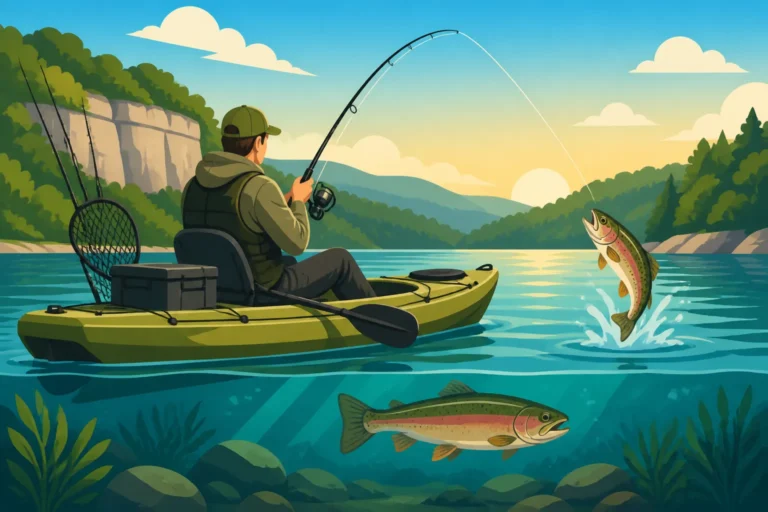
Fly fishing is an art form, and in Kentucky, it finds its home in the state's colder tailwaters and mountain streams, primarily for trout species like rainbow, brown, and brook trout. This technique requires a completely different approach to rods and reels, as the weight of the line carries the virtually weightless fly, rather than the lure itself.
A fly fishing setup consists of a fly rod, a fly reel, and fly line.
- Fly Rods: These are typically long (7' to 9' being common), flexible rods, measured in "weights" rather than power. A 3-weight or 4-weight rod is ideal for smaller trout streams and delicate presentations with tiny dry flies or nymphs. A 5-weight or 6-weight rod is more versatile, capable of handling larger trout, throwing bigger flies, and even doubling for smallmouth bass in rivers. The action of fly rods varies from slow (very flexible, great for delicate casts) to fast (stiffer, more powerful for longer casts or windy conditions).
- Fly Reels: Unlike spinning or baitcasting reels, a fly reel's primary purpose is to store line and provide drag to fight a fish. It doesn't contribute to casting distance. Reels are also matched to rod weight; a 5-weight rod needs a reel designed for 5-weight line. Higher-quality fly reels offer smoother, more adjustable drag systems, which are crucial for protecting light tippets when fighting strong trout.
- Fly Line: This is the heart of the system. Fly line comes in different weights (matched to the rod), tapers (weight forward, double taper), and densities (floating, sinking). A weight-forward floating line is the most common starting point for trout fishing, allowing for easy casting and presentations of surface and subsurface flies.
To pursue Kentucky Trout Permit Guide, especially in places like the Cumberland River below Lake Cumberland or various stocked streams, a 5-weight, 9-foot moderate-fast action fly rod, paired with a matching weight-forward floating line and a reliable disc-drag fly reel, is an excellent all-around choice. This setup offers enough versatility to handle both dry flies and nymph rigs, providing the delicate touch required for discerning trout. While fly fishing gear can seem complex, it offers a deeply rewarding connection to the water and the fish.
Matching Rod and Reel to Target Species in Kentucky
Now that we've covered the fundamentals of rod action and power, and the distinct characteristics of spinning, baitcasting, and specialized gear, let's put it all together. The most practical way to choose your next rod and reel is to consider the specific fish species you plan to target in Kentucky and the techniques you'll use to catch them. Each species, with its unique behaviors and habitats, thrives when pursued with a thoughtfully matched setup.
Largemouth and Smallmouth Bass Setups
Bass fishing is incredibly popular in Kentucky, whether you're targeting chunky largemouth in submerged timber or acrobatic smallmouth in rocky river stretches. A well-rounded bass angler will likely have multiple rod and reel combos to cover various techniques.
For largemouth bass, especially in heavier cover, a baitcasting combo is often preferred.
- Pitching and Flipping: For getting jigs and creature baits into tight cover, a 7' to 7'6" heavy power, fast action baitcasting rod is ideal. This rod provides the backbone to pull fish out of cover and the fast action for immediate hooksets. Pair it with a high gear ratio (7.1:1 or higher) baitcasting reel spooled with 15-20 lb fluorocarbon or 30-50 lb braided line.
- Crankbaits and Spinnerbaits: A 6'6" to 7'3" medium-heavy power, moderate action baitcasting rod is excellent. The moderate action allows fish to fully inhale the bait and helps prevent treble hooks from tearing out. A medium gear ratio (6.3:1 to 6.8:1) baitcasting reel with 12-17 lb fluorocarbon or monofilament is a solid choice.
- Topwater and Jerkbaits: A 6'6" to 7' medium power, fast action rod (either spinning or baitcasting, depending on lure weight) is often used. A slightly slower gear ratio on a baitcaster (around 6.4:1) can be good for twitching jerkbaits, while a medium spinning reel (3000 size) with 10-12 lb monofilament works well for walking a topwater lure.
For smallmouth bass, particularly in clear rivers or open water, spinning gear often takes center stage due to its finesse capabilities, though baitcasting can be used for heavier presentations.
- Finesse Jigs and Tubes: A 6'6" to 7' medium-light power, fast action spinning rod paired with a 2500-size spinning reel is perfect for these lighter presentations. Spool up with 6-8 lb fluorocarbon or braided line with a fluorocarbon leader. This setup allows for delicate casts and excellent bite detection when fishing for Best Lures for Smallmouth Bass in Kentucky Rivers.
- Ned Rigs and Drop Shots: Similar to finesse jigs, an ultra-sensitive 6'10" to 7'2" medium-light, extra-fast action spinning rod is exceptional. A 2000 or 2500 size reel with light braided line and a long fluorocarbon leader maximizes sensitivity.
- Small Crankbaits and Jerkbaits: A 6'6" medium power, moderate-fast action spinning rod can handle slightly heavier smallmouth lures, offering a good balance of casting distance and fight control. A 3000-size spinning reel with 8-10 lb fluorocarbon would be a suitable match.
Crappie and Panfish Rod & Reel Pairs
Catching crappie and panfish like bluegill and redear sunfish is all about light tackle and finesse, often requiring sensitivity to detect subtle bites.
For crappie, especially when vertical jigging or tightlining around brush piles, a long, sensitive spinning rod is highly effective.
- Jigging and Dock Shooting: A 6'6" to 7'6" medium-light power, extra-fast action spinning rod is superb. The extra-fast tip allows for pinpoint casting of small jigs (1/16 to 1/8 oz) and quick hooksets. A 1000 or 2000 size spinning reel with 4-6 lb monofilament or fluorocarbon is a great choice. Look for models with sensitive graphite blanks. Many anglers also use telescopic "crappie poles" up to 12-14 feet for direct vertical presentations.
- Spider Rigging: For those who fish multiple poles from a boat, very long (10-16 ft), light power, moderate action rods are used. These are usually designed to hold small spinning reels or have simple line keepers, allowing for multiple baits to cover a wide area. How to Jig for Crappie in Shallow Water can give you further insights into the specific techniques.
For bluegill and other panfish, a delicate touch is key, and ultralight spinning gear is king.
- Bobber Fishing and Small Lures: A 5' to 6'6" ultralight power, slow to moderate action spinning rod is perfect. The limber blank makes even small bluegill feel like a trophy. Pair this with a tiny 500 or 1000 size spinning reel spooled with 2-4 lb monofilament. This setup is fantastic for presenting small worms, crickets, or tiny jigs under a bobber. It's the quintessential setup for introducing kids to fishing, making every nibble exciting.
Catfish and Trophy Fish Rigs
When you're chasing the truly large fish in Kentucky, particularly the big blue and flathead catfish in the state's major river systems and reservoirs, your gear needs to be robust and built for battle.
For trophy catfish (especially on the Ohio River or large lakes like Kentucky Lake), you need heavy-duty baitcasting or conventional gear.
- Bank Fishing and Anchoring: A 7' to 10' heavy to extra-heavy power, moderate-fast to fast action baitcasting rod. The length aids in casting heavy baits and keeping line clear of obstacles. Pair it with a large conventional reel (like a 6500 size or larger Ambassadeur, or a comparable level wind reel from Penn or Okuma) spooled with 30-80 lb braided line, often with a heavy monofilament leader. The reel needs a powerful, smooth drag system and durable gears. Kentucky Catfish Fishing: Ohio River and Kentucky Lake Guide emphasizes the need for stout gear for these powerful fish.
- Drift Fishing and Jug Fishing: Shorter, stout 6' to 7' heavy power rods are often used, designed to be durable and handle the strain of a heavy fish on the move. Jug fishing, a popular technique for catfish, uses specialized floats with attached lines, often without a rod and reel in the traditional sense, though a sturdy rod is used to land the fish once it's brought to the boat.
For muskie and striped bass, which are also powerful, hard-fighting species found in certain Kentucky lakes (like Cave Run for muskie or Lake Cumberland for striped bass), your gear needs to handle large lures and intense fights.
- Muskie: These fish require specialized muskie rods, typically 8' to 9'6" heavy to extra-heavy power, fast action baitcasting rods. They are designed to cast massive baits (often several ounces) and handle aggressive strikes. Pair these with large, robust baitcasting reels (often specialized muskie reels) with high line capacity (50-100 lb braided line) and powerful drags.
- Striped Bass: For schooling stripers, a 7' to 8' medium-heavy to heavy power rod (often a conventional boat rod or a heavy baitcasting rod) paired with a large spinning reel (6000-8000 size) or a conventional reel is common. These reels need ample line capacity (20-40 lb mono or 50-80 lb braid) and a strong drag to handle their blistering runs.
Essential Considerations Beyond Rod and Reel
While the rod and reel form the core of your fishing setup, their effectiveness is greatly influenced by several other crucial components and practices. Overlooking these details can severely diminish your angling success and even shorten the lifespan of your valuable gear. From the type of line you spool to how you care for your equipment, these aspects are just as vital to a successful fishing experience in Kentucky.
Choosing the Right Fishing Line
The fishing line is the direct connection between you and the fish, so choosing the right type, strength, and diameter for your target species and presentation is paramount. There are three main types of fishing line, each with distinct characteristics:
- Monofilament (Mono): This is the traditional, most widely used line, made from a single strand of nylon.
- Pros: It's inexpensive, easy to cast, has good knot strength, and offers significant stretch, which acts as a shock absorber, helping to prevent hooks from tearing out or lines from snapping on sudden strikes. It's also fairly abrasion-resistant for its cost.
- Cons: High stretch means less sensitivity, making it harder to feel subtle bites or detect bottom structure. It has more memory, leading to coils, and can degrade over time with UV exposure.
- Best Uses: Excellent for topwater lures, crankbaits, or any application where stretch is an advantage. Good all-around line for spinning reels, especially for beginners. Ideal for Bluegill Fishing Tips for Beginners.
- Fluorocarbon (Fluoro): Made from a denser polymer, fluorocarbon is a popular choice for its unique properties.
- Pros: It's nearly invisible underwater due to its refractive index being similar to water, making it stealthy. It has low stretch, offering excellent sensitivity, and is highly abrasion-resistant. It also sinks, which can be an advantage for certain lure presentations.
- Cons: It's generally more expensive than mono, can be stiffer and harder to cast (especially in heavier sizes), and requires specific knots to maintain strength.
- Best Uses: Perfect for finesse techniques where invisibility and sensitivity are key, like drop shotting, shaky heads, or jig fishing for bass. It also makes a fantastic leader material for braided line.
- Braided Line (Braid): Made from multiple strands of synthetic fibers woven together, braid is incredibly strong for its diameter.
- Pros: Virtually no stretch, offering unparalleled sensitivity and powerful hooksets. Extremely strong for its diameter, allowing for higher breaking strengths on smaller reels. Excellent casting distance.
- Cons: Highly visible underwater (requires a fluorocarbon or mono leader in clear water), can be difficult to cut, and digs into itself on the spool if not spooled correctly. Less abrasion-resistant than fluorocarbon if rubbed against sharp objects.
- Best Uses: Ideal for fishing in heavy cover where strength is critical, for powerful presentations like frogging or punching, or anytime maximum sensitivity and hook-setting power are desired. Often paired with a fluorocarbon leader for stealth.
Always match the line weight to your rod's recommended line rating. Using line that's too heavy or too light can negatively impact casting performance and the rod's intended action. For instance, using 50 lb braid on a medium-light spinning rod designed for 8 lb test will make it feel stiff and lifeless.
Maintenance Tips for Longevity
Your fishing rods and reels are investments, and proper maintenance is key to ensuring their longevity and performance. Neglect can lead to sticky drags, corroded components, and ultimately, premature failure.
- Rinse After Every Use: Especially if you fish in saltwater or brackish water (though Kentucky is freshwater, rain and humidity can still cause issues), a quick rinse with fresh water can remove salt, dirt, and grime. Don't submerge reels; simply wipe them down and lightly rinse the exterior.
- Clean and Lubricate Reels: Periodically (at least once a season for regular use, more often for heavy use), disassemble your reels (following manufacturer instructions) to clean out old grease, dirt, and debris. Apply fresh, high-quality reel grease to gears and moving parts, and light reel oil to bearings and pivots. This keeps your drag smooth, your retrieve effortless, and prevents internal corrosion. You can find specialized reel cleaning kits and lubricants at stores like Bass Pro Shops or online at Amazon.
- Inspect Rods and Guides: After each trip, quickly check your rod for any signs of damage. Pay close attention to the guides; even a tiny crack or groove in a guide insert can fray and weaken your line, leading to unexpected break-offs. If a guide is damaged, replace it promptly. Also, check the reel seat for any looseness and the rod blank for cracks or deep scratches.
- Store Gear Properly: Store rods upright or horizontally in a rack, never leaning against a wall where they can bend or fall. Keep reels in a cool, dry place, away from direct sunlight and extreme temperatures. Loosen the drag on your reels before storage to prevent the drag washers from compressing and sticking.
- Clean Your Line: Over time, dirt and grime can build up on your fishing line, affecting its performance. Run your line through a damp cloth as you reel it in, or use a specialized line cleaner. Consider replacing your line at least once a season, especially monofilament, which degrades with UV exposure and use.
Adhering to a regular maintenance schedule not only protects your investment but also ensures that your gear performs flawlessly when that trophy fish finally bites.
Budgeting for Your Kentucky Fishing Gear
Fishing can be as affordable or as expensive as you make it. When budgeting for rods and reels, it's helpful to think about value, durability, and your specific angling goals. You don't need to break the bank to get started, but investing a bit more in key components can pay off in the long run.
- Entry-Level (Under $100 per combo): For beginners or casual anglers, there are many excellent rod and reel combos available in this price range. These setups are perfectly capable of catching fish and are a great way to learn the ropes. You might find a decent spinning combo that can handle panfish and smaller bass. While these might not have the buttery-smooth drag or hyper-sensitivity of higher-end gear, they are reliable and functional. Look for reputable brands that offer good customer service.
- Mid-Range ($100-$300 per combo): This is often the sweet spot for many serious recreational anglers. In this range, you start to see significant improvements in materials, construction, and features. Rods will be lighter, more sensitive, and stronger (often high-modulus graphite). Reels will have smoother drag systems, more durable components, and more bearings for a more refined feel. A mid-range setup often provides a fantastic balance of performance and value, suitable for specializing in specific techniques or targeting larger game fish. For example, a quality bass casting combo for around $200-$250 can last for many years of heavy use.
- High-End ($300+ per combo): At this level, you're looking at professional-grade equipment, often used by tournament anglers or those who demand the absolute best in performance. These rods and reels feature the lightest, strongest, and most sensitive materials, advanced technologies, and precision engineering. The benefits include extreme sensitivity for detecting the lightest bites, incredibly smooth and powerful drags, and feather-light designs that reduce fatigue over long fishing days. While not necessary for everyone, these setups offer a distinct advantage in competitive or highly technical fishing situations.
When considering your budget, think about what species you'll target most often and how frequently you'll fish. If you're only going out a few times a year for bluegill, an entry-level combo is perfectly fine. But if you plan to spend every weekend chasing trophy bass or catfish, investing in a mid-range or even a few high-end combos will significantly enhance your experience and increase your success. Remember to also factor in the cost of line, lures, and other essential accessories. Stores like Bass Pro Shops often have sales, and online retailers like Amazon frequently offer competitive prices, so it's worth shopping around.
Rod and Reel Comparison for Kentucky Species
To help you visualize the best pairings, here's a general guide for common Kentucky species:
| Target Species | Recommended Rod Type | Power | Action | Recommended Reel Type | Reel Size (Spinning) / Gear Ratio (Baitcasting) | Line Type (Leader) | Key Application |
|---|---|---|---|---|---|---|---|
| Bluegill/Panfish | Spinning | Ultralight | Slow to Moderate | Spinning | 500-1000 | Mono (2-4 lb) | Bobber fishing, micro jigs, worms, crickets |
| Crappie | Spinning (or specialized "crappie pole") | Light-Medium Light | Fast to Extra-Fast | Spinning | 1000-2500 | Mono/Fluoro (4-6 lb) | Vertical jigging, minnows, dock shooting, spider rigging |
| Finesse Bass | Spinning | Medium Light | Fast to Extra-Fast | Spinning | 2500-3000 | Braid (8-15 lb) w/ Fluoro (6-10 lb) | Drop shot, Ned rig, shaky head, wacky rig |
| All-Around Bass | Baitcasting | Medium-Heavy | Fast | Baitcasting | 6.3:1 – 7.1:1 | Fluoro (12-17 lb) or Braid (30-40 lb) | Jigs, Texas rigs, spinnerbaits, smaller crankbaits |
| Power Bass | Baitcasting | Heavy-Extra Heavy | Fast-Extra Fast | Baitcasting | 7.1:1 – 8.1:1+ | Braid (40-65 lb) | Flipping/punching, frogging, heavy cover, large swimbaits |
| Crankbait Bass | Baitcasting | Medium-Heavy | Moderate | Baitcasting | 5.0:1 – 6.3:1 | Fluoro/Mono (12-17 lb) | Deep diving crankbaits, lipless crankbaits, some larger spinnerbaits |
| Walleye/Sauger | Spinning (or light baitcasting) | Medium-Medium Heavy | Fast | Spinning / Baitcasting | 2500-3000 / 6.3:1-7.1:1 | Braid (10-20 lb) w/ Fluoro (8-12 lb) | Jigging, bottom bouncing, trolling with crankbaits |
| River Catfish | Baitcasting (conventional) | Heavy-Extra Heavy | Moderate-Fast | Conventional / Baitcasting | 6500 size / 4.0:1-5.0:1 | Braid (50-80 lb) | Heavy cut bait, live bait, deep water, strong current |
| Trout (Spinning) | Spinning | Ultralight-Light | Moderate-Fast | Spinning | 1000-2000 | Mono/Fluoro (4-6 lb) | Small spinners, powerbait, worms, nymphs under a bobber |
| Trout (Fly Fishing) | Fly Rod | 3wt-5wt | Moderate-Fast | Fly Reel | Matched to rod weight | Fly Line (WF/DT) & Leader | Dry flies, nymphs, streamers in streams and tailwaters |
| Muskie/Pike | Baitcasting (specialized Muskie) | Heavy-Extra Heavy | Fast | Baitcasting (Muskie) | 5.0:1 – 6.3:1 | Braid (80-100 lb) | Large lures, bucktails, jerkbaits, heavy cover |
| Striped Bass | Spinning / Baitcasting | Medium-Heavy-Heavy | Fast | Spinning / Baitcasting | 4000-6000 / 6.3:1-7.1:1 | Braid (30-50 lb) w/ Fluoro (20-30 lb) | Topwater, swimbaits, jigs, live bait in open water |
This table provides a snapshot, but remember that personal preference, specific fishing conditions, and the exact lure you're throwing can always lead to variations. The most important thing is to select gear that feels comfortable, performs reliably, and instills confidence as you explore the amazing fishing opportunities Kentucky has to offer.
Disclaimer
This article is for general informational purposes only and does not constitute professional advice. Laws, prices and regulations vary by location and change over time. Consult a qualified professional for guidance on your specific situation.