Brown Trout Vs Rainbow Trout: How to Tell Them Apart
For many of us who love chasing trout in the beautiful waters of Kentucky, there's a certain pride in knowing exactly what kind of fish we've just brought to hand. But let's be honest, especially for newer anglers or when you're caught up in the excitement of a fast bite, telling a brown trout from a rainbow trout can sometimes feel like a real head-scratcher. You're looking at a flash of silver and spots, and in that moment, it's easy to get them mixed up. This guide is all about helping you understand the subtle, and sometimes not-so-subtle, differences between these two beloved species, making your next trout outing in Kentucky even more rewarding.
The Unique Appeal of Trout Fishing in Kentucky
Trout fishing in Kentucky might not be as widely known as our bass or crappie fisheries, but for those in the know, it's a truly special experience. From the chilly depths of Lake Cumberland to the winding, cold-water streams nestled in our eastern mountains, there's a unique charm to pursuing these beautiful, feisty fish. It's a different kind of angling, often requiring a bit more finesse and attention to detail, which is exactly why identifying your catch correctly adds another layer of satisfaction.
Why Identifying Trout Species Matters
Beyond just satisfying your curiosity, knowing whether you've caught a brown trout or a rainbow trout is actually pretty important for a few reasons. First, it helps you understand the health of the fishery. Brown trout, for instance, are often more tolerant of slightly warmer water than rainbows, and their presence can tell you something about that particular stream or lake. Second, and this is crucial, regulations sometimes differ between species, especially when it comes to creel limits or special size restrictions. You don't want to accidentally keep a fish you shouldn't, or vice-versa, just because you couldn't tell them apart at the bank. It's all part of being a responsible angler, and trust me, the Kentucky Department of Fish and Wildlife Resources game wardens appreciate anglers who know their stuff. You can always check out the Kentucky Fishing Regulations Explained for the latest rules.
The Thrill of the Catch and the Challenge of Identification
There’s nothing quite like the rush of a trout hitting your line, especially if you're fly fishing in a pristine mountain stream. That initial run, the acrobatics, the flash of color – it’s exhilarating! But once you get the fish close, the real fun of identification begins. Sometimes it's obvious, a textbook example of one or the other. Other times, it's like a puzzle, especially with fish that might have unusual coloration due to diet or environment. This is where truly understanding the distinctions comes into play. It turns every catch into a mini-biology lesson, connecting you even more deeply to the natural world around you.
Key Visual Differences Between Brown Trout and Rainbow Trout
Okay, let's get down to brass tacks. When you've got that trout in your net, what exactly should you be looking for? While both species are beautiful and share some general trout-like features, there are several key visual cues that will help you tell them apart. Think of it like distinguishing between two types of apples – they're both apples, but one might be red and crisp while the other is green and tart.
Spotting the Distinctive Markings and Colors
This is often the first and easiest way to differentiate them.
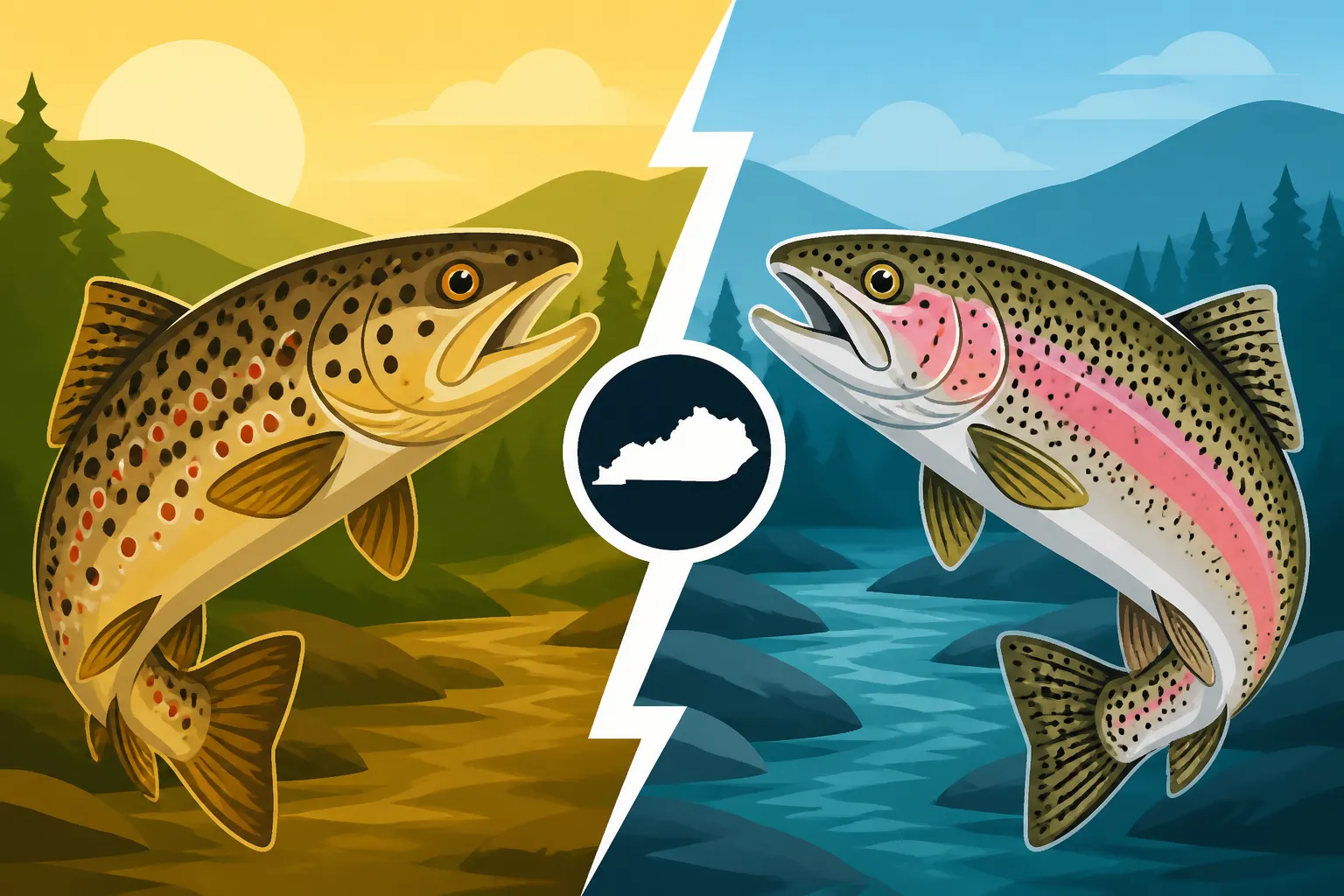
- Brown Trout: These fish, as their name suggests, tend to have a brownish or olive-green base color, often fading to a yellowish or creamy white belly. But the real giveaway is their spots. Brown trout typically have dark brown or black spots, often surrounded by lighter halos, scattered over their back, sides, and even onto their dorsal and adipose fins. Crucially, they also almost always have red or orange spots, sometimes quite vibrant, interspersed among the darker ones, especially along their lateral line. These red spots might also have light halos around them. Their tail fin usually has few to no spots, or only faint ones. When you're browsing for fishing guides or identification charts on Amazon, pay close attention to the detail in the spot patterns.
- Rainbow Trout: Rainbows generally have a more silvery, olive, or bluish-green back that transitions to silvery sides and a white belly. The most iconic feature, and the one that gives them their name, is a prominent pink or reddish stripe running horizontally along their lateral line from their gill plate to their tail. This stripe can be incredibly vibrant on spawning fish or those in clear, cold water, but it might be faint or absent on hatchery-raised fish or those in murky conditions. Their spots are typically smaller, more numerous, and exclusively black. These black spots cover their back, sides, dorsal fin, and most notably, their tail fin is heavily spotted with small black dots. This heavily spotted tail is a huge indicator for rainbows.
Let's put this into a quick comparison table:
| Feature | Brown Trout | Rainbow Trout |
|---|---|---|
| Body Color | Brown, olive-green, yellowish sides | Silvery, olive, bluish-green back, silvery sides |
| Lateral Line | No distinct stripe | Prominent pink/reddish stripe (often vibrant) |
| Body Spots | Dark brown/black spots (often with light halos); red/orange spots also present | Numerous small black spots only |
| Tail Fin Spots | Few to no spots, or very faint ones | Heavily spotted with small black dots |
| Adipose Fin | Often has spots | Usually unspotted or very few spots |
Fin Shapes, Mouth Structure, and Body Proportions
While the spots and colors are the big indicators, if you're still unsure, look closer at their physical structure.
- Brown Trout: They tend to have a more elongated, torpedo-shaped body. Their mouth is typically larger, extending back beyond the rear edge of their eye. This larger mouth is a clue to their more predatory nature, as they're known to eat larger prey, including other fish. Their tail fin is usually square or slightly emarginate (forked).
- Rainbow Trout: Rainbows often have a slightly deeper body profile and a more compact head. Their mouth is usually smaller, not extending past the middle of their eye. Their tail fin is typically more square or even slightly rounded, but the key is those heavy black spots we talked about earlier.
Think about the general "feel" of the fish. A chunky, broad-shouldered trout with a big jaw is more likely a brown, especially if you're fishing a river known for holding larger, older fish. A more streamlined, agile-looking fish with a smaller mouth is often a rainbow. This isn't a hard and fast rule, as diet and genetics play a role in body shape, but it's a good secondary indicator.
Habitat and Behavior Clues to Distinguish Trout
Beyond their looks, where and how these trout live and behave can also give you hints about their identity. Kentucky has a diverse range of trout waters, from large reservoirs to small freestone streams, and each species has its preferences. Understanding these ecological niches can help you predict what you might catch even before you cast a line.
Preferred Waters and Environmental Factors
Trout, regardless of species, generally prefer cold, clear, well-oxygenated water. However, there are nuances in their preferences.
- Brown Trout: These guys are often considered the hardier of the two, capable of tolerating slightly warmer water temperatures and a bit more turbidity. They are also notoriously elusive and cagey. You'll find them in many of Kentucky's stocked streams and rivers, but they're especially known for their ability to survive and thrive in waters that might be marginal for rainbows, often holding over year after year and growing quite large. Brown trout are also more inclined to be found in waters with plenty of cover – undercut banks, log jams, deep pools, and rocky structure. If you're fishing a section of stream that has a good mix of these features, you're likely in prime brown trout territory. You might find some excellent brown trout fishing in some of Kentucky's cold-water streams mentioned in Brown Trout and Brook Trout in Kentucky's Cold-Water Streams.
- Rainbow Trout: Rainbows generally prefer colder, cleaner, and faster-moving water, making them ideal candidates for many of our put-and-take fisheries. They are often stocked heavily by the Kentucky Department of Fish and Wildlife Resources because of their willingness to bite and their excellent fighting qualities. You'll find them in places like Lake Cumberland, which is known for its excellent trout fishery, as detailed in Rainbow Trout Fishing on Kentucky's Lake Cumberland. They also do well in tailwaters below dams, where water temperatures remain consistently cold. While they appreciate cover, they are often found in more open runs and riffles, actively feeding on insects drifting by. If you're in a heavily stocked, easily accessible stream, chances are you're catching a rainbow.
Feeding Habits and Seasonal Movements
How and what these fish eat can also provide clues, especially if you're observing them in their natural environment.
- Brown Trout: Browns are opportunistic predators. While they'll certainly eat aquatic insects, especially when they're smaller, larger brown trout develop a taste for bigger meals. This includes crayfish, sculpins, minnows, and even smaller trout or other fish. They are often nocturnal feeders, especially the big ones, coming out to hunt during low light conditions. Their elusive nature and preference for larger prey contribute to their reputation as a challenging catch. If you're using larger streamers or minnow imitations, you might be targeting a brown.
- Rainbow Trout: Rainbows are generally more insectivorous, especially when smaller. They are expert at rising to dry flies, hitting nymphs, and chasing small emergers. They are often active throughout the day, particularly when there's an insect hatch. While larger rainbows will certainly eat minnows, they tend to maintain a diet heavier in invertebrates. If you're seeing lots of rises on the surface to small flies, you're probably in good rainbow territory. Fly fishing with small patterns, as described in Best Flies for Rainbow Trout in Mountain Streams, is often a great way to target them. Many anglers find the Best Bait for Trout on Cold-Water Mountain Streams can attract both, but the presentation might differ.
Practical Tips for Anglers: Beyond the Visual
So you're on the water, you've hooked a fish, and you're trying to figure out if it's a brown or a rainbow. What else can you do? It's not always about a perfect visual ID in the heat of the moment, especially if you're practicing catch and release. There are other ways to gather information and improve your identification skills.
Observing Behavior on the Water
Sometimes, how a fish fights can give you a clue, though this isn't always foolproof, as every fish is an individual.
- Rainbow Trout: Many anglers will tell you that rainbows are known for their aerial acrobatics. They often jump and tail-walk across the surface, especially when hooked. They tend to make strong, fast runs. This energetic fight is one reason they're so popular with recreational anglers.
- Brown Trout: Browns, on the other hand, are often characterized by their powerful, deep runs. They tend to stay closer to the bottom or dive into cover, trying to break you off on structure. While they can jump, it's generally less common than with rainbows. They often feel like a heavier, more determined pull.
Again, these are generalizations. A small brown trout might jump, and a large rainbow might make powerful deep runs. But if you consistently notice a fish jumping and flashing that pink stripe, you're almost certainly dealing with a rainbow. If a fish is trying to bury itself in a log jam, it's more likely a brown. When considering your gear, picking the right setup, like described in Spin Fishing for Trout: Gear and Technique, can help you manage these different fight styles.
Using Photography for Later Identification
Here's a tip that can save you a lot of headache and help you learn. If you're practicing catch and release, and you're unsure about the species, quickly snap a clear photo of the fish while it's still in the net or wet hand. Try to get a shot that clearly shows the side of the fish, including its spots, lateral line, and tail fin.
Later, when you're off the water, you can compare your photo to reliable identification guides, online resources, or even ask experienced anglers in a local fishing group or tackle shop. Many anglers use waterproof phone cases or dedicated fishing cameras to make this easier. There are some fantastic field guides available on Amazon that can be invaluable for this kind of post-trip analysis. This practice not only helps you identify that specific fish but also trains your eye for future encounters. Remember, handling fish minimally and carefully, especially trout, is key to their survival after release. A quick picture with wet hands while the fish is still in the water is the best practice.
Learning the distinctions between brown trout and rainbow trout truly enhances your fishing experience in Kentucky. It moves you from simply catching fish to understanding and appreciating the unique biology and ecology of these incredible creatures. So next time you're out on the water, take a moment to really look at your catch. Those spots, that stripe, the shape of the mouth – they all tell a story about the fish and the waters it calls home. And that, my friends, is what makes fishing so much more than just a hobby. You'll even need to know the species if you're checking regulations on special permits like the Kentucky Trout Permit Guide before you go.
Disclaimer
This article is for general informational purposes only and does not constitute professional advice. Laws, prices and regulations vary by location and change over time. Consult a qualified professional for guidance on your specific situation.