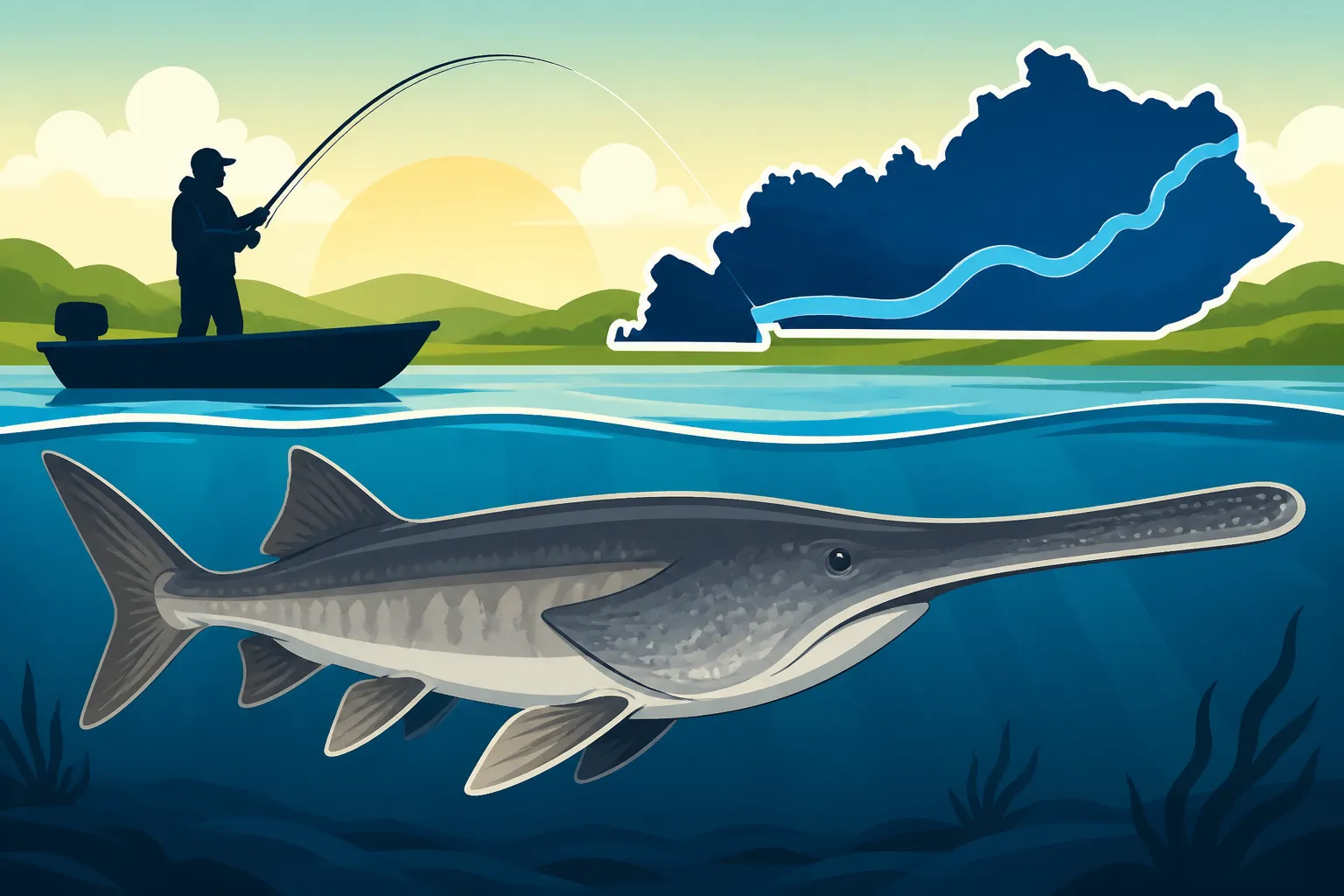
Paddlefish Size and Growth on the Ohio River
It’s a truly humbling experience to hook into a fish that feels like it swam straight out of the prehistoric past. When you're out on the Ohio River here in Kentucky, the paddlefish are those living dinosaurs, and the sheer power and size of them can be jaw-dropping. Many anglers, myself included, often wonder just how big these incredible creatures can get, and what makes the Ohio River such a prime nursery for them. This guide is dedicated to pulling back the curtain on the fascinating world of paddlefish size and growth, specifically focusing on what you can expect when you’re chasing these giants on our home waters.
The Phenomenon of Kentucky Paddlefish in the Ohio River
Kentucky’s stretch of the Ohio River isn't just a waterway; it's a vital artery for many fish species, and for the American paddlefish, it’s practically a superhighway and a buffet all rolled into one. These aren't your typical sport fish that bite on a worm; they are filter feeders with a unique biology that allows them to thrive in these vast, nutrient-rich waters.
A Glimpse into the Past: What Makes Paddlefish So Unique?
Imagine a fish with a long, paddle-shaped snout, a body that feels like smooth leather, and a mouth that opens wide to filter microscopic plankton from the water. That's a paddlefish. They are truly ancient, belonging to a lineage that predates many dinosaurs, and they’ve barely changed their form in 300 million years. Their 'paddle' or rostrum is packed with electroreceptors, which they use to detect the tiny electrical fields of their prey – the plankton they consume. Unlike most fish we target, they don't have teeth or actively chase bait; they simply swim with their mouths open, sifting their meals from the currents. This unique feeding strategy means they need vast amounts of productive water, and the Ohio River delivers.
Catching one of these magnificent beasts isn't about traditional bait fishing; it’s typically done by snagging, a legal method in Kentucky for paddlefish, which speaks to their feeding habits. The sheer size and power you feel when a paddlefish connects to your line is unlike anything else. It's a testament to their muscular bodies and their ancient survival instincts.
The Ohio River's Role in Growing Giants
So, why does the Ohio River play such a significant role in the impressive size and growth of Kentucky’s paddlefish? It comes down to a perfect storm of environmental factors. The Ohio is a massive river system, constantly moving and churning nutrients. This sustained flow creates an incredibly productive environment for plankton – the microscopic organisms that form the base of the paddlefish diet. Think of it as an endless, slow-moving conveyor belt of food.
The system of locks and dams along the Ohio River, while sometimes controversial for other species, can actually create concentrated feeding areas for paddlefish. The calmer pools above and below these structures can collect plankton, making it easier for these filter feeders to gorge themselves. This consistent access to abundant, high-quality food, combined with the sheer volume of water, allows paddlefish to grow to truly astonishing sizes. They have the space, the food, and the relatively stable environment needed to reach their full genetic potential.
Kentucky's Connection to Paddlefish Populations
Kentucky has a long-standing history with paddlefish, recognizing their ecological and recreational value. Historically, they were vital to Native American cultures and early settlers. Today, they are a unique angling opportunity and an important part of the river's ecosystem. The Kentucky Department of Fish and Wildlife Resources actively monitors paddlefish populations, implements regulations, and sometimes even participates in stocking efforts to ensure these incredible fish continue to thrive. This commitment to conservation helps ensure that anglers on the Ohio River today and in the future will have the chance to experience the thrill of encountering these freshwater giants. You can learn more about specific rules and why they're in place in our comprehensive Kentucky Fishing Regulations Explained guide.
Understanding Paddlefish Size: Averages and Extremes
When you’re dreaming of catching a paddlefish on the Ohio River, one of the first questions that pops into your head is usually, "How big do they actually get?" It's a fair question, and the answer can be quite impressive.
Typical Paddlefish Dimensions for Kentucky Anglers
While every fish is an individual, anglers fishing Kentucky’s Ohio River can generally expect to encounter paddlefish ranging from about 25 to 60 pounds, with lengths typically falling between 4 to 6 feet from the tip of their paddle to the fork of their tail. Now, I know what you’re thinking – even the "average" is pretty big! And you’d be right. A 40-pound paddlefish puts up a fight you won't soon forget, making even experienced anglers thankful for strong tackle.
It's important to remember that these are just averages. You'll catch smaller ones, especially if you're hitting early season runs, and you'll definitely encounter larger, more mature fish that will test your gear and your muscles. The variation can be significant, even within the same stretch of river. For a deeper dive into targeting these fish, check out our Paddlefish Fishing on the Ohio River: A Complete Guide.
The Factors that Fuel Their Growth
So, what makes some paddlefish grow into absolute behemoths while others stay closer to the average? It's a combination of factors, much like with any other species, but with a few paddlefish-specific twists:
- Food Availability: This is arguably the biggest driver. The Ohio River is incredibly productive, brimming with zooplankton and phytoplankton. Areas where these microscopic organisms are particularly dense, perhaps due to currents or river features, provide paddlefish with an endless buffet, leading to faster growth rates.
- Water Quality and Temperature: Healthy, oxygenated water free from excessive pollution is crucial for all fish, paddlefish included. Consistent water temperatures within their optimal range also contribute to efficient metabolism and growth.
- Genetics: Just like us, some fish are simply predisposed to grow larger and live longer due to their genetic makeup.
- Age: While we'll dive deeper into this soon, older fish naturally have had more time to grow. A paddlefish that has navigated the Ohio River for two or three decades has had ample opportunity to pack on the pounds.
- Habitat Diversity: Access to diverse habitats, including deep pools for overwintering, spawning grounds, and areas with good current for feeding, all play a role in the overall health and growth of the population. The varied structure of the Ohio River provides this crucial diversity.
Chasing a Trophy: What Defines a "Big" Ohio River Paddlefish?
For many anglers, landing a paddlefish is an achievement in itself. But for those who chase true giants, a "trophy" paddlefish on the Ohio River usually means a fish pushing 70 pounds or more, sometimes even breaking the incredible 100-pound mark. These are the fish that dominate fishing tales and inspire expeditions. Kentucky has a rich history of producing enormous paddlefish, and the state record is a testament to the river's capacity to grow true giants. If you're wondering just how impressive that record is, you might be interested to know that Kentucky's Record Paddlefish Weighed 106 Pounds.
Catching a fish of that magnitude isn't just about luck; it often requires dedication, understanding the river's nuances, and a bit of strategic planning around the Best Time of Year to Snag Paddlefish on the Ohio River. When you do hook into one of these monsters, the experience is electrifying – a powerful tug-of-war against a truly ancient and magnificent creature.
The Paddlefish Life Cycle and Growth Trajectory
The journey of a paddlefish from a tiny egg to a massive river giant is a long and fascinating one, marked by different growth phases and an impressive lifespan. Understanding this trajectory helps us appreciate their place in the ecosystem and why certain regulations are in place.
From Fry to Feeder: Early Life and Rapid Development
Paddlefish begin their lives as tiny, vulnerable fry, hatching from eggs laid in swift-flowing river sections. These larval fish are initially quite small, but their growth in the first few years is remarkably rapid. They're like little plankton-eating machines, constantly consuming and adding size as they navigate the river currents. This early burst of growth is crucial for their survival, allowing them to quickly grow too large for many predators. During this time, they're absorbing nutrients and developing the robust body structure that will define their later years. They mature relatively quickly, ready to join the adult population in their tireless filter-feeding mission.
Slow and Steady Wins the Race: Mature Growth Patterns
After their initial rapid growth phase, the rate at which paddlefish grow tends to slow down considerably. However, unlike many fish species that have a more defined maximum size, paddlefish continue to grow throughout their entire lives, albeit at a reduced pace. This means that an older paddlefish is almost always a larger paddlefish. They steadily add length and girth year after year, especially if food resources remain abundant in the Ohio River. This continuous growth pattern is one of the reasons why the potential for truly massive, older specimens exists in such productive waters. It's a testament to their longevity and their consistent ability to find and consume their planktonic diet.
Longevity and Age Estimation in Paddlefish
Paddlefish are incredibly long-lived creatures, often reaching ages of 20 to 30 years, and sometimes even older in pristine conditions. Some studies have even documented paddlefish living for over 50 years! This impressive longevity contributes directly to their potential for monumental size. A fish that has been growing for decades has had a lot of time to get big.
For biologists, estimating the age of a paddlefish typically involves examining a cross-section of their jawbone or fin rays, similar to how one might count tree rings. For the average angler, however, directly aging a paddlefish by its size is challenging and not always accurate, as growth rates can vary. Generally, though, a larger fish is almost certainly an older fish. This long lifespan highlights the importance of sustainable fishing practices and respecting catch limits, especially for older, larger breeding fish that are crucial for the population's future.
Fishing Strategies for Encountering Larger Paddlefish
Successfully landing a large paddlefish on the Ohio River requires more than just luck; it demands specialized gear, a keen understanding of their behavior, and strict adherence to regulations.
The Right Gear for the Job
When you're targeting a fish that can easily weigh 50, 70, or even over 100 pounds, you absolutely need heavy-duty gear. This isn't the time for your lightweight bass setup!
- Rods: Look for heavy or extra-heavy action rods, typically 7 to 9 feet in length. These rods need to have enough backbone to handle the immense pulling power of a large paddlefish. Fiberglass or composite rods are often favored for their durability and parabolic bend under heavy load.
- Reels: A large, sturdy spinning reel or a robust conventional reel capable of holding a significant amount of heavy line is essential. The drag system needs to be smooth and powerful enough to withstand prolonged runs. Some anglers find excellent heavy-duty reels by checking out options on Amazon, looking for high customer reviews and durable construction for saltwater applications, which often translate well to big freshwater species.
- Line: This is not where you skimp. Braided line in the 60 to 100-pound test range is practically mandatory. Its strength, low stretch, and abrasion resistance are vital for controlling powerful fish in strong currents and around potential snags. A heavy monofilament or fluorocarbon leader of similar strength is often used to absorb shock and provide additional abrasion resistance.
- Hooks and Weights: Large, strong treble hooks are typically used for snagging. The size can vary, but generally, 8/0 to 12/0 are common. Heavy sinkers, often 6 to 12 ounces or more, are needed to get your rig down to the bottom in the strong Ohio River currents.
You can find a more in-depth discussion on necessary equipment in our guide on Best Catfish and Paddlefish Gear for Kentucky's Ohio River, which often overlaps with paddlefish gear needs due to the similar heavy tackle requirements.
Best Times and Locations on the Ohio River
Timing and location are crucial for increasing your chances of hooking into a large paddlefish.
- Seasonal Movements: Paddlefish in the Ohio River often undertake seasonal migrations. They tend to congregate in deeper pools and channels during colder months. As spring approaches, they move upstream towards spawning grounds, and this is often when anglers have the best success at encountering large, gravid fish. The period between late winter and early spring is often considered prime time.
- River Features: Look for deep holes, channels, and areas below dams. The turbulent water below dams can disorient baitfish and other organisms, but for paddlefish, it can be a plankton-rich feeding zone. These areas also tend to concentrate fish as they move upstream. The mouths of large tributaries where they meet the Ohio River can also be hotspots, as these areas often have significant current breaks and plankton concentrations.
- Current: Paddlefish are active filter feeders, so they prefer areas with a moderate current that brings food to them. Finding a seam where strong current meets a calmer eddy can be a prime location.
The Art of Snagging: Techniques and Regulations
Snagging is the primary and legal method for catching paddlefish in Kentucky. It's important to understand that this isn't about traditional "fishing" in the sense of a fish biting a hook. Instead, it involves casting a heavy line with a large treble hook and heavy weight, letting it sink to the bottom, and then making sharp, upward jerks of the rod to "snag" the fish as it swims by.
- Technique: The goal is to swing the rod with enough force to embed the hook into the paddlefish's body. It often takes practice to get the rhythm right – cast, let it sink, then a series of strong sweeps. When you feel that distinct "thump" or sudden weight, it’s game on.
- Regulations: It's absolutely critical to be aware of and abide by all current Kentucky fishing regulations regarding paddlefish. These typically include specific seasons, daily limits, and sometimes even size limits. There may also be rules about the number of hooks allowed or the size of the treble hook. For example, Do You Need a Special Permit to Snag Paddlefish in Kentucky? is a common question, and understanding these specifics ensures you're fishing legally and sustainably. Always check the latest KDFWR regulations before heading out.
Conservation and Responsible Angling for Paddlefish
Paddlefish are a unique and valuable part of Kentucky's aquatic ecosystem. Their long lifespans and slow reproductive rates make them particularly vulnerable to overfishing, which is why responsible angling and conservation efforts are so vital.
Kentucky's Paddlefish Regulations: Why They Matter
The regulations set forth by the Kentucky Department of Fish and Wildlife Resources for paddlefish aren't arbitrary; they are carefully crafted to protect and manage these precious populations. These rules typically include:
- Seasons: Specific windows during which paddlefish can be harvested are designed to avoid critical spawning periods and allow fish to reproduce undisturbed.
- Daily Limits: These limits control the number of fish an individual angler can keep in a single day, preventing excessive harvest.
- Size Limits (if applicable): While not always in place for paddlefish, minimum or maximum size limits can protect young, growing fish or large, breeding adults, ensuring they contribute to future generations.
- Method Restrictions: As paddlefish are filter feeders, snagging is often the prescribed method, but there may be specific rules about hook size or number.
These regulations are crucial for maintaining healthy paddlefish populations on the Ohio River. Ignoring them not only risks penalties like those discussed in Penalties for Fishing Without a License in Kentucky (though the focus is broader there), but more importantly, it jeopardizes the future of this incredible species. Always check the most current regulations before your trip.
Practicing Proper Catch and Release for Large Specimens
While harvesting paddlefish is part of the sport for many, practicing proper catch and release, especially for the largest specimens, is highly encouraged. The biggest paddlefish are often the oldest and most reproductively valuable fish in the population. Releasing them allows them to continue spawning and contributing their genetics to future generations.
If you plan to release a large paddlefish:
- Minimize Fight Time: Use appropriate heavy tackle to land the fish as quickly as possible, reducing stress.
- Handle with Care: Support the fish horizontally, especially large ones, to avoid damaging internal organs. Avoid dragging them on rough surfaces.
- Quick Hook Removal: Use strong pliers to quickly remove the snagging hook. If it's deeply embedded and cannot be removed without causing further damage, cut the line as close to the hook as possible.
- Revive If Necessary: If the fish seems stressed, hold it gently in the water, facing into the current, until it regains its strength and can swim away on its own.
The Future of Paddlefish on the Ohio River
The health and vitality of paddlefish populations on the Ohio River depend heavily on the actions of anglers today. By understanding their unique biology, respecting their growth trajectory, and adhering to conservation-minded fishing practices, we can ensure that these magnificent "living dinosaurs" continue to thrive for years to come. Every angler who takes the time to learn and apply these principles contributes to a richer and more sustainable fishing experience for everyone.
Remember, exploring the range of fishing gear on platforms like Amazon can help you find the robust rods, reels, and lines necessary to handle these powerful fish without undue stress on either the angler or the fish.
Paddlefish Size and Growth Factors Summary
Here's a quick overview of what we've discussed regarding paddlefish size and growth in Kentucky's Ohio River:
| Characteristic | Average Ohio River Paddlefish | Trophy Ohio River Paddlefish | Key Growth Factors |
|---|---|---|---|
| Weight Range | 25-60 pounds | 70-100+ pounds | Abundant plankton, water quality, genetics, age |
| Length Range | 4-6 feet (rostrum to fork) | 6+ feet (rostrum to fork) | Consistent food supply, suitable river habitat, longevity |
| Lifespan | 20-30 years (commonly), up to 50+ years | Older individuals, often 30+ years | Environmental stability, low stress, continuous feeding |
| Growth Pattern | Rapid early growth, then slow and continuous | Continuous slow growth over many decades | Metabolism, access to rich feeding grounds |
| Feeding Method | Filter-feeding zooplankton | Filter-feeding zooplankton | Availability of dense plankton blooms |
Disclaimer
This article is for general informational purposes only and does not constitute professional advice. Laws, prices and regulations vary by location and change over time. Consult a qualified professional for guidance on your specific situation.