Best Catfish and Paddlefish Gear for Kentucky’s Ohio River
The Ohio River is a powerhouse, a sprawling, challenging waterway that demands respect and the right tools for the job, especially when you're targeting its legendary catfish and the unique, prehistoric paddlefish. Many anglers, myself included, have learned the hard way that standard lake gear just won't cut it against the strong currents, snags, and sheer size of the fish lurking in these waters. This comprehensive guide will walk you through all the essential rods, reels, lines, tackle, and specialized equipment you need to confidently and successfully tackle catfish and paddlefish on Kentucky's mighty Ohio River.
Choosing the Right Rods and Reels for Ohio River Giants
Fishing the Ohio River isn't like casting a line in a calm farm pond. You're up against powerful currents, often deep water, and fish that can grow to truly astonishing sizes. This means your rods and reels need to be built for heavy-duty performance, offering both the strength to winch in a monster and the sensitivity to detect subtle bites in a swift flow. Skimping on this foundational gear is a common mistake that leads to frustration and lost fish.
Heavy-Duty Catfish Rods for Power and Sensitivity
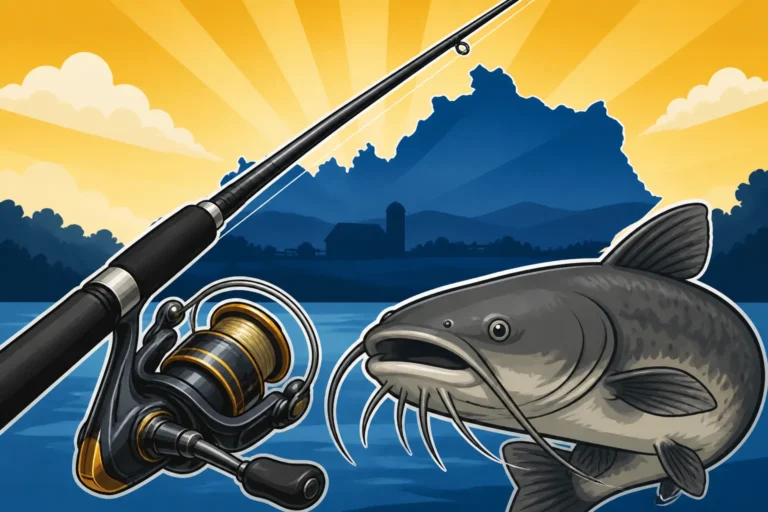
For serious Ohio River catfishing, you need a rod that can handle the abuse. We're talking about stout, powerful rods, typically in the 7 to 10-foot range, with a heavy or extra-heavy action. This isn't just for battling huge blue cats and flatheads; it's also crucial for casting heavy weights to hold your bait in the strong current and for setting the hook firmly into a tough, cartilaginous mouth. Look for rods made of durable fiberglass or composite materials that can absorb shocks without snapping.
The longer rod length helps you manage long casts, keep more line out of the current to reduce drag, and provides better leverage when fighting a big fish. A comfortable, sturdy handle, often cork or EVA foam, is also key for those long hours of holding onto a rod as you wait for that tell-tale thud. Many seasoned river anglers swear by brands known for their catfish-specific rods, often available at places like Bass Pro Shops, because they understand the unique demands of big river fishing. Consider the specific species you're targeting; channel cats might allow for a slightly lighter setup, but for trophy blue and flathead catfish, go big or go home. You can learn more about these fascinating fish in our Kentucky Catfish Fishing: Ohio River and Kentucky Lake Guide.
Powerful Catfish Reels to Handle the Fight
Matching your heavy-duty rod with an equally capable reel is non-negotiable. For Ohio River catfishing, you'll generally want a baitcasting reel designed for heavy line and big fish, or a robust spinning reel if you prefer that style for certain applications. Baitcasting reels, particularly conventional models, are often favored for their superior drag systems, line capacity, and sheer cranking power. Look for a reel with a smooth, powerful drag that can be adjusted precisely, preventing line breaks when a trophy cat decides to make a run.
Line capacity is paramount here. You'll need enough space on your spool for at least 200-300 yards of heavy monofilament or braided line, which we'll discuss next. Gear ratio is also a consideration; a lower gear ratio provides more torque for winching in heavy weights and big fish, while a slightly higher one can help you retrieve line faster. Durability is another key factor; saltwater-rated reels often cross over well into heavy freshwater applications like river catfishing due to their robust construction and corrosion resistance, even if you're not dealing with salt. For specific recommendations, check out our Best Rod and Reel Combo for Catfish Fishing.
Specialized Rods for Paddlefish Snagging
Paddlefish snagging is a whole different ballgame that requires its own specialized equipment. You're not trying to entice a bite; you're actively trying to hook a fast-moving, filter-feeding fish. This means your rod needs to be incredibly stout, almost like a broomstick, capable of casting extremely heavy weights and withstanding the tremendous force of repeatedly sweeping a large, sharp hook through the water. Imagine trying to set a hook into something the size of a small torpedo while battling river current!
Paddlefish rods are typically very long, often 8 to 14 feet, and possess an extra-heavy or even "XX-heavy" action. They need to be incredibly stiff with a strong backbone to generate the power needed for a solid snag. Fiberglass construction is common due to its durability and ability to handle immense pressure. Paired with an equally robust reel, these rods are specifically designed to deliver heavy snagging hooks and weights and then muscle in a large, powerful fish that isn't hooked in the mouth. When choosing, consider the sheer force you'll be exerting and the size of the paddlefish the Ohio River is known to produce. Check out our Paddlefish Fishing on the Ohio River: A Complete Guide for more insights into this unique sport.
Line and Rigging for Big River Cats and Paddlefish
Your fishing line is the direct link between you and the fish, and on the Ohio River, it's under constant stress from current, snags, and powerful fish. Choosing the right type of line, appropriate strength, and effective rigging strategies can make or break your trip. Don't underestimate the forces at play in a major river system; a weak link in your setup will be exposed quickly.
Braided Line for Maximum Power and Durability
When targeting catfish and paddlefish on the Ohio River, braided line is often the top choice for your main line, and for very good reasons. Its incredible strength-to-diameter ratio means you can use a lighter diameter line for a given breaking strength compared to monofilament, which helps cut through the current more efficiently. More importantly, braid has virtually no stretch, providing superior sensitivity to detect subtle bites in a strong current and offering immense power for setting hooks and pulling fish out of heavy cover.
For catfish, especially trophy blue cats and flatheads, consider braided line in the 50 to 100-pound test range. For paddlefish snagging, some anglers go even heavier, opting for 100 to 150-pound test to ensure maximum snagging power and to handle the shock of hooking a large, fast-swimming fish. While more expensive upfront, braid's durability and longevity, especially when properly maintained, often make it a cost-effective choice in the long run. Just be aware that braid can be harder to cut and tie, so quality knots are crucial. Online retailers like Amazon often have great deals on bulk spools of various braided lines.
Leader Materials and Swivels for Enhanced Performance
While braid makes an excellent main line, it's often paired with a monofilament or fluorocarbon leader for several reasons. For catfishing, a leader (typically 30-80 lb test mono or fluoro) provides a bit of stretch, acting as a shock absorber during violent head shakes, and is generally more abrasion-resistant than braid, which is crucial when fishing around rocks, stumps, and other snags on the river bottom. Fluorocarbon leaders offer the added benefit of being nearly invisible underwater, which can be an advantage when fish are wary, though often less critical for opportunistic feeders like catfish.
High-quality swivels are also incredibly important for both catfishing and paddlefish snagging. For catfishing, heavy-duty barrel or ball-bearing swivels prevent line twist, especially when using cut bait that might spin in the current. Three-way swivels are essential for many river rigs, allowing you to attach your main line, your sinker leader, and your hook leader independently. For paddlefish snagging, robust swivels are critical to connect your main line to your heavy snagging rig, ensuring everything holds together under extreme pressure. Always opt for swivels with a higher breaking strength than your main line. When thinking about your Best Catfish Rigs for the Ohio River, remember the role of a good leader and swivel.
Essential Catfish Rigs for River Fishing
River fishing for catfish demands rigs that can present bait effectively in moving water and withstand the current. The three-way swivel rig is a classic and highly effective choice. It allows your sinker to hit the bottom and hold, while your bait leader (often 12-24 inches) drifts naturally just above the bottom, keeping your bait in the strike zone and out of direct contact with snags. The length of the sinker leader can be adjusted based on current strength and desired bait presentation.
Another popular option is the Carolina rig (or sliding sinker rig), especially when you want the fish to pick up the bait without feeling immediate resistance from the weight. Here, a heavy egg or no-roll sinker slides freely on your main line, above a bead and a stout swivel, which then connects to your leader and hook. The weight holds the bottom, but the line slides through, giving catfish time to mouth the bait. For heavy current, you'll need pyramid or flat-sided no-roll sinkers to prevent your rig from tumbling downstream. Understanding these fundamental rigs will significantly improve your success rate on the Ohio River.
Essential Terminal Tackle and Baits for Catfish
Beyond rods, reels, and lines, the small but mighty components of your terminal tackle are critical for success. The right hooks, weights, and, of course, the most enticing baits are what ultimately bring those Ohio River giants to your boat or the bank.
Hooks for Big Catfish
Forget those flimsy treble hooks; when you're targeting big blue cats and flatheads on the Ohio River, you need serious hardware. Circle hooks are overwhelmingly popular for catfishing due to their self-setting nature and their tendency to hook fish in the corner of the mouth, leading to fewer gut-hooked fish and easier releases. Sizes can range from 5/0 to 10/0 or even larger, depending on the size of your bait and the target species. For smaller channel cats, you might use 2/0 to 4/0, but for those true river monsters, don't be shy about going big.
Kahle hooks are another option, offering a wide gap and an offset point that can be very effective. Whatever style you choose, ensure they are made from heavy-gauge wire that won't straighten under the strain of a powerful fish. Chemically sharpened points are also a huge advantage for penetrating tough mouths. Always carry a variety of sizes to match your bait and target.
Weights to Hold Bottom in Current
The Ohio River's current is relentless, and if your bait isn't on the bottom where the catfish are feeding, you're not going to catch anything. This means you need heavy sinkers, sometimes surprisingly heavy. For moderate current, you might use 2-4 ounce pyramid or no-roll sinkers. In stronger flows or deeper channels, you might need 6, 8, or even 10+ ounces to keep your rig anchored.
Pyramid sinkers, as their name suggests, are pyramid-shaped and designed to dig into the bottom, offering good holding power. No-roll sinkers are flat on one or more sides to resist rolling with the current. Bank sinkers also work well for their ability to anchor. Always bring a variety of weights, as conditions on the river can change rapidly. Losing a few sinkers to snags is just part of the game when fishing the Ohio, so stock up from a reliable supplier like Amazon.
Best Catfish Baits for the Ohio River
The Ohio River is home to a rich forage base, and matching your bait to what the catfish are naturally feeding on is key. For blue catfish, cut bait is often king. Shad, skipjack herring, drum, and even carp cut into chunks or strips are irresistible. Freshness is paramount, so if you can catch your own bait, even better. The oilier the fish, the better, as it disperses a scent trail in the current.
Flathead catfish are more particular; they prefer live bait. Live sunfish, bluegill, small carp, or suckers are excellent choices. They need to be presented alive and active to draw a flathead's attention. Channel catfish are less picky and will hit a variety of baits, including cut bait, chicken livers, shrimp, stink baits, and even dough balls. Having a range of baits on hand allows you to adapt to what the fish are biting on a given day. Remember, the Kentucky Catfish Daily Limit and Trophy Fish Rule will apply to your catches, so always be mindful of regulations.
Specialized Gear for Paddlefish Snagging
Paddlefish snagging is a unique and often thrilling experience on the Ohio River, but it requires specific gear designed for this aggressive technique. Attempting to snag paddlefish with standard fishing gear is not only ineffective but can be dangerous due to the forces involved.
Snagging Hooks and Heavy Weights
Unlike traditional fishing, paddlefish snagging utilizes specialized, large, unbaited treble hooks. These hooks are designed for snagging, meaning you're trying to physically hook the fish anywhere on its body as it swims by. Common sizes for paddlefish snagging hooks range from 8/0 to 12/0, with heavy-gauge wire construction to prevent bending or breaking. They need to be incredibly sharp to penetrate the thick hide of a paddlefish.
These hooks are typically paired with very heavy weights, often 8 ounces up to 16 ounces or more. The weight's primary purpose is to get the hook down quickly to the desired depth and to allow for powerful, sweeping rod movements that propel the hook through the water. Bell sinkers or teardrop weights are common, as they descend quickly. The combination of a massive hook and heavy weight ensures maximum snagging efficiency. For a deep dive into what's needed, refer to our Best Paddlefish Snagging Gear for the Ohio River.
Heavy Snagging Line and Reels
As mentioned in the rod section, paddlefish snagging demands incredibly strong line. Braided line is the overwhelming choice for this application, with many anglers opting for 100-pound test or even heavier, up to 150-pound. The zero stretch of braid is critical for transferring the force of your sweep to the hook and for battling a large, powerful fish. A big paddlefish, often well over 50 pounds (and sometimes over 100 pounds!), puts immense strain on your tackle, especially when it's hooked on the side.
The reels used for paddlefish snagging are typically large, robust conventional baitcasting reels with high line capacity and powerful, smooth drag systems. These are often the same types of reels used for offshore saltwater fishing or deep-sea bottom fishing, repurposed for their raw power and durability. Again, a lower gear ratio is often preferred for the torque it provides when reeling in heavy weights and large fish. Some anglers prefer large spinning reels, but the sheer power and cranking ability of a conventional reel often make it the preferred choice for truly heavy snagging. Always verify specific regulations regarding line strength and hook types for paddlefish snagging, as these can vary. Remember, Do You Need a Special Permit to Snag Paddlefish in Kentucky? is a critical question to answer before you head out.
Buoys and Floats for Drift Snagging
While not always used, buoys and floats can be helpful for certain paddlefish snagging techniques, particularly when drift snagging. In this method, you allow your heavy snagging rig to drift downstream with the current, performing periodic sweeps. If you're fishing from a boat with multiple lines, or if you want to mark a successful snagging area, a buoy can be invaluable.
These aren't your typical bobbers. They need to be large, brightly colored, and capable of supporting substantial weight, as they might be used to mark a snagged fish that needs to be chased down or simply to indicate the position of your drifting rig in a busy river. Some anglers attach a float to their line with a break-away clip, allowing the float to mark the fish if they need to drop the rod to manage the boat or another line. They provide visual indicators on a sprawling river where keeping track of your lines, especially when drifting, can be a challenge.
Safety and Supporting Gear for Ohio River Anglers
Fishing the Ohio River isn't just about catching fish; it's about doing so safely and efficiently. The river's vastness, strong currents, and commercial traffic demand careful preparation. Essential safety gear, reliable boat equipment, and effective navigation tools are just as crucial as your rod and reel.
Life Jackets and Personal Safety Equipment
Safety on the Ohio River is paramount. Commercial barges, towboats, and fast-moving pleasure craft share these waters, often creating large wakes and unpredictable conditions. A Coast Guard-approved life jacket for every person on board is not just a good idea, it's the law, especially for children. Ensure that all life jackets are properly fitted and easily accessible. Wearing one at all times while fishing, especially when alone or in cold weather, is a practice many seasoned river anglers adopt. Check out Life Jacket Rules for Boats in Kentucky for full details.
Beyond life jackets, a comprehensive first-aid kit, a whistle or horn, and visual distress signals (flares or a flag) are essential. A reliable communication device, like a fully charged cell phone in a waterproof bag or a VHF marine radio, is also crucial for emergencies. Remember that conditions on the river can change rapidly, and being prepared for the unexpected is key to a safe outing. Having a knife, pliers, and line cutters readily available is not just for fishing; it's also a safety measure for quickly cutting tangled lines or freeing yourself from snags.
Boat Equipment and Anchoring Systems
For serious Ohio River fishing, especially catfishing and paddlefish snagging, a robust boat is often necessary. Jon boats or V-hull boats with strong outboards are common choices, offering stability, power, and maneuverability. You'll need to carry all required safety equipment, including navigation lights, fire extinguishers, and throwable flotation devices. Always ensure your boat's registration is current and visible. Learn more about suitable vessels in Best Boats for Ohio River Catfishing in Kentucky.
An effective anchoring system is absolutely critical for river fishing. A single anchor often isn't enough in strong currents. Many river anglers use a dual anchoring system (one off the bow, one off the stern) to precisely position their boat and prevent it from swinging in the current, which is vital for maintaining a productive fishing spot and keeping lines from tangling. Heavy anchors, such as river anchors with flukes designed to dig into soft bottoms or grapple anchors for rocky areas, are necessary. Anchor ropes need to be long and stout, capable of holding your boat against the river's immense power.
Navigation and Electronics for River Fishing
Navigating the Ohio River, especially in low light or fog, can be challenging. A reliable GPS unit or a chartplotter is highly recommended, not only for navigation but also for marking productive fishing spots, known snags, and safe channels. Many modern fish finders also incorporate GPS capabilities, making them dual-purpose tools. Utilizing detailed marine charts of the Ohio River is also a smart move to understand depths, channel markers, and potential hazards.
Fish finders, particularly those with side-imaging or down-imaging capabilities, are invaluable for locating baitfish schools, bottom structure, and even large fish hiding in depressions or along channel edges. This technology can save you countless hours by helping you pinpoint exactly where the fish are holding, especially when targeting suspended paddlefish or schooling blue cats. High-quality marine electronics from brands like Humminbird or Lowrance can give you a significant advantage. Learning how to interpret your sonar readings is a skill that will pay dividends on the Ohio. You can find out more about these tools in our Best Marine Electronics for Ohio River Fishing.
Table of Essential Ohio River Fishing Gear
To help summarize, here's a quick reference table for the primary gear categories for both catfish and paddlefish on the Ohio River.
| Gear Category | Catfish Fishing | Paddlefish Snagging | Key Considerations |
|---|---|---|---|
| Rod | 7-10 ft, Heavy/Extra-Heavy Action, Durable Fiberglass/Composite | 8-14 ft, Extra-Heavy/XX-Heavy Action, Very Stiff Fiberglass | Power for big fish & heavy weights, leverage |
| Reel | Conventional Baitcaster or Robust Spinning, High Line Capacity, Strong Drag | Large Conventional Baitcaster, High Line Capacity, Extreme Drag & Torque | Smooth drag, capacity for heavy line, durability |
| Main Line | 50-100 lb Braided Line | 100-150 lb Braided Line | Zero stretch for sensitivity & power, abrasion resistance |
| Leader | 30-80 lb Mono/Fluorocarbon, abrasion-resistant | Not typically used with snagging rig, main line directly to hook | Shock absorption (catfish), invisibility (fluorocarbon) |
| Hooks | 5/0 – 10/0 Circle or Kahle Hooks, Heavy-Gauge Wire | 8/0 – 12/0 Heavy-Gauge Treble Snagging Hooks, Barbless (check regulations) | Hook setting efficiency, strength, appropriate size for bait/target |
| Weights | 2-10+ oz Pyramid/No-Roll/Bank Sinkers | 8-16+ oz Bell/Teardrop Sinkers | Holding bottom in strong current, quick descent for snagging |
| Bait (Catfish) | Cut Bait (Shad, Skipjack), Live Bait (Sunfish), Prepared Baits (Livers, Stink) | N/A (Snagging) | Freshness, matching local forage, scent dispersion |
| Boat Gear | Robust Jon/V-Hull boat, Dual Anchor System, Navigation | Robust Jon/V-Hull boat, Dual Anchor System, Navigation, Buoys/Floats | Stability, power, ability to hold position, safety |
| Safety Gear | USCG-approved Life Jackets, First-Aid, Communication, Whistle | USCG-approved Life Jackets, First-Aid, Communication, Whistle, Pliers/Cutters | Essential for all river outings, prepares for emergencies |
| Electronics | GPS/Chartplotter, Fish Finder (side/down imaging) | GPS/Chartplotter, Fish Finder (side/down imaging) | Navigation, locating fish & structure, marking spots |
Ohio River Fishing Strategies and Seasonal Considerations
The Ohio River is a dynamic environment, constantly changing with water levels, current speeds, and seasonal fish movements. Understanding these factors and adapting your gear and techniques accordingly will dramatically increase your success. It's not just about having the right gear, but knowing how to use it effectively throughout the year.
Seasonal Shifts and Fish Behavior
Spring on the Ohio River often brings higher water levels and stronger currents as snowmelt and rains swell the river. This can make fishing challenging, but it's also a prime time for certain species. As water temperatures rise, catfish become more active and start moving into shallower areas to feed and eventually spawn. Blue cats and flatheads will often be found along current breaks, submerged structure, and feeder creek mouths. Paddlefish also begin their spawning runs in spring, making it a key time for snagging, particularly after significant rain events. You can discover more about these patterns in How the Ohio River Produces Kentucky's Biggest Catfish and Best Time of Year to Snag Paddlefish on the Ohio River.
Summer sees lower, warmer water levels, which can concentrate fish in deeper holes, around bridge pilings, and in areas with cooler, oxygenated water. Night fishing for catfish becomes incredibly productive during these warmer months. Fall brings cooler temperatures, and fish often go on a feeding frenzy to bulk up for winter. Catfish will actively chase baitfish, and paddlefish might still be available in deeper pools. Winter fishing can be tough, but the deepest holes and power plant discharges can hold concentrations of sluggish but catchable catfish. Adjusting your bait presentation, slowing down retrieves, and targeting specific deep structures are key during the colder months.
Locating Productive Spots on the River
Finding fish on a massive river like the Ohio can feel overwhelming, but a few key principles can guide you. Look for current breaks: these are areas where the main current is disrupted, providing fish with a place to rest out of the flow while waiting for food to drift by. This includes areas downstream of islands, points, bridge pilings, wing dams, and barge tie-offs. Submerged structure, such as old trees, rock piles, or channel edges, also holds fish, offering cover and ambush points.
Channel swings, where the river bends and creates deeper pockets on the outside bend, are also prime areas. These deep holes often hold large concentrations of fish. Using your fish finder to identify these depth changes and to mark schools of baitfish is invaluable. For paddlefish, focus on deep, open areas of the main channel where they filter feed. Often, these are the same areas where commercial navigation happens, so always be vigilant. Explore Best Catfish Fishing Spots on the Ohio River in Kentucky for some specific starting points.
Adapting Techniques for River Conditions
The Ohio River is constantly changing, so flexibility in your techniques is vital. If the current is strong, you'll need heavier weights to hold bottom and perhaps shorter leader lengths to keep your bait close to the sinker. If the current is weaker, you might use lighter weights and longer leaders for a more natural bait presentation. When drifting, understanding current speed and depth is crucial for positioning your boat and presenting your bait or snagging rig effectively.
Boat control is an art form on the river. Using your trolling motor to slowly work along a seam or holding yourself against the current with a dual anchor system can make all the difference. Always be mindful of river traffic; commercial barges create massive wakes that can be dangerous if you're not prepared. Understanding river maps, navigation markers, and respecting private property when bank fishing are all part of being a responsible and successful Ohio River angler.
Disclaimer
This article is for general informational purposes only and does not constitute professional advice. Laws, prices and regulations vary by location and change over time. Consult a qualified professional for guidance on your specific situation.