Striped Bass Fishing in Kentucky’s Big Lakes
Many anglers in Kentucky are accustomed to the thrill of landing a feisty largemouth or the steady pull of a plump crappie. But when it comes to striped bass, these magnificent fish present an entirely different challenge. Their sheer power, migratory habits, and preference for deep, open water can make them seem almost mythical to the uninitiated, leading to frustration for those who don't know where to begin. This comprehensive guide will unravel the mysteries of striped bass fishing in Kentucky's premier impoundments, offering the insights and practical tips you need to confidently pursue these hard-fighting giants.
Understanding Kentucky's Striped Bass Fishery
Kentucky's big lakes are home to an incredible fishery, and among the most sought-after species by many is the striped bass. These powerful, oceanic transplants bring a unique angling experience to our freshwater reservoirs. Unlike their black bass cousins, stripers are built for long runs and brutal fights, making them a true trophy for any angler who can consistently find them.
Striped Bass in Kentucky: Not Your Average Bass
When we talk about "bass" in Kentucky, most folks immediately think of largemouth, smallmouth, or even spotted bass. But striped bass, often just called "stripers," are in a league of their own. They're anadromous fish by nature, meaning they typically live in saltwater and spawn in freshwater rivers. However, in many landlocked reservoirs like ours, they've adapted to a purely freshwater existence thanks to successful stocking programs. They are pelagic, meaning they live in open water rather than hugging structure, and they chase schools of baitfish, often shad, across vast expanses.
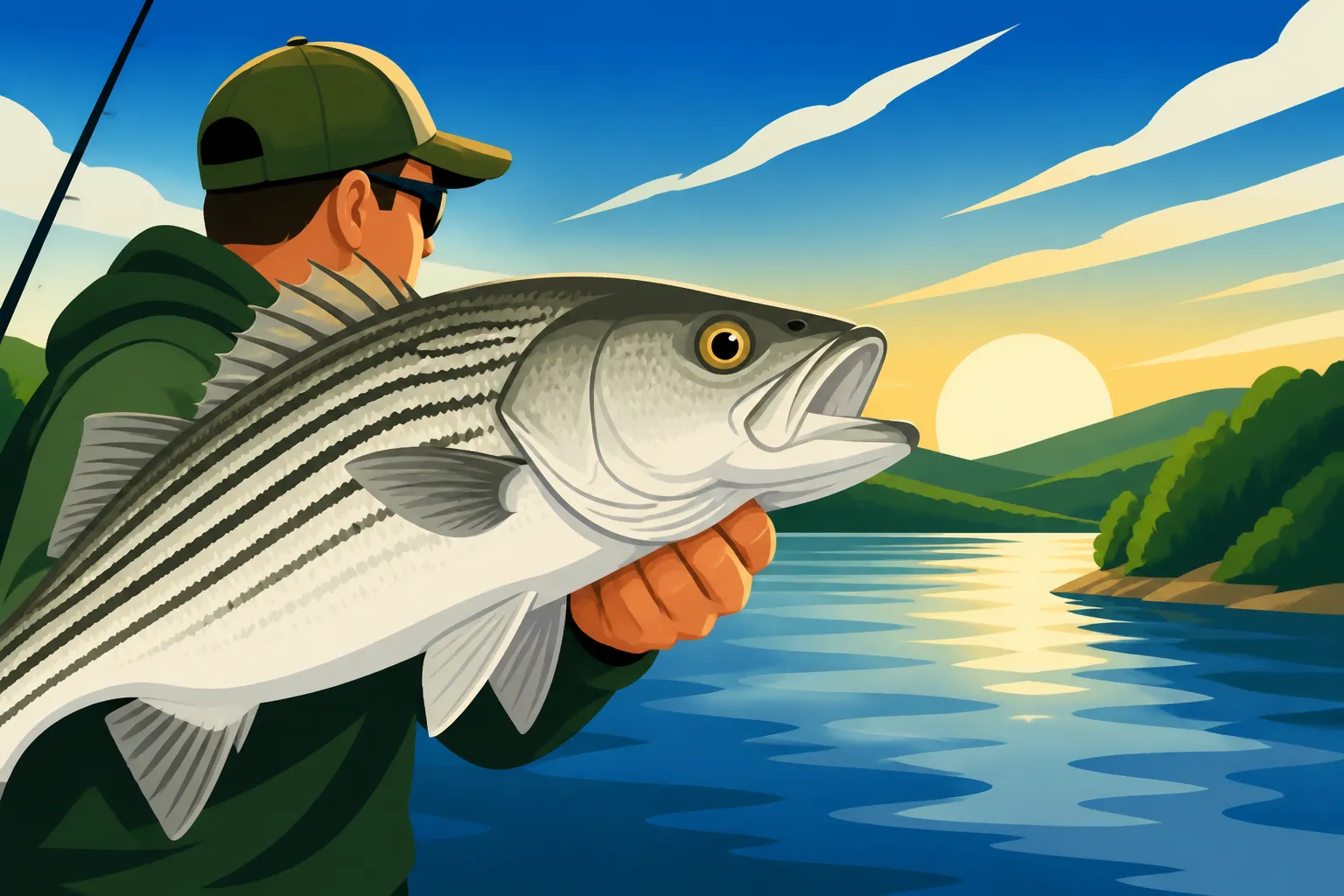
Their physiology is also distinct. Stripers are torpedo-shaped, incredibly muscular, and possess powerful, forked tails that allow them to make blistering runs once hooked. They typically have seven or eight prominent dark stripes running horizontally along their silvery bodies. Knowing these characteristics helps you understand their behavior—they're always on the move, always looking for their next meal, and always ready to put up a fight that will test your tackle and your stamina.
Key Lakes for Striped Bass Action
While you might find a stray striper in various places, a few Kentucky lakes are renowned for their thriving striped bass populations. These are the places where the Kentucky Department of Fish and Wildlife Resources (KDFWR) has actively stocked stripers and where the forage base, primarily gizzard and threadfin shad, is abundant enough to support their growth to impressive sizes. If you're serious about striper fishing, these are the destinations you'll want to focus on.
Lake Cumberland is often considered the undisputed king for striped bass in Kentucky. Its immense size, deep, cold waters, and abundant baitfish make it an ideal habitat. Anglers here regularly pull out stripers weighing in the double digits, and the lake holds the state record for the largest striped bass. Lake Cumberland: Kentucky's Best All-Around Fishing Lake is a great resource if you're planning a trip there. Herrington Lake is another fantastic choice, known for its deep, clear water and consistent striper action, particularly during certain seasons. And while not as famous for stripers as Cumberland, Lake Barkley and Kentucky Lake can also offer opportunities, especially in areas with deep channels and strong current. Each lake presents its own challenges and rewards, but all offer the potential for a memorable striper catch.
Life History and Behavior in Reservoir Environments
Striped bass are truly fascinating fish. In their native saltwater environments, they undertake long migrations between spawning grounds and feeding areas. In Kentucky's reservoirs, they still exhibit a similar instinct to migrate, even if it's just within the confines of a massive lake. They follow the baitfish, moving seasonally between deep, cool summer haunts and shallower, more accessible feeding grounds in spring and fall.
Their diet is almost exclusively baitfish, with shad being the primary food source in our lakes. This is why understanding shad movements – when they spawn, where they school, and how they react to water temperature changes – is paramount to locating stripers. These fish are also highly sensitive to water temperature and oxygen levels, which often dictates their depth. During summer, they'll seek out the thermocline, that distinct layer where warm surface water meets cooler, deeper water, because that's where both baitfish and comfortable oxygen levels are found. During winter, they might suspend in deep water, conserving energy but still willing to strike a well-presented bait. Understanding these patterns is key to unlocking consistent success.
Essential Gear for Battling Big Stripers
Trying to land a powerful Kentucky striped bass with gear meant for panfish would be a hilarious, if short-lived, endeavor. Stripers demand serious tackle, designed to withstand blistering runs and the sheer brute force they exert. Investing in the right equipment isn't just about catching fish; it's about making sure you can control them once hooked and bring them to the boat efficiently, minimizing stress on the fish.
Heavy-Duty Rods and Reels for the Fight
When it comes to striped bass, think power. You're not finesse fishing; you're battling a true heavyweight. For rods, you'll want something in the medium-heavy to heavy power range, typically 7 to 8 feet long. Longer rods give you better casting distance, especially with heavier baits, and more leverage when fighting a strong fish. A fast action tip is ideal for detecting subtle bites and setting the hook, while a strong backbone is crucial for muscling a striper. You can find excellent options for Best Rods and Reels for Kentucky Fishing on retailers like Amazon, where you can read reviews and compare specs easily.
Matching that powerful rod with an equally robust reel is critical. Spinning reels should be in the 4000 to 6000 size range, offering plenty of line capacity and a smooth, strong drag system. For baitcasting reels, look for models with a high retrieve ratio (for taking up slack quickly) and a solid drag that can handle prolonged runs. Remember, a cheap reel with a sticky drag will lead to snapped lines and lost fish, so this is one area where it pays to invest in quality.
Line, Leaders, and Terminal Tackle Choices
Your line is the direct connection between you and that hard-fighting striper, so choosing wisely is non-negotiable. Braided line is a favorite among striper anglers for a few key reasons: its incredible strength-to-diameter ratio, minimal stretch (which means better sensitivity and solid hooksets), and superior casting distance. You'll want to spool up with at least 30-50 lb test braid, depending on the size of fish you're targeting and the cover you're fishing around.
However, stripers can be line-shy in clearer waters, and braid is visible. This is where a fluorocarbon leader comes into play. Attach a 20-40 lb test fluorocarbon leader, typically 3-6 feet long, to your main braided line using a strong knot like an FG knot or an Albright knot. Fluorocarbon is nearly invisible underwater and is more abrasion-resistant than mono. For terminal tackle, heavy-duty swivel snaps are a must for quickly changing lures, and strong, sharp hooks (often 4/0 to 6/0 circle or treble hooks) are essential to penetrate their tough mouths. Best Fishing Line for Big Lake Bass offers more insight into line choices, many of which also apply to stripers.
Must-Have Lures and Baits for Striped Bass
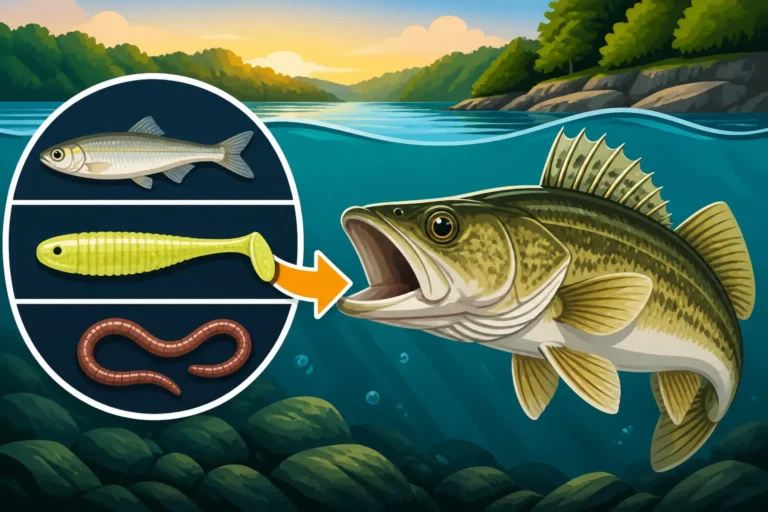
Striped bass are opportunistic predators, but they primarily key in on schools of shad. Therefore, your lure selection should mimic their natural forage. Topwater plugs like poppers and walk-the-dog baits are incredibly exciting when stripers are busting bait on the surface, creating explosive strikes. These work best during low light conditions or when fish are actively feeding.
Sinking or suspending jerkbaits and swimbaits that imitate shad are excellent for targeting suspended fish or those feeding just below the surface. Look for lures in chrome, white, or shad patterns. When stripers are deeper or lethargic, heavy spoons (like flutter spoons) and large bucktail jigs (paired with a grub trailer) can be dropped vertically or cast and retrieved. Live bait, particularly gizzard shad, threadfin shad, or herring, is often the most effective method, especially when fishing specific humps, points, or river channels. Keep an eye on new offerings on Amazon or your local tackle shop for Best Lures for Striped Bass in Deep-Water Reservoirs.
Top Techniques for Kentucky Striped Bass
Unlike species that might be found hugging a stump or lurking under a dock, stripers are often found in the vast open waters of our larger lakes. This means your approach needs to be dynamic and often involves covering a lot of water to locate these nomadic predators. We'll explore some of the most effective methods to get your lines tight with a Kentucky striper.
Trolling: Covering Water for Active Fish
Trolling is arguably one of the most popular and effective methods for locating and catching striped bass, especially in expansive lakes like Lake Cumberland. It allows you to cover vast amounts of water, presenting multiple baits at different depths simultaneously, which is crucial when fish are scattered or their depth preferences are unknown. You'll typically use planer boards to spread out your lines, umbrella rigs to simulate a school of baitfish, or deep-diving crankbaits and lead core line to get your offerings down to the desired depth.
Key to successful trolling is understanding your boat speed (usually 2-4 mph, but it varies), the depth your baits are running, and monitoring your fish finder constantly. Look for significant bait balls and arches representing stripers beneath them. Pay close attention to points, humps, creek channels, and areas around the dam. Some anglers even employ Best Trolling Motors for Kentucky Lake Bass Fishing to maintain precise speeds and stealth. Remember, trolling isn't just dragging bait; it's a strategic hunt involving speed, depth, and pattern adjustments until you crack the code.
Live Bait Tactics: The Natural Advantage
When stripers are being finicky, or when you've located a concentrated school, live bait often outperforms artificial lures. There's just something about a struggling, natural baitfish that a striper can't resist. The primary live baits in Kentucky are gizzard shad and threadfin shad, though some anglers also use herring or even large shiners. Catching these baitfish typically requires a cast net, and keeping them alive requires a well-aerated livewell – often a much larger one than you'd use for black bass. Best Livewell Setup for Bass Boats can give you an idea of what's needed, though striper fishing often demands even more capacity.
Once you have your bait, there are several ways to present it. You can free-line live bait with just a hook and perhaps a small split shot, allowing it to swim naturally. This is excellent for targeting suspended fish or those feeding on the surface. Alternatively, a down-line rig with a heavy sinker can get your bait into deep water fast, presenting it directly to fish holding near the bottom or in the thermocline. A balloon rig, where a balloon acts as a bobber, is effective for keeping live bait at a consistent depth while drifting. Always use strong, sharp circle hooks with live bait to ensure a solid hookup in the striper's tough mouth.
Casting and Vertical Jigging Strategies
While trolling and live bait excel in open water, casting and vertical jigging have their moments, especially during specific seasons or when fish are concentrated. When stripers are actively chasing bait on the surface, often called "busting" or "boiling," casting topwater plugs, large jerkbaits, or spoons into the melee can be incredibly effective and visually thrilling. This typically happens during low light conditions, early morning or late evening, or on cloudy days.
Vertical jigging is a technique often employed when stripers are holding tight to structure or suspended in deep water, identified by your fish finder. Heavy spoons, large bucktail jigs, or even blade baits are dropped directly over the fish and then aggressively jigged up and down. This erratic movement mimics a dying baitfish, often triggering a reaction strike. Fish Finders and Electronics for Kentucky Lake Fishing are invaluable here, allowing you to pinpoint schools of fish and drop your jig precisely into their strike zone. This method requires a sensitive rod and a good feel for the lure's action and the bottom.
| Tactic | Best Conditions | Pros | Cons | Ideal Gear |
|---|---|---|---|---|
| Trolling | Scattered fish, covering large areas, unknown depths | Efficiently finds fish, presents multiple baits, covers water | Requires specific gear (planer boards, lead core), can be slow | Heavy rods, large reels, deep-diving crankbaits, umbrella rigs |
| Live Bait | Finicky fish, precise depth targeting, concentrated schools | Often the most effective, natural presentation, high strike rate | Requires catching and keeping bait alive, more gear intensive | Bait tank, cast net, circle hooks, heavy sinkers, sensitive rods |
| Casting | Surface busts, visible feeding activity, shallow targets | Exciting visual strikes, active fishing, versatile lure options | Limited range compared to trolling, needs active fish | Medium-heavy casting rods, topwater plugs, jerkbaits, spoons |
| Vertical Jigging | Deep suspended fish, tight schools, specific structure | Direct presentation, reaction strikes, good for precise targeting | Requires accurate electronics, can be tiring, specific lure types | Heavy jigging rods, strong reels, heavy spoons, bucktail jigs |
Seasonal Strategies and Hot Spots
Understanding the seasonal movements of striped bass is paramount to consistent success in Kentucky's big lakes. These fish are highly influenced by water temperature, oxygen levels, and, most importantly, the movement of their primary food source: shad. Adapting your strategy to the time of year will dramatically increase your chances of finding and catching these powerful fish.
Spring: Following the Shad Runs
As winter gives way to spring and water temperatures begin to rise, the entire lake ecosystem awakens. This is a fantastic time to target striped bass, as they become more active and start moving into shallower areas, often following the baitfish. The shad, their main forage, will start to congregate and eventually move towards spawning areas in creeks and coves when water temperatures hit the mid-60s. The stripers won't be far behind.
During early spring, focus your efforts on the major creek arms and shallower points near the main lake. Trolling with large crankbaits or umbrella rigs can be very effective as stripers cruise these areas searching for food. As the water warms further and shad begin to spawn, live bait becomes incredibly potent. Free-lining live shad in these creek arms, especially early in the morning or late in the evening, can produce explosive strikes. Look for surface activity, as stripers will often push bait to the surface in these shallower areas. Kentucky Fishing Seasons: What to Catch Each Month will offer more insights into general spring patterns.
Summer: Deep Water and Thermocline Tactics
When the scorching Kentucky summer arrives, the surface waters of our big lakes heat up considerably. This drives the striped bass, which prefer cooler, oxygen-rich water, much deeper. During this time, they will typically hold around the thermocline – that distinct layer of water where the temperature rapidly changes from warm to cold. This layer also tends to concentrate baitfish and oxygen, making it a prime location for stripers.
Finding the thermocline and the fish requires good electronics. Once located, deep-water trolling with downriggers, lead core line, or heavy umbrella rigs is a highly effective tactic. You'll be presenting your baits at depths often exceeding 30-60 feet. Live bait, particularly large gizzard shad, drifted or slow-trolled at the depth of the thermocline, is also incredibly productive. Focus on the main lake points, submerged humps, and the deep channels of the riverbeds, especially those close to the dam. Night fishing during the summer can also be very good, as stripers will sometimes move shallower under the cover of darkness to feed. Remember that these deeper fish put up an incredible fight and need to be handled with care once brought to the surface.
Fall: Feeding Frenzies and Surface Action
Fall is often considered by many striper anglers to be the absolute prime time for fishing in Kentucky. As the water temperatures begin to cool from their summer highs, the thermocline breaks up, and the stripers become much more active and can be found throughout the water column. The cooling temperatures also trigger intense feeding behavior as they instinctively fatten up for the leaner winter months.
This is the season when you're most likely to witness spectacular surface busts, where huge schools of stripers violently attack massive balls of shad, sending baitfish leaping into the air. When this happens, cast topwater lures, large jerkbaits, or spoons into the commotion. Trolling remains highly effective, but you'll find fish shallower than in summer, often along main lake points, humps, and the mouths of creeks. Live bait fishing with free-lined or slightly weighted shad is also a deadly tactic, especially in areas where baitfish are abundant. The fall bite can be fast and furious, offering some of the most exciting striper fishing of the year.
Winter: Slower Bites and Deepwater Holds
Winter fishing for striped bass in Kentucky's lakes can be a challenge, but it can also be incredibly rewarding for those who brave the cold. Stripers are still present, but their metabolism slows down significantly, and they tend to concentrate in deeper, more stable water. They'll often suspend in large schools over deep channels or around major humps and points in the main lake.
Your electronics are more important than ever during winter. Look for large schools of baitfish, often tightly balled up, and the stripers will likely be lurking nearby, either directly within the bait ball or just below it. Vertical jigging with heavy spoons or large bucktail jigs is a potent technique, as is slow-trolling live bait (shad or large shiners) right at the depth where the fish are holding. Your retrieve and presentations need to be much slower and more methodical than in warmer months. The bites might be subtle, but a winter striper often means a larger, fatter fish that put on weight throughout the fall. Patience and precise boat control are key to success during the colder months.
Navigating Regulations and Conservation
Fishing for striped bass in Kentucky is a fantastic experience, but it's crucial to understand and respect the regulations in place. These rules aren't just there to make your life harder; they are vital for managing the fishery and ensuring healthy populations of these incredible fish for future generations of anglers. Ignoring them can lead to significant penalties, so it's always worth taking the time to be informed.
Understanding Striped Bass Regulations
Regulations for striped bass, like many other game fish, can vary not only by state but sometimes even by specific lake within Kentucky. Generally, you'll find rules regarding minimum size limits and daily creel limits. These limits are set by the Kentucky Department of Fish and Wildlife Resources (KDFWR) based on scientific data, aiming to allow enough fish to reach reproductive maturity and maintain a sustainable population. For instance, a lake might have a 15-inch minimum size limit and a daily creel limit of 5 fish. It's crucial to check the most current regulations every time you plan a trip, as these can change.
The best place to find up-to-date information is the official KDFWR website or their annual fishing guide. Never rely on outdated information or hearsay. Always make sure your Kentucky Fishing Regulations Explained knowledge is current. If you're unsure about a specific rule for a particular lake, contact the KDFWR directly. It's also important to note that a separate Kentucky Fishing License Guide is required for all anglers, and sometimes additional permits (like a trout permit, though not for stripers) might be needed for certain species or waters.
Practicing Catch and Release for Future Generations
While it's certainly rewarding to keep a few stripers for the table (they are delicious!), many anglers, especially those targeting larger trophy fish, practice catch and release. Striped bass are relatively slow-growing fish, and allowing larger specimens to survive and spawn contributes significantly to the health of the fishery. If you do plan to release fish, it's essential to do so responsibly to maximize their chances of survival.
Here are some tips for responsible catch and release:
- Minimize Fight Time: Use appropriate tackle that can bring the fish in quickly. A prolonged fight can exhaust a fish, making it less likely to survive.
- Handle With Care: Avoid touching the fish's gills or eyes. Support its body horizontally, especially larger fish, to prevent internal organ damage. If possible, keep the fish in the water while unhooking.
- Use Barbless Hooks: Crushing the barbs on your hooks or using barbless hooks makes removal much easier and less damaging to the fish.
- Dehook Safely: Use long-nosed pliers or a dehooking tool to remove the hook quickly and efficiently. If the fish is deeply hooked, cut the line as close to the hook as possible rather than tearing the hook out.
- Revive If Necessary: If a fish seems sluggish before release, hold it gently in the water, facing into any current, allowing water to flow over its gills until it swims away under its own power. Don't just toss it back.
By being mindful of regulations and practicing responsible angling, we can all contribute to the long-term health and enjoyment of Kentucky's incredible striped bass fishery. These powerful fish are a precious resource, and it's up to us to protect them.
Disclaimer
This article is for general informational purposes only and does not constitute professional advice. Laws, prices and regulations vary by location and change over time. Consult a qualified professional for guidance on your specific situation.