Tackle Box Setup for Bass and Crappie Anglers
Feeling overwhelmed by the sheer amount of fishing gear out there? Setting up a tackle box for Kentucky's diverse waters, especially when you're targeting both feisty bass and schooling crappie, can feel like navigating a maze. This comprehensive guide will help you build a practical, efficient tackle box tailored for successful bass and crappie fishing trips across the Bluegrass State.
Building Your Foundational Tackle Kit
Before we dive into species-specific gear, let's talk about the absolute essentials that form the backbone of any serious angler's setup. Having the right rod, reel, and line is critical, as these components work together to provide the sensitivity, strength, and casting ability you need to succeed on Kentucky's lakes and rivers. Think of this as your starting lineup, without which even the best lures won't perform their best.
It's tempting to try and use one setup for everything, but anyone who's spent time on the water knows that a bass setup is very different from a crappie setup. You need different sensitivities and power levels to effectively present baits and fight fish for each species.
The Right Rod and Reel Combo for Each Species
For bass fishing in Kentucky, especially when you're casting everything from heavy crankbaits on Kentucky Lake to flipping jigs into thick cover on Lake Barkley, you'll want a medium-heavy to heavy power rod. A 6'6" to 7'3" fast-action rod is a versatile choice, allowing for powerful hooksets and accurate casts. Pair this with a baitcasting reel if you're comfortable, as it excels in accuracy and handling heavier lines and lures. If spinning is more your style, a robust medium-heavy spinning combo can still get the job done, especially for lighter bass presentations like a Texas rig or a wacky-rigged worm. Best Rods for Largemouth Bass delves deeper into specific rod choices.
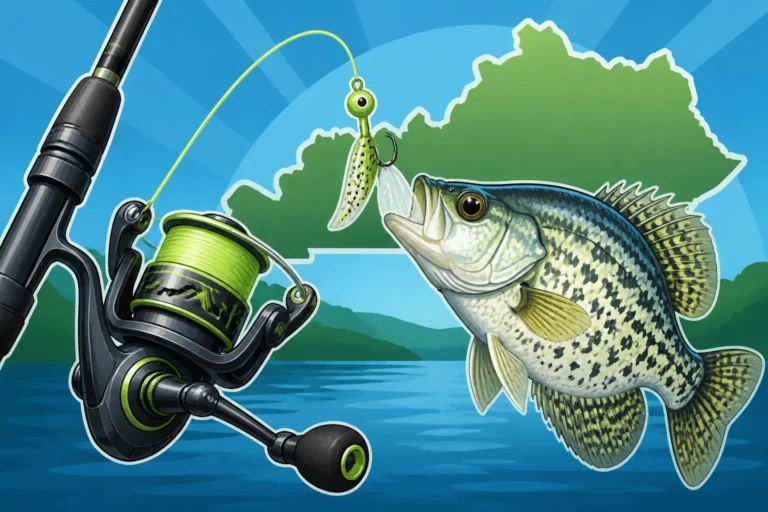
When it comes to crappie, the game changes entirely. These panfish have delicate mouths and often bite very subtly, requiring a much lighter touch. A 5' to 7' light or ultralight action spinning rod is ideal. This rod will have a lot of flex, protecting those soft mouths and making even a small crappie feel like a trophy. Couple it with a small, sensitive spinning reel (think 1000-2500 series) that can handle light line. This combo will allow you to feel those faint taps and make precise presentations with tiny jigs. Best Rods and Reels for Kentucky Crappie Fishing offers more detailed recommendations for your crappie arsenal.
Many anglers in Kentucky, myself included, will carry multiple rod and reel setups in their boat or even when bank fishing. It might seem like a lot, but having a dedicated bass rod and a dedicated crappie rod means you're always ready for whatever bite comes your way. Trying to throw a tiny crappie jig with a heavy bass rod is an exercise in futility, just as trying to pull a lunker bass out of heavy brush with an ultralight crappie setup is a recipe for a broken rod and a lost fish.
Choosing Your Fishing Line Wisely
Fishing line is your direct connection to the fish, and choosing the right type and pound test is crucial for both bass and crappie. For bass, many anglers opt for a braided line as their main line, especially when fishing heavy cover or needing extra casting distance. A 30-50 lb braid has excellent sensitivity and no stretch, making hooksets powerful. You can then tie a fluorocarbon or monofilament leader (10-20 lb test) depending on water clarity and the technique you're using. Fluorocarbon is nearly invisible underwater and has good abrasion resistance, making it perfect for clear water. Monofilament offers a bit of stretch and is a good all-around choice. Best Fishing Line for Big Lake Bass has more insights.
For crappie, finesse is the name of the game, and that means lighter line. Four to eight-pound test monofilament or fluorocarbon is typically all you need. Monofilament is very forgiving with its stretch, which is great for not tearing crappie's delicate mouths, and it floats, which is helpful for bobber fishing. Fluorocarbon offers more sensitivity and less visibility, which can be an advantage in clear lakes like Lake Cumberland. Whichever you choose, ensure it's fresh and supple; old, stiff line can lead to frustrating break-offs and missed bites. Best Line Weight for Crappie Jigging goes into the specifics of crappie line choices.
I've seen too many people try to get by with one spool of heavy mono for everything, only to wonder why they're not catching crappie or why their bass line keeps breaking when they're fishing rocks. Investing in quality line, and the right type of line for the job, will save you a lot of heartache and lost lures. It's often the unsung hero of a successful fishing trip, quietly doing its job under the water, so don't skimp on it.
Bass-Specific Tackle Box Essentials
Now, let's fill that tackle box with the exciting stuff – the lures, hooks, and weights designed specifically to entice Kentucky's abundant bass population. From the topwater explosions on a calm morning to the subtle jig bite in deep structure, having a diverse selection will prepare you for any situation the fish throw at you.
Kentucky offers some fantastic bass fishing, whether you're after largemouth, smallmouth, or spotted bass. Each species, and the varying conditions of our lakes and rivers, demands a slightly different approach. Building a versatile selection means you'll always have a confidence bait in your box.
Go-To Lures for Kentucky Bass
When it comes to bass lures, variety is key. Here are some staples every Kentucky angler should have:
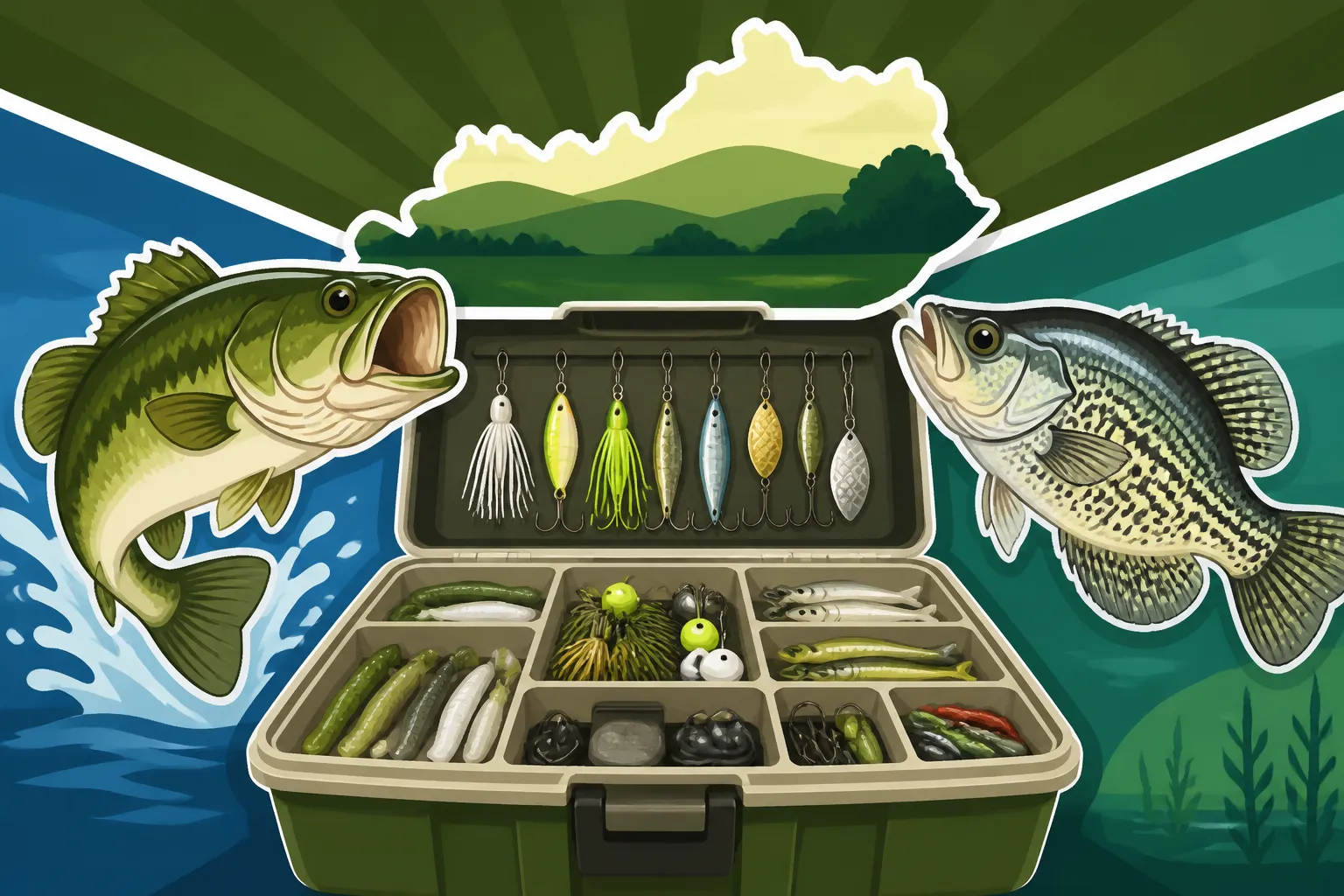
- Soft Plastics: These are incredibly versatile. Texas-rigged worms (like a 7" Berkley Power Worm or a Zoom Trick Worm), wacky-rigged Senkos, and creature baits (think Strike King Rage Craws or NetBait Paca Craws) are absolute must-haves. They can be fished slowly along the bottom, flipped into cover, or twitched subtly to mimic injured prey. Keep a good range of colors, from natural greens and browns for clear water to darker blues and blacks for murky conditions.
- Jigs: Flipping jigs, casting jigs, and football jigs are indispensable. A black and blue jig is a classic for a reason, but also carry green pumpkin and brown hues. Pair them with a soft plastic trailer that adds bulk and action. Jigs are phenomenal for probing structure, wood, and rock piles where big bass often hide. Best Lures for Largemouth Bass on Big Water provides further recommendations.
- Crankbaits and Spinnerbaits: For covering water quickly and targeting active fish, shallow-diving and medium-diving crankbaits are excellent. Chartreuse and shad patterns are always solid choices. Spinnerbaits (1/2 oz is a good starting point) with tandem willow leaf blades are fantastic for fishing around grass or through standing timber. Best Crankbaits for Big Lake Bass Fishing details these types of lures.
- Topwater Lures: Nothing beats a topwater strike! Poppers, walking baits (like a Heddon Super Spook), and hollow-body frogs (for dense lily pads) are thrilling options, especially during low-light conditions or over shallow cover.
Hooks and Weights for Bass Rigs
Having the right hooks and weights is just as important as the lures themselves. For soft plastics, you'll want a selection of EWG (Extra Wide Gap) worm hooks in sizes 3/0 to 5/0, along with straight shank or round bend worm hooks for different bait styles. For wacky rigs, small octopus hooks or specialized wacky rig hooks work best.
Your weight selection should include bullet weights (1/8 oz to 3/4 oz) for Texas rigging, drop shot weights (1/4 oz to 1/2 oz) for finesse presentations, and a variety of jig heads for swimbaits or small plastics. Tungsten weights are more compact and sensitive than lead, but either will work. Don't forget swivels and snaps for quickly changing lures, especially when throwing crankbaits or spinnerbaits to prevent line twist. A good assortment ensures you can adapt your presentation to changing conditions and fish behavior.
| Item Type | Bass Recommendations | Crappie Recommendations |
|---|---|---|
| Rods | Medium-Heavy (6'6"-7'3" Fast Action) | Light/Ultralight (5'-7' Fast/Moderate Action) |
| Reels | Baitcasting (6.4:1 – 7.5:1 ratio) or Medium-Heavy Spinning (3000-4000 series) | Small Spinning (1000-2500 series) |
| Line | Main: 30-50 lb Braid; Leader: 10-20 lb Fluorocarbon/Mono | Main: 4-8 lb Monofilament or Fluorocarbon |
| Lures/Baits | Soft Plastics (worms, creature baits), Jigs, Crankbaits, Spinnerbaits, Topwaters | Small Jigs (1/32-1/16 oz), Soft Plastic Grubs/Tubes, Minnows, Crickets |
| Hooks | EWG Worm Hooks (3/0-5/0), Round Bend Hooks, Treble Hooks (on lures) | Aberdeen Hooks (sizes 2-8), Tiny Jig Hooks |
| Weights | Bullet Weights (1/8-3/4 oz), Drop Shot Weights, Jig Heads (for swimbaits) | Split Shot Weights (BB-3/0), Small Jig Heads (1/32-1/8 oz) |
| Bobbers | Rarely used, maybe for live bait | Slip Bobbers, Fixed Clip-On Bobbers |
Crappie-Specific Tackle Box Setup
Kentucky's crappie fishing can be phenomenal, especially during the spring spawn or when they school up in deeper water during the colder months. But catching these "paper mouths" requires a different approach than bass. Your tackle box needs to reflect their smaller size, delicate bites, and preferred forage.
Whether you're targeting black crappie or white crappie, the key is finesse and subtle presentations. Having the right tools for these tasty panfish will make all the difference, turning a slow day into a memorable stringer.
Jigs and Soft Plastics for Crappie
For many crappie anglers, small jigs and soft plastics are the bread and butter. You'll want an assortment of jig heads in sizes ranging from 1/32 oz to 1/8 oz. These tiny heads are paired with equally small soft plastic bodies like tube jigs, grubs, paddletails, and minnow imitations. The colors can vary wildly, but always have some chartreuse, white, black, and natural shad patterns. Often, crappie will show a strong preference for one color over another on any given day, so having options is vital. Best Crappie Jigs for Kentucky Waters can guide your color and style choices.
Fishing these small jigs can be done under a bobber, tight-lined, or slowly trolled. The action imparted by the tiny tail of a grub or the pulsating tentacles of a tube jig is often irresistible to crappie. Experiment with different retrieve speeds and depths until you find where the fish are holding and what they want. Sometimes a slow, steady retrieve is best, other times a subtle jigging motion is the ticket.
Live Bait and Bobber Rigs for Crappie
While jigs are highly effective, you can't talk about crappie fishing without mentioning live bait. Live minnows are arguably the most consistent crappie bait. Keep them lively in a small minnow bucket or livewell. You'll need small Aberdeen hooks (sizes 2-8) which are thin-wired to easily pierce the minnow and straighten out if snagged, preventing you from losing your whole rig. Thread the minnow gently through the lips or just behind the dorsal fin.
Pair your live minnow setup with slip bobbers. These allow you to fish at various depths by simply adjusting a bobber stop knot on your line. A small split shot weight just above the hook will help your minnow get down to the desired depth. Crappie often suspend at specific depths, and a slip bobber rig is perfect for presenting bait right in their strike zone. For shallow water, a traditional fixed clip-on bobber will work. Don't forget a small pair of needle-nose pliers or hemostats for hook removal, as those little hooks can be tough to get out of a crappie's mouth without tearing it.
For those times when crappie are being particularly finicky, or if you're fishing in smaller ponds and don't want to mess with minnows, sometimes crickets can be a surprisingly effective alternative. They float and provide a natural presentation that sunfish, including crappie, often can't resist.
Essential Tools and Accessories for Kentucky Anglers
A tackle box isn't just about lures and line; it's also about having the right tools and accessories to make your time on the water more efficient, safe, and enjoyable. These often-overlooked items can make or break a fishing trip, especially when you're facing unexpected challenges.
From simple knot tying to safely unhooking a fish or getting back to the boat ramp in the dark, a well-stocked accessory compartment is a sign of a prepared angler. Don't let a small oversight ruin a great day.
Handy Tools and Measuring Devices
Every angler needs a few key tools close at hand. A good pair of needle-nose pliers or hemostats is indispensable for safely removing hooks, especially from toothy fish or deep-hooked crappie. Line clippers or a small pair of scissors are essential for clean knot tying and trimming tag ends. Don't rely on your teeth – it's bad for your dental health and rarely results in a clean cut. A small multi-tool can also be incredibly useful for unexpected repairs or adjustments.
Measuring and weighing your catch is part of the fun and often necessary for adhering to Kentucky's regulations, such as the Kentucky Statewide Bass Size and Daily Limit Rules. A fish ruler or tape measure (preferably adhesive ones on your boat or a folding one for your tackle box) is crucial for checking length limits. A small scale can help you weigh your trophies, whether it's a big bass or a chunky crappie. Remember to always check the specific regulations for the body of water you're fishing, as limits can vary from statewide rules to lake-specific exceptions like Barren River Lake Crappie Size Limit in Kentucky.
Beyond that, a headlamp or small flashlight is a must-have if you plan on fishing at dawn, dusk, or into the night. Things always get a little trickier in the dark, and seeing what you're doing can prevent frustrations.
Organization and Storage Solutions
A messy tackle box leads to wasted time and tangled lines. Investing in good tackle boxes or soft-sided tackle bags with multiple compartments and removable trays is key. For smaller items like hooks, weights, and swivels, clear plastic utility boxes with adjustable dividers are fantastic. This way, you can quickly grab what you need without rummaging through a jumbled mess.
Consider organizing your tackle by species (bass vs. crappie) or by lure type. For example, one box for all your bass plastics, another for crankbaits, and a separate small box specifically for crappie jigs and minnow hooks. Many anglers find products from companies like Bass Pro Shops or even general storage solutions from Amazon to be excellent for keeping everything tidy and accessible. Having a designated spot for everything means less time searching and more time fishing.
Finally, don't forget a small first aid kit for minor cuts and scrapes, some sunscreen, and insect repellent, especially when fishing during the warmer months. Being prepared for common outdoor inconveniences will ensure your focus stays on the fish, not on discomfort.
Disclaimer
This article is for general informational purposes only and does not constitute professional advice. Laws, prices and regulations vary by location and change over time. Consult a qualified professional for guidance on your specific situation.