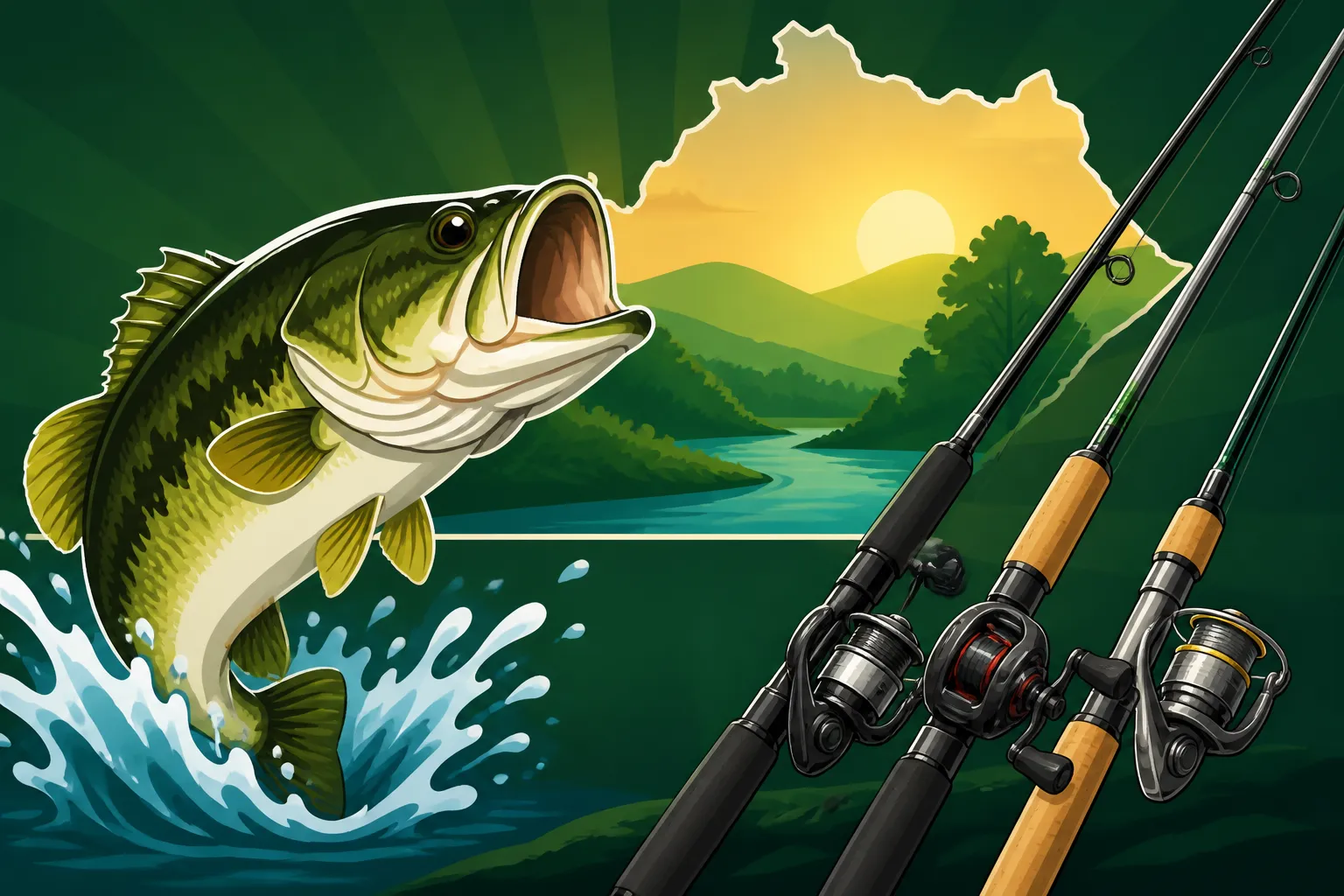
Best Fishing Rods for Largemouth Bass
Finding the perfect fishing rod for largemouth bass in Kentucky can feel like searching for a needle in a haystack, especially with so many options out there promising to be the "best." It’s easy to get overwhelmed by terms like "fast action," "heavy power," and different materials. This guide is here to cut through the noise, helping you understand the nuances of bass rods so you can confidently choose the right one for tackling those trophy largemouth in our beautiful Kentucky waters.
Understanding the Basics of a Bass Rod
Before you even start looking at specific models, it’s crucial to understand the fundamental characteristics that define a fishing rod. These aren't just fancy terms; they directly impact how a rod performs with different lures and techniques, and ultimately, how well you can catch fish. Getting a handle on these basics will empower you to make informed decisions that suit your personal fishing style and the conditions you often face on Kentucky's lakes and rivers.
Rod Length and Its Impact
The length of a fishing rod is one of the first things you'll notice, and it plays a much bigger role than just how far it extends past your arm. Rods for largemouth bass typically range from about 6 feet to over 7 feet 6 inches, with some specialized techniques even using longer or shorter options. A shorter rod, say in the 6-foot to 6-foot 6-inch range, generally offers better accuracy for casting in tight quarters, like around docks or heavy brush. Think of those precise pitches you need to make under overhanging trees on Lake Barkley. These rods can also be easier to handle in smaller boats or kayaks, giving you more control in confined spaces.
On the other hand, longer rods, often in the 7-foot to 7-foot 6-inch range, excel at casting longer distances. This extra length can be a huge advantage when you need to cover a lot of water quickly, like searching for bass on expansive flats on Kentucky Lake, or when you need to keep your boat further away from a shallow target to avoid spooking fish. The added length also provides more leverage during a fight, helping you pull big bass out of heavy cover, and can aid in making longer, sweeping hooksets. It's often a trade-off between pinpoint accuracy and sheer casting distance, so consider the primary type of water you fish and the techniques you employ most often.
Rod Power Explained: Not Just About Strength
"Rod power" is a term that often gets confused with "rod action," but they are distinct and equally important. Rod power refers to the amount of force it takes to bend the rod, or its lifting strength. You'll typically see ratings like Ultra-Light, Light, Medium, Medium-Heavy, and Heavy. For largemouth bass fishing, you'll mostly be looking at Medium, Medium-Heavy, and Heavy power rods. A Medium power rod is versatile for lighter presentations, smaller crankbaits, or topwater lures. It offers a good balance of sensitivity and forgiveness, making it a solid choice for many general-purpose applications.
When you step up to a Medium-Heavy or Heavy power rod, you're talking about more backbone. These rods are designed to handle heavier lures, penetrate tougher fish mouths with a strong hookset, and more importantly, wrestle bigger bass out of thick cover like hydrilla beds or submerged timber. Imagine trying to pull a 5-pound largemouth out of a gnarly laydown on Lake Cumberland; a Heavy power rod gives you the muscle to do it without the rod feeling like it's going to snap. The trade-off is often a slight reduction in sensitivity with lighter lures, but the ability to control powerful fish in demanding situations makes them indispensable for specific techniques.
Rod Action: Where the Bend Begins
While power describes how much a rod bends, "rod action" describes where the rod bends. This characteristic is often rated as Fast, Moderate-Fast, Moderate, or Slow. A Fast action rod bends primarily in the upper third or quarter of the blank. This means the tip is very sensitive, allowing you to feel even the slightest bites, and it quickly transfers power to the hookset. Fast action rods are excellent for techniques that require direct contact with the lure and quick, powerful hooksets, such as fishing jigs, Texas-rigged worms, or soft plastics. They offer great control over your lure and are fantastic for detecting subtle strikes, which is key when bass are being finicky.
Moderate-Fast action rods bend further down the blank, into the middle section. This provides a bit more flex, which can be advantageous for certain moving baits. Moderate action rods bend even more, often through the upper half of the rod. This "softer" bend allows for longer casts with certain lures and acts as a shock absorber, helping to keep fish from tearing off the hook, especially with treble hook baits. Think of crankbaits or spinnerbaits; the moderate action helps the fish engulf the lure and prevents them from throwing the hooks during violent head shakes. Slow action rods bend almost through the entire blank, and while not common for typical bass fishing, they are sometimes used for very specific applications, like fishing small topwater baits or live bait with a lot of give. Understanding this distinction between action and power is paramount to matching your rod to your technique and fishing preferences.
Different Rod Materials and Their Benefits
The material a fishing rod is made from fundamentally dictates its performance characteristics, affecting everything from sensitivity to durability and weight. Over the years, advancements in materials have given anglers an incredible array of choices, each with its own set of advantages for tackling Kentucky's largemouth bass. Knowing the pros and cons of graphite, fiberglass, and composite rods will help you pinpoint the best tool for your specific needs.
Graphite Rods: Sensitivity and Lightness
Graphite rods are the undisputed champions when it comes to sensitivity and light weight, which is why they are so popular among serious bass anglers. These rods are constructed from carbon fibers, and the higher the modulus (a measure of stiffness), the more sensitive and lighter the rod typically is. This incredible sensitivity allows you to feel everything your lure is doing underwater – every subtle bump, every weed strand, and most importantly, the slightest tick of a bass inhaling your bait. Imagine you're fishing a deep jig on a submerged point on Lake Cumberland; that graphite rod will transmit the smallest "thunk" of a bite right up to your hands.
The lightweight nature of graphite rods also reduces angler fatigue, making them ideal for long days on the water. You can cast all day without your arms feeling like lead. Their crisp action also contributes to very powerful and precise hooksets, which is crucial when fishing with single-hook lures like jigs or soft plastics that require firm penetration. However, this high performance comes with a trade-off: graphite can be more brittle than other materials. While modern graphite rods are incredibly durable, they are more susceptible to breaking if bent sharply or struck against a hard surface. Care must be taken when transporting and handling them, but for feeling every nuance of the bite, graphite is hard to beat.
Fiberglass Rods: Durability and Flexibility
Fiberglass rods represent the older generation of rod materials, but they are far from obsolete, especially for certain bass fishing applications. These rods are known for their incredible durability and flexibility. They are much less likely to break than graphite if you accidentally bang them against something or put too much stress on them. This makes them a great choice for anglers who might be a bit rougher on their gear or for those situations where durability is paramount, like fishing in heavy cover or with multiple rods in a tight space. Best Rod and Reel Combo for Catfish Fishing might feature some durable fiberglass options for their tough fights.
The characteristic "slow" or "moderate" action of fiberglass rods also makes them exceptional for fishing with treble hook baits, such as crankbaits, spinnerbaits, and some topwater lures. The softer, parabolic bend of a fiberglass rod acts like a shock absorber, cushioning the impact of a hard strike and preventing fish from tearing free, especially during those explosive head shakes near the boat. It gives the fish more time to fully engulf the lure before the hookset. While they are heavier and less sensitive than graphite, for moving baits where the visual strike or the feel of the lure grinding bottom is often the primary indicator, fiberglass rods shine. They offer a certain forgiveness that can increase your landing ratio with these specific lure types.
Composite Rods: The Best of Both Worlds
Composite rods are a fantastic innovation that attempts to blend the best characteristics of both graphite and fiberglass. These rods are constructed by combining graphite and fiberglass materials in varying ratios, often with a graphite core wrapped in fiberglass, or layers of both materials. The goal is to create a rod that offers a good balance of sensitivity and durability, along with a desirable action. You get some of the lightness and sensitivity of graphite, allowing you to feel more subtle bites and have better control over your lure, but with the added resilience and parabolic bend of fiberglass.
This hybrid construction makes composite rods incredibly versatile, often making them a go-to choice for techniques that benefit from a moderate action but still require decent feel. They're particularly popular for mid-range crankbaits, chatterbaits, and even some spinnerbait applications where you want a bit more "give" than a pure graphite rod, but don't want the full softness and weight of fiberglass. For an angler looking for a single rod that can handle a variety of moving baits effectively, a good composite rod is an excellent investment. They can offer a performance profile that simply can't be achieved with a single material, giving you a wider range of effective fishing techniques.
Pairing Rods with Common Largemouth Bass Techniques
Choosing the right rod isn't just about understanding its specifications; it's about matching those specs to the specific lures and techniques you'll be using. Largemouth bass fishing is incredibly diverse, with different presentations demanding different rod characteristics. Trying to fish a tiny shaky head on a heavy flipping stick, or throw a deep-diving crankbait on a fast-action jig rod, simply won't yield the best results. Let's break down some of the most common largemouth bass techniques and the ideal rod setups for each.
Jig and Worm Fishing Rods
When you're fishing jigs, Texas-rigged worms, Carolina rigs, or shaky heads, you need a rod that offers maximum sensitivity and a quick, powerful hookset. These are typically bottom-contact baits, meaning you need to feel every pebble, stick, and, most importantly, every subtle "thump" or "tick" as a bass picks up your bait. This is where graphite rods truly shine. For these techniques, a Medium-Heavy to Heavy power, Fast to Extra-Fast action graphite casting rod is usually the preferred choice. The fast action tip allows you to detect those subtle bites instantaneously, while the strong backbone (power) provides the leverage needed to drive a single hook through a bass's bony mouth.
Imagine you're meticulously working a football jig over a rocky bottom on Lake Barkley. That fast action graphite rod will let you discern between a rock and a bite, allowing for an immediate and effective hookset. Rod lengths typically range from 6 feet 10 inches to 7 feet 6 inches. Shorter rods (6'10"-7'0") offer more accuracy for pitching into tight spots, while longer rods (7'2"-7'6") provide better casting distance and more leverage for fighting fish out of deeper water or heavy cover. Many anglers will keep several of these rods on deck, each rigged for a slightly different weight jig or worm, ensuring they have the perfect match for the conditions.
Crankbait and Spinnerbait Rods
Moving baits like crankbaits and spinnerbaits often call for a different rod philosophy. While sensitivity is still important to feel the lure working and detect subtle changes, the primary goal is often to keep the fish hooked once it bites. This is where a more forgiving rod comes into play. For crankbaits, especially those with multiple treble hooks, a Medium to Medium-Heavy power, Moderate to Moderate-Fast action rod is typically ideal. Fiberglass or composite rods often excel here due to their more parabolic bend. The softer action prevents the fish from getting enough leverage to pull free from the treble hooks, acting as a shock absorber. It allows the bass to fully inhale the bait, improving your hook-up ratio.
For spinnerbaits, which typically have a single large hook, some anglers prefer a slightly faster action than for crankbaits, but still often in the moderate-fast range. A Medium-Heavy power, Moderate-Fast action graphite or composite rod works well for spinnerbaits. This gives you enough backbone for a solid hookset but still provides some flex to keep the fish pinned. Rod lengths for both crankbaits and spinnerbaits commonly fall in the 6 feet 6 inches to 7 feet 4 inches range. Longer rods can increase casting distance, which is often beneficial for covering water with these lures. When selecting gear, considering Best Bass Lures for Spring Fishing will help you match your rod to the right bait.
Topwater and Jerkbait Rods
Topwater fishing is one of the most exciting ways to catch largemouth bass, but it requires a specific rod to maximize effectiveness. For most topwater baits like walking baits, poppers, and prop baits, a Medium to Medium-Heavy power, Moderate-Fast to Fast action casting rod is a good starting point. The moderate-fast action allows for good casting distance and helps with lure presentation, especially for walking the dog with a Zara Spook. The slight give helps keep fish hooked, but you still want enough backbone for a quick hookset when a bass explodes on your bait. A graphite or composite rod is often preferred for its lighter weight, which helps reduce fatigue during constant twitching and retrieving.
Jerkbaits, on the other hand, benefit from a rod that allows for sharp, crisp twitches to impart the lure's erratic action, but also has enough tip flexibility to absorb a sudden strike. A Medium-Heavy power, Moderate-Fast to Fast action graphite casting rod is a solid choice for jerkbaits. The faster tip allows you to pop the lure effectively, while the backbone helps drive those treble hooks home. Rod lengths for both topwater and jerkbaits typically range from 6 feet 6 inches to 7 feet 2 inches. Shorter rods can offer more precise lure control, while longer rods aid in casting distance, particularly useful for covering large areas of open water.
Flipping and Pitching Rods
Flipping and pitching are highly specialized techniques designed for presenting baits into extremely heavy cover at close range, such as dense laydowns, thick grass mats, or docks. These techniques demand a rod with immense power and control. For flipping and pitching, you'll want a Heavy to Extra-Heavy power, Fast to Extra-Fast action graphite casting rod. The sheer power of these rods is essential for horsing big bass out of impenetrable cover the moment they bite. A strong backbone prevents the fish from burying itself in snags, which is common in places like the shallow stumps of Kentucky Lake.
The fast or extra-fast action tip is critical for precise lure placement and for feeling those subtle bites, as bass often don't hit aggressively in heavy cover. Rod lengths for flipping and pitching are typically longer, often ranging from 7 feet 6 inches to 8 feet. The extra length provides leverage for short, accurate casts and for controlling the fish once it's hooked. Longer rods also help you reach further into cover without getting too close with your boat. This is one area where investing in a high-quality, sensitive graphite rod truly pays off, as detecting bites in dense vegetation is incredibly challenging otherwise. How to Flip and Pitch for Bass in Heavy Cover will expand on techniques that utilize these specialized rods.
Choosing the Right Reel for Your Bass Rod
A fishing rod is only half of the equation; the reel you pair it with is equally crucial for balance, performance, and overall fishing success. For largemouth bass fishing, you'll primarily choose between spinning reels and baitcasting reels, each offering distinct advantages depending on your technique, lure weight, and experience level. Matching the reel to your rod isn't just about aesthetics; it's about creating a balanced, efficient system.
Spinning Reels for Lighter Lures and Beginners
Spinning reels are often the go-to choice for beginners due to their ease of use and forgiveness, but they are also invaluable tools for experienced anglers, particularly when fishing lighter lures or finesse presentations. A spinning reel sits underneath the rod, and the line spools off in coils rather than rotating a spool, which greatly reduces backlash problems common with baitcasters. This makes them ideal for casting light lures like shaky heads, small finesse worms, lightweight jigs, or even tiny crankbaits where a baitcaster might struggle to achieve good casting distance or control. Best Reels for Crappie Fishing on Big Lakes will often suggest spinning reels for similar reasons.
When pairing a spinning reel with a rod, you'll generally look for lighter power rods (Medium-Light to Medium) with a Fast or Moderate-Fast action, typically ranging from 6 feet 6 inches to 7 feet 2 inches. The balance is key; a smaller, lighter spinning reel will feel right on a shorter, lighter power rod. Spinning gear also excels in windy conditions, as line management is less prone to tangles. For instance, if you're fishing a weightless Senko in a light breeze on Barren River Lake, a spinning setup will give you much less hassle and more accurate casts than a baitcaster. They are also excellent for kids or those just learning to cast, minimizing frustration and maximizing enjoyment on the water.
Baitcasting Reels for Precision and Power
Baitcasting reels are the workhorses of serious largemouth bass fishing, offering superior casting accuracy, power, and the ability to handle heavier lines and lures. These reels sit on top of the rod, and the spool rotates to let line out, providing more direct contact with the lure and enhancing sensitivity. This direct contact means that when you're fishing a jig or heavy Texas rig, you can feel even the slightest vibration or change in bottom composition more acutely. The direct retrieve also provides more winching power, making it easier to pull big bass out of heavy cover.
Baitcasters shine with techniques that involve heavier lures, such as pitching jigs, flipping heavy soft plastics, casting deep-diving crankbaits, or throwing large spinnerbaits and swimbaits. They are paired with Medium-Heavy to Extra-Heavy power rods, typically ranging from 6 feet 10 inches to 8 feet, depending on the specific technique. While baitcasters require a bit more practice to master – learning to feather the spool with your thumb to prevent backlash is crucial – the precision and power they offer are unmatched once you get the hang of it. For anglers targeting trophy largemouth with heavy cover presentations, a quality baitcasting reel matched with the appropriate rod is an absolutely indispensable combination.
Considering Line Type and Size for Your Setup
The fishing line you choose is the critical link between you and the fish. It's not a one-size-fits-all decision for largemouth bass, as different line types and sizes offer unique advantages depending on the fishing technique, lure choice, and water conditions in Kentucky. Understanding the characteristics of monofilament, fluorocarbon, and braided line, and how they interact with your rod and reel, is key to maximizing your success.
Monofilament: The All-Around Choice
Monofilament line, often simply called "mono," is perhaps the most traditional and versatile fishing line available. It's made from a single strand of nylon and is known for its affordability, ease of use, and stretch. This stretch is a double-edged sword: on one hand, it acts as a shock absorber, which can be beneficial for keeping fish hooked, especially with treble hook baits or when using a rod with a fast action. It provides some forgiveness during sudden surges from a hard-fighting bass. The stretch also helps to prevent lures from getting snagged as easily on sudden impacts. Mono is also very easy to cast and manage on both spinning and baitcasting reels, and it's relatively abrasion resistant.
However, the stretch in monofilament can also reduce sensitivity, making it harder to detect subtle bites, particularly in deeper water or when fishing slow-moving baits. It also has a tendency to float, which can be a disadvantage for bottom-contact techniques. For general-purpose fishing, topwater baits, or when using crankbaits on a fiberglass rod, monofilament in the 10-17 pound test range is an excellent choice. It’s also often favored by beginner anglers for its user-friendliness. If you're looking for a simple, reliable line for a variety of presentations, mono is a fantastic starting point.
Fluorocarbon: Sensitivity and Low Visibility
Fluorocarbon line has become a favorite among bass anglers, and for good reason. Its primary advantages are its near-invisibility underwater and its exceptional sensitivity. Fluorocarbon has a refractive index very similar to water, meaning light passes through it rather than reflecting off it, making it incredibly difficult for fish to see. This is a huge advantage in clear waters like parts of Lake Cumberland or when bass are particularly line-shy. Furthermore, fluorocarbon has very low stretch, even less than monofilament, which translates directly into increased sensitivity. You'll feel every bump and tick, improving your ability to detect subtle bites.
Because of its density, fluorocarbon sinks, making it perfect for bottom-contact baits like jigs, Texas rigs, and Carolina rigs. It helps your lure get down to the strike zone faster and stay there. However, fluorocarbon can be a bit stiffer and have more memory than monofilament, which can lead to tangles if not spooled correctly, especially on spinning reels. It's also typically more expensive. For those finesse techniques or when fishing jigs and worms on a sensitive graphite rod, fluorocarbon in the 10-20 pound test range is often the preferred choice for its invisibility and incredible feel. Best Fishing Line for Big Lake Bass will likely delve deeper into fluorocarbon's advantages.
Braided Line: Strength and No Stretch
Braided line is a powerful tool in the bass angler's arsenal, known for its incredible strength-to-diameter ratio and virtually no stretch. Made from multiple strands of synthetic fibers woven together, braid offers unparalleled pulling power. You can use a much thinner diameter line for a given test strength compared to mono or fluoro, which can improve casting distance and allow you to spool more line on your reel. The lack of stretch provides extreme sensitivity, transmitting every vibration and bite directly to your hands, and ensures powerful, immediate hooksets.
Braided line is indispensable for fishing in heavy cover – thick grass mats, dense lily pads, or submerged brush piles. Its cutting power helps slice through vegetation, and its brute strength allows you to winch big bass out of snags that would snap other lines. Because it floats, braid is also excellent for topwater baits, as it keeps your line on the surface, allowing for better lure action and easier hooksets. However, braid is highly visible underwater, which can be an issue in clear water. For this reason, many anglers will tie a fluorocarbon leader to their braided main line. It can also be more abrasive on rod guides over time. For flipping and pitching, fishing frogs, or punching heavy mats, braided line in the 30-65 pound test range is the ultimate choice for its brute force.
Investing in Quality: When to Spend More
In the world of fishing gear, like many hobbies, there's a wide spectrum of prices and perceived quality. It's natural to wonder when it's truly worth it to shell out more cash for a rod. While there are plenty of decent entry-level options that will certainly catch fish, there are also undeniable benefits to investing in higher-quality rods, especially for specialized largemouth bass fishing in Kentucky.
Entry-Level vs. High-End Rods
Entry-level rods, often found at accessible price points, are fantastic for beginners or for anglers who only fish occasionally. These rods are typically durable, forgiving, and perfectly capable of catching fish. They might be made of slightly lower modulus graphite or a composite blend, which means they might be a touch heavier, less sensitive, or have a less refined action than their high-end counterparts. For someone just getting into fishing around the local ponds, a $50-$100 rod and reel combo from a big box store or even a place like Bass Pro Shops is a perfectly fine starting point. You'll learn the basics, catch fish, and decide if you want to dive deeper into the sport without breaking the bank.
However, as you progress in your angling journey, you'll likely start to appreciate the benefits of high-end rods. These rods, often costing several hundred dollars or more, use premium materials like high-modulus graphite, advanced resin systems, and high-quality components like Fuji guides and reel seats. The result is a rod that is incredibly lightweight, exceptionally sensitive, and perfectly balanced. This translates to feeling more bites, making more accurate casts, and experiencing less fatigue throughout the day. For example, if you're a tournament angler on Kentucky Lake, the difference between feeling a subtle "tick" of a bass mouthing a jig with a high-end rod versus missing it with an entry-level rod can mean the difference between winning and losing. The performance gains are incremental, but they can be significant for serious anglers.
Maintenance and Longevity of Your Gear
Regardless of whether you choose an entry-level or high-end rod, proper maintenance is key to maximizing its longevity and performance. Fishing rods, while tough, are susceptible to damage from neglect and improper care. After each trip, especially if you've been fishing in saltwater (though not common for Kentucky bass, it's good practice), it's wise to lightly rinse your rod with fresh water, paying special attention to the guides and reel seat to remove any grime, grit, or corrosive elements. Kentucky Boating Safety Gear Checklist reminds us of the importance of checking our gear.
Always store your rods properly. Avoid leaving them propped up against a wall where they can fall or get stepped on. Rod sleeves are an excellent investment to protect guides and prevent tangles when transporting multiple rods. Be mindful of how you get in and out of your boat or vehicle, as snapping a rod tip in a door jamb is a heartbreakingly common occurrence. Check your guides regularly for any cracks or sharp edges, as these can fray and weaken your line, leading to lost fish. With a little care, even an affordable rod can last for many seasons, while a high-end rod, when properly maintained, can be a cherished piece of equipment that performs flawlessly for years.
Disclaimer
This article is for general informational purposes only and does not constitute professional advice. Laws, prices and regulations vary by location and change over time. Consult a qualified professional for guidance on your specific situation.