Boat Trailer and Ramp Guide for Kentucky Lakes
There's nothing quite like the excitement of hitting the road, boat in tow, on your way to a fantastic day of fishing on one of Kentucky's beautiful lakes. But that excitement can quickly turn to frustration if you're not prepared for the nuances of boat trailers and public ramps. Many anglers face unexpected hitches, literally and figuratively, from tricky trailer maintenance to navigating crowded launches, which can really put a damper on your eagerly anticipated trip. This guide will walk you through everything you need to know about boat trailers and ramps, ensuring your time on the water starts and ends smoothly.
Understanding Kentucky's Boat Trailer Regulations
Before you even hook up your boat, it's absolutely vital to understand the rules of the road, particularly as they apply to boat trailers here in Kentucky. It's not just about avoiding a ticket; it's about ensuring safety for yourself, your boat, and everyone else sharing the highway. Many folks assume trailer rules are universal, but state-specific details can make all the difference, and ignorance of the law is never a valid excuse when a Kentucky Fish and Wildlife officer pulls you over.
State-Specific Registration and Titling for Trailers
Just like your car or truck, your boat trailer needs to be properly registered and, in most cases, titled in Kentucky. This isn't a "set it and forget it" kind of deal. You'll interact with your local county clerk's office, and they're going to want to see some specific paperwork. If you're buying a new trailer, the dealership usually handles the initial titling and registration for you, but it’s still smart to double-check their process. For a used trailer, the responsibility falls squarely on your shoulders. You'll need the title signed over to you, a bill of sale, and proof of insurance, among other things, to get it transferred into your name. Failing to do this can lead to headaches, fines, and potentially even your boat being impounded if you're caught on the road with an unregistered trailer. It's a critical step that sometimes gets overlooked in the excitement of a new boat, but it's non-negotiable for anyone planning to trailer their vessel across state lines or even just down to the local ramp. For a deeper dive, check out our guide on Kentucky Boat Titling and Registration Rules and Kentucky Boat Registration Requirements Explained.
The process typically involves filling out forms, paying a fee based on the trailer's value or weight, and then you'll receive your registration and license plate. Renewals are usually annual, and it’s important to mark your calendar so you don't let it lapse. Imagine driving all the way to Lake Barkley, only to realize your tags expired last month and you're now technically breaking the law just by being on the road. It's a scenario that plays out more often than you'd think, causing unnecessary stress and wasted time. Make it a routine to check your registration dates just like you would your vehicle's. This foresight saves a lot of potential grief and keeps you legally compliant for all your fishing adventures.
Essential Safety Equipment for Road Travel
Beyond the paperwork, there’s physical safety equipment that your boat trailer absolutely must have to be road-legal in Kentucky. This isn’t optional; it’s about preventing accidents and making sure your boat arrives safely. Think about the lights first and foremost: tail lights, brake lights, turn signals, and side marker lights. These need to be fully functional, visible, and properly connected every single time you tow. Water and electrical connections don't always mix well, so frequent checks are crucial. A quick walk-around before you leave the driveway, testing each light function, can prevent a roadside stop by law enforcement or, worse, a collision because someone couldn't see your turn signal.
Then there are the chains and braking systems. Your trailer must be secured to your tow vehicle with safety chains that are strong enough to hold the trailer if the primary coupling fails. Many larger trailers also require a separate braking system, which could be surge brakes or electric brakes, to assist your tow vehicle in stopping. This is especially important when you’re hauling a heavy bass boat or a large pontoon. Overloaded or improperly braked trailers are a serious hazard, particularly on Kentucky's winding country roads or busy interstates. Ensure your tires are in good condition and properly inflated; a blown tire on a trailer can be just as dangerous as one on your car. Regularly inspecting these components, even a quick glance before each trip, is an investment in your safety and the longevity of your fishing rig. For a complete list of what you'll need, review our What Safety Equipment Is Required on a Kentucky Boat? article.
Choosing the Right Boat Trailer for Your Kentucky Adventures
Selecting the right boat trailer is almost as important as choosing the boat itself. A mismatch here can lead to constant headaches, safety risks, and premature wear on both your boat and the trailer. It’s not just about what fits; it’s about what’s appropriate for the weight, size, and type of boat you own, and how you plan to use it around Kentucky’s diverse waterways, from the vast expanses of Kentucky Lake to the deeper waters of Lake Cumberland.
Matching Trailer to Boat Size and Weight
This is the golden rule of trailer buying: your trailer must be rated for the weight of your boat, engine, fuel, and all your gear. Don't just look at the boat's dry weight. Add in a full tank of gas, your trolling motor, batteries, tackle boxes, coolers, and everything else you routinely carry. That total weight, known as the Gross Vehicle Weight Rating (GVWR), needs to be well within your trailer's capacity. Exceeding this capacity puts immense strain on the trailer's frame, axles, tires, and brakes, leading to premature failure and creating a dangerous towing situation. Imagine trying to pull a heavy fiberglass bass boat with a trailer designed for a small aluminum jon boat; it’s an accident waiting to happen.
Beyond weight, the trailer also needs to be the right size. It should support your boat uniformly along the hull. The bow should rest snugly against the bow stop, and the transom should ideally sit just forward of the rear crossmember. Too short, and you risk poor support and balance; too long, and you might have issues with overhang. Consider the tongue weight as well – typically 5-10% of the total loaded trailer weight. Too much or too little tongue weight can make your tow vehicle unstable and prone to swaying, especially when you're cruising down I-65 or navigating windy roads. It's a precise balance, and getting it right ensures a smooth, safe ride for your precious fishing vessel.
Types of Boat Trailers: Bunk vs. Roller
When you're looking at boat trailers, you'll quickly notice two main types: bunk trailers and roller trailers. Each has its pros and cons, and the best choice for you often depends on your boat and the types of ramps you frequent in Kentucky.
Bunk trailers feature carpeted wooden bunks that support the boat's hull. They cradle the boat securely, distributing weight evenly across a larger surface area, which is generally better for the hull, especially for fiberglass boats. Launching and retrieving with a bunk trailer typically requires the trailer to be submerged deeper into the water, allowing the boat to float off or on. This can be a bit more challenging on shallow ramps or if you're not used to backing deep. However, once loaded, the boat sits very securely, reducing movement during transport. If you mostly launch at well-maintained, deep public ramps on lakes like Kentucky Lake or Lake Cumberland, and you prioritize hull support and secure transport, a bunk trailer is often the preferred choice.
Roller trailers, on the other hand, use a series of rollers that the boat rests on. These are fantastic for easier launching and retrieving, especially on shallow ramps or if you're launching solo. With a roller trailer, you often don't need to submerge the trailer as deeply; the rollers allow you to push the boat off or winch it on with less effort. This can be a huge advantage if you're hitting lesser-known, more primitive ramps along some of Kentucky's rivers or smaller lakes where the water might not be very deep. The trade-off is that the rollers concentrate the boat's weight on smaller points, which can potentially stress the hull more over time, particularly for heavier fiberglass boats. However, for aluminum boats or smaller vessels, the convenience often outweighs this concern. Many anglers find the ease of use a major plus, especially after a long day on the water when fatigue sets in.
Trailer Materials: Galvanized, Aluminum, Painted
The material of your boat trailer is another important consideration, especially given Kentucky's varied climate and the types of water you'll be trailering through.
Painted steel trailers are often the most economical option upfront. They offer good strength and are typically hot-dip galvanized and then painted for corrosion resistance. However, if that paint finish gets scratched or chipped, especially after repeated dunkings in the water, the underlying steel can be exposed to moisture and begin to rust. This is a common sight on older trailers where rust starts to bloom around wheel wells or connection points. Regular cleaning and touch-up paint can help extend their life, but they generally require more diligent maintenance to ward off corrosion. If you're on a budget and commit to careful upkeep, they can be a viable choice.
Galvanized steel trailers are a step up in corrosion resistance. These trailers are submerged in a bath of molten zinc, which creates a protective coating over the steel. This zinc layer forms a barrier against rust, even if the surface gets scratched, because the zinc sacrifices itself to protect the steel (a process called cathodic protection). They're heavier and generally more durable in harsh environments than painted steel, making them an excellent choice for anglers who frequently launch in freshwater lakes and rivers, or even brackish water if you happen to venture to coastal areas sometimes. They might not look as sleek as a painted trailer, but their robust protection is hard to beat for long-term durability.
Aluminum trailers are the premium option, especially for saltwater use (though less common in landlocked Kentucky, some still prefer them). They are significantly lighter than steel trailers, which makes them easier to tow and can improve fuel efficiency for your tow vehicle. Their inherent resistance to corrosion makes them virtually maintenance-free in terms of rust. However, aluminum trailers typically come with a higher price tag. They're strong, but the frame flex can be different from steel, and they may not always be ideal for extremely heavy boats unless specifically engineered for that purpose. For anglers looking for the lightest, most corrosion-resistant option that will last for decades with minimal rust worries, an aluminum trailer is a top contender, even if it means a bigger initial investment. You might find a good selection of these at larger outdoor retailers like Bass Pro Shops or even specialty trailer dealers.
Essential Boat Trailer Maintenance for Kentucky Conditions
Maintaining your boat trailer isn't just about making it last longer; it's about ensuring safety on the road and preventing frustrating breakdowns that can ruin a fishing trip. Kentucky's diverse terrain, from bustling highways to gravel roads leading to remote ramps, means your trailer takes a beating. Neglecting simple maintenance tasks can turn a pleasant journey to your favorite fishing spot, like Green River Lake, into a roadside nightmare.
Wheel Bearings and Tire Care
Ah, wheel bearings – the bane of many boat owners' existence! These crucial components allow your wheels to spin freely, but they are constantly exposed to water, especially when launching and retrieving. Even with "maintenance-free" or "sure-lube" systems, water can eventually get in and mix with the grease, leading to rust and premature failure. Nothing halts a fishing trip faster than a seized wheel bearing on the side of the road, sparks flying, or a wheel coming off entirely. It’s a real, often expensive, mess. A good rule of thumb is to check and re-grease your wheel bearings at least once a season, or more frequently if you're trailering long distances or launching in very deep water regularly. Many anglers keep a spare set of bearings, races, and seals on hand, along with the necessary tools, just in case.
Tire care is equally critical. Think about your trailer tires as separate from your vehicle tires. They often sit for long periods, exposed to UV rays, and then are subjected to heavy loads. Always check tire pressure before each trip, ensuring it matches the recommendations on the tire's sidewall, not your vehicle's door jamb. Underinflated tires can overheat and blow out, while overinflated tires can lead to a harsh ride and uneven wear. Inspect the sidewalls for cracks (dry rot), bulges, or embedded debris. Even if the tread looks good, age can cause trailer tires to fail. Most trailer tires have a lifespan of about 3-5 years, regardless of mileage. Remember, a spare tire for your trailer isn't a luxury; it's an absolute necessity. There’s nothing worse than getting a flat on a country road near Lake Barkley and having no backup. Keeping a Boat Trailer Maintenance Checklist can help you stay on top of these crucial tasks.
Brakes, Lights, and Electrical Systems
Your trailer's braking system is a critical safety feature, especially for heavier boats. If your trailer has surge brakes (which activate when the tow vehicle slows down), make sure they engage smoothly and don't lock up or drag. Check the fluid levels in the master cylinder periodically and inspect the brake lines for any leaks or damage. For electric brakes, ensure the controller in your tow vehicle is properly calibrated and that the electrical connection between the vehicle and trailer is clean and secure. Test the brakes at low speed in a safe area before hitting the main road; you want to know they're working when you need them most.
The lights and electrical system are often the most frustrating maintenance items for boat owners. Repeated submersion in water can cause corrosion in wiring, connections, and light housings, leading to intermittent failures or complete outages. Always do a quick walk-around light check before you leave: turn on your headlights (which should activate your trailer lights), hit the brakes, and activate your turn signals. If any lights aren't working, troubleshoot them immediately. Sometimes it's as simple as a corroded bulb, other times it could be a loose ground wire or a deeper issue in the wiring harness. Applying dielectric grease to electrical connections can help prevent corrosion, and using waterproof marine-grade connectors is always a good idea. A non-functioning light isn't just an inconvenience; it's a safety hazard that can lead to accidents or fines, potentially spoiling your plans for a peaceful morning on Lake Herrington.
Frame and Coupling Inspection
Don't overlook the structural integrity of your trailer's frame and coupling. These are the backbone of your towing setup. Regularly inspect the entire frame for any signs of rust, cracks, or bends, especially around welds and stress points. If you see significant rust on a painted steel trailer, address it immediately; sand it down, apply a rust converter, and touch up with paint to prevent it from compromising the structural integrity. Pay close attention to the axles and leaf springs; look for any signs of bowing, cracks, or broken spring leaves. These components absorb a lot of road shock and are essential for a smooth and safe ride.
The coupling, also known as the hitch or coupler, is what connects your trailer directly to your tow vehicle's hitch ball. This component endures immense stress, especially during acceleration, braking, and turning. Inspect it for wear, cracks, or damage. Make sure the locking mechanism functions properly and securely clamps onto the hitch ball. The safety chains should also be checked for rust, twisted links, or excessive wear. Remember, these chains are your last line of defense if the coupler fails. Lubricate the moving parts of the coupler and tongue jack regularly to ensure smooth operation. A quick once-over of the frame and coupling, checking for anything loose or damaged, is a small effort that provides huge peace of mind, knowing your boat is securely attached for the journey ahead to one of Kentucky's fantastic fishing destinations.
Navigating Kentucky's Public Boat Ramps
Kentucky is blessed with an abundance of incredible fishing opportunities, from the massive reservoirs to winding rivers. And to access these waters, you'll inevitably find yourself at a public boat ramp. But not all ramps are created equal, and knowing what to expect and how to handle different conditions is key to a stress-free launch and retrieval.
Finding Accessible Ramps on Popular Lakes
When planning your fishing trip to a big lake like Kentucky Lake, Lake Barkley, or Lake Cumberland, knowing where the best ramps are located can save you a lot of time and hassle. Some ramps are well-maintained, wide, and have plenty of parking, often found at state parks or major recreation areas. Others might be more rustic, narrow, and have limited space, particularly on smaller, less-frequented lakes or river access points. Websites, fishing forums, and even Google Maps with satellite view can be invaluable resources for scouting out ramps before you go. Look for clear indications of parking availability, turnaround space, and the general condition of the launch.
Consider the time of year and day, too. Peak season weekends on popular lakes can see ramps absolutely swamped with boats. Knowing the secondary ramps or less-popular access points can be a game-changer when the main ramp is bumper-to-bumper. For example, while the main boat ramp at Lake Barkley State Resort Park is excellent, if it's packed, you might find a bit more breathing room at a smaller public access point a few miles down the road. Some larger ramps even have multiple lanes, which helps immensely with traffic flow. Always have a backup plan for a ramp, especially if you're heading to a new body of water or during a major fishing tournament. Our Kentucky Boat Ramp Guide for Major Lakes can provide specific insights into some of the state's most popular destinations.
Understanding Ramp Designs and Conditions
Boat ramps in Kentucky come in all shapes and sizes, and their condition can vary wildly. Most public ramps are concrete, extending well into the water. However, some older or more remote ramps might be gravel, dirt, or even just a natural bank. Understanding the design and checking the conditions upon arrival is crucial.
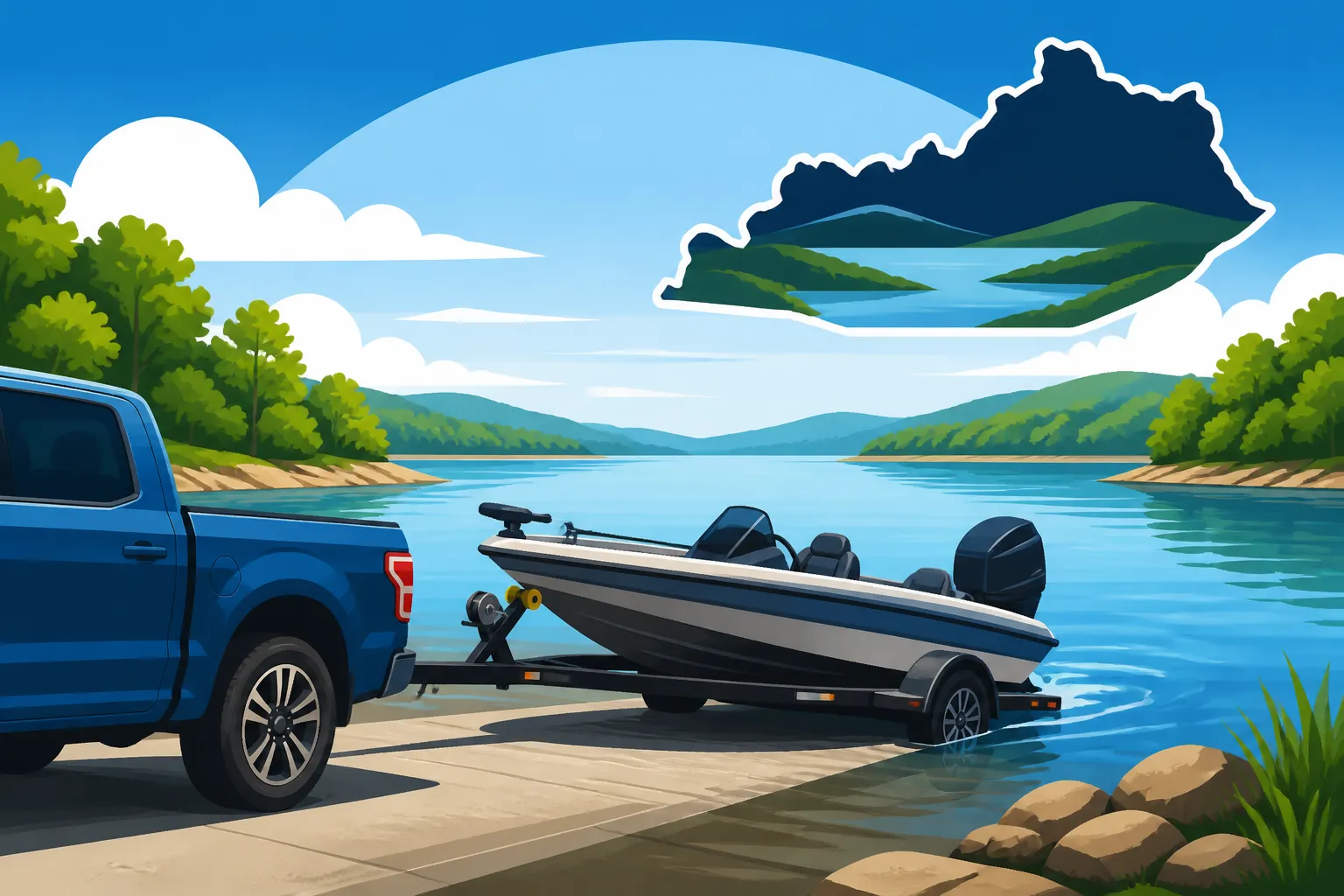
Concrete ramps are generally the easiest to navigate. Look for ramps with a gentle slope and good traction, as slick algae or mud can make them treacherous, especially when wet. Pay attention to the submerged end of the ramp; sometimes, there's a drop-off or a shelf where the concrete ends, which can cause your trailer wheels to drop unexpectedly if you back too far. This can be jarring, potentially damage your trailer, or even get your tow vehicle stuck if your tires lose traction on the slick, deep bottom. Always observe other boaters or walk down the ramp (if safe) to get a feel for its submerged topography.
Gravel or dirt ramps, while sometimes offering access to less crowded waters, present their own challenges. They often provide less traction, especially if wet or muddy, making it easy for your tow vehicle's tires to spin. The bottom can be uneven, with hidden rocks or potholes that can damage your trailer or even get it stuck. If using a gravel ramp, consider engaging 4-wheel drive in your tow vehicle if you have it, and proceed slowly. On any ramp, be mindful of the current if you’re on a river. A strong current can make launching and retrieving tricky, pushing your boat sideways as you try to get it on or off the trailer. Always evaluate the conditions before you commit, and if a ramp looks too challenging for your setup or skill level, don't be afraid to find another option. There's no shame in choosing safety and ease over a potentially risky situation.
Etiquette and Safety at Kentucky Boat Ramps
Boat ramps can be hotbeds of frustration if anglers aren't considerate or safe. It's a shared space, and everyone wants to get on the water as quickly and smoothly as possible. Following some basic etiquette and safety rules isn't just polite; it makes the experience better for everyone, and prevents those infamous ramp rage incidents.
The Golden Rules of Ramp Etiquette
Imagine you've been driving for hours to get to Lake Cumberland, eager to launch your boat, only to find the ramp blocked by someone fiddling with their gear. This is a common frustration that can be easily avoided. The cardinal rule of boat ramp etiquette is simple: do your prep work before you get to the ramp. That means loading all your fishing gear, putting in your drain plug, taking off your boat cover, untying your transom tie-downs, and generally getting your boat ready to launch while you're still in the parking lot. Don't pull up to the ramp and then start rummaging through your truck for your life jackets or trying to install your trolling motor battery. This holds up the entire line of impatient anglers behind you.
Secondly, be efficient and quick. When it's your turn, back your trailer down, launch your boat, and then immediately move your tow vehicle and trailer to a designated parking spot. Don't linger at the ramp to tie up your boat, load more gear, or chat with your buddies. The same goes for retrieval: have your vehicle and trailer ready, back down quickly, load up, and pull out of the way to finish securing everything in the parking lot. A few minutes of extra prep time in the parking area can save you and others a lot of aggravation. Also, be mindful of other boaters; avoid cutting off others or trying to jump the line. A friendly atmosphere at the ramp starts with everyone showing respect and patience. For those who are still learning, our guide on How to Back a Boat Trailer Down a Ramp offers some great tips.
Safety Tips for Launching and Retrieving
Safety at the boat ramp goes hand-in-hand with etiquette. The ramp area, with moving vehicles, trailers, and boats, can be a dangerous place if you're not paying attention. First, always have a spotter when backing your trailer, especially if the ramp is crowded or has limited visibility. Your spotter can guide you, watch for other people or obstacles, and alert you to any hazards like a sudden drop-off at the end of the ramp. Clear communication with hand signals or a two-way radio is key.
Secondly, never stand directly behind a trailer as it's being backed down the ramp, nor between the tow vehicle and the trailer. Accidents can happen quickly, and a vehicle or trailer could move unexpectedly. Keep children and pets well away from the ramp area during active launching and retrieving. When launching, ensure your boat is securely attached to the bow line before you unhook it from the trailer winch and safety chain. This prevents your boat from drifting away prematurely, especially if there's a current or wind.
Finally, wear appropriate footwear – those slick, algae-covered ramps are notorious for slips and falls. Many a good fishing day has been cut short by a twisted ankle at the ramp. Be aware of your surroundings, anticipate potential movements, and always prioritize safety over speed. A safe launch and retrieval sets the tone for a great day on the water, ensuring everyone can enjoy Kentucky's beautiful fishing spots without incident.
Troubleshooting Common Boat Trailer and Ramp Issues
Let's face it, things go wrong. A fishing trip to Dale Hollow Lake can turn south fast if your trailer decides to act up. From issues on the highway to unexpected problems at the ramp, knowing how to quickly troubleshoot common boat trailer and ramp issues can be a trip-saver, preventing major delays or even total cancellations.
Dealing with Submerged Trailer Issues
One of the most common and frustrating problems happens right there at the boat ramp: your trailer simply won't cooperate once it's submerged. This often boils down to two main things: your boat not wanting to slide off (or on) easily, or your tow vehicle struggling with traction.
If your boat is sticking to the bunks or rollers, it could be a few reasons. For bunk trailers, dry bunks can create a lot of friction. Some anglers apply a silicone-based bunk spray or even soap to their bunks to help the boat slide more easily. However, be careful not to make them too slick, or your boat might slide off prematurely! Another common issue is that the trailer isn't submerged deep enough. This is particularly true for bunk trailers; you might need to back down a bit more to get the boat to float free. For roller trailers, sometimes the rollers can get stiff, corroded, or damaged, preventing smooth movement. Inspect them regularly and apply lubricant if needed. If your tow vehicle is having trouble gaining traction on a slick, wet ramp – especially if it’s covered in algae or mud – put it in 4-wheel drive if available, and try to make slow, steady movements. Spinning your tires wildly will only dig you in deeper and spray mud on everyone waiting patiently behind you. Sometimes, a bit of sand or gravel from your truck bed scattered under the tires can provide just enough grip to get you moving. It’s always better to be prepared for these sticky situations, because they will happen eventually.
Common Roadside Breakdowns
Roadside breakdowns with a boat trailer are often a major source of anxiety and can really throw a wrench in your plans for a peaceful day on Green River Lake. The most frequent culprits are tire issues and wheel bearing failures. As we discussed, a blown tire due to incorrect pressure, age, or damage can happen unexpectedly. Having a properly inflated spare tire, a jack rated for your trailer's weight, and a lug wrench that fits your trailer's lug nuts are absolutely non-negotiable items for your tow vehicle. Don't just rely on your truck's spare; make sure your trailer has its own. You might find spare parts and tools at a local auto parts store, or quickly ordered online from Amazon if you're stuck somewhere with cell service and have time to wait.
Wheel bearing failure is another big one. You might notice a high-pitched squealing noise, excessive heat coming from the hub, or even smoke before a complete failure. If you experience this, pull over immediately. Continuing to drive on a failing bearing can lead to catastrophic axle damage or the wheel coming off entirely. Carrying a spare bearing assembly (pre-packed with grease is a bonus) and the tools to install it can be a lifesaver, though it's a job many people prefer to leave to a mobile mechanic if available. Other issues like trailer light malfunctions (corroded wires, blown fuses) or a broken safety chain can also necessitate a roadside stop. Again, a basic tool kit with pliers, wire cutters, electrical tape, and spare fuses can often resolve light issues. The key to mitigating roadside breakdowns is thorough pre-trip inspections and being prepared with the right spare parts and tools.
Getting Your Boat Ready for the Trailer and Water
Preparing your boat properly for trailering and then for the water is a crucial step that many anglers rush, leading to problems. It's not just about getting it on and off the trailer; it's about safeguarding your investment and ensuring a smooth, safe experience.
Pre-Trip Checks for Boat and Trailer
Before you even think about pulling out of the driveway for that long drive to your favorite spot, a comprehensive pre-trip check of both your boat and trailer is essential. For your boat, ensure all hatches are closed and latched. Loose items in the boat—tackle boxes, rods, life jackets, coolers—can become projectiles or fly out during transport, causing damage or becoming a road hazard. Secure anything that isn't bolted down. Make sure the drain plug is in securely if you're heading to the water, or removed if you're storing it after a trip to prevent water accumulation. Check your engine's trim/tilt to ensure it's in the proper position for travel, usually fully down or supported by a transom saver.
For the trailer, this is where that maintenance checklist really comes in handy. Double-check your tire pressure and visually inspect the tires for any obvious damage. Test all your trailer lights: running lights, brake lights, and turn signals. Ensure your safety chains are crossed under the trailer tongue and securely attached to your tow vehicle. Confirm that your coupler is fully engaged and locked onto the hitch ball, and that the pin is inserted. Wiggle it to make sure it's snug. Check the condition of your tie-downs and winch strap, making sure they are tight and secure. These seemingly small steps take only a few minutes but can prevent major headaches and dangerous situations on the road. Remember, a thorough pre-trip inspection is your best defense against unexpected problems. You can consult our Kentucky Boating Safety Gear Checklist for more safety information.
Securing Your Boat for Transport
Properly securing your boat to the trailer for transport is paramount for safety and to prevent damage. A boat that's not tied down correctly can shift, bounce, or even separate from the trailer, causing severe accidents.
Start with the bow. The winch strap should be tight and the boat's bow eye securely fastened to the winch post. Many trailers also have a separate safety chain or strap that clips from the bow eye to the trailer frame; use it! This acts as a backup if the winch strap were to fail. Next, focus on the transom. Transom tie-down straps are absolutely critical. These straps connect from the boat's stern to the trailer frame, pulling the boat down and back, preventing it from bouncing vertically or shifting side to side. Use two straps, one on each side, for maximum security. Make sure they are cinched down tightly, but don't over-tighten them to the point of deforming your hull. The goal is snug, not crushing.
Finally, consider a transom saver if your outboard motor is large. This device supports the motor's lower unit, transferring the weight from the transom to the trailer frame, reducing stress on your boat's transom during bumpy rides. While not legally required, it's a wise investment for protecting your boat's structure, especially when traversing long distances to premier fishing lakes like Lake Cumberland or when you're hitting gravel roads. Taking the time to properly secure your boat not only protects your investment but also ensures a safer journey for everyone on the road.
Beyond the Ramp: Securing and Storing Your Boat Trailer
Once your boat is launched or you're done for the season, the boat trailer still needs attention. Securing it while you're on the water and properly storing it when not in use are important steps to ensure its longevity and prevent theft. It’s an investment, and like any investment, it needs protection.
Preventing Theft and Damage
Leaving your boat trailer unattended at a busy public boat ramp, especially for an entire day of fishing, can make it a target for theft. Thieves are opportunistic, and an easy target is an open invitation. Many anglers use a hitch lock or coupler lock to secure the trailer to the tow vehicle or to prevent it from being hitched up by someone else if you leave it unhitched. These locks effectively immobilize the trailer, making it much harder to steal. A wheel lock, which clamps onto one of the trailer wheels, is another excellent deterrent. These bright, visible devices make it obvious that the trailer is secured and often require significant effort to remove, discouraging casual thieves.
Beyond theft, consider damage. Parking your trailer in a designated area away from heavy traffic flow can prevent accidental bumps or scrapes from other vehicles. If you're parking in a grassy or soft area, ensure the ground is firm enough to prevent the trailer wheels from sinking, especially if it rains. When you park, try to choose a spot where the trailer is easily visible, rather than tucked away in a dark, secluded corner of the parking lot. A little foresight in parking and a few simple security devices can provide significant peace of mind while you're out enjoying the waters of Kentucky. Many of these security devices are readily available at sporting goods stores or online.
Long-Term Storage Solutions
When the fishing season winds down or if you simply won't be using your boat for an extended period, proper long-term storage for your trailer is crucial. Exposure to the elements, especially Kentucky's hot summers and icy winters, can take a toll.
Ideally, storing your trailer in a garage or under a covered carport is the best option. This protects it from UV rays, rain, snow, and ice, which can degrade tires, corrode electrical components, and fade paint. If indoor storage isn't an option, a heavy-duty, breathable trailer cover can provide significant protection. Just make sure it's securely fastened to prevent wind from whipping it off or causing damage.
When storing, consider blocking the tires off the ground to prevent flat spots from prolonged pressure, especially if you have an older set of tires. You can use jack stands under the frame to take the weight off the axles and tires. It's also a good idea to remove the wheels and store them indoors if possible, especially during winter, to protect them from the elements and prevent them from seizing onto the hubs. Disconnect the electrical connection from the tow vehicle to prevent any parasitic drains on the battery. Applying a good coat of wax or a rust preventative spray to the frame, particularly on painted steel trailers, will add an extra layer of protection against corrosion. Taking these steps for long-term storage ensures your trailer will be in prime condition and ready to go when the urge to hit the water next strikes.
Trailer Towing Considerations for Kentucky Roads
Towing a boat trailer through Kentucky means navigating everything from bustling city streets to winding, hilly country roads, and sometimes even long stretches of interstate. It's a different beast than just driving your car, and understanding the unique challenges and best practices can make your journey safer and more enjoyable.
Safe Towing Practices and Vehicle Setup
Before you even hook up, ensure your tow vehicle is up to the task. Check your vehicle's owner's manual for its maximum towing capacity and tongue weight limits. Exceeding these limits is not only dangerous but can also cause significant wear and tear on your vehicle's engine, transmission, and brakes. Make sure your hitch receiver is properly installed and rated for your trailer's weight, and that your hitch ball matches the size of your trailer's coupler. A mismatch here is a recipe for disaster.
When actually towing, drive defensively. Leave extra space between your vehicle and the one in front of you, as your stopping distance will be significantly increased with the added weight of the boat and trailer. Avoid sudden braking or acceleration, as these can cause your trailer to sway dangerously or put undue strain on your hitch. Take turns wider than you normally would to account for the trailer's length, especially in tight parking lots or at intersections. Anticipate hills and downshifts; Kentucky has plenty of inclines that will test your tow vehicle. Use a lower gear when going downhill to help control your speed and save your brakes from overheating. Regularly check your mirrors to monitor the trailer's behavior, looking for excessive sway or any issues with the tires or lights. Remember, slow and steady often wins the race when towing, especially when heading to a popular destination like Lake Cumberland with many other boats on the road.
Weight Distribution and Tongue Weight
Getting the weight distribution right on your boat trailer is arguably one of the most critical factors for safe towing. Improper weight distribution is the primary cause of dangerous trailer sway, which can quickly lead to loss of control. The general rule of thumb is that 5-10% of the total loaded trailer weight should be resting on the hitch ball as "tongue weight."
If the tongue weight is too low (i.e., too much weight is towards the rear of the trailer), the trailer will be "tail-heavy." This creates an unstable setup that is highly prone to swaying back and forth, especially at higher speeds or in crosswinds. It can feel like the trailer is trying to pull your tow vehicle around, making it very difficult to control. If the tongue weight is too high (i.e., too much weight is towards the front), it puts excessive strain on your tow vehicle's rear suspension and tires, potentially lifting the front wheels and reducing steering control and braking effectiveness. This can also exceed your hitch's weight rating.
Adjusting weight distribution typically involves shifting gear within the boat. For instance, moving coolers, tackle boxes, or extra fuel forward can increase tongue weight, while moving them aft decreases it. Sometimes, adjusting the boat's position slightly on the trailer (if your trailer allows for such adjustments by moving the axle or bow stop) can also fine-tune the tongue weight. You can measure tongue weight using a specialized scale or by taking your loaded rig to a truck stop with a public scale. Investing a little time to ensure proper weight distribution before a long trip will significantly improve stability and safety on Kentucky’s roads, making your drive much more relaxed.
Trailer Maintenance Table
Here's a quick reference table for common boat trailer maintenance tasks:
| Component | Frequency | What to Check For | Action Needed |
|---|---|---|---|
| Wheel Bearings | Annually / Every 3,000 miles | Grinding noises, excessive heat, grease leakage, play in wheel | Re-pack with marine grease, replace if worn or damaged |
| Tires | Before Each Trip / Monthly | Correct pressure, dry rot (cracks), tread wear, bulges | Inflate to sidewall PSI, replace if damaged or over 5 years old |
| Lights & Wiring | Before Each Trip | All lights functional (brake, turn, running, markers), frayed wires, corrosion | Replace bulbs, clean connections, repair/replace damaged wiring |
| Brakes (if equipped) | Annually / Every 5,000 miles | Fluid levels, leaks, proper engagement, pad wear | Top off fluid, inspect lines, replace worn pads, adjust |
| Frame & Crossmembers | Annually / After severe impact | Cracks, rust, bends, loose fasteners | Sand and paint rust, repair structural damage |
| Coupler & Hitch Ball | Before Each Trip | Wear, cracks, proper locking mechanism, security pins | Replace if worn or damaged, lubricate moving parts |
| Safety Chains | Before Each Trip | Rust, twists, proper attachment, secure hooks | Replace if rusted or damaged |
| Winch Strap & Tie-downs | Before Each Trip / Annually | Fraying, tears, functional buckles, proper length | Replace if worn, ensure secure tightening |
| Leaf Springs | Annually | Rust, cracks, broken leaves, alignment | Clean rust, replace if damaged |
Disclaimer
This article is for general informational purposes only and does not constitute professional advice. Laws, prices and regulations vary by location and change over time. Consult a qualified professional for guidance on your specific situation.