Best Rods for Sauger Fishing on Kentucky’s Lake Barkley
If you've ever spent a chilly morning on Lake Barkley, patiently jigging for sauger, you know the frustration of feeling that subtle tap, only to reel in nothing. Sauger bites can be incredibly light, especially in deep, cold water, and having the wrong fishing rod can mean the difference between a successful trip and a day of missed opportunities. This guide is all about helping you understand exactly what to look for in a rod that will put more sauger in your cooler on Kentucky's beautiful Lake Barkley.
Understanding Sauger Fishing on Lake Barkley
Lake Barkley is a fantastic sauger fishery, especially when the water cools down, but these fish aren't always aggressive biters. They often hold in deeper channels, near structure, or below dams where there's a good current, and they're known for their delicate takes. Knowing their habits is the first step in selecting the right tool for the job. You can learn a lot more about this particular body of water in our comprehensive Lake Barkley Fishing Guide for Kentucky Anglers.
Sauger Behavior and Preferred Habitats
Sauger are members of the perch family, closely related to walleye, but they tend to prefer murkier, more turbulent waters, which makes Lake Barkley's riverine sections and dam tailwaters perfect for them. They're often found hugging the bottom in deep holes, along ledges, and in the current breaks that offer them a place to ambush prey without expending too much energy. Unlike some fish that smash a bait, sauger often just "mouth" it, or give a very soft tap. This subtle feeding behavior is precisely why your rod's characteristics become so critical. If your rod is too stiff or lacks the necessary sensitivity, you'll simply never feel these light bites.
Their preference for deeper, colder water means you're often fishing with lighter jigs and baits to get them down to the strike zone effectively. These fish are also quite active in winter, making them a popular target when other species might be sluggish. Understanding this seasonal preference is key to anticipating their bite. For more on when these fish are most active, check out When Is Sauger Season at Lake Barkley Kentucky.
Lake Barkley's Unique Fishing Challenges
Fishing Lake Barkley for sauger presents a few specific challenges that directly influence your rod choice. First, the depth can be considerable, often 20 to 40 feet or more, especially in the river channel. This means your lure needs to get down quickly and stay there. Second, the current, particularly near the dam or in certain river sections, can make it difficult to maintain bottom contact with lighter jigs. You need a rod that allows you to feel that contact, even with the pull of the water.
Another significant factor is the structure. Lake Barkley has a lot of submerged timber, rock piles, and old creek channels. Your rod needs enough backbone to pull a sauger away from potential snags, but not so much that it sacrifices the delicate feel needed to detect a bite among all the ambient vibrations. It's a delicate balance, and choosing wisely here can save you a lot of frustration and lost tackle.
Key Characteristics of an Ideal Sauger Rod
When it comes to sauger fishing, especially on a lake as dynamic as Lake Barkley, not just any rod will do. You need specific features that cater to their unique biting habits and preferred deep, current-laden habitats. Focusing on sensitivity, action, power, and length will significantly improve your chances of success.
Sensitivity and Action for Light Bites
Sensitivity is paramount when sauger fishing. These fish are masters of the light bite, sometimes feeling like nothing more than a slight increase in weight or a faint tick. A highly sensitive rod, usually made from a high-modulus graphite material, transmits even the slightest vibrations from your line to your hand. This allows you to differentiate between your jig bouncing off the bottom, a piece of submerged wood, or that tell-tale sauger nibble. If you can't feel it, you can't set the hook.
The rod's action, which describes where the rod bends when pressure is applied, is equally important. For sauger, a "fast" or "extra-fast" action is generally preferred. This means the rod bends mostly in the tip section, providing incredible sensitivity to detect those subtle bites. It also allows for quick, precise hooksets with minimal movement, which is crucial for sauger, as they often spit the bait almost immediately if they feel resistance. A fast action also helps you control the jig with subtle lifts and drops, mimicking natural baitfish movements.
Rod Power for Hooksets and Fighting Fish
While sensitivity detects the bite, rod power is what helps you drive the hook home and fight the fish. Power refers to how much force it takes to bend the rod. For sauger, a "medium-light" to "medium" power rod is usually ideal. A medium-light rod offers enough flex in the blank to be sensitive, yet enough backbone to handle a sauger's weight and pull it out of cover. Going too heavy, like a medium-heavy rod, might feel like overkill and could actually make those light bites even harder to detect. Conversely, a light power rod might not have the grunt to drive a hook through a sauger's bony mouth or handle a larger fish in current.
The goal is to find a rod that balances sensitivity for detection with sufficient power for control. You want to feel that little "thump," and then have the power to quickly snap your wrist and set the hook firmly. This is especially true when you're vertical jigging in deep water, where line stretch can absorb some of your power. For more on the right tackle for these conditions, consider checking out our guide on Best Gear for Kentucky Sauger Fishing on Lake Barkley.
Optimal Rod Length for Boat and Bank
The length of your rod can greatly impact casting distance, leverage, and control, especially depending on whether you're fishing from a boat or the bank. For most sauger fishing scenarios on Lake Barkley, a rod length between 6'6" and 7'6" is highly versatile.
If you're primarily boat fishing, especially vertical jigging directly below the boat, a shorter rod in the 6'6" to 7'0" range can offer more precise control and make it easier to manage your line and feel subtle bites without excess slack. This shorter length also reduces fatigue during repetitive jigging motions. If you're casting jigs or small crankbaits away from the boat, or fishing from the bank where longer casts are often necessary, a rod closer to 7'0" or 7'6" will give you the extra casting distance and the ability to pick up line quickly, which is beneficial in current. Longer rods also offer a bit more leverage when fighting a fish, especially if you need to steer it around obstacles.
Recommended Rod Types and Setups
Once you understand the ideal characteristics, it's time to consider the actual types of rods that fit the bill for sauger fishing on Lake Barkley. Generally, spinning rods are the go-to for jigging, while baitcasting setups might come into play for specific trolling or heavier presentations.
Spinning Rod Setups for Jigging
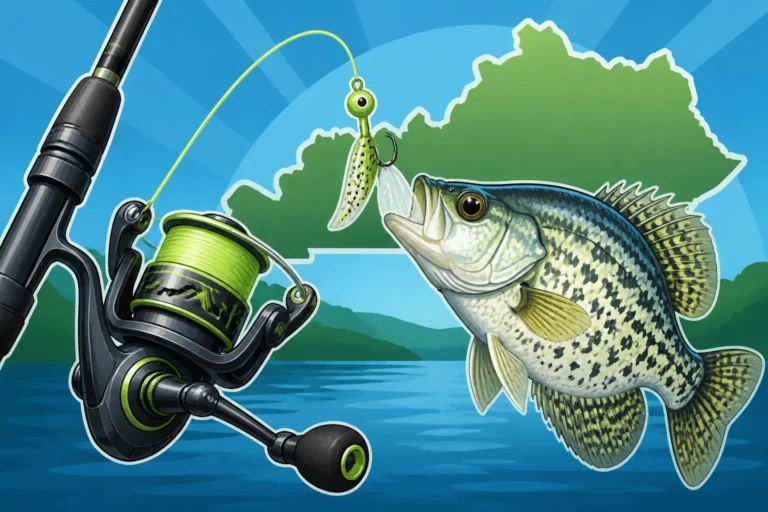
For the vast majority of sauger fishing on Lake Barkley, a spinning rod is your best friend. They excel at casting lighter jigs and offering the sensitivity needed for those delicate bites. A 6'6" to 7'0" medium-light to medium power, fast or extra-fast action spinning rod is the sweet spot. Many anglers find a 6'8" or 6'9" medium-light, extra-fast rod to be the perfect all-around choice. Brands like St. Croix (their Eyecon series is popular for walleye/sauger) or Shimano offer excellent options that fit this description. You can often find a good selection of these rods at outdoor retailers like Bass Pro Shops or even through online stores like Amazon, especially when looking for specific models and lengths.
Pair this rod with a lightweight spinning reel in the 1000 to 2500 size range. Spool it with a sensitive braided line of 6-10 pound test, and then tie on a 6-10 pound fluorocarbon leader. The braid provides incredible sensitivity and no stretch for solid hooksets, while the fluorocarbon leader offers invisibility in clear water and abrasion resistance against rocks and timber. This setup is perfect for vertical jigging techniques or casting lighter jigs. Want to refine your jigging technique? Our guide on How to Jig for Sauger in Deep Water can provide some excellent tips.
Baitcasting Rods for Trolling and Heavier Baits
While spinning rods dominate, there are specific situations where a baitcasting setup might be more appropriate for sauger on Lake Barkley. If you're planning to troll for sauger with heavier crankbaits or bottom bouncers, a baitcasting rod often provides better line capacity and more control over heavier tackle. For trolling, a medium power, moderate-fast action baitcasting rod in the 7'0" to 7'6" range can be very effective. The moderate-fast action helps the rod absorb the shock of a strike while trolling and keeps the hooks pinned.
You might also opt for a baitcasting setup if you're using exceptionally heavy jigs or larger spoons, which can sometimes be the case in very strong currents or when targeting larger, deeper sauger. A baitcasting reel paired with 10-15 pound braided line can handle these heavier presentations with ease. However, for sheer sensitivity with lighter jigs, the spinning setup generally wins out. If you're trying to decide on the right lines for your setup, check out Best Line and Leader Setup for Lake Barkley Sauger.
Matching Rods with Lines and Lures
The synergy between your rod, line, and lure is what ultimately leads to success. For sauger, light jigs (1/8 oz to 1/2 oz being common) are frequently used. Your rod needs to be able to load and cast these light lures effectively, and the line must transmit the subtle action. Using too heavy of a rod with a light jig will feel like casting a toothpick.
When fishing jigs, braided line with a fluorocarbon leader is a powerhouse combination. The lack of stretch in braid means every little bump and tick is amplified through your sensitive rod. The fluorocarbon leader, being nearly invisible underwater and highly abrasion-resistant, makes it ideal for the clear-ish waters and rocky bottom of Lake Barkley. For instance, if you're throwing a small grub on a 1/4 oz jighead, that medium-light, extra-fast spinning rod with 6lb braid and a 6lb fluorocarbon leader is going to give you maximum feel and control. This combination allows you to feel the bottom, detect subtle strikes, and set the hook with confidence.
Refining Your Sauger Rod Selection
Choosing the "best" rod isn't always about the most expensive one; it's about finding the one that matches your fishing style, the conditions you'll face, and your budget. Once you have the right basic characteristics down, you can start to refine your choices.
Shopping for Your Ideal Rod
When you're ready to invest in a sauger rod, it's wise to handle a few different models. Go to a local tackle shop or a larger retailer like Bass Pro Shops and physically hold the rods. Feel the balance, the weight, and how they flex. Imagine yourself jigging for hours – does it feel comfortable? Does it feel too tip-heavy or too flimsy?
Don't be afraid to ask questions. Many fishing pros and store associates are passionate anglers themselves and can offer valuable insights based on local conditions and what's proven effective. While I can't give you specific price points, rods designed for walleye or sauger will typically fall into various tiers, from entry-level options that are perfectly functional to high-end models that offer extreme sensitivity and lightness. Look for a rod that feels responsive in your hand. You might find great deals online from retailers like Amazon, but nothing beats holding a rod in person before you buy it to assess its feel.
Here's a quick comparison of common rod characteristics for sauger:
| Characteristic | Ideal for Sauger (Lake Barkley) | Why It Matters |
|---|---|---|
| Power | Medium-Light to Medium | Balances sensitivity with enough backbone for hooksets and fighting fish in current. |
| Action | Fast to Extra-Fast | Detects light bites with minimal rod movement; allows for quick, precise hooksets. |
| Length | 6'6" to 7'6" | Shorter for vertical jigging/boat control; longer for casting distance from bank/boat. |
| Material | High-Modulus Graphite | Provides superior sensitivity to transmit subtle bites. |
| Handle | Split Grip (EVA/Cork) | Lightweight, comfortable, enhances sensitivity by directly connecting hand to blank. |
| Guides | Lightweight, Durable | Reduces overall rod weight, allows line to flow smoothly for casting and sensitivity. |
Don't Forget the Reel
A great rod is only half the equation; a good reel completes the package. For spinning rods, a smooth, lightweight reel with a reliable drag system is crucial. Brands like Daiwa or Shimano consistently produce reels that pair well with sensitive sauger rods. The reel should balance the rod, not make it feel tip-heavy or unwieldy. A reel that allows for precise line management and has a smooth retrieve will greatly enhance your ability to feel subtle bites and maintain control of your lure. Remember, the combination of rod and reel should feel like an extension of your arm, providing seamless communication with your lure underwater.
Beyond the specific gear, remember that practicing your technique, like those found in Cold-Water Sauger Fishing at Kentucky's Lake Barkley, and staying attuned to local conditions will always boost your chances.
Disclaimer
This article is for general informational purposes only and does not constitute professional advice. Laws, prices and regulations vary by location and change over time. Consult a qualified professional for guidance on your specific situation.